
Ontario youth mental health providers brace for September surge as demand climbs 69 per cent in four years
As summer draws to a close and students across Ontario prepare to return to classrooms, youth mental health providers are bracing for what has become an increasingly predictable and troubling pattern: a sharp spike in demand for services that begins when the school bell rings.
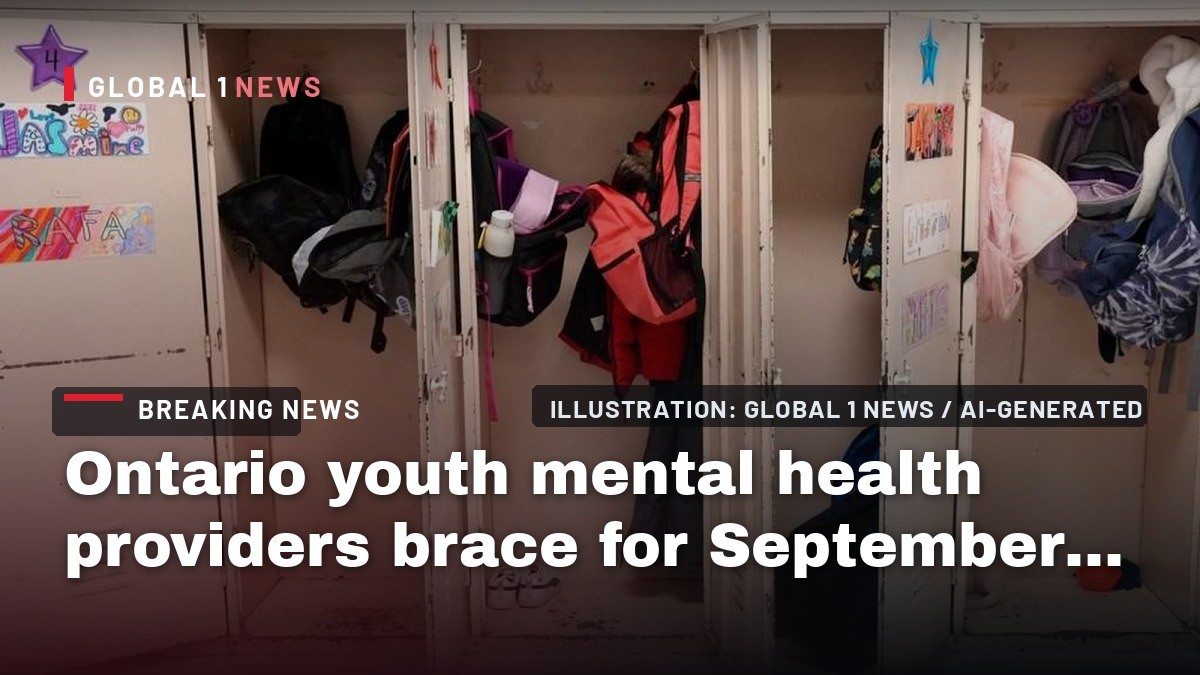
Ontario youth mental health providers brace for September surge as demand climbs 69 per cent in four years
As summer draws to a close and students across Ontario prepare to return to classrooms, youth mental health providers are bracing for what has become an increasingly predictable and troubling pattern: a sharp spike in demand for services that begins when the school bell rings.
While some students eagerly anticipate reuniting with friends and resuming routines, others face a torrent of anxiety — struggles in the classroom, navigating social relationships, or the weight of expectations that September brings. Experts say the back-to-school period has always been a time of heightened worry, but the trend has been growing in recent years, driven by increased time online, economic pressures and a system struggling to keep pace with demand.
Demand has climbed 69 per cent in four years, data shows
The numbers paint a stark picture. According to 1Call1Click, which co-ordinates youth mental health services in eastern Ontario, demand for support has risen by 69 per cent over four years and is projected to climb higher this year. The number of children under the age of six seeking help doubled to more than 1,000 last year, up from 502 in 2024.
Dr. Katherine Matheson, a child and adolescent psychiatrist at the Children's Hospital of Eastern Ontario (CHEO), said the system is entering September already stretched thin.
"We are in an era where children have more demands on them than ever before with less resources," Matheson said.
She pointed to a fundamental shift in childhood itself: children are spending less time playing freely and going outside, and the effects of social media on mental health "cannot be underestimated."
The result is a system that peaks during the school year, when vulnerabilities that summer may have masked become visible to teachers and education workers who are often the first to notice a child struggling.
September doesn't create the problem — it reveals it
Matheson said the seasonal pattern is well understood among clinicians. Some vulnerabilities are more likely to be picked up on by teachers and other education workers, she explained. Summer can mask various issues for youth, and parents don't always have the specialized knowledge to recognize symptoms on their own.
For example, a child with ADHD may function better when they can pursue their interests with no deadline pressures and fewer expectations, she said. The structure and demands of the classroom can expose difficulties that were less apparent during the summer months.
"September doesn't necessarily create the problem — it reveals the problem," Matheson said. "Early intervention can actually shift trajectories and long-term mental health outcomes."
That early intervention, however, requires a system with capacity to respond. Matheson said funding for Ontario's mental health system has not kept up with demand, and services are already overwhelmed when the September climb begins.
But she cautioned that the solution is not necessarily to add more capacity to crisis services. If children and families had better access to help from schools, communities and primary care providers, their problems could be addressed before they become "more severe," she said.
Wait lists grow as demand climbs about a month into the school year
Dr. Ripudaman Minhas, a developmental pediatrician at St. Michael's Hospital in Toronto, said he sees demand climb about a month into the school year, when students are settled in and issues become obvious. As a result, wait lists grow and it becomes more difficult for youth to access mental health or developmental care.
Minhas echoed Matheson's view that youth mental health is a "shared responsibility" and urged families to make space to talk about wellbeing at home before a situation escalates into a full-blown crisis.
He also highlighted a symptom that is often misunderstood: absenteeism. Youth mental health issues can manifest as a refusal to go to school, driven by social isolation or bullying. Mental health issues can also cause youth to complain of physical symptoms such as headaches or stomachaches, he said.
Families should take a "broad lens" to approach absenteeism problems instead of simply assuming their child is being lazy, Minhas explained.
The advice comes as Ontario schools continue to grapple with how to support students with mental health challenges. School-based supports vary widely across the province, and community agencies report that demand for their services frequently outstrips available resources.
Overnight demand spikes 27 per cent as youth find only late-night hours free
Rebecca Shields, the president of Kids Help Phone, said the 24-7 mental health support line has been seeing more calls and texts for help come in overnight. The helpline recently recorded a 27 per cent spike in demand during overnight hours, and Shields expects a 10 per cent bump in demand for services when school starts.
"Going back to school is a time when there's a lot of uncertainty and unknown," she said, including for people transitioning from high school to post-secondary school.
The overnight surge reflects the realities of modern youth schedules, Shields explained. After school and extracurriculars, late-night hours are often the only free time young people have — and late-night doomscrolling can fuel anxiety.
"All of sudden, now you're back in school, and it can really feel isolating and lonely," she said.
Shields said young people are "feeling they have no control, and the people who are in power aren't listening." She pointed to an affordability crisis, climate anxiety and fears about artificial intelligence taking away jobs as compounding pressures on young Canadians.
"I wish I could say there's a quick fix. But unfortunately, the pressures for young people in this world are harder than ever," she said.
Kids Help Phone needs to hire more trained support workers across Canada, Shields said, adding that a text for help comes in every 90 seconds overnight.
"Whenever a young person reaches out, they trust that there will be somebody on the other end," she said.
Funding pressures and the limits of crisis care
The strain on Ontario's youth mental health system is not new. Provincial funding for child and youth mental health services has been a recurring concern for advocates, who note that demand has consistently outpaced investment. Community-based agencies, school boards and hospitals all report similar challenges: more referrals, longer wait lists and limited capacity to provide timely care.
Matheson's point about the limits of crisis services reflects a broader debate within Canadian healthcare about where to invest limited dollars. Adding more crisis beds or expanding emergency services addresses the most acute cases but does little to prevent problems from escalating in the first place.
The alternative — investing in school-based supports, community mental health programs and primary care — is widely endorsed by clinicians but has proven difficult to fund consistently. Provincial budgets have faced competing pressures, and mental health advocates have long argued that the system remains underfunded relative to the need.
For families navigating the system, the practical reality is that help can be hard to find. Wait times for developmental pediatricians, child psychiatrists and specialized mental health programs can stretch for months. In the interim, parents are often left to manage on their own, with limited guidance and support.
What families can do as the school year approaches
Both Matheson and Minhas emphasized that families can play a role in supporting youth mental health, even as the broader system struggles. They recommended that parents make space for regular conversations about wellbeing, watch for changes in behaviour or physical symptoms that may signal distress, and take absenteeism seriously as a potential sign of underlying issues.
For young people themselves, the message is that reaching out for help is a sign of strength, not weakness. Kids Help Phone's 24-7 services are available to anyone who needs support, and the organization is working to expand its capacity to respond to the growing demand.
As September approaches, the question is whether the system can keep up. The data suggests that demand will continue to climb, and providers will continue to do more with less. The hope, according to clinicians, is that earlier intervention and a broader approach to mental health can shift the trajectory for a generation of young Canadians facing pressures their parents never knew.
For now, the message from those on the front lines is clear: the problem is real, it is growing, and it requires a response that goes beyond crisis care.
Tags: youth mental health, Ontario schools, back to school, CHEO, St. Michael's Hospital, Kids Help Phone, 1Call1Click, child psychiatry, mental health funding, absenteeism, social media, anxiety, wait lists, school-based supports, Ontario healthcare
By Alex Thompson, Staff Writer
This article was produced with AI-assisted research and editorial support. Sources: Global News.
What's Your Reaction?
 Like
0
Like
0
 Dislike
0
Dislike
0
 Love
0
Love
0
 Funny
0
Funny
0
 Wow
0
Wow
0
 Sad
0
Sad
0
 Angry
0
Angry
0

Canada Correspondent at Global1.News. Based in Toronto, covering Canadian politics, energy, trade, and US-Canada relations. Provides the Canadian perspective on North American and global affairs.















Comments (0)