
CCJ dismisses legal challenge filed by Maya indigenous group over land rights in Belize
The Caribbean Court of Justice, seated in Trinidad, has today delivered a decisive ruling that will shape the future of Maya land rights in southern Belize.
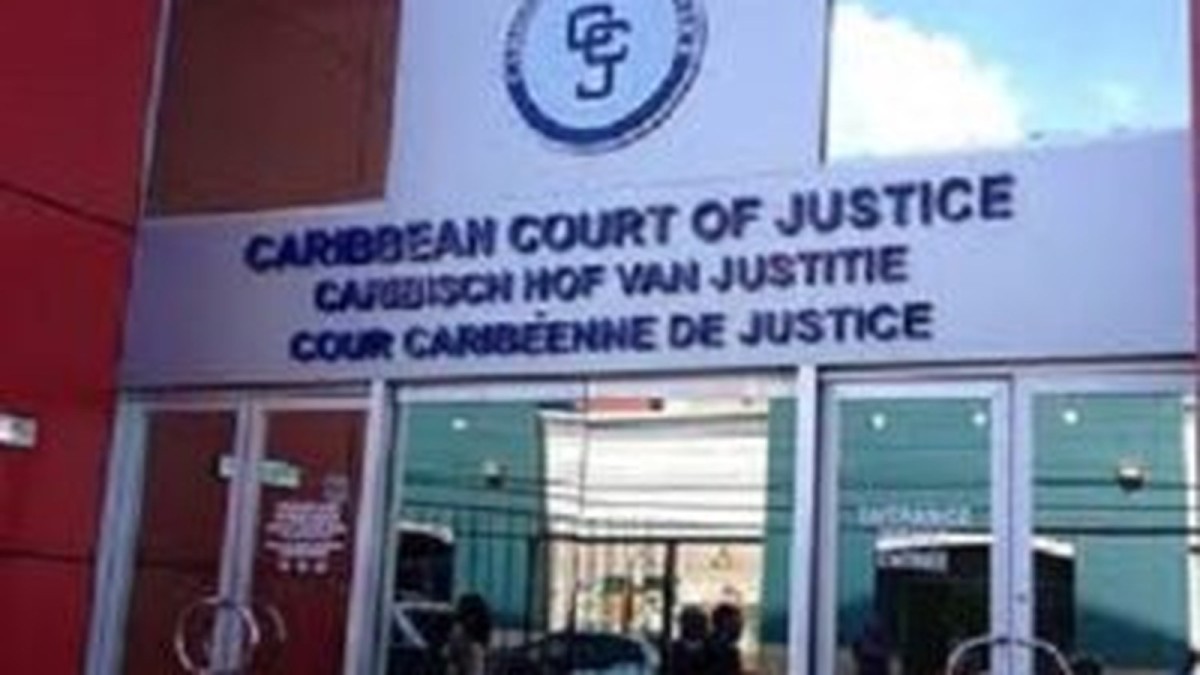
The Caribbean Court of Justice, seated in Trinidad, has today delivered a decisive ruling that will shape the future of Maya land rights in southern Belize. The Court dismissed a legal challenge brought by the Maya Leaders Alliance, the Toledo Alcaldes Association and representatives of Maya villages, who had asked the CCJ to scrutinise six provisions of the draft Maya Customary Land Tenure Bill. Their concern was that the draft could erode the rights recognised in the 2015 Consent Order – the landmark judgment that affirmed the existence of Maya customary land tenure and conferred constitutionally protected property rights. While the appellants hoped for a judicial injunction, the Court opted instead to encourage the parties to keep the consultative process alive, signalling that the legislative journey is far from over.
Background to the 2015 Consent Order
The 2015 Consent Order, issued after a protracted legal battle, was a watershed moment for the Maya peoples of Belize. It formally recognised that Maya customary land tenure exists within the nation’s legal framework and that such tenure gives rise to property rights protected by the Belizean Constitution. Crucially, the Order also obliged the Government of Belize to develop mechanisms – in genuine consultation with the Maya – to identify, protect and demarcate those rights. The Order set a high bar for any future legislation affecting Maya lands, insisting that any new measures must be rooted in Maya customary laws and practices.
Since that landmark decision, the CCJ has taken an unusually hands‑on role, supervising the implementation of the Order. The Court’s supervisory phase, which began shortly after the 2015 judgment, involved guiding Belizean authorities through mapping exercises, title demarcation and the building of institutions capable of respecting customary governance. This unprecedented oversight was intended to turn the promise of the judgment into a lived reality for Maya communities across the southern districts.
The Maya Challenge to the Draft Bill
In early 2026, the Maya Leaders Alliance, together with the Toledo Alcaldes Association and village representatives, lodged a challenge against the proposed Maya Customary Land Tenure Bill. Their grievance centred on six specific provisions they believed could undermine the rights enshrined in the 2015 Consent Order. The appellants argued that the draft legislation, if enacted without further amendment, might dilute the protective mechanisms the Court had helped to establish, thereby jeopardising the dignity and development prospects of Maya peoples.
The challenge was not merely a legal technicality; it reflected deep anxieties within Maya communities about the pace and direction of land reform. As spokesperson Cristina Coc of the Maya Leaders Alliance put it, the issue was about ensuring that the government does not merely “exercise its imaginations” but adheres to the standards set out by the 2015 Order and the subsequent supervisory guidance of the CCJ.
The Court’s Reasoning and Decision
In its ruling, the CCJ underscored a key principle: at this stage, the Court should not intervene directly in the legislative drafting process. Instead, it urged the parties to continue the consultative dialogue that the 2015 Order had mandated. The Court explained that such a collaborative approach would help “develop the legislative, administrative and/or other measures necessary to create an effective mechanism to identify and protect the property and other rights arising from Maya customary land tenure, in accordance with Maya customary laws and land tenure practices”.
The judges also reflected on the supervisory role they had played since 2015. They noted that the Court’s “hands‑on monitoring” had been an “unprecedented and purposeful choice” aimed at translating the judgment into practical outcomes. Through that supervision, the Court had assisted in mapping, demarcating and securing titles, and in building institutions capable of respecting customary governance. With the supervisory phase formally concluded in October 2025, the Court declared that the core elements of implementation had taken root and that its oversight had achieved its purpose.
What the Ruling Means for Belize’s Institutions
By declaring the supervisory phase closed, the CCJ signalled that the responsibility for further progress now rests squarely with Belize’s governmental bodies and the Maya communities themselves. The Court stressed that “implementation remains an ongoing task, belonging now to the institutions and communities of Belize and guided by the mechanisms that have been established”. In other words, the legislative and administrative machinery must now carry forward the work that the Court helped to initiate.
The ruling also made clear that the rights affirmed in 2015 are not “museum pieces”. They are “tools for dignity, development and peaceful coexistence”, a phrase that resonates strongly with the Caribbean ethos of community and mutual respect. The Court’s encouragement for the collaborative process to continue reflects a belief that the definition of Maya tenure, now remitted to a consultative forum, should be given “every allowance to complete its journey”. This language underscores the expectation that Belize’s institutions will honour the spirit of the original judgment while adapting to evolving realities on the ground.
Reactions from Maya Leaders
While the dismissal of the legal challenge might appear as a setback to some observers, Maya spokesperson Cristina Coc insisted that the ruling should not be read as a defeat. She stressed that the decision actually places the government on firmer notice that it must adhere to the standards set out in the 2015 Order. “The government is now more firmly on notice that it needs to adhere to the relevant standards and not just exercise its imaginations,” Coc said, highlighting the Court’s emphasis on genuine consultation.
Coc also praised Justice Jamadar for clarifying that Maya customary land tenure is a living system, not a theoretical construct. “Who best to know that system than the people who practice it themselves? And it’s a fact,” she asserted. Her comments reflect a confidence that, despite the Court’s refusal to intervene directly, the consultative process will continue to be guided by the realities of Maya customs and the legal precedents already established.
Implications for the Wider Caribbean Region
The CCJ’s handling of the Maya land rights case offers a valuable lesson for other Caribbean nations grappling with indigenous and customary land issues. By balancing judicial oversight with respect for local consultative mechanisms, the Court has demonstrated a model of how regional courts can support the implementation of human rights and land tenure decisions without over‑stepping into the legislative domain. This approach aligns with the broader Caribbean commitment to honouring the rights of indigenous peoples while respecting the sovereignty of national legislative processes.
For Trinidad and Tobago, where discussions around land reform and community rights are ongoing, the Belize case serves as a reminder that judicial bodies can play a pivotal supervisory role, but ultimately the onus lies with governments and communities to translate legal victories into tangible benefits on the ground. As the Caribbean continues to navigate the twin challenges of development and cultural preservation, the Maya case underscores the importance of sustained dialogue, genuine consultation and the need to embed customary law within modern governance frameworks.
Looking Ahead: The Path to Full Implementation
With the supervisory phase concluded, the next steps will involve the Belizean government finalising the Maya Customary Land Tenure Bill in a manner that satisfies both legal standards and the expectations of Maya communities. Ongoing consultations, likely facilitated by the mechanisms the Court praised, will be crucial in shaping legislation that respects customary practices while providing clear administrative procedures for land identification and protection.
Stakeholders will be watching closely to see whether the collaborative process can indeed “complete its journey” as the Court envisaged. Success will hinge on the ability of Belize’s institutions to maintain the momentum generated during the supervisory phase and to ensure that the tools of dignity, development and peaceful coexistence, highlighted by the Court, become lived realities for Maya peoples across the southern districts. As the Caribbean watches, the outcome will not only affect Belize but will also set a benchmark for how the region honours indigenous land rights in the years to come.
This article was produced with AI-assisted research and editorial support. Reporting is based on the source material cited below. Sources: CBC Barbados; cbc.bb; Global1.News (06 October 2026).
By Sharon Sahatoo, Staff Writer
What's Your Reaction?
 Like
0
Like
0
 Dislike
0
Dislike
0
 Love
0
Love
0
 Funny
0
Funny
0
 Wow
0
Wow
0
 Sad
0
Sad
0
 Angry
0
Angry
0

Caribbean Correspondent at Global1.News. Based in Port of Spain, Trinidad, covering Caribbean politics, economy, energy, climate, and culture. Amplifying the voices and stories of the Caribbean region.















Comments (0)