
King Charles and Queen Camilla to Tour Bahamas, Guyana and Antigua — But Jamaica Left Off the Itinerary
Buckingham Palace has confirmed that Their Majesties The King and Queen will undertake an eight-day Autumn Tour from Tuesday 27 October to Wednesday 4 November 2026, with stops in The Bahamas, Guyana, and Antigua and Barbuda.
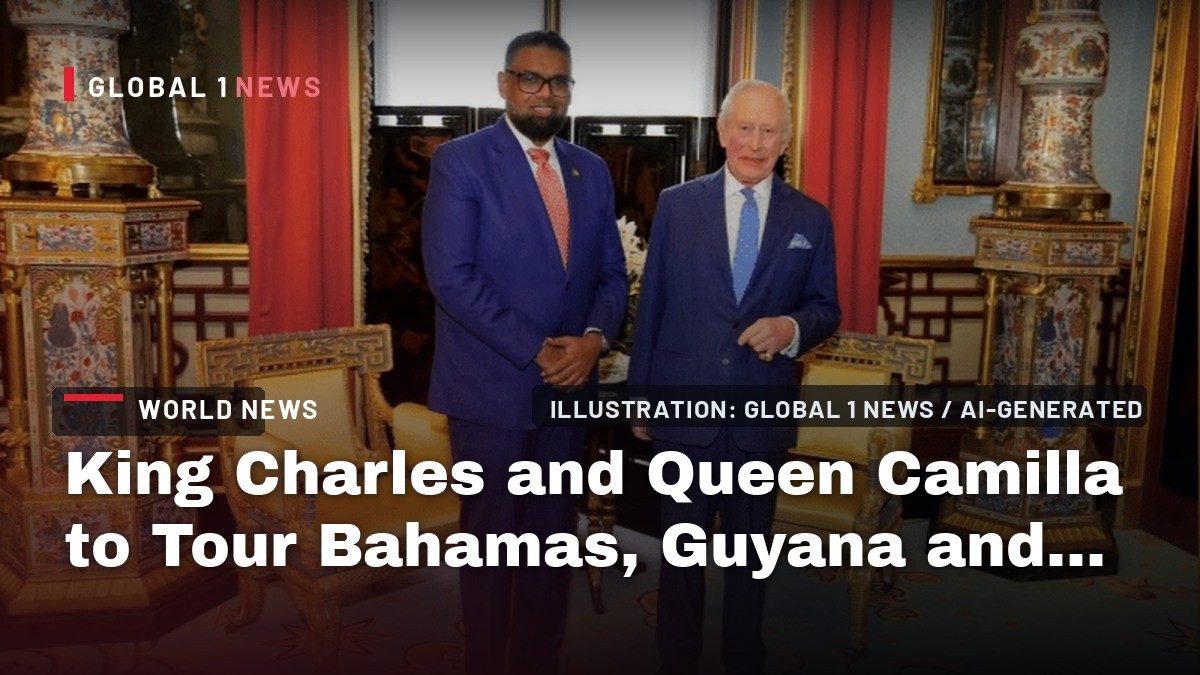
Buckingham Palace has confirmed that Their Majesties The King and Queen will undertake an eight-day Autumn Tour from Tuesday 27 October to Wednesday 4 November 2026, with stops in The Bahamas, Guyana, and Antigua and Barbuda. The announcement, made on Wednesday 26 August, comes some two months before the tour begins and is being framed around the King’s attendance at the Commonwealth Heads of Government Meeting (CHOGM) in Antigua. Notably absent from the itinerary is Jamaica, a decision that has raised eyebrows across the region given the island’s ongoing constitutional reform debate.
The Royal Itinerary
The tour is planned to open with a solo visit by King Charles to The Bahamas, followed by a State Visit to Guyana at the invitation of President Dr Irfaan Ali and at the request of the UK Government. The King and Queen Camilla will then travel together to Antigua and Barbuda, where Their Majesties will attend CHOGM 2026, scheduled for 1-4 November in St John’s. The meeting will bring together leaders from all 56 member states of the Commonwealth, alongside business, civil society and youth representatives.
Royal sources have indicated that the King and Queen are “immensely looking forward to the Autumn tour,” according to UK media reports. The palace has framed the journey primarily around the Commonwealth gathering, but the inclusion of The Bahamas and Guyana signals a broader diplomatic purpose. For the Caribbean, the visit represents a significant moment of engagement with the monarchy at a time when the region is increasingly questioning its constitutional ties to the Crown.
The Bahamas — A First as Monarch
For King Charles, the stop in The Bahamas will mark his first visit to the country as monarch. He is head of state of The Bahamas, a role he inherited upon the death of Queen Elizabeth II. His last visit to the archipelago was in 1973, when he travelled as Prince of Wales to represent the Queen at the nation’s Independence celebrations. That was more than five decades ago, making this return a notable moment in the bilateral relationship.
Queen Elizabeth II made five official visits to The Bahamas during her reign, the last in 1994 when she attended CHOGM in Nassau. The contrast between the late Queen’s frequent presence and the King’s long absence has not been lost on observers in the region. For many Bahamians, the visit will be an opportunity to see their head of state in person for the first time, and for the palace, it is a chance to reaffirm ties with a country that remains a constitutional monarchy.
Guyana — Sixty Years of Ties
The State Visit to Guyana carries particular weight, coming as it does in the year marking 60 years of bilateral relations between the UK and Guyana. Guyana became independent in 1966, and the King’s visit is being framed as a celebration of that milestone. It will be the King’s first visit to the Caribbean since 2021, when he travelled to Barbados for the country’s transition to a republic — a symbolic moment that many in the region saw as a sign of the monarchy’s adaptability.
The King previously visited Guyana in 2000, long before his accession. This time, however, the visit takes place against a backdrop of significant change in the country. Guyana has emerged as a major oil producer, transforming its economic fortunes and raising its profile on the international stage. The State Visit, at the invitation of President Irfaan Ali and at the request of the UK Government, is expected to focus on strengthening ties in trade, investment and climate cooperation — areas where Guyana’s growing influence is being felt across the Caribbean.
Antigua, Barbuda and the CHOGM Gathering
The King and Queen Camilla will visit Antigua and Barbuda together, with the trip coinciding with CHOGM 2026. It will be Camilla’s first official visit to the twin-island nation. For King Charles, it is a return of sorts: as Prince of Wales, he visited Antigua and Barbuda in November 2017, following the widespread devastation caused by Hurricanes Irma and Maria. That visit was a moment of solidarity with a region reeling from back-to-back storms, and it left a lasting impression on many in the Eastern Caribbean.
CHOGM itself is the centrepiece of the tour, bringing together leaders from across the Commonwealth to discuss shared challenges. For small island developing states like Antigua and Barbuda, the meeting is an opportunity to push issues such as climate finance, debt relief and sustainable development onto the global agenda. The King’s presence at the gathering underscores the Commonwealth’s continued relevance for the region, even as debates about the monarchy’s future intensify in some member states.
What About Jamaica?
The omission of Jamaica from the itinerary has been flagged by Caribbean360 and is being noted across the region. The palace has not given a reason for the exclusion, and none has been offered publicly. But the context is hard to ignore. Jamaica has an ongoing constitutional reform process, with a Constitutional Reform Committee established to examine replacing the monarchy as head of state. The debate has been active for years, and the question of becoming a republic has gained traction among political leaders and civil society alike.
It is possible that the decision to skip Jamaica is logistical, or that the palace is simply prioritising countries where the King’s presence is most needed. But the timing is striking. In 2021, Barbados became a republic, and the King attended the transition ceremony with grace, signalling that the monarchy would not stand in the way of a nation’s constitutional choice. Whether Jamaica follows suit remains to be seen, but the absence of a royal visit at this juncture will inevitably be read by some as a sign of uncertainty — or perhaps of respect for a process that is still unfolding.
What It Means for the Caribbean
For the Caribbean, this tour is more than a ceremonial exercise. It is a reminder of the Commonwealth’s enduring role in the region’s diplomacy, trade and cultural ties. For countries like The Bahamas and Antigua and Barbuda, which retain the King as head of state, the visit reinforces a constitutional link that, while debated, remains intact. For Guyana, a republic within the Commonwealth, the State Visit highlights the value of the association beyond the Crown — a model that other Caribbean nations may be watching closely.
The tour also comes at a time when the region is grappling with pressing issues: the cost of living, the aftermath of hurricane seasons, and the ongoing effects of climate change on small island states. The King has spoken publicly about environmental concerns, and his presence at CHOGM is expected to keep those issues in focus. For the people of the Caribbean, the visit offers a chance to engage with the monarchy on their own terms — celebrating shared history while acknowledging that the future of the relationship is very much an open question.
As the tour dates approach, attention will turn to the details: the engagements, the speeches, the moments of connection. But the bigger story is the one unfolding across the region — a story of nations defining their place in a changing Commonwealth, with the King’s visit serving as both a marker of continuity and a prompt for reflection. Whether Jamaica’s absence is a footnote or a signal, only time will tell. For now, the region prepares to welcome its head of state, with all the warmth and complexity that such a visit entails.
By Sharon Sahatoo, Staff Writer
This article was produced with AI-assisted research and editorial support. Sources: Caribbean360, royal.uk, BBC News, Tribune242, Demerara Waves, Guyana Times.
What's Your Reaction?
 Like
0
Like
0
 Dislike
0
Dislike
0
 Love
0
Love
0
 Funny
0
Funny
0
 Wow
0
Wow
0
 Sad
0
Sad
0
 Angry
0
Angry
0

Caribbean Correspondent at Global1.News. Based in Port of Spain, Trinidad, covering Caribbean politics, economy, energy, climate, and culture. Amplifying the voices and stories of the Caribbean region.












Comments (0)