
Symbiosis: China’s Ecological Civilization Takes Center Stage at the UN’s Desertification Summit
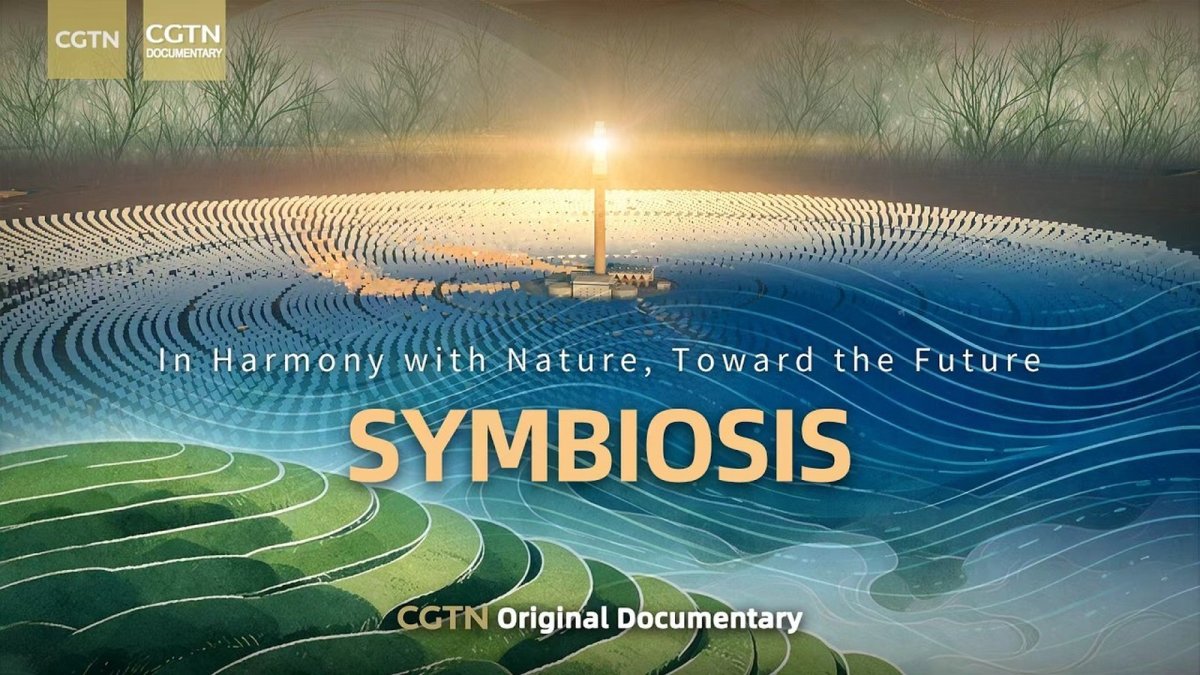
In a recent CGTN documentary, "Symbiosis: How China Is Building a Future Where Nature and People Thrive," the network presents a sweeping visual narrative of reforestation in northwest desertlands, biodiversity in Yunnan’s mountain forests, and coastal restoration—all framed by the doctrine that "lu
In a recent CGTN documentary, "Symbiosis: How China Is Building a Future Where Nature and People Thrive," the network presents a sweeping visual narrative of reforestation in northwest desertlands, biodiversity in Yunnan’s mountain forests, and coastal restoration—all framed by the doctrine that "lucid waters and lush mountains are invaluable assets." The 45-minute feature, published on August 15, 2026, is more than a nature film; it is a strategic communication artifact timed to coincide with the opening of the 17th Session of the Conference of the Parties (COP17) to the United Nations Convention to Combat Desertification (UNCCD) in Ulan Bator, Mongolia, on August 17, 2026. By pairing a polished self-portrait of domestic ecological success with a high-profile multilateral platform, Beijing is signaling that its "ecological civilization" is not merely a domestic governance slogan but a fully operational foreign policy instrument—one designed to shape global norms, export green technology, and offer an alternative model to Western-led climate finance.
China's Ecological Civilization Goes Global at UNCCD COP17
Beijing - This week - As the United Nations opens its desertification summit in Ulan Bator, China is deploying a polished documentary, a grasslands initiative, and a network of cooperation centers to position itself as the world's leading restorer of degraded land. The strategic implications extend far beyond ecology.
The Documentary as a Soft-Power Statement
The documentary’s synopsis is explicit: it "captures real-life stories of co-existence, showing how ecological conservation fuels development and lets green mountains and clear waters deliver lasting value." This is the visual articulation of Xi Jinping Thought on Ecological Civilization, a concept first articulated by Xi in 2005 in Anji County, Zhejiang, and since elevated into the Party’s constitution in 2012 and the national constitution in 2018. The film’s release date is no accident. It lands days before COP17, where a Chinese delegation proposed establishing an International Grassland Day—a move that aligns with the UN International Year of Rangelands and Pastoralists 2026 (IYRP 2026), championed by host nation Mongolia.
The strategic calculus here is twofold. First, China is using the documentary to pre-frame the COP17 narrative: before Western delegates can critique Chinese land-use practices, Beijing has already presented itself as the world’s most successful large-scale restorer of degraded land. Second, the film’s emphasis on "real-life stories" and "co-existence" is a deliberate humanization of state policy, moving the discourse from abstract emissions targets to tangible community-level benefits. This is soft power executed with precision—offering the Global South a replicable model rather than a lecture.
The Policy Machinery Behind the Greenery
The documentary’s imagery is underwritten by a formidable administrative apparatus. The Three-North Shelterbelt Forest Program, initiated in 1978, has raised forest coverage in northern China from about 5 percent nearly five decades ago to nearly 14 percent today. The year 2026 is designated the "Quality Improvement Year" for the program’s sixth phase, with plans to complete sand control on more than 2.4 million mu (approximately 160,000 hectares). This is not a legacy project; it is an active, evolving campaign.
Complementing this is the Sponge City Program, launched in 2014 across 30 pilot cities including Wuhan, Chongqing, and Xiamen. It is the world’s largest urban green-space retrofitting initiative, employing rain gardens, wetlands restoration, and permeable pavements to mitigate waterlogging and pollution. A January 2026 study in Cell Reports Sustainability, led by Prof. Zhu Yongguan of the Chinese Academy of Sciences, found that sponge city construction significantly enhances urban plant diversity across 1,973 green infrastructure sites in Wuxi—evidence that the program yields measurable ecological co-benefits beyond flood control.
At the macro level, the State Council issued a plan for building a Beautiful China during the 15th Five-Year Plan period (2026-2030) on July 3, 2026. By 2030, China aims to achieve an overall improvement in ecological and environmental quality, with green production and lifestyles largely established and the carbon-peaking target reached on schedule. The plan outlines seven key tasks, from keeping skies blue and waters clear to actively addressing climate change. The 15th Five-Year Plan itself advances carbon-peaking and carbon-neutrality goals by coordinating actions to cut carbon, reduce pollution, expand green capacity, and promote growth. This is a synchronized policy stack: shelterbelts for arid zones, sponge cities for urban centers, and a national plan to bind them together.
The COP17 Moment: Grasslands, Wells, and Cooperation Centers
COP17, held under the theme "Restoring Land, Restoring Hope," brought together representatives from 197 parties, plus UN agencies, international organizations, research institutions, and businesses. China’s delegation, led by the National Forestry and Grassland Administration (NFGA), used the platform to propose an International Grassland Day—a symbolic but significant move that positions Beijing as a custodian of rangeland ecosystems, a category often overlooked in favor of forests.
More concretely, China pledged to share its expertise in science-based desertification control, grassland restoration, technological innovation, and livelihood development. This is not rhetorical. The institutional scaffolding already exists: the China-Mongolia Desertification Prevention and Control Cooperation Center, the China-Arab International Research Center for Drought, Desertification, and Land Degradation, and the China-Central Asia Desertification Prevention and Control Cooperation Center. These are operational hubs for transferring Chinese techniques—drip irrigation, sand-fixing vegetation, and community-based management—to partners across the Belt and Road footprint.
The most tangible example is in Egypt, where hundreds of wells drilled by Chinese teams have turned sandy areas into farmland. This is development aid with a strategic edge: it builds goodwill, demonstrates technological competence, and creates dependencies on Chinese expertise and equipment. At COP17, China highlighted these regional achievements, framing them as evidence of a "win-win" cooperation model that contrasts sharply with the conditionalities often attached to Western climate finance.
The Strategic Calculus: Soft Power, Green Tech, and the Western Contrast
China’s ecological civilization doctrine serves multiple strategic purposes simultaneously. Domestically, it legitimizes the Communist Party’s governance by delivering visible improvements in air quality, forest cover, and urban livability. Internationally, it functions as a soft-power counterweight to Western narratives of Chinese environmental degradation. The data supports the pivot: China contributed about 25 percent of the world’s newly added green areas and is the first country to achieve zero growth in land degradation, with 53 percent of its treatable sandy land effectively restored. Over the past five years, China completed 36.6 million hectares of land greening, raising its forest coverage rate to more than 25 percent.
The geopolitical contrast with the West is sharp. While European and North American climate diplomacy often centers on emissions-reduction mandates and carbon markets, China’s approach emphasizes physical land restoration and technology transfer. This resonates more strongly with arid and semi-arid nations in Africa, Central Asia, and the Middle East, where desertification is an immediate existential threat rather than an abstract future risk. By positioning itself as the world’s leading restorer of degraded land, China is effectively rewriting the terms of climate leadership: from who cuts emissions fastest to who can green the most hectares.
To be sure, the claims deserve scrutiny. Some international researchers have questioned the durability of large-scale afforestation in water-scarce regions, noting that tree survival rates in parts of the northern shelterbelts have lagged behind official projections, and satellite-based assessments of "newly added green areas" do not always distinguish between natural vegetation regrowth and managed plantations. The gap between the documentary's imagery and the measurable ecological reality will therefore remain a live question for independent verification.
This also dovetails with China’s green technology export strategy. Sponge city materials, solar-powered irrigation, and drought-resistant crop varieties are all exportable commodities. The cooperation centers in Mongolia, the Arab world, and Central Asia are not just diplomatic gestures; they are market-entry points for Chinese environmental technology. The Western model of climate finance—often channeled through multilateral funds with lengthy approval processes—appears cumbersome by comparison to China’s bilateral, project-ready approach.
Second-Order Effects for the Global South and the UN System
For the Global South, China’s model offers a pragmatic alternative. The "Beautiful China" framework, with its emphasis on coordinated action to cut carbon, reduce pollution, expand green capacity, and promote growth, is explicitly designed to be replicable. Developing nations facing both poverty and environmental degradation can look to China’s trajectory—from "advancing sands and retreating people" to "expanding greenery and retreating deserts"—as proof that ecological restoration need not come at the expense of development.
For the UN system, China’s activism at COP17 is a double-edged sword. On one hand, Beijing’s engagement strengthens the multilateral framework and provides much-needed implementation capacity. On the other, it challenges the traditional donor-recipient hierarchy. China is not a classic donor; it is a peer partner offering shared expertise. This reshapes the diplomatic landscape, forcing Western nations to recalibrate their own climate finance strategies or risk being seen as less effective.
The proposal for an International Grassland Day, if adopted, would institutionalize China’s influence over rangeland policy—a domain where Mongolia, Australia, and several African nations also have stakes. It is a subtle but effective way to embed Chinese priorities into the UN’s permanent agenda.
What to Watch: COP31 and the 2030 Carbon-Peaking Milestone
The immediate test of China’s ecological leadership will come at COP31, the approaching UN climate conference, where China has framed itself as a climate implementation leader. The 2030 carbon-peaking target is the hard deadline. The Beautiful China plan explicitly states that the carbon-peaking target will be reached "on schedule," a commitment that will require sustained reductions in coal consumption even as the economy grows.
For observers, the key indicators are: the pace of Three-North Shelterbelt sixth-phase implementation, the expansion of sponge city techniques beyond pilot cities, and the operationalization of the China-Mongolia and China-Central Asia cooperation centers. If China can demonstrate measurable progress at COP31, its ecological civilization doctrine will have moved from domestic policy to global standard. If not, the gap between the documentary’s imagery and on-the-ground reality will become a vulnerability.
The symbiosis narrative is compelling, but it is also a claim that must be continuously validated. For now, Beijing has seized the initiative, using COP17 to project an image of a nation that has not only restored its own land but is ready to help the world do the same. The coming years will reveal whether this is a durable model or a carefully curated mirage.
By Prof. Marcus Chen, Staff Writer
By Prof. Marcus Chen, Staff Writer
This article was produced with AI-assisted research and editorial support. Reporting is based on sources cited in the article.
What's Your Reaction?
 Like
0
Like
0
 Dislike
0
Dislike
0
 Love
0
Love
0
 Funny
0
Funny
0
 Wow
0
Wow
0
 Sad
0
Sad
0
 Angry
0
Angry
0

World Politics Analyst at Global1.News. Based in Beijing, covering US-China relations, global trade, and geopolitical strategy. Brings deep analytical perspective to the power dynamics shaping international affairs.













Comments (0)