
Suvarnabhumi to Open Auto Gates to 31 More Nationalities
Suvarnabhumi Airport is preparing to welcome the world with wider arms. In a significant move announced this week, the airport will expand its automated passport control gates, known as Auto Gates, to travelers from 31 additional nationalities by the end of August.
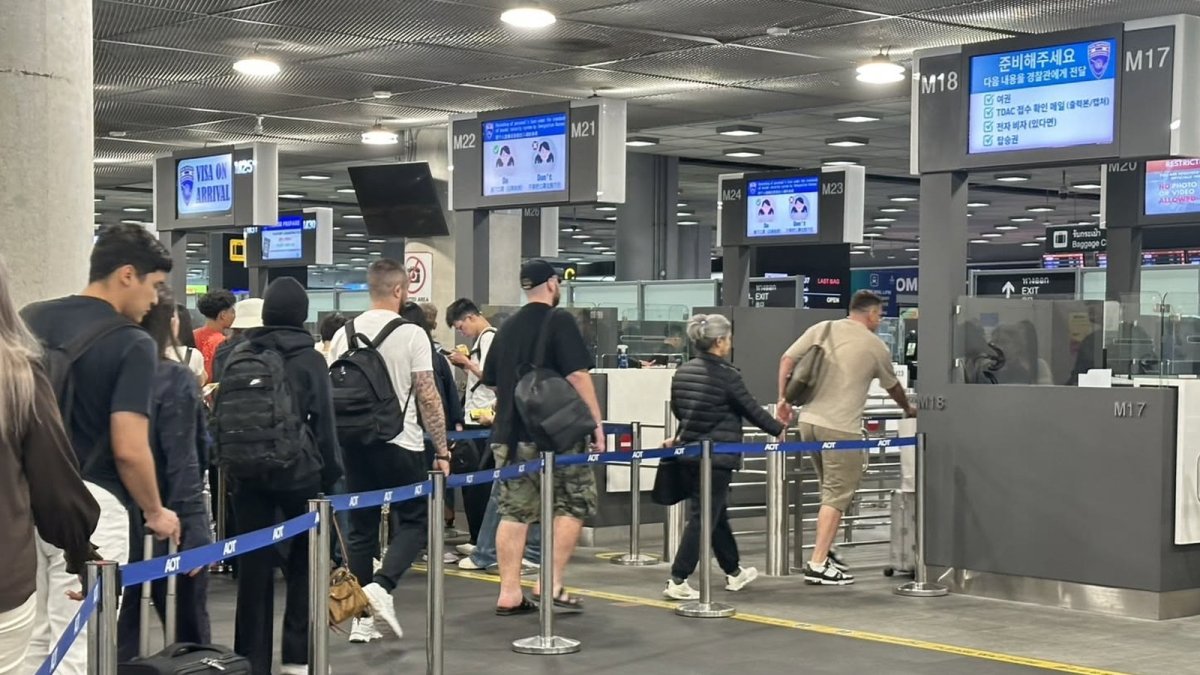
Suvarnabhumi Airport is preparing to welcome the world with wider arms. In a significant move announced this week, the airport will expand its automated passport control gates, known as Auto Gates, to travelers from 31 additional nationalities by the end of August. The decision, confirmed following a high-level inspection on Monday, promises to reshape the arrival experience for millions of visitors and marks a critical step in Thailand’s ongoing effort to cement its status as Southeast Asia’s premier aviation gateway.
The announcement came after Deputy Prime Minister and Minister of Commerce Suphajee Suthumpun, alongside Tourism Minister Surasak Phancharoenworakul, senior transport officials, and airport executives, toured the bustling terminals to address overcrowding and streamline passenger flow. Deputy government spokesperson Lalida Periswiwatana detailed the expansion, explaining that the selection of the 31 nationalities was based on rigorous criteria, including entry-refusal statistics, the Henley Passport Index, and comprehensive legal and security considerations. The Immigration Bureau has approved the expansion in principle, and with final signatures pending, the system is expected to go live by the end of August.
A Smoother Landing for International Visitors
For Thai readers and regional travelers alike, this development signals a profound shift in how the kingdom greets its guests. Currently, Suvarnabhumi handles up to 190,000 passengers daily during peak travel season, with international arrivals averaging around 70,000 people each day. The busiest window, between 1:00 PM and 5:00 PM, sees 5,000 to 6,000 passengers per hour entering immigration areas, a volume that severely tests the processing capacity of manned counters. The expansion is expected to add approximately 6.5 million potential Auto Gate users annually, plus an additional 900,000 long-term visa holders, dramatically easing the pressure on immigration officers during these critical hours.
At full capacity, officials project that 53% of arriving passengers will be able to use the automated gates, while the remaining 47% will continue through traditional immigration desks. This shift is not merely a matter of convenience; it is a strategic economic imperative. The arrival experience at the airport is the first link in a wider tourism chain that encompasses airlines, ground transport, hotels, restaurants, and retail. A seamless entry process directly influences a visitor’s first impression and their willingness to spend, making this upgrade a foundational investment in Thailand’s national economy.
Phased Rollout and Biometric Integration
The rollout will proceed in phases, contingent upon equipment readiness, biometric database integration, and security checks. Travelers who have previously entered Thailand and already have their biometric information stored in the system will be the first to benefit from the new gates. First-time visitors, however, will still need to have their biometric data collected at manned immigration desks before they can utilize the automated system on subsequent trips. This pragmatic approach ensures that security remains paramount while gradually expanding the convenience to a broader demographic of travelers.
The Immigration Bureau’s approval in principle marks a significant bureaucratic milestone, but the technical work is just beginning. Airport authorities are coordinating with technology partners to ensure that the biometric databases are fully synchronized and that the new gates are calibrated to handle the diverse documentation of 31 new nationalities. The phased approach allows for real-time troubleshooting and minimizes the risk of system overload, ensuring that the expansion does not compromise the integrity of Thailand’s border security.
Immediate Measures to Tackle Peak-Hour Congestion
Beyond the Auto Gate expansion, Monday’s inspection yielded a suite of immediate measures designed to alleviate congestion in the short term. The airport and the Immigration Bureau will make full use of all three immigration zones, actively redirecting passengers to less congested areas and opening central hall space to disperse crowds. Additional officers will be deployed during peak flight periods, with staffing levels meticulously matched to flight arrival patterns. These tactical adjustments are intended to provide immediate relief while the more comprehensive Auto Gate system comes online.
Officials also discussed expanding waiting areas and facilities for early arrivals, creating dedicated spaces for transit passengers, and pursuing longer-term airport space development to support aviation-related business growth. Deputy Prime Minister Suphajee stated that immediate issues would be handled directly by the relevant agencies, while matters requiring legislative changes or long-term investment would be escalated to the government level for strategic planning. This dual-track approach demonstrates a commitment to both quick wins and sustainable infrastructure development.
Protecting Travelers from TDAC Scams
In a parallel advisory, the government issued an urgent warning regarding the Thailand Digital Arrival Card (TDAC). As the system becomes mandatory for all foreign visitors, unscrupulous third-party websites have emerged, charging unauthorized processing fees or posing significant identity theft risks. The Ministry of Tourism and Sports, alongside airline partners, will intensify pre-departure communications to ensure travelers complete their TDAC only through official government channels. The government emphasized that the TDAC via the official portal is entirely free, and any website charging a fee is fraudulent.
This advisory is particularly crucial for regional travelers from neighboring ASEAN countries who may be less familiar with the official procedures. The ministry’s proactive stance aims to protect tourists from financial exploitation and data breaches, which could otherwise tarnish Thailand’s reputation as a safe and welcoming destination. By partnering with airlines to disseminate accurate information before departure, the government is closing the information gap that scammers exploit.
Strengthening Thailand’s Position as a Regional Aviation Hub
The broader implications of this expansion extend far beyond the immigration hall. By streamlining the arrival process, Thailand is reinforcing its competitive edge against regional rivals like Singapore’s Changi Airport and Kuala Lumpur International Airport. The ability to process a diverse array of international passengers efficiently is a key metric for airlines when choosing hub cities. Suvarnabhumi’s enhanced capacity to handle high volumes of travelers with minimal friction makes it a more attractive proposition for long-haul carriers and budget airlines alike.
For the ASEAN community, this development is a bellwether for regional integration. As intra-ASEAN travel continues to grow, the ease of movement across borders becomes a critical driver of economic cooperation and cultural exchange. Thailand’s investment in automated border control technology sets a precedent for neighboring countries, demonstrating a commitment to modernizing infrastructure in line with global standards. The ripple effects will be felt across the region, encouraging other nations to follow suit and fostering a more connected Southeast Asia.
The expansion of the Auto Gate system is also a testament to the Thai government’s responsiveness to the tourism sector’s needs. With the industry rebounding strongly post-pandemic, the pressure on key entry points like Suvarnabhumi has intensified. By proactively addressing these bottlenecks, the government is signaling that tourism remains a top national priority, deserving of both immediate attention and long-term strategic investment. The arrival experience, once a source of frustration for many, is being transformed into a hallmark of Thai hospitality and efficiency.
As the end of August approaches, all eyes will be on Suvarnabhumi to see the seamless integration of the new nationalities into the Auto Gate system. The promise of shorter queues and faster processing is a welcome relief for frequent flyers and a compelling reason for first-time visitors to choose Thailand. For the millions of travelers who pass through the airport each year, this expansion represents more than just a technological upgrade; it is a warm, efficient, and secure welcome to the Land of Smiles.
The government’s holistic approach, combining immediate operational tweaks with long-term infrastructure planning, ensures that Suvarnabhumi remains not only a gateway to Thailand but a vital engine for the nation’s economic growth. By prioritizing the passenger experience, Thailand is investing in its most valuable asset: the goodwill of the global traveler. This week’s announcement is a clear signal that the kingdom is ready to welcome the world with open arms and a streamlined passport control process.
By Ann Srisawat, Staff Writer
This article was produced with AI-assisted research and editorial support. Sources: Khaosod English, Xinhua, The Nation Thailand.
What's Your Reaction?
 Like
0
Like
0
 Dislike
0
Dislike
0
 Love
0
Love
0
 Funny
0
Funny
0
 Wow
0
Wow
0
 Sad
0
Sad
0
 Angry
0
Angry
0

Southeast Asia Correspondent at Global1.News. Based in Bangkok, covering Thai and Southeast Asian politics, economy, technology, and culture. Deep regional perspective on one of the world's most dynamic regions.















Comments (0)