
Senate Declares First Hostile Witness in Sara Duterte Trial as P125M Cash Transfer Revealed
In a recent ANC 24/7 report, the Senate impeachment court entered a new and dramatic phase in the trial of Vice President Sara Duterte, declaring its first hostile witness and hearing explosive testimony about millions in cash handed to a security officer.
In a recent ANC 24/7 report, the Senate impeachment court entered a new and dramatic phase in the trial of Vice President Sara Duterte, declaring its first hostile witness and hearing explosive testimony about millions in cash handed to a security officer. For ordinary Filipinos watching from their living rooms in Quezon City or listening on the radio in Davao, the proceedings are no longer just about legal technicalities — they are about whether public money meant for confidential operations was handled with accountability. The stakes could not be higher, as the case now hinges on the word of a former disbursing officer against the sitting Vice President.
Senate Impeachment Court Declares First Hostile Witness in VP Sara Duterte Trial as P125 Million Cash Transfer Testimony Emerges
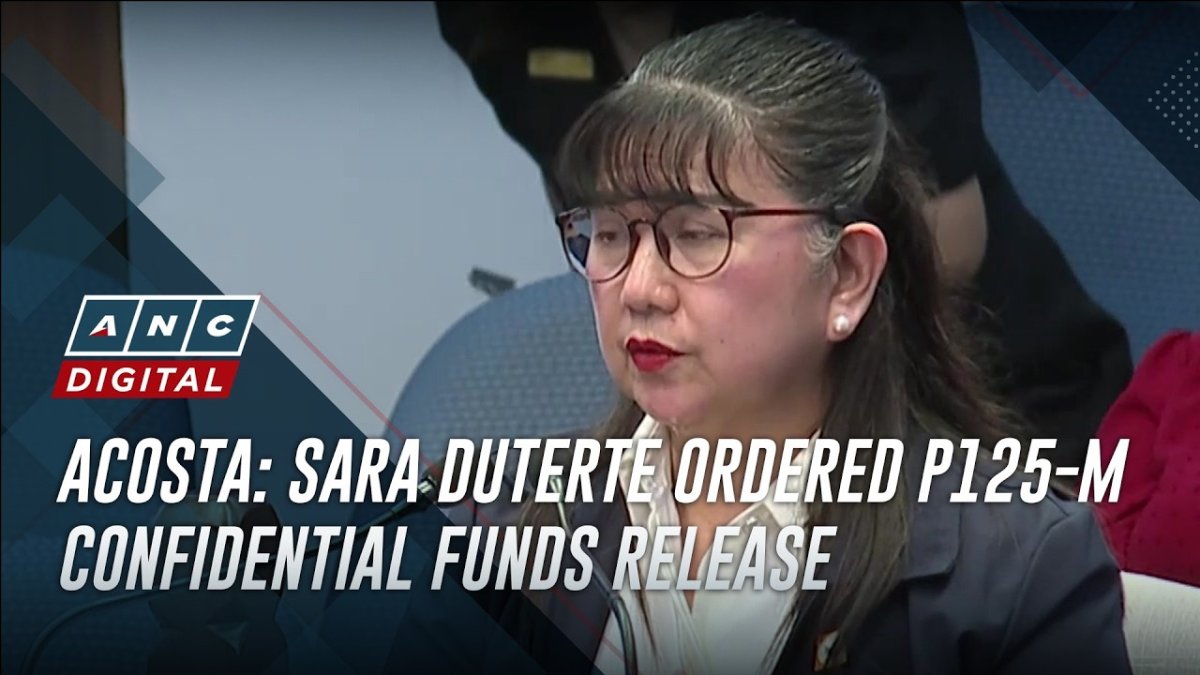
Manila, Philippines – August 18, 2026 — The Senate impeachment court on Monday, August 17, declared Gina Acosta, the former special disbursing officer (SDO) of the Office of the Vice President (OVP), a hostile witness under Rule 132, Section 13 of the Revised Rules of Evidence. Presiding Officer Sen. Francis "Chiz" Escudero made the ruling on Day 16 of the trial, a decision that fundamentally shifts the prosecution's ability to extract testimony from a key insider who once controlled the flow of millions in confidential funds.
The Hostile Witness Ruling
Escudero's ruling did not come lightly. The Presiding Officer cited the argument of private prosecutor Amando Virgil Ligutan that Acosta's counter-affidavit filed before the Office of the Ombudsman took a position contrary to the prosecution's case — specifically, that Duterte complied with rules on confidential funds. This contradiction, Escudero reasoned, justified treating Acosta as a witness who may be adverse to the party calling her.
Acosta herself confirmed the delicate nature of her position when asked about her employment status. "Wala na po ako sa OVP [kung wala na sa OVP si VP Sara]," she said, admitting that her job is co-terminus with the Vice President's tenure. This admission — that she would lose her OVP post if Duterte were removed — underscored the personal stakes for Acosta, who currently serves as Vice Presidential Staff Officer VI at the OVP.
The ruling allows Ligutan to ask Acosta leading questions, a significant tactical advantage in Philippine criminal procedure. However, Escudero stressed that misleading questions remain strictly prohibited, drawing a clear line between aggressive examination and outright manipulation of testimony. Defense counsel Atty. Lindon Bacquel objected to questions about Acosta's previous service as SDO of Davao City, arguing that Davao City confidential funds were not part of the impeachment allegations. Ligutan countered that her Davao City experience was precisely what led Duterte to bring her to the OVP in the first place.
The P125 Million Testimony
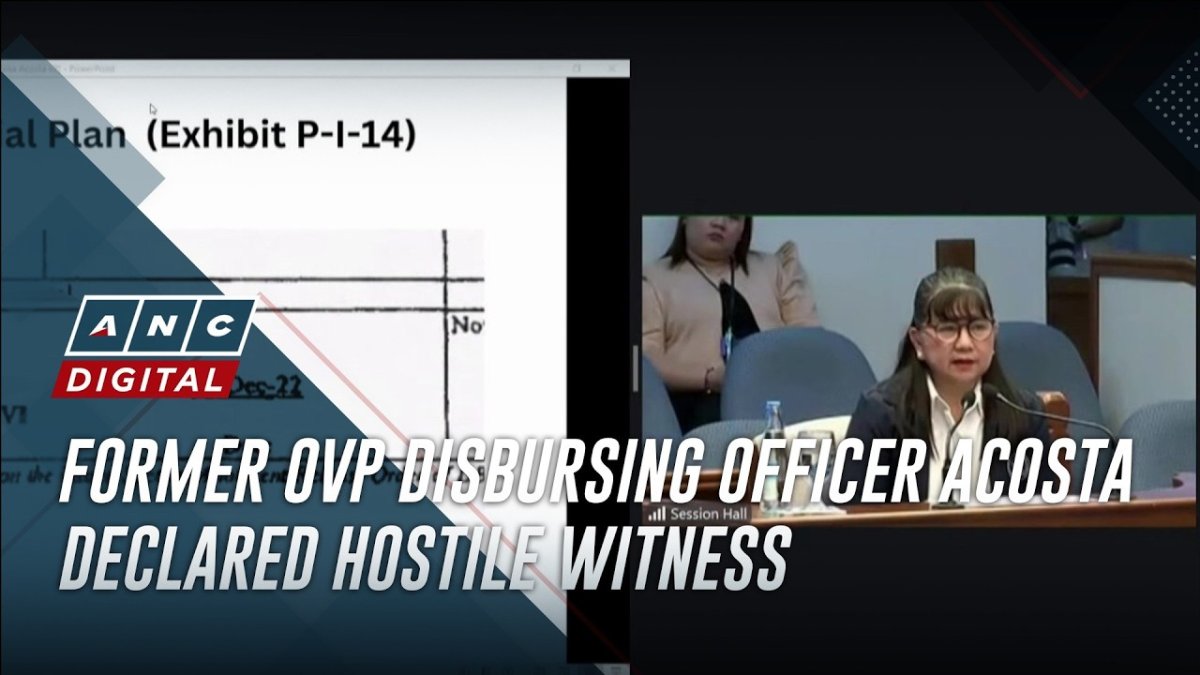
The heart of Acosta's testimony centered on a staggering sum: P125 million in cash. Acosta testified that Vice President Sara Duterte, as head of agency, personally ordered her to hand this amount to Col. Raymund Lachica, then-head of the Vice Presidential Security Group (VPSG), whom Duterte designated as security officer. Her quote was direct and damning: "Ang nag-utos po sa akin na i-release ang pera na 125 M sa security officer na si Colonel Lachica ay si Ma'am Sara Duterte" (The one who ordered me to release the P125 million to security officer Colonel Lachica was Ma'am Sara Duterte).
Escudero himself probed the logic of this arrangement, asking Acosta whether it is a security officer's job to spend confidential funds. Her answer was a simple "no." She further testified that she could not find any provision in Joint Circular 2015-01 allowing a security officer to disburse such funds. Under the joint circular, security officers designated by heads of agencies handle intelligence reports and preparation of accomplishment reports — not the physical handling of cash.
Acosta confirmed that Lachica disbursed the funds as the "expert" on confidential activities, explaining that she has "no access to national security information," which is why she did not directly pay recipients. This testimony echoes her statements at a House inquiry in November 2024, where she said it was Duterte who gave her the go-signal to turn over P125 million in OVP confidential funds in 2022 to Lachica. "May approval po kay Ma'am Inday Sara" (There's approval from Ma'am Inday Sara), she said then, adding that she trusted Lachica because her OVP head trusted him.
What This Means for the Impeachment Case
The hostile witness ruling is a pivotal moment for the prosecution, which has struggled to build a cohesive narrative around Article I of the impeachment case. That article accuses Duterte of systematic misappropriation and irregular liquidation of confidential funds amounting to P500 million released to the OVP and P112.5 million released to the Department of Education during her tenure as Education secretary — a total of P612.5 million.
The prosecution intends to establish that Duterte instructed Acosta to encash P500 million in OVP confidential funds in four tranches from December 2022 to July 2023 and turn over the cash to an OVP security officer. They argue the funds were not properly liquidated and that disbursement violated Joint Circular 2015-01, which governs confidential and intelligence funds. Specifically, Section 6.6.1 of the joint circular provides that cash advances for confidential or intelligence funds should be drawn by duly designated and bonded SDOs or heads of agency for the implementation of a program, activity, and project chargeable to the corresponding fund, upon approval of the head of agency. It further states that under no circumstance shall it be used for liquidation of the previous cash advance or be transferred from one accountable officer to another.
For the defense, the counter-affidavit filed by Acosta before the Ombudsman remains a key piece of evidence. In that document, she reportedly took the position that Duterte complied with rules on confidential funds — a stance that now directly contradicts her live testimony. The defense will likely hammer on this inconsistency, arguing that Acosta's hostile witness status is a product of prosecutorial pressure rather than a genuine change of heart.
The stakes for VP Duterte are existential. A conviction on Article I alone could lead to her removal from office and perpetual disqualification from holding public office. For a political figure who has repeatedly signaled presidential ambitions, the outcome of this trial will shape the landscape of Philippine politics for years to come.
Weather Postpones the Trial
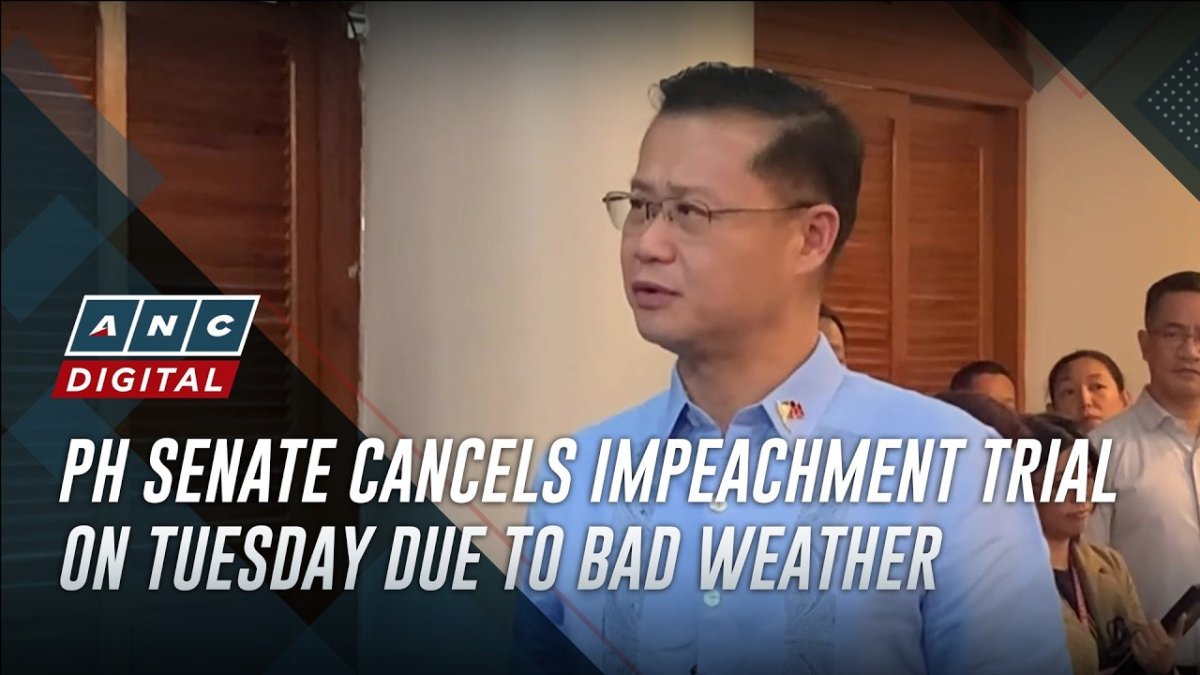
In a reminder that the Philippines remains at the mercy of its tropical climate, the Senate impeachment court postponed Tuesday's session on Monday, August 17, citing the forecast of heavy rain and flooding due to the southwest monsoon, or habagat. This is the second time the impeachment court has postponed a trial session due to bad weather; the first was Monday, August 10.
The Senate also cut short Monday's trial to 2 p.m. and the Senate session to 4 p.m. as the state weather bureau PAGASA issued heavy rainfall advisories. The impact of the habagat was felt across Metro Manila and nearby provinces, with a red rainfall warning raised over the capital region, suspending classes in some areas. In Pampanga, a hospital evacuated patients as floodwaters rose, a stark reminder that while senators deliberate on impeachment, ordinary Filipinos are grappling with the immediate realities of climate and infrastructure.
Impact on Filipinos
For the average Filipino, this trial is more than a political spectacle. It is a test of whether public officials can be held accountable for the handling of taxpayer money. The P612.5 million at the center of Article I represents funds that could have built classrooms, equipped rural health units, or supported livelihood programs for marginalized communities. Instead, the prosecution alleges, it was encashed in tranches and handed over in cash to a security officer.
The timing of the weather postponement also highlights the competing demands on public attention. While the nation's leaders are focused on the impeachment trial, the habagat is flooding barangays, displacing families, and disrupting livelihoods. The Senate's decision to cut short its session reflects a recognition that governance must continue even amid constitutional crises, but it also underscores the fragility of institutional processes in a country that faces both political and climate challenges simultaneously.
Public trust in government institutions hangs in the balance. The Senate impeachment court, composed of senators who will also vote on the verdict, must demonstrate that it can conduct a fair and transparent trial. The hostile witness ruling, while procedurally sound, will be scrutinized by both supporters and critics of the Vice President. For many Filipinos, the question is not just whether Duterte is guilty, but whether the process itself is credible.
What to Watch For
As the trial resumes, likely later this week once the weather clears, the prosecution will continue its examination of Acosta under the hostile witness framework. Expect Ligutan to press her on the specifics of the four tranches of cash releases, the documentation (or lack thereof) for each disbursement, and her interactions with Lachica and Duterte. The defense, led by Bacquel, will seek to impeach her credibility by highlighting the contradictions between her Ombudsman counter-affidavit and her current testimony.
More witnesses are expected to follow, including possibly other OVP personnel and officials from the Department of Education. The prosecution's case on Article I will likely hinge on establishing a pattern of behavior — that the alleged misappropriation was not an isolated incident but a systematic practice. The defense, meanwhile, will argue that confidential funds are by nature opaque and that the Vice President acted within her discretion as head of agency.
The timeline for the trial remains uncertain. With weather postponements and the complexity of the evidence, the Senate impeachment court could be deliberating for weeks or even months. Each delay gives both sides time to refine their arguments, but it also prolongs the political uncertainty that hangs over the country.
The coming days will reveal whether the prosecution can convert Acosta's testimony into a compelling case for conviction. For now, the image of a former disbursing officer describing how she handed over P125 million in cash to a security officer on the orders of the Vice President is a powerful one — one that will resonate in the halls of power and in the sari-sari stores and jeepney terminals where Filipinos discuss the news of the day. The trial of Sara Duterte is not just a legal proceeding; it is a moment of reckoning for a nation that demands answers about how its money is spent.
By Bella Reyes, Staff Writer
This article was produced with AI-assisted research and editorial support. Reporting is based on sources cited in the article.
What's Your Reaction?
 Like
0
Like
0
 Dislike
0
Dislike
0
 Love
0
Love
0
 Funny
0
Funny
0
 Wow
0
Wow
0
 Sad
0
Sad
0
 Angry
0
Angry
0

Philippines/Southeast Asia Correspondent at Global1.News. Manila-based journalist covering Philippine politics, environment, maritime security, and social issues. Passionate about marine conservation and the communities protecting the Philippines' natural heritage.











Comments (0)