
Shoppers told supermarket prices will rise this year due to extreme heat
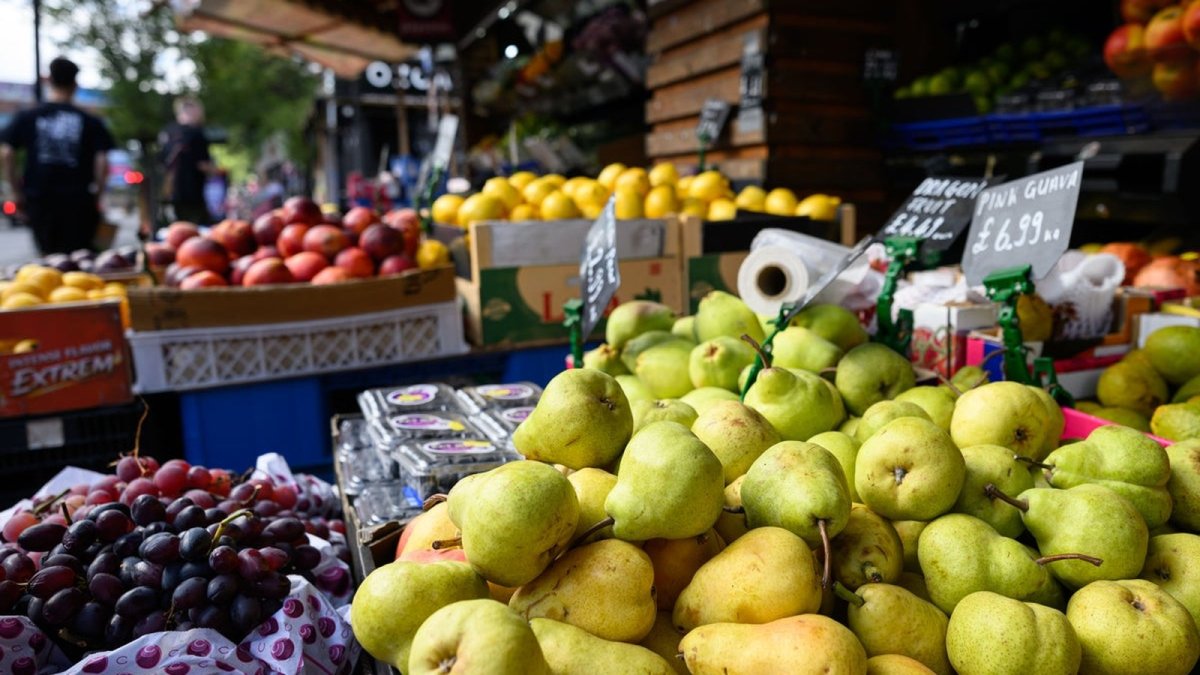
Shoppers told supermarket prices will rise this year due to extreme heat A warning from Westminster: the bill comes due British shoppers have been put on notice. The chairman of the House of Commons' Environment, Food and Rural Affairs Committee — the select committee that scrutinises the Department for Environment, Food and Rural Affairs — has warned that this summer's extreme heat and drought will feed through into higher supermarket prices before the year is out.
Shoppers told supermarket prices will rise this year due to extreme heat
A warning from Westminster: the bill comes due
British shoppers have been put on notice. The chairman of the House of Commons' Environment, Food and Rural Affairs Committee — the select committee that scrutinises the Department for Environment, Food and Rural Affairs — has warned that this summer's extreme heat and drought will feed through into higher supermarket prices before the year is out.
Alistair Carmichael, the Liberal Democrat MP for Orkney and Shetland, told BBC Radio 4's The World At One that consumers should expect to feel the impact within six to twelve months, as the country's wheat and barley harvests come in dramatically below expectations and vegetable producers grow increasingly vocal in their concerns.
"The problems for farmers today will be the problems for consumers in six or 12 months' time because you see massively decreased yield for wheat and for barley," Mr Carmichael said.
The arithmetic is uncompromising. "If you decrease the supply but you maintain the demand, then you're going to pick the price up," he said, predicting "further food price inflation shocks for everybody come the later part of the year."
The warning arrives at a moment of acute household strain. Families already grappling with elevated food prices, soaring energy bills and rising mortgage costs now face the prospect of a fresh inflationary jolt from the most basic of quarters: the weather.
Harvests wither, prices follow
The scale of the crisis is becoming starker by the day. England and Wales endured their driest July since records began, while the south of England chalked up its driest month ever. Half of England and all of Wales are currently experiencing drought, with the National Drought Group — the body that unites the Environment Agency, water companies and farming representatives — expected to make further announcements when it meets this week.
Analysis from the Energy and Climate Intelligence Unit (ECIU) last week estimated that the hot, dry conditions that have plagued spring and summer could cut the country's cereals and oilseed harvest by an estimated 2.5 million tonnes compared with earlier projections. That is no marginal shortfall. The reduction will ripple through the supply chain, from the price of a loaf of bread to the cost of animal feed, and onwards to the meat and dairy on Britain's dinner tables.
The timing is particularly damaging. With harvests already under pressure from rising input costs, this summer's drought has compounded a sector already operating on the thinnest of margins. Consumers, who have grown accustomed to supermarkets absorbing shocks through aggressive price competition, are unlikely to be shielded this time. When the raw commodities themselves are scarce, the retail buffer disappears.
No refuge in Europe
The option of simply importing our way out of trouble has been closed off. Mr Carmichael cautioned that Britain cannot look to continental Europe as a safety net this year, because the same heat that has scorched domestic farmland has blighted the continent with equal severity.
"We can't look to some of the alternative markets that we might have done in continental Europe in recent years because they are experiencing the same problems that we are," he said.
Huge wildfires across France and Spain have compounded the damage, destroying crops and disrupting agricultural regions that would ordinarily be exporting to British retailers. The result is a synchronous supply shock across much of the northern hemisphere's breadbaskets — precisely the scenario that import-reliant nations fear most.
Tom Bradshaw, president of the National Farmers' Union, drove the point home. "While retailers are used to managing variations in global supply, we're not going to be able to trade our way through this potential crisis," he said.
That is a striking admission from the country's most senior farming voice. For decades, Britain has leaned on international markets to smooth over domestic shortfalls. The current situation has exposed the fragility of that assumption, and the peril of depending on a global food system that is itself buckling under climate extremes.
Farming on the frontline
For the agricultural community, the present is already deeply painful. Mr Bradshaw said conditions amounted to "one of the most severe droughts many farmers and growers have lived through." Harvest yields are looking poor; fruit and vegetable growers are struggling to secure adequate water for irrigation; and livestock farmers are being forced to use grass cut in the spring — normally reserved as winter feed for cattle — because there is almost nothing growing in the fields now.
The livestock dimension is especially worrying. Winter feed is a critical constraint for British herds and flocks. If animals cannot be properly fed, the consequences will be felt in the meat and dairy supply chain for years to come, not merely months.
"The picture is even worse when we look across Europe to many of the countries we import food from, with huge wildfires across France and Spain," Mr Bradshaw observed.
The National Farmers' Union's language has been striking for its urgency. The president's warning that Britain "can't produce food without water" was blunt, as was his insistence that food production has been "taken for granted for too long." His rallying cry — that the country must create "a more resilient food system to feed the 29 million households across the country" — frames the crisis not as a weather anomaly but as a systemic failure of national priority-setting.
Water, reservoirs and the infrastructure gap
Beyond the immediate crisis, Mr Bradshaw argued that the summer should force a fundamental rethink of how Britain manages its most essential resource. He called for urgent action to "bolster our water security" and insisted that food security "be treated as a vital part of our nation's critical infrastructure" — a phrase deliberately calculated to place farming on the same footing as energy and national defence.
Central to that ambition, he said, would be fast-tracking investment and planning changes to enable the construction of new reservoirs on farms. He also called for a "common sense approach to water use," with access prioritised for livestock — particularly poultry and pigs — and more flexible abstraction rules so that farmers can draw water for irrigation when crops need it, rather than being constrained by rigid and outdated paperwork.
The ambition is straightforward: to grow more of the food Britain can and should produce itself, particularly fruit and vegetables. The policy questions, however, run much deeper than any single drought response. The planning system — long the graveyard of British infrastructure ambition — will be central to whether new reservoirs are ever built. The abstraction regime, governed by a licensing system that dates back decades, will need wholesale modernisation. And the water companies, already under fire for leakage and environmental failures, will face renewed scrutiny over their stewardship of supply.
If implemented, these are changes that would reshape the landscape of British agriculture and water management for a generation. The challenge is whether the political will survives contact with the Whitehall machinery.
A question of national resilience
Mr Carmichael was candid about what lies ahead. His timeline is short: six to twelve months, at the checkout till. And while the drought announcements expected this week will focus on the immediate management of water resources, the more profound issue is whether the United Kingdom is prepared for a future in which summers like this one are no longer anomalies but the emerging norm.
For consumers, the message is stark. Britain's harvests have been cut, Europe cannot ride to the rescue, and food prices are heading in one direction. The era of cheap, abundant and freely traded food may not be over, but it is certainly under threat.
The challenge for the government is whether it can convert this moment of crisis into a genuine reappraisal of how the country grows, imports and values its food. The alternative — tinkering at the margins while the climate tightens its grip — is not a strategy. It is an abdication.
By Erica Thornton, Staff Writer
This article was produced with AI-assisted research and editorial support. Sources: The Independent.
What's Your Reaction?
 Like
0
Like
0
 Dislike
0
Dislike
0
 Love
0
Love
0
 Funny
0
Funny
0
 Wow
0
Wow
0
 Sad
0
Sad
0
 Angry
0
Angry
0

US Politics and Policy Correspondent at Global1.News. Based in Washington DC, covering American politics, policy, elections, and the courts. Knows how the system works and tells you what it actually means.














Comments (0)