
Suvarnabhumi says food prices are controlled, doughnut + Coke set just 50 baht
In the bustling heart of Thailand's busiest international gateway, a familiar debate has resurfaced: just how much should a meal cost inside Suvarnabhumi Airport? This week, Airports of Thailand (AOT) stepped forward with a firm answer, insisting that food prices at the international passe
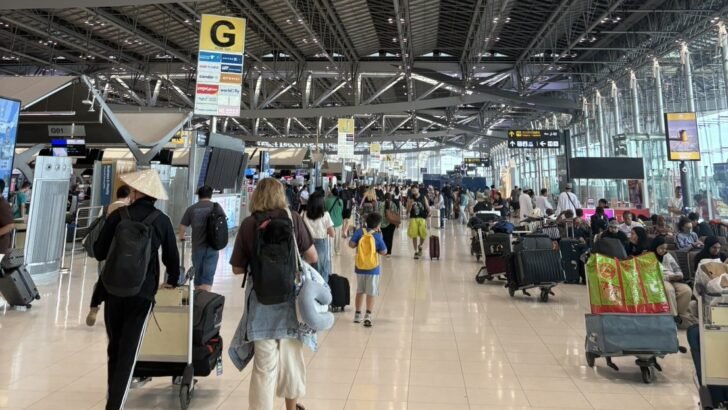
Airport Responds to Passenger Complaints Over Food Prices
In the bustling heart of Thailand's busiest international gateway, a familiar debate has resurfaced: just how much should a meal cost inside Suvarnabhumi Airport? This week, Airports of Thailand (AOT) stepped forward with a firm answer, insisting that food prices at the international passenger terminal are indeed controlled, with restaurants and beverage outlets required to keep their prices within 20 percent of normal market rates.
The clarification arrived after Khaosod English published a post on 9 August asking travellers whether food at Suvarnabhumi Airport was too expensive. The social media query struck a chord, drawing complaints from passengers who said dining inside the international departure terminal cost significantly more than similar items found outside the airport. Some went further, claiming certain prices were several times higher than what one would pay at a typical Bangkok restaurant or street stall.
For Thai travellers accustomed to the vibrant food culture of their homeland — where a hearty plate of pad kaprao can cost 50 baht on almost any soi — the airport dining experience has long been a point of gentle frustration. The response from AOT acknowledges this tension between international service standards and local expectations of fair pricing.
Inside the Price Control System at Suvarnabhumi
AOT explained that Suvarnabhumi Airport operates a wide range of restaurants and beverage outlets, with prices varying according to the type of establishment and menu selection. This variety, the airport said, gives passengers and other airport users a spectrum of choices based on their individual preferences and budgets — from quick bites to more elaborate meals before a long-haul flight.
The key mechanism behind this system is the concession agreement between AOT and King Power Suvarnabhumi Co., Ltd. (KPS), which holds the concession to manage commercial activities inside the passenger terminal. Under this arrangement, restaurants and beverage outlets operating under KPS are bound by contractual conditions that require them to control prices so they do not exceed 20 percent above standard market prices.
But what exactly constitutes the "market price" benchmark? This is where the details matter. AOT said the benchmark is based on regular selling prices at department stores and leading hotels in Bangkok, rather than prices at restaurants located outside the airport generally. This distinction is significant — it means the comparison point is not the local street vendor or neighbourhood eatery, but rather established commercial venues in the capital.
The airport also noted that AOT receives pricing information from KPS and checks the submitted prices every month to ensure compliance with the contractual conditions. This monthly review process is designed to keep operators accountable and maintain the integrity of the pricing framework.
The 50-Baht Food Guide: Budget Options Take Centre Stage
Perhaps the most reassuring news for cost-conscious travellers comes in the form of the "Suvarnabhumi Food Guide" program for 2026-27. Under this initiative, KPS has introduced budget food options designed to make dining at the airport more accessible to a wider range of passengers.
The program offers food sets starting at just 50 baht — a price point that aligns closely with what many Thai travellers would expect to pay for a casual meal in Bangkok. Among the featured options is a Krispy Kreme doughnut set that includes one can of soft drink, offering a familiar international brand at a budget-friendly price.
For those seeking something more substantial, the guide also features a Bonchon chicken set with sundubu soup, Japanese rice and a 600-milliliter bottle of Purra mineral water for 280 baht. This combination provides a fuller meal for travellers who want something heartier before their flight, while still remaining within reasonable bounds compared to downtown Bangkok restaurant prices.
The introduction of these curated budget sets reflects a broader awareness among airport operators that passengers increasingly compare prices against their everyday experiences. For Thai families travelling abroad, the ability to purchase a simple meal at a fair price before boarding can significantly reduce the stress of air travel.
Magic Food Point: A 24-Hour Haven for Frugal Travellers
Beyond the new Food Guide program, AOT pointed to Magic Food Point as another enduring budget option at Suvarnabhumi Airport. Located on the first floor of the passenger terminal, this 24-hour food court has long been a favourite among airport staff, budget-conscious travellers and those with early morning or late night flights.
Prices at Magic Food Point start at just 30 baht, making it one of the most affordable dining options within the airport complex. The food court operates around the clock, offering a variety of food and drinks to accommodate the constant flow of passengers passing through one of Southeast Asia's busiest aviation hubs.
For Thai travellers, Magic Food Point holds a special place in the airport experience. It evokes the atmosphere of a traditional Thai food court — the kind found in shopping malls and office buildings across Bangkok — where one can find familiar dishes such as boat noodles, fried rice, grilled pork skewers and refreshing Thai desserts without breaking the bank.
The contrast between Magic Food Point and the higher-end restaurants in the departure terminal illustrates the airport's strategy of offering options across price ranges. Passengers with generous expense accounts or those celebrating special occasions can indulge in premium dining, while those watching their budgets have accessible alternatives.
Why This Matters for Thai Travellers and the Region
For the millions of Thai passengers who pass through Suvarnabhumi each year, food pricing at the airport is more than a matter of convenience — it touches on deeply held cultural values around hospitality and fair dealing. In Thai culture, the phrase "gin khao reu yang" (have you eaten yet?) reflects the central role that food plays in social interactions, and the expectation that a meal should be both satisfying and reasonably priced.
The airport's response also carries significance for Thailand's position as a regional aviation hub within the ASEAN community. Suvarnabhumi serves as a primary gateway not only for Thailand but for neighbouring countries including Cambodia, Laos, Myanmar and Vietnam. Travellers from across the region pass through its terminals, and their perceptions of Thai hospitality — including the fairness of airport pricing — shape broader impressions of the country.
The Tourism Authority of Thailand has long promoted the kingdom as a destination offering excellent value for money. When passengers encounter inflated prices at the airport gate, it can undermine that carefully cultivated image. Conversely, transparent pricing and affordable food options reinforce the message that Thailand welcomes visitors with genuine warmth and fairness.
Balancing International Standards with Passenger Expectations
AOT's response acknowledged the concerns raised by passengers and stated that their comments and suggestions would be taken into consideration as part of ongoing efforts to improve services. This represents a notable shift toward greater responsiveness to passenger feedback — a recognition that in the age of social media, traveller experiences are shared instantly across platforms and can influence the choices of millions.
The airport also said it would coordinate with relevant operators to encourage them to take into account price, product quality and value for money, while maintaining international service standards. This dual commitment — to affordability and quality — reflects the delicate balance that airport operators must strike between commercial viability and passenger satisfaction.
It is worth noting that operating a restaurant inside an international airport involves costs that street-side establishments do not face. Rental rates at airport concessions are substantially higher, security requirements add operational overhead, and the logistics of supplying fresh ingredients in a secure environment complicate the supply chain. These factors explain, at least in part, why airport food prices tend to run higher than their counterparts in the city.
The 20 percent cap above market prices, benchmarked against department stores and leading hotels in Bangkok, acknowledges this reality while seeking to prevent excessive markups. For comparison, restaurants in many international airports around the world routinely charge two to three times street prices for similar items, making Suvarnabhumi's approach relatively consumer-friendly by global standards.
Looking Ahead: The Future of Airport Dining in Thailand
As Thailand continues to recover and grow its tourism sector, the experience of passengers at Suvarnabhumi Airport will remain a critical touchpoint. The airport's willingness to engage publicly on the issue of food prices, and to point toward specific affordable options, demonstrates an understanding that today's travellers are informed, connected and vocal about their expectations.
The Suvarnabhumi Food Guide program for 2026-27 represents a concrete step toward making the airport more accessible to all travellers, regardless of budget. By highlighting specific meal sets at transparent prices, the program gives passengers the information they need to make confident choices — a simple but powerful form of consumer protection.
For the Thai travelling public, the assurance that prices are monitored and capped offers some peace of mind. For regional travellers from across ASEAN, it reinforces the image of Suvarnabhumi as a welcoming and fair-minded gateway to the region. And for the millions of international visitors who pass through Bangkok's main airport each year, it demonstrates that Thailand's legendary hospitality extends even to the moment they step off the plane — or, in this case, the moment they sit down for a meal before boarding.
The debate over airport food prices is unlikely to disappear entirely. There will always be passengers who find airport dining expensive, and there will always be comparisons between the 50-baht meal in town and the 200-baht meal at the departure gate. But with clear pricing guidelines, monthly compliance checks and visible budget options, Suvarnabhumi Airport is making a genuine effort to address the concern — one doughnut and soft drink set at a time.
As travellers, we are often told that the journey matters as much as the destination. For the millions who pass through Suvarnabhumi each year, knowing that a fair meal awaits them on the other side of security makes the journey a little more comfortable.
This article was produced with AI-assisted research and editorial support. Sources: Khaosod English, Airports of Thailand (AOT), King Power Suvarnabhumi Co., Ltd. (KPS).
By Ann Srisawat, Staff Writer
What's Your Reaction?
 Like
0
Like
0
 Dislike
0
Dislike
0
 Love
0
Love
0
 Funny
0
Funny
0
 Wow
0
Wow
0
 Sad
0
Sad
0
 Angry
0
Angry
0

Southeast Asia Correspondent at Global1.News. Based in Bangkok, covering Thai and Southeast Asian politics, economy, technology, and culture. Deep regional perspective on one of the world's most dynamic regions.













Comments (0)