
Record 230 People Cross English Channel on a Single Small Boat
A record 230 people crossed the English Channel on a single small boat on Monday, the largest number ever to make the journey in one vessel. The Home Office condemned the smugglers' tactics as Border Force brought the overcrowded dinghy into Dover.
The English Channel has witnessed its deadliest arithmetic yet. At approximately 2:30am on Monday morning, a single 15-metre inflatable boat carrying 230 people — including more than 20 children — was guided into Dover Western Docks, shattering every previous record for a single crossing and forcing a stark question upon Westminster: if the smugglers can now pack a quarter of a thousand souls onto one flimsy craft, what exactly constitutes "control"?
The Mega-Dinghy Era: How 230 People on One Boat Exposed the Limits of Britain's Border Strategy
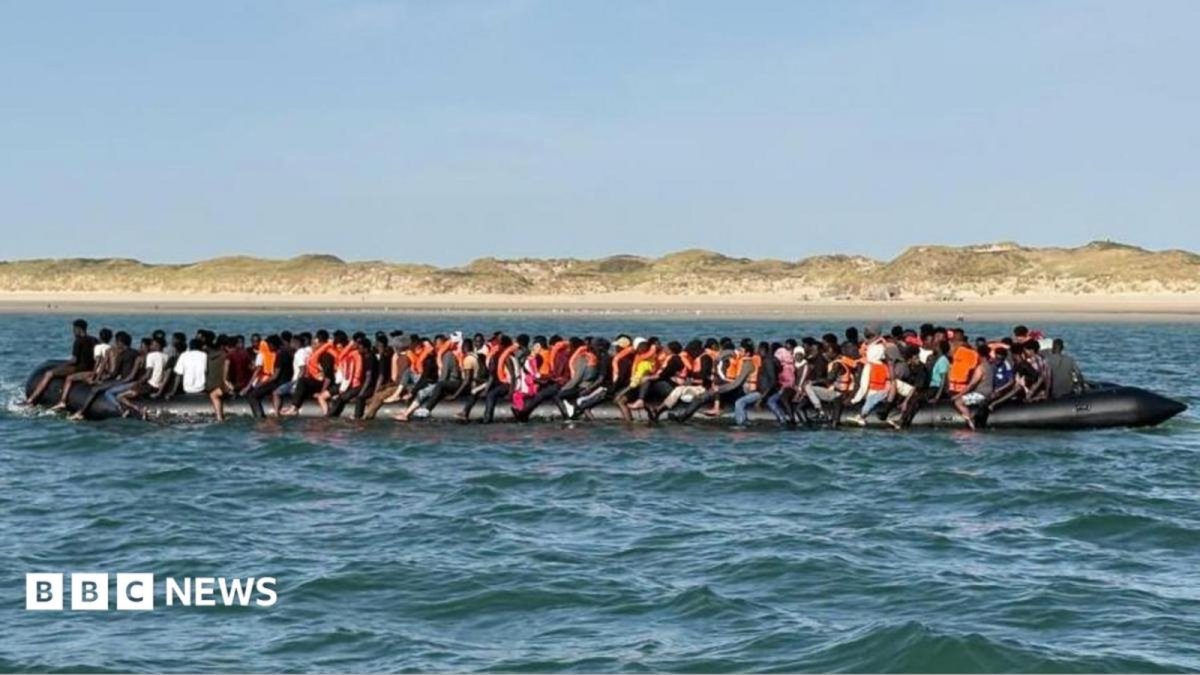
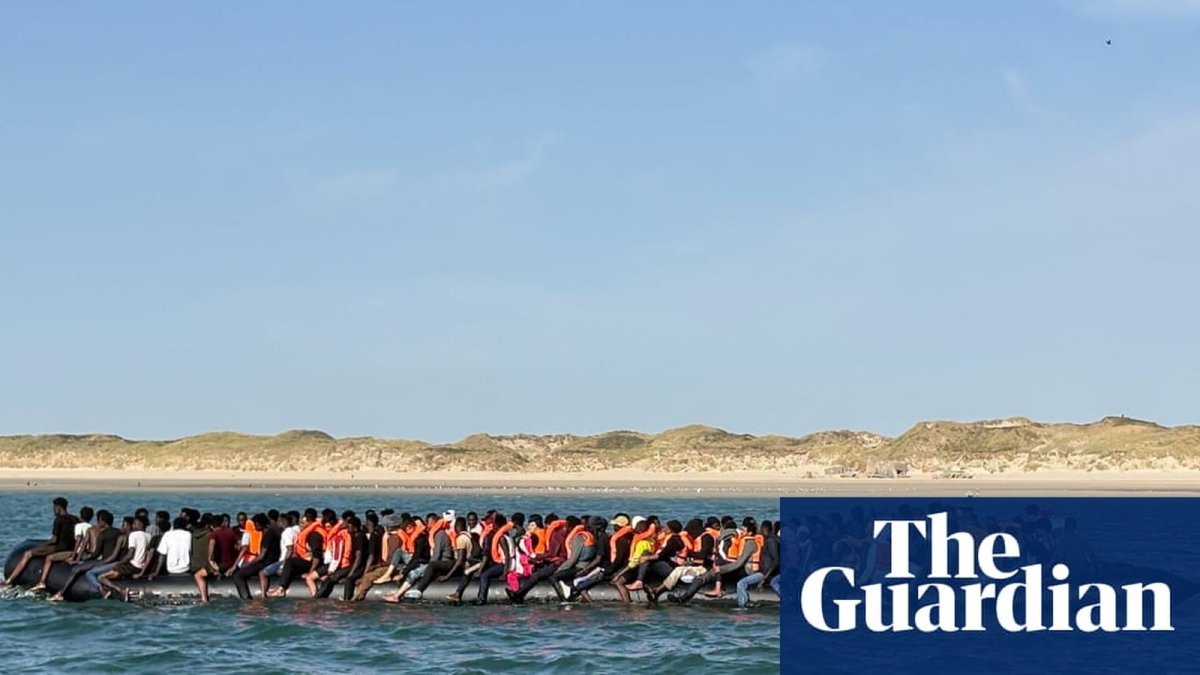
London, UK – 10 August 2026 — The vessel that arrived in Kent before dawn was not a boat in any conventional sense. It was, according to France's SNSM lifeboat service, a 49-foot inflatable "buckling" under a weight it was never designed to bear. Photographs from the scene showed passengers' legs dangling into the water as the craft lurched through one of the world's busiest shipping lanes. The SNSM, which has monitored the evolution of these crossings for years, issued a statement that carried the weary tone of professionals watching a catastrophe unfold in slow motion: "a new and sad record for the number of people crammed onto these flimsy boats... We recently passed the record of 150 people; we didn't think there could be more, but now there really are no limits anymore."
The Crossing: A Night of Near-Tragedy Off Berck-sur-Mer
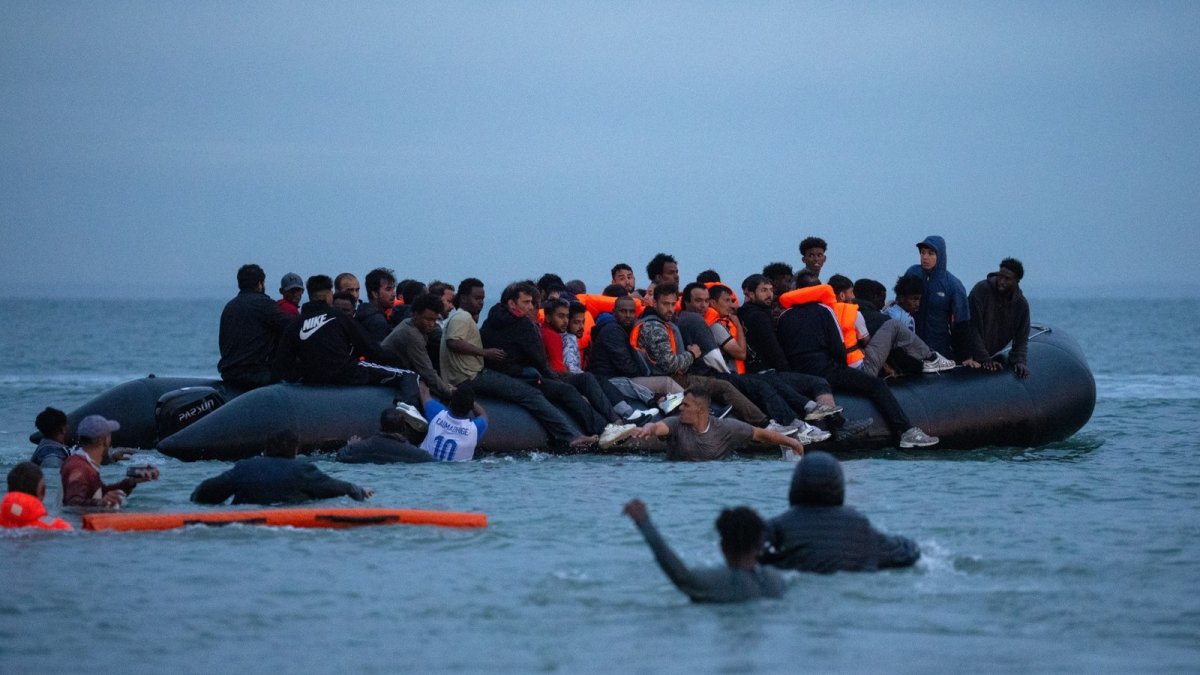
The journey began late Sunday evening on the northeastern French coast, a stretch of shoreline that has become the epicentre of a smuggling economy now operating at industrial scale. At Berck-sur-Mer beach, the boarding operation descended into chaos before the vessel even reached open water. Thirty migrants were left stranded by the incoming tide during the scramble to board and had to be brought to safety by maritime and land-based rescue services. The boat, now carrying 232 people, pressed on regardless. Two passengers on board requested assistance mid-crossing and were taken to Calais by a French Navy rescue ship, leaving 230 to complete the journey to English waters.
The SNSM's warning was unambiguous: the inflatable was structurally compromised, and the presence of over 20 children — some of them babies, as the Prime Minister's own spokesman later acknowledged — transformed a routine interception into a potential mass casualty event. The fact that all 230 arrived alive owes more to the skill of Border Force crews and the relative calm of the sea than to any safety measures implemented by the smugglers who organised the voyage.
The Mega-Dinghy Trend: Smugglers Adapting to Enforcement
This was not an isolated incident but the logical endpoint of a trend that has been building for months. French authorities confirmed that there had been nine "mega-dinghy" crossings — vessels carrying over 100 people — this year before Monday's record-breaker. On 12 July, 128 people were crammed onto a single boat; on 23 July, that number rose to 165, itself a record at the time. Last year saw 106 people on one dinghy in August and 125 in September. The progression is relentless: 7 people per boat on average in 2018, rising to 62 last year, and now an average of 67 people per vessel for boats arriving between August 2025 and August 2026 — more than double the figure from 2021.
Dr Mihnea Cuibus of Oxford University's Migration Observatory offers a counterintuitive interpretation of these numbers. The growing average, he argues, "is indicative of them struggling to secure enough boats and enough equipment." Increased enforcement on French beaches — including the seizure of 1,100 boats and engines since Labour came to power — has made it harder for smugglers to operate. But the response has been to pack more people onto fewer vessels, and to shift departure points. "More boats are leaving from Belgium as opposed to France," Cuibus notes, "a much longer journey," suggesting that the crackdown has pushed operations eastward rather than eliminating them.
Government Response: "Relentless" Rhetoric Meets Record Numbers
The Home Office moved quickly to frame Monday's arrival within its broader narrative of progress. A spokesperson said: "This latest incident demonstrates the reckless and dangerous tactics employed by the criminal gangs facilitating these crossings, who continue to put lives at risk by cramming ever greater numbers of people onto unseaworthy vessels. We are making progress, with the number of small boat crossings down this year and the lowest number recorded for the month of July since 2020. But we must go further, which is why we have signed a payment-by-results deal with the French to put 40% more boots on the ground on French beaches."
A spokesperson for Prime Minister Andy Burnham, who took office on 20 July 2026, struck a similar chord: "We've seen today some appalling images... of young babies being put into these unseaworthy craft... shocking images, and they show the reality behind the ruthless smuggling gangs that are prepared to risk human lives for profit... As the prime minister has said, we're not complacent and we are bearing down on these crossings, and that's reflected in the joint action that's prevented 47,000 attempted crossings since the election."
Burnham has vowed to be "relentless" in his approach, and Home Secretary Shabana Mahmood has repeated the government's pledge to "smash the gangs." The strategy rests on a three-pillar approach: the UK-France "one in, one out" deal announced in July 2025, a new three-year agreement signed in April 2026 committing London to pay Paris up to €766 million ($897m) to boost French law enforcement, and a separate arrangement with Germany to increase seizures of dinghies and engines "upstream." Officials claim that "unintercepted" beach landings have ended and that all boats crossing the halfway point are now met at sea by Border Force.
What the Numbers Actually Say: Progress and Its Limits
The government's statistics are real, and they are significant. As of 8 August, 14,819 people had crossed by small boat from France in 2026 — down 43% on the same period last year. The number of boats successfully crossing is down 49%. July 2026 recorded the lowest number of crossings for a July since 2020. The daily record for 2026 was set on 29 July, when 752 people arrived. On Saturday, 258 migrants arrived in four boats; on Sunday, 423 arrived in five.
But the headline reduction masks a troubling recalibration. Fewer boats are crossing, yet each one carries more people. The average of 67 per vessel represents a doubling of the 2021 figure, and Monday's 230-person crossing suggests the ceiling has not yet been reached. Last Tuesday, 173 migrants had to be rescued from a single boat that capsized after its engine caught fire; all were believed rescued, with 11 minor injuries and three taken to hospital in Boulogne. The SNSM's grim observation — "now there really are no limits anymore" — captures the dynamic perfectly: enforcement has made crossings more dangerous, not less frequent.
Local Impact: Kent on the Front Line
For the coastal communities of Kent, Monday's arrival was another chapter in a story that has reshaped the county. Dover Western Docks has become a processing hub of grim efficiency, with Border Force crews conducting what have become routine interceptions in the busiest shipping lane in the world. The human cost is measured not just in the 230 people processed on Monday but in the cumulative toll: at least 84 people died attempting to cross the Channel in 2024, according to the UN, and the Home Office found that at least 2,000 people who arrived by small boat between January and December 2025 were potential victims of human trafficking or modern slavery.
The strain on local services is compounded by the changing demographics of arrivals. Small boat arrivals made up 42% of asylum applications between April 2025 and March 2026, with Eritrea accounting for 18% of arrivals. Ten people have been sentenced for endangering lives at sea since a new law targeting small boat pilots came into force in January, but the smugglers' willingness to risk 230 lives on a single inflatable suggests that deterrence has its limits.
The Political Debate: Deterrence Versus Safe Routes
The politics of the record are as loaded as the boat itself. The Rwanda deportation scheme, championed by the previous Conservative government, was abandoned after Labour took office, and the party's present leadership has made border control a defining test of Burnham's premiership. Charities and refugee advocates offer the most fundamental critique. Hannah Marwood, head of legal access at Care4Calais, put it bluntly: "Deterrence doesn't stop people seeking safety, it just pushes them towards greater danger and greater exploitation... Politicians keep promising that another tough policy will solve this but the evidence keeps proving them wrong. If the government is serious about stopping dangerous journeys, it needs to stop recycling failed gimmicks and create safe routes to claim asylum."
NGOs report that smaller vessels have recently carried an average of 50-60 passengers, and that camps in northern France still hold people waiting to cross. The record-breaking 230-person boat was not an anomaly but a signal: the smugglers have adapted to every enforcement measure thrown at them, and their capacity for innovation appears boundless.
The Bottom Line — What Comes Next
The government's response to Monday's record will be closely watched. Burnham has promised to be "relentless," and the 47,000 prevented crossings since the election suggest that the strategy is having an effect. But the arithmetic is unforgiving: if the smugglers can fit 230 people on one boat, they will. If enforcement pushes them to Belgium, they will launch from there. If the average per boat continues to climb, the next record could be a tragedy rather than a statistic.
The 230 people who arrived at Dover Western Docks on Monday morning are now in the asylum system, joining the thousands who have made the journey before them. The question for Westminster is whether the current strategy — more enforcement, more seizures, more "boots on the ground" — can ever match the smugglers' capacity for adaptation. The SNSM's warning was not about the boat that arrived but about the ones that will follow. "There really are no limits anymore," they said. The government's response will determine whether that statement remains a warning or becomes an epitaph.
By Erica Thornton, Staff Writer
This article was produced with AI-assisted research and editorial support. Reporting is based on sources cited in the article.
What's Your Reaction?
 Like
0
Like
0
 Dislike
0
Dislike
0
 Love
0
Love
0
 Funny
0
Funny
0
 Wow
0
Wow
0
 Sad
0
Sad
0
 Angry
0
Angry
0

US Politics and Policy Correspondent at Global1.News. Based in Washington DC, covering American politics, policy, elections, and the courts. Knows how the system works and tells you what it actually means.















Comments (0)