
Stolen Matisse Artworks Recovered by Police in Brazil
Brazilian police recovered eight stolen Henri Matisse illustrations worth about $200,000 from a home in São Bernardo do Campo, arresting a 44-year-old suspect. Five Portinari engravings from the December library heist remain missing.
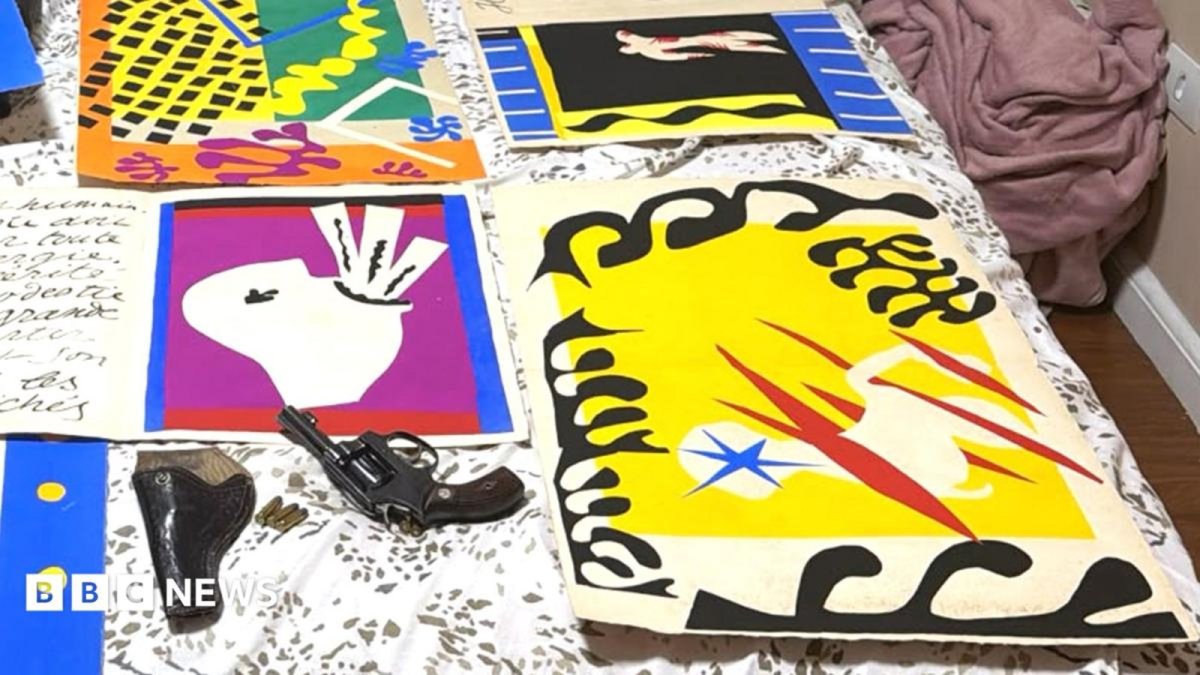
Eight original illustrations by French master Henri Matisse, stolen from a public library in São Paulo in December last year, have been recovered by Brazilian police in a suburb south of the city. The artworks, part of a limited-edition book that is considered a landmark of 20th-century printmaking, were found on Thursday at a home in São Bernardo do Campo, where a 44-year-old man was arrested. The recovery marks a significant breakthrough in a case that has gripped Brazil's art world, though five companion works by a celebrated national painter remain missing. Police say the investigation is ongoing as they pursue leads on the whereabouts of the remaining pieces.
São Paulo, Brazil — article continues...
Recovery in São Bernardo do Campo
The eight Matisse illustrations were discovered on Thursday during a police operation at a residence in São Bernardo do Campo, an industrial municipality located to the south of São Paulo. According to authorities, the works have a combined estimated value of approximately $200,000 (£148,000), though art critics have noted that their cultural worth far exceeds any market valuation.
João Paulo Linhares de Araujo, the 44-year-old man arrested at the scene, is suspected by police of having stored the Matisse artworks on behalf of those accused of being involved in the theft. He also faces charges related to illegal possession of a firearm, which was reportedly found during the search of the property.
The local department of culture confirmed that the illustrations have already been returned to the Biblioteca Mário de Andrade, the library from which they were stolen. Officials stated that security at the institution has been improved in the wake of the incident, though specific details of the new measures were not disclosed.
The December Heist at Biblioteca Mário de Andrade
The original robbery took place on 7 December last year at the Biblioteca Mário de Andrade, one of São Paulo's most important cultural institutions, located in the city's historic downtown district. According to police reports, two thieves overpowered a security guard and an elderly couple who had been visiting the library during the incident.
The perpetrators made off with the artworks through the main entrance on foot, reportedly placing the stolen pieces in a canvas bag to flee the scene. Investigators said the thieves entered the library by its main entrance mid-morning and headed towards the nearest metro station following the heist, suggesting a well-planned operation with a clear escape route.
The theft occurred on the final day of an exhibition entitled From Book to Museum, a joint presentation organized with the São Paulo Museum of Modern Art. The timing of the robbery — on the last day of the show — has raised questions about whether the thieves had been monitoring the exhibition.
Investigation and Suspects
The investigation into the heist has yielded multiple arrests over the past eight months. In addition to Araujo, three other people have been taken into custody in relation to the case, according to police statements.
Central to the investigation is Laéssio Rodrigues de Oliveira, 53, who has been described by Brazilian media as a prolific art thief. Oliveira is suspected of having planned and directed the crime, according to Brazilian news outlet Globo. He has been in custody since April after being arrested in relation to another case, and investigators believe he orchestrated the library robbery from a distance.
Another man and a woman have also been arrested over the library heist, though authorities have not released their names or detailed the specific roles they are alleged to have played. The arrests suggest that the theft was not the work of opportunistic criminals but rather a coordinated operation involving multiple individuals with distinct responsibilities.
Police in São Paulo have indicated that the investigation remains active, particularly regarding the whereabouts of the missing Portinari engravings. Authorities suspect that these works may have already been sold, potentially moving them into private collections where they could be difficult to trace.
The Cultural Significance of the Stolen Works
The recovered Matisse illustrations were created for Jazz, a limited-edition art book published in 1947 that is widely regarded as one of the most important artist's books of the 20th century. Matisse, who is considered one of the most influential artists of the modern era, produced the illustrations using his signature cut-out technique, creating vibrant compositions that reflect his mastery of color and form.
The Jazz illustrations are particularly significant because they represent Matisse's late-career innovation, when declining health limited his ability to paint but spurred him to develop a new artistic language using painted paper cut into shapes. Art critics have described the value of the stolen works as "incalculable," noting that their importance transcends any monetary assessment.
The five engravings by Candido Portinari that remain missing were created to illustrate a special edition of Menino de Engenho (Plantation Boy), a novel by Brazilian writer José Lins do Rego. Portinari, who often painted rural workers and labourers, is one of the most significant Brazilian Modernist artists, and his engravings for the novel are considered important examples of his graphic work.
The joint exhibition From Book to Museum brought together these illustrated works to explore the relationship between literature and visual art, a theme that resonates deeply in Latin American cultural traditions where the boundary between text and image has often been fluid.
The Missing Portinari Engravings and Art Theft in Latin America
While the recovery of the Matisse illustrations represents a victory for Brazilian law enforcement, the fate of the five Portinari engravings remains uncertain. Police in São Paulo said they suspected the works had been sold, which would complicate recovery efforts if they have already crossed international borders.
Art theft has long been a challenge in Latin America, where cultural institutions often struggle with limited security budgets and where the black market for stolen artworks can be lucrative. The region has seen numerous high-profile art thefts over the years, from colonial-era religious paintings in churches to modern masterpieces in museums.
The Portinari engravings hold particular significance for Brazilian cultural heritage. Portinari's depictions of rural workers and labourers captured the social realities of Brazil's countryside, and his works are deeply embedded in the national consciousness. The loss of these engravings represents not just a financial loss but a blow to the country's artistic patrimony.
Investigators have not ruled out the possibility that the Portinari works may still be in Brazil, and they continue to pursue leads. The recovery of the Matisse illustrations demonstrates that persistent investigative work can yield results, even months after a theft.
Cultural Heritage Protection in Brazil
The successful recovery of the Matisse works raises important questions about the protection of cultural heritage in Brazil's public institutions. The Biblioteca Mário de Andrade, named after one of the country's most important modernist writers, is a cornerstone of São Paulo's cultural infrastructure, housing rare books, manuscripts, and artworks of significant historical value.
The fact that two thieves could enter the library, overpower staff and visitors, and walk out with valuable artworks through the main entrance has raised concerns about security protocols at cultural institutions across the country. The local department of culture has stated that security at the library has been improved, but the incident has prompted broader discussions about the vulnerability of Brazil's cultural collections.
Art experts have noted that the theft of illustrated books and prints presents particular challenges for recovery, as these works can be more easily concealed and transported than large paintings. The use of a canvas bag to carry the stolen items underscores how relatively simple it can be to remove such works from a building.
The case also highlights the importance of international cooperation in combating art crime. While the Matisse works were recovered domestically, the suspected sale of the Portinari engravings raises the possibility that stolen Brazilian art could surface in other countries, requiring coordination with foreign law enforcement agencies and art recovery organizations.
For now, the return of the Matisse illustrations to the Biblioteca Mário de Andrade represents a positive outcome in a case that could have ended very differently. The works, which were part of a joint exhibition with the São Paulo Museum of Modern Art, will presumably be available for public viewing once again, though the museum has not announced specific plans for their display.
The investigation into the theft continues, with authorities focused on locating the missing Portinari engravings and determining the full extent of the criminal network involved. The arrests made so far suggest that the operation involved careful planning and multiple participants, and police are working to ensure that all those responsible are brought to justice.
As Brazil continues to grapple with challenges in protecting its cultural heritage, the recovery of the Matisse works offers a measure of reassurance that law enforcement can succeed in recovering stolen art when investigations are pursued with determination. The case serves as a reminder of the importance of cultural institutions and the need to safeguard the artistic treasures they hold for future generations.
This article was produced with AI-assisted research and editorial support. Sources: BBC News, Agence France-Presse, The Art Newspaper, Globo.
By Elena Vasquez, Staff Writer
What's Your Reaction?
 Like
0
Like
0
 Dislike
0
Dislike
0
 Love
0
Love
0
 Funny
0
Funny
0
 Wow
0
Wow
0
 Sad
0
Sad
0
 Angry
0
Angry
0

Latin America Correspondent at Global1.News. Based in Mexico City, covering politics, economics, energy, and culture across the region. Brings an on-the-ground perspective to stories spanning from the Rio Grande to Patagonia.














Comments (0)