
Lula Calls Amazon Oil Find a 'Passport to Brazil's Future'
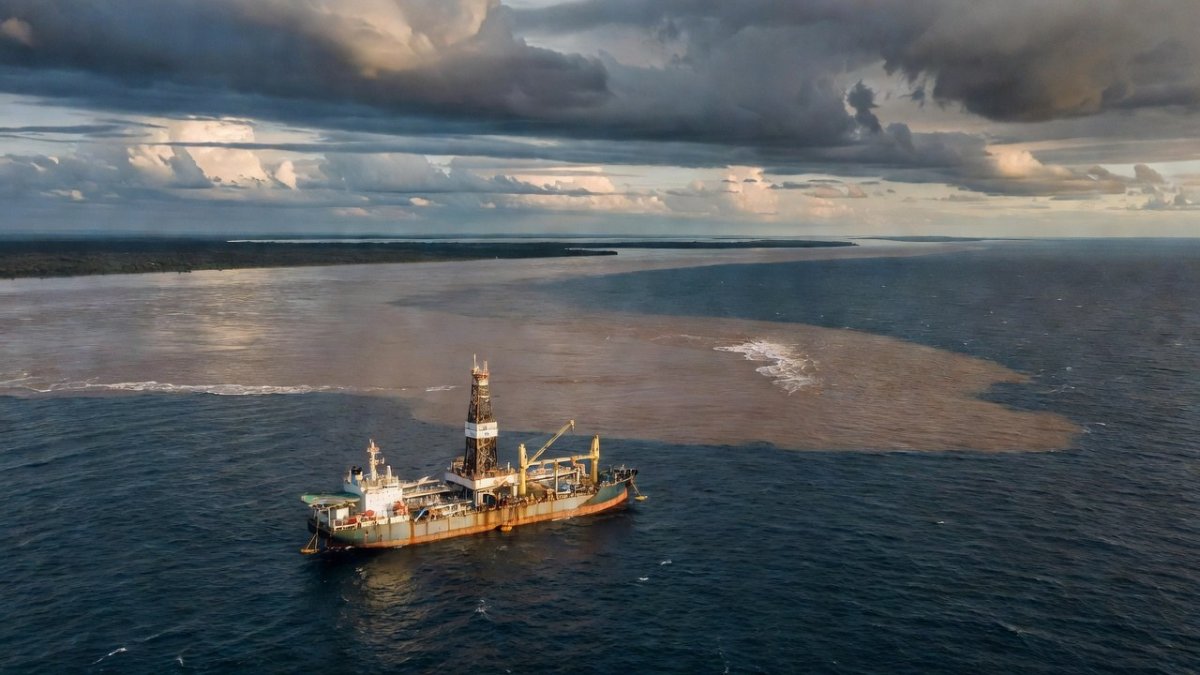
The air in Macapá is thick with humidity and contradiction. On one side, the Amazon River pours a fifth of the world's freshwater into the Atlantic. On the other, a drillship named Morpho has just pulled a promise of black gold from 2,886 meters beneath the seafloor. For the fishermen and Indigenous peoples who have lived on these currents for centuries, the announcement is not a promise—it is a threat.
The air in Macapá is thick with humidity and contradiction. On one side, the Amazon River pours a fifth of the world's freshwater into the Atlantic. On the other, a drillship named Morpho has just pulled a promise of black gold from 2,886 meters beneath the seafloor. For the fishermen and Indigenous peoples who have lived on these currents for centuries, the announcement is not a promise—it is a threat.
Lula Calls Amazon Oil Find a 'Passport to Brazil's Future'
Macapá, Brazil — President Luiz Inácio Lula da Silva stood on the deck of a Petrobras drillship on Monday, Aug. 17, 2026, and declared that the first hydrocarbon discovery in the Foz do Amazonas basin is a "passport to the country's future." The statement, made alongside Senate President Davi Alcolumbre, came just three days after Petrobras announced signs of oil and gas at the Morpho well, igniting a political firestorm that pits national development against environmental survival.
The Discovery at the Mouth of the Amazon
On Friday, Aug. 14, 2026, Petrobras announced that it had detected signs of hydrocarbons—oil and gas indications, not yet a commercial reserve—at the Morpho well, formally designated 1-BRSA-1405-APS. The well sits in Block FZA-M-59, approximately 175 kilometers off the coast of Amapá state, in water depths reaching 2,886 meters. This is the Foz do Amazonas sedimentary basin, the crown jewel of Brazil's Equatorial Margin, a stretch of coastline that runs from Amapá down to Rio Grande do Norte.
The announcement was carefully worded. Petrobras President Magda Chambriard emphasized that the finding is an "indication" of hydrocarbons, not proof of a commercially viable reserve. Technical and economic viability assessments are ongoing, and drilling continues for exploratory evaluation. Yet the tone of the company's statement was unmistakably triumphant. "Our optimism regarding the Brazilian equatorial shelf has been confirmed today," Chambriard said. "This first discovery off the coast of Amapá is the result of the dedication and expertise of Petrobras, which is committed to rebuilding the country's oil reserves and ensuring its energy security."
Block FZA-M-59 was acquired in the ANP's 11th bidding round in 2013, under a concession model with Petrobras as the 100% operator. The license took 12 years to secure, largely due to fierce opposition from environmental agencies and civil society. The well itself is named after the morpho butterfly, a vivid blue species native to the Amazon—a poetic name for a project that environmentalists say could destroy the region's biodiversity.
Petrobras expects to spend R$3.3 billion on wells in the Foz do Amazonas and is awaiting IBAMA authorization for three additional wells in the same block: Manga, Crotalus, and Morpho Extension. The company's broader strategy is clear: replenish oil and gas reserves through frontier exploration as pre-salt production declines in the 2030s, while meeting domestic demand during what it calls the "just energy transition."
Lula's 'Passport to the Future'
President Lula's visit to the drillship on Monday was a masterclass in political theater. Standing against the industrial backdrop of the rig, he invoked the 2006 pre-salt milestone, a discovery that transformed Brazil into a global oil powerhouse. "This is a passport to the country's future," he said, flanked by Alcolumbre and other officials. "Just as the pre-salt was in 2006, this is a moment of national pride."
Lula acknowledged that he was advised by many to delay the announcement of the Petrobras license tied to the COP30 event, which Brazil hosted in Belém in October 2025. He proceeded anyway, he said, to protect national interests. "I was told, 'Don't do this during COP30, it will look bad.' But I said, 'This is a matter of national sovereignty.' We cannot abdicate our resources to please the world."
The president also took a swipe at privatization efforts, defending national control over Brazil's energy resources. He criticized past governments for selling off Petrobras assets and promised that Amapá would not become merely a resource exporter. "We want development, but we want development with the people of Amapá benefiting," he said. "We will continue to lead in biofuels and renewable energy, but we cannot ignore the reality that the world still needs oil."
His comments echo a statement he made to BBC Brasil in September 2025: no country "is prepared to have an energy transition capable of abdicating the fossil fuel." It is a pragmatic, if controversial, stance that places Brazil in a delicate position as a climate leader and an aspiring oil giant.
Mines and Energy Minister Alexandre Silveira doubled down on the rhetoric, saying the discovery can "resignify Brazil's future" and reposition the country in global geopolitics. For the government, the find is not just about oil—it is about national identity, economic sovereignty, and a seat at the table of global energy politics.
The Numbers Behind a New Oil Frontier
The numbers are staggering, and they are being repeated like a mantra by government officials and industry executives. Official government and ANP estimates place the total potential of the Brazilian Equatorial Margin at up to 41 billion barrels of oil equivalent, with broader projections exceeding 30 billion barrels. Preliminary estimates from Newsmax suggest the Foz do Amazonas basin alone could contain up to 10 billion barrels, with a potential value of about 3.8 trillion reais—roughly $720 billion.
To put that in perspective, Brazil currently produces around 3.4 million barrels per day, ranking as the world's 7th-largest oil exporter. The government's ambition is to rise to 4th place, a leap that would require massive new production capacity. Petrobras projects that Amapá could begin producing in ultra-deep waters within up to seven years, a timeline echoed by the FUP union, which says new platforms could be fully operational in five to seven years.
The jobs argument is equally potent. The FUP says the development could create 50,000 direct and indirect jobs in Amapá alone, with up to 2 million across the national production chain. In a state with a population of just over 800,000 and an economy heavily dependent on public sector employment, these numbers are transformative. Governor Clécio Luís called it "the news of the century" for northern development.
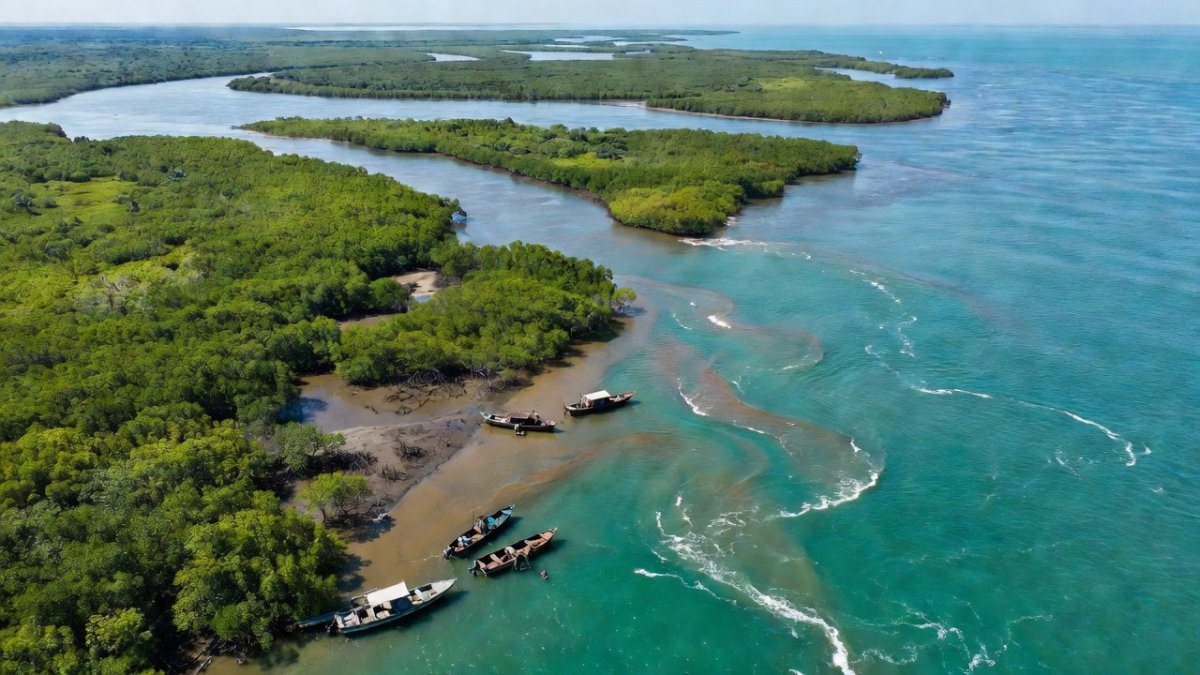
But the numbers cut both ways. The same projections that excite investors terrify environmentalists. The waters off Amapá are home to the world's largest continuous stretch of mangroves, and more than 100 prospective oil blocks overlap the 9,300-square-kilometer Great Amazon Reef System, one of the largest coral and sponge reefs in the world. The reef was only discovered in 2016, and scientists say they have barely begun to understand its ecological significance.
Alex Carvalho, president of Fiepa, the Pará industry federation, framed the debate as a battle against obstructionism. "It is a victory against those who insist on boycotting the country's development and treating the Amazon as a territory where everything must be prohibited," he said. "The North has the right to development—with responsibility, security and respect for the environment."
An Amazon Reef and a Coastline at Risk
The Great Amazon Reef System is a biological treasure that most Brazilians have never seen. Stretching from the mouth of the Amazon to the waters off French Guiana, it is a vast network of coral and sponge reefs that thrives in the murky, sediment-rich waters where the river meets the sea. It is also, according to Greenpeace Brasil, directly in the path of the oil industry's ambitions.
Mariana Andrade, Greenpeace Brasil's Oceans Front coordinator, was blunt in her assessment of the Morpho discovery. "The detection of hydrocarbons is not a reserve, just as an optimistic announcement is not a technical and economic feasibility report," she said. "This is risk being sold as a conquest." Andrade pointed to the area's "sensitive and remote" nature, home to traditional communities and Indigenous peoples, surrounded by mangroves and reefs, and cut by currents that could spread a spill along the Brazilian coast and to neighboring countries.
The warnings are not hypothetical. In 2019, an oil spill of unknown origin hit more than 3,000 kilometers of Brazilian coastline, from the Northeast to the Southeast, devastating beaches, mangroves, and fishing communities. The source was never definitively identified, but the disaster exposed the fragility of Brazil's spill response capabilities. More recently, in January 2026, a leak of about 18,000 liters of drilling fluids occurred in the Equatorial Margin, a reminder that accidents happen even in routine operations.
IBAMA, Brazil's environmental agency, has been the primary obstacle to oil exploration in the region. In 2023, it denied Petrobras an exploration license, citing "extreme socio-environmental sensitivity" and inadequate spill response plans. In 2024, dozens of IBAMA staff signed a recommendation to deny the license again. Lula publicly criticized IBAMA's decisions, and the agency eventually accepted an updated plan on the eve of COP30 in October 2025.
The reversal was a bitter pill for climate advocates, who saw Brazil's hosting of COP30 as a moment to showcase leadership on environmental issues. Instead, the licensing decision signaled that economic development would take precedence over ecological preservation. The strong currents in the region mean a spill could reach French Guiana, Guyana, Suriname, and even the Caribbean, making this not just a Brazilian issue but a regional one.
Voices from the Ground: Indigenous and Fishing Communities
Luene Karipuna, an Indigenous leader from APOIANP, the Articulation of Indigenous Peoples of Amapá and Northern Pará, has been fighting this battle for years. At COP30 in Belém, she delivered a stark warning that has only grown more urgent. "We are excluded as if we didn't exist," she said. "There are overflights over our territory, constant pressure, and the most painful impact is when companies try to divide the leaders. No compensation pays for what they have already done."
Karipuna represents three Indigenous territories where four distinct peoples live, all of whom are already suffering from the prospect of exploration. "It is the gateway to exploit the entire Equatorial Margin," she said, "and this is a bill that cannot be paid by Indigenous peoples." Her words carry the weight of centuries of displacement and broken promises, and they resonate deeply in a region where the state's development model has often come at the expense of its original inhabitants.
On Marajó island, a riverine island roughly the size of Denmark, fishermen are watching the developments with growing anxiety. A DeSmog investigation from June 2026 captured their fears. Nelson Bastos, a 58-year-old fisherman, warned that the strong "Geral" wind could carry oil to shore in the event of a spill. "The wind here is our master," he said. "If oil comes, it will come fast, and it will stay."
The municipality of Oiapoque, the closest to the basin, is already experiencing disorderly occupation and real estate speculation, according to BBC Brasil. The promise of jobs and revenue has attracted migrants, driving up land prices and straining public services. The social fabric of these communities is being tested before a single barrel of oil has been extracted.
Petrobras has responded to the criticism with a public relations offensive. A DeSmog investigation found that the company boosted its advertising and sponsorship spending five-fold between 2020 and 2025, and influencer videos promoting the company racked up over 1.5 billion views in 2024-25. The goal is clear: win the hearts and minds of Brazilians before the environmental costs become impossible to ignore.
The Political Storm Before Brazil's October Vote
The timing of the discovery is no accident. Brazil's general elections are scheduled for October 2026, and campaigns officially began on Aug. 16, 2026—just two days after Petrobras announced the Morpho find. President Lula is running for re-election against former President Jair Bolsonaro, and the oil discovery has become a central campaign issue.
Lula's "passport to the future" framing is designed to appeal to voters who see oil as a path to prosperity. It is a message that resonates in the North and Northeast, regions that have historically been marginalized by Brazil's economic development. The promise of jobs, revenue, and national pride is powerful, and it cuts across traditional political divides.
But the opposition is also mobilizing. Environment Minister Marina Silva, a longtime Lula ally, has defended IBAMA's technical role, creating a visible rift within the government. Silva, who is deeply respected by environmentalists, has walked a careful line, supporting the president while insisting that environmental licensing must be rigorous and transparent. Her position is increasingly untenable as the political pressure mounts.
The FUP union's Cibele Vieira supports the energy transition but argues that oil dependence won't be overcome overnight. "Energy demand keeps growing," she said. "We need to be realistic about the transition." This pragmatic stance is shared by many in the labor movement, who see oil as a bridge to a renewable future, not a permanent destination.
The international community is watching closely. Brazil's stance on oil exploration in the Amazon will have implications for global climate policy, particularly as the country prepares to host COP30's follow-up events. The tension between Lula's climate leadership and his oil ambitions is a microcosm of the broader global dilemma: how to balance development with survival.
What This Means for Latin America
The Foz do Amazonas discovery is not just a Brazilian story; it is a Latin American one. The Equatorial Margin runs along Brazil's North and Northeast coast, but its geological potential extends into the waters of French Guiana, Guyana, Suriname, and beyond. ExxonMobil is already pumping more than 900,000 barrels a day offshore neighboring Guyana, a country that has been transformed by oil wealth in less than a decade.
Brazil's entry into this frontier could reshape the region's energy dynamics. If the Foz do Amazonas proves commercially viable, it would create a new oil province that could rival the pre-salt fields. That would have profound implications for global oil markets, regional geopolitics, and the balance of power in South America.
But it also raises the stakes for environmental protection. The currents that connect the Amazon's mouth to the Caribbean mean that a major spill would not respect national borders. French Guiana, an overseas department of France, would be directly in the path of any disaster. The European Union, which has strict environmental standards, would likely pressure Brazil to adopt higher safety measures.
The discovery also complicates Brazil's relationship with its neighbors. Guyana's oil boom has been a source of tension with Venezuela, which claims a large portion of Guyanese territory. Brazil, as a regional power, must navigate these tensions carefully. The promise of oil wealth can be a unifying force, but it can also exacerbate existing conflicts.
For Latin America as a whole, the Foz do Amazonas represents a test case. Can the region develop its fossil fuel resources while protecting its most sensitive ecosystems? Can it use oil wealth to fund a just energy transition, or will it become locked into a carbon-intensive path? The answers will shape the region's future for decades to come.
The Bottom Line — What Comes Next
The Morpho well is a beginning, not an end. Petrobras must now conduct extensive testing to determine whether the hydrocarbon indications represent a commercially viable reserve. This process could take years, and the outcome is far from certain. The history of the Foz do Amazonas is littered with dry wells and abandoned projects; in the 1980s and 1990s, Petrobras and its rivals drilled dozens of wells in the region but were forced to abandon the area due to high accident rates from strong currents and a lack of commercial finds.
The renewed interest was sparked by Guyana's huge oil discoveries in the 2010s, which prompted Brazil to auction blocks in 2013. Now, more than a decade later, the gamble may be paying off. But the technical challenges remain immense. The ultra-deep waters, the strong currents, and the remote location make this one of the most difficult drilling environments in the world.
Environmental licensing will be another hurdle. IBAMA has already demonstrated its willingness to delay projects, and the agency's technical staff remains deeply skeptical of Petrobras's safety plans. The upcoming elections could also change the political landscape; if Bolsonaro were to win, he would likely fast-track exploration, but he would also face international backlash.
For the communities of Amapá and Marajó, the wait is agonizing. They have heard promises before, and they have seen the costs of development. The oil industry offers jobs and revenue, but it also brings pollution, displacement, and social disruption. The choice is not simple, and the people who will live with the consequences deserve a voice in the decision.
President Lula calls this a "passport to the future." But the future is not a single destination; it is a set of possibilities, each with its own risks and rewards. The question is whether Brazil can find a path that honors both its economic ambitions and its environmental responsibilities. The world is watching, and the stakes could not be higher.
By Elena Vasquez, Staff Writer
This article was produced with AI-assisted research and editorial support. Reporting is based on sources cited in the article.
What's Your Reaction?
 Like
0
Like
0
 Dislike
0
Dislike
0
 Love
0
Love
0
 Funny
0
Funny
0
 Wow
0
Wow
0
 Sad
0
Sad
0
 Angry
0
Angry
0

Latin America Correspondent at Global1.News. Based in Mexico City, covering politics, economics, energy, and culture across the region. Brings an on-the-ground perspective to stories spanning from the Rio Grande to Patagonia.












Comments (0)