
South Korea's Sensory Toy Trend Exposes Youth Mental Health Crisis
South Korea's embrace of tactile toys such as keycap keyrings and squishies reveals deeper structural pressures on young adults navigating an education system and labor market shaped by decades of rapid industrialization and intense competition. These consumer trends intersect with documented rises in youth anxiety, prompting policy responses from multiple ministries while echoing regional patterns across Northeast Asia.
South Korea's embrace of tactile toys such as keycap keyrings and squishies reveals deeper structural pressures on young adults navigating an education system and labor market shaped by decades of rapid industrialization and intense competition. These consumer trends intersect with documented rises in youth anxiety, prompting policy responses from multiple ministries while echoing regional patterns across Northeast Asia.
The Emergence of Keycap Keyrings as Coping Mechanisms
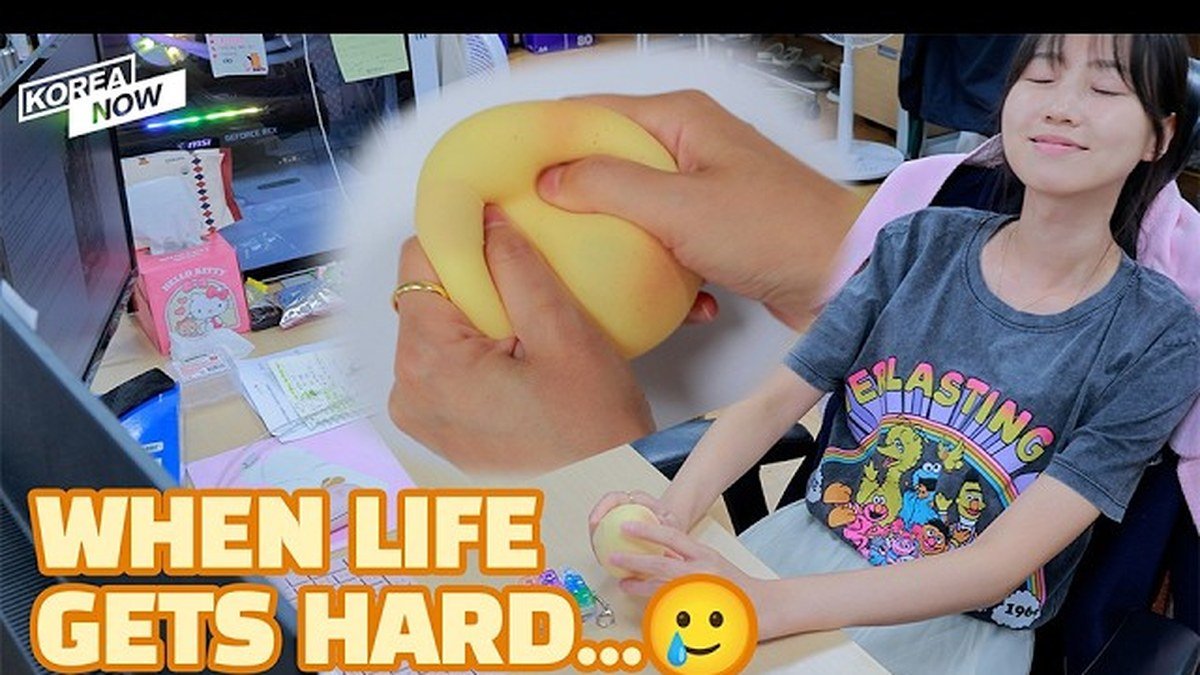
South Korean consumers in their twenties and thirties have embraced keycap keyrings as portable stress relievers. These miniature accessories replicate mechanical keyboard switches and deliver repetitive tactile feedback that users report reduces tension during commutes and work breaks.
Office worker Kim Ji-min described how colleagues fidget with the devices to calm their minds, while social media posts show custom designs shared among peers. Products range from single keys to nine-key clusters with LED lights, priced between 3,000 and 15,000 won.
Convenience store promotions accelerated adoption. 7-Eleven's Hello Kitty edition in January 2026 and CU's Pokémon Eevee version in February 2026 sold out rapidly. Instagram mentions of keycap keyrings rose 137 percent from December 2025 to February 2026, according to Sometrend analytics.
Korea's education fever, rooted in the post-1960s industrialization drive under Park Chung-hee, positioned formal schooling and credentials as the primary channel of social mobility, a dynamic that successive governments sought to moderate through the 1980 July 30 Education Reform and later hagwon curfews. Yet private tutoring expenditures tracked by the Ministry of Education continued to climb, embedding chronic performance anxiety that now finds expression in tactile coping devices among young adults who experienced this system from childhood.
The Suneung exam, administered annually in November by the Korea Institute for Curriculum and Evaluation, exemplifies this national preoccupation: flights are rerouted and public offices adjust hours to minimize noise, underscoring how examination stress permeates the calendar and leaves lasting psychological imprints that portable stress-relief products now address in daily routines.
Statistical Evidence of Worsening Youth Mental Health
The Ministry of Data and Statistics recorded an increase in its negative emotions index to 3.8 in 2025 from 3.1 the prior year. This measure captures depression and anxiety levels comparable to pandemic peaks. OECD figures placed Korean life satisfaction at 6.4 in 2023, below the 7.3 average.
Youth-specific data underscore the severity. The Quality of Life for Youth 2025 indicators report ranked South Korea 31st out of 38 OECD countries for young people's life satisfaction. Health Insurance Review and Assessment Service figures showed child and adolescent depression treatment rising 72.6 percent from 49,983 cases in 2020 to 86,254 in 2024.
The Ministry of Health and Welfare's 2024 National Mental Health Knowledge and Attitude Survey found 73.6 percent of adolescents experienced mental health problems, up 9.7 points year-over-year. Serious stress reports climbed from 36.0 percent to 46.3 percent, and persistent depression from 30.0 percent to 40.2 percent.
These indicators align with Korea's total fertility rate of 0.72 recorded in 2023, the world's lowest, as Statistics Korea projections indicate a shrinking working-age population that policymakers increasingly frame as both a human-capital and national-security concern. Youth mental health thus moves beyond individual well-being to influence long-term demographic stability.
Comparable pressures appear elsewhere in Northeast Asia, where Japan's hikikomori phenomenon and China's tangping movement similarly reflect youth withdrawal amid competitive education and employment environments, positioning Korean trends within a broader regional policy challenge that warrants cross-border scholarly attention.
Education and Employment Structures Driving Anxiety
Korea's competitive framework begins with hagwon cram schools and culminates in the Suneung college entrance exam. Rankings and test scores determine advancement, creating sustained psychological strain from early schooling through job market entry.
Professor Lee Eun-hee of Inha University's consumer studies department noted that pressing motions in these toys address boredom and anxiety rooted in early-career difficulties. Chaebol recruitment processes intensify this environment, where employment outcomes hinge on narrow performance metrics.
Suicide has remained the leading cause of death among Korean youth for 13 consecutive years, with a rate of 11.7 per 100,000 in 2023. These structural features contribute to the world's lowest fertility rate, signaling long-term demographic consequences.
The "spec" culture that emerged in the 2000s, requiring language certificates, internships, and additional credentials for chaebol and public-sector positions, extended the psychological demands of the Suneung era into young adulthood, transforming résumé accumulation into a continuous source of anxiety that tactile toys now mitigate in everyday settings.
Ministry of Education efforts to curb hagwon dependence through successive reforms have met limited success, as household spending on private education reached record levels, illustrating how deeply entrenched pathways to social mobility continue to shape mental health outcomes across generations.
Government Ministry Initiatives and Policy Frameworks
The National Mental Health Investment Support Project aims to deliver counseling to 160,000 citizens facing depression and anxiety. The Ministry of Education and Korea Disease Control and Prevention Agency launched the 22nd Korea Youth Risk Behavior Survey in 2026 to track behavioral indicators.
These measures respond directly to data from the Ministry of Data and Statistics and Health Insurance Review and Assessment Service. Policy debates in the National Assembly have linked youth mental health support to broader human capital preservation amid Northeast Asian regional competition.
Under the Yoon Suk-yeol administration, a comprehensive mental health reform was announced, followed by 2025 National Assembly measures expanding the National Mental Health Investment Support Project and the Ministry of Health and Welfare's establishment of regional mental health crisis response centers, reflecting a policy shift that treats youth wellbeing as integral to economic resilience.
Korea Development Institute and Asan Institute analyses have increasingly connected these mental health investments to demographic sustainability, arguing that sustained low fertility and workforce contraction require integrated approaches spanning education, employment, and psychological support rather than isolated interventions.
Market Expansion and Long-Term Societal Implications
Related products including wax-coated squishies and push-pop silicone toys have accumulated millions of YouTube views for their auditory feedback. Blackpink member Rosé's November 2024 Vogue Korea appearance with a stress ball further mainstreamed the category.
Shop owner Seo Young-hyun at Dongdaemun Shopping Complex reported primary demand from teenage girls and women in their early twenties. The trend reflects a consumer-driven adaptation to documented pressures rather than a temporary fad.
Analysts connect sustained low life satisfaction and rising depression treatment to risks for workforce productivity and demographic stability. Continued monitoring by the Ministry of Health and Welfare will determine whether expanded counseling services alter these trajectories.
The Korean term mallang-i for squishy toys, alongside the wakppu ball popularized through variety shows, illustrates how tactile products have entered mainstream cultural awareness, as evidenced by SNL Korea satire, signaling that stress-relief consumption now forms part of everyday discourse rather than a niche phenomenon.

Looking Ahead
Future policy trajectories will hinge on whether Ministry of Health and Welfare expansions and Ministry of Education reforms can meaningfully reduce structural pressures from hagwon culture and chaebol hiring practices, or whether consumer adaptations such as keycap keyrings will remain the primary outlet for youth anxiety. Regional comparisons with Japan and China suggest that Northeast Asian societies face shared demographic headwinds, making coordinated scholarly and policy attention increasingly relevant. Sustained monitoring by institutions including the OECD and Statistics Korea will clarify whether current initiatives shift long-term life satisfaction and fertility trajectories.
By Prof. David Park, Staff Writer
This article was produced with AI-assisted research and editorial support. Reporting is based on sources cited in the article.
What's Your Reaction?
 Like
0
Like
0
 Dislike
0
Dislike
0
 Love
0
Love
0
 Funny
0
Funny
0
 Wow
0
Wow
0
 Sad
0
Sad
0
 Angry
0
Angry
0

East Asia/Technology Correspondent at Global1.News. Seoul-based voice covering Korean politics, technology, business, and culture. Analyzes how technology and geopolitics intersect across East Asia.












Comments (0)