
Israeli Settler Shoots 10-Year-Old Palestinian Child in al-Mughayyir
In a recent Middle East Eye report released on August 1, 2026, CCTV footage captured the moment a 10-year-old Palestinian child was shot in the back by an Israeli settler during an attack on a sheep farm west of al-Mughayyir in the occupied West Bank.
In a recent Middle East Eye report released on August 1, 2026, CCTV footage captured the moment a 10-year-old Palestinian child was shot in the back by an Israeli settler during an attack on a sheep farm west of al-Mughayyir in the occupied West Bank. The incident on Friday, July 31, 2026, unfolded as a group of settlers opened fire on the farm, leaving the child wounded amid a scene that also included a mother and her three young children. This shooting highlights the ongoing risks faced by Palestinian families in the area.
Israeli Settler Shooting of Child in al-Mughayyir Exposes West Bank Lawlessness
Ramallah, Occupied West Bank – August 1, 2026 — Local sources described how the attack began when settlers targeted the sheep farm, firing live rounds that struck the child in the back. Palestinian news agency WAFA reported on July 31, 2026, that the ten-year-old was shot and injured during the assault on the village northeast of Ramallah. SadaNews added that settler assaults have increased unprecedentedly since October 7, often under the protection of the occupation army. Times of Israel liveblog coverage noted footage showing a mother and her three young children present at the scene, with the child reportedly wounded. The child's name and current condition were not immediately released.
What Happened on Friday Evening
WAFA stated that a group of colonists attacked the sheep farm west of al-Mughayyir and opened live fire. SadaNews confirmed the 10-year-old boy was shot in the back. The Middle East Eye video from August 1, 2026, provided CCTV evidence of the shooting. Figures on the exact number of settlers involved or additional injuries were not immediately available.
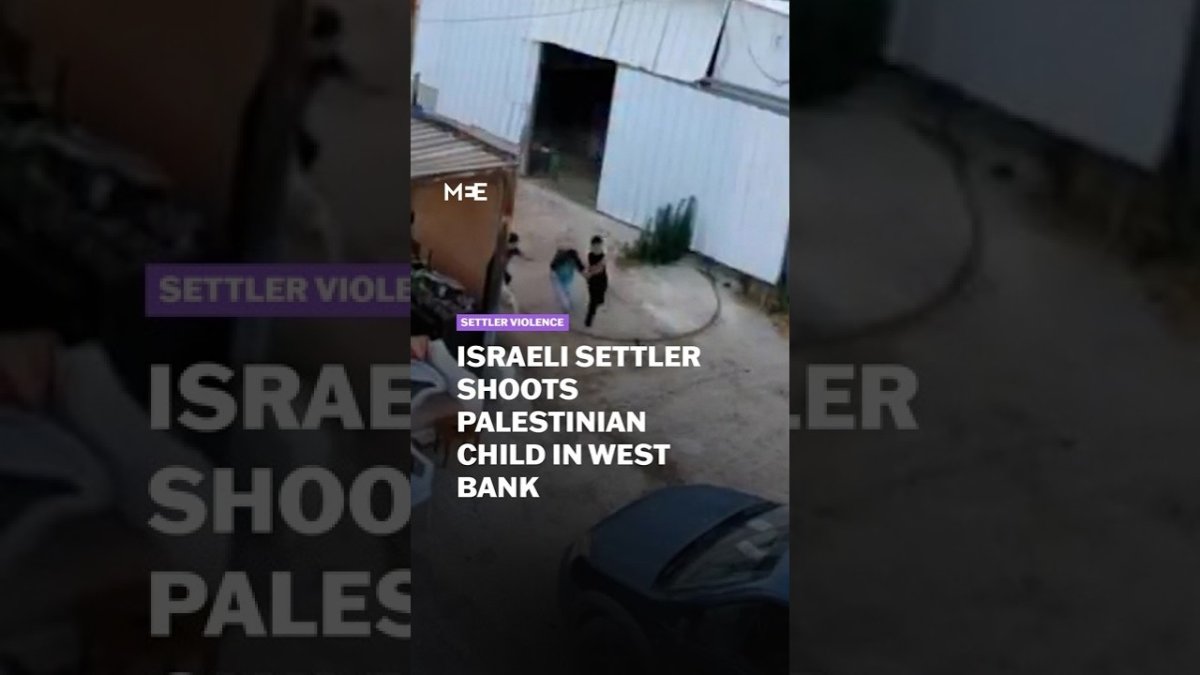
On Friday evening July 31 2026 a group of Israeli settlers attacked a sheep farm west of al-Mughayyir village northeast of Ramallah in the occupied West Bank and opened live fire striking a ten-year-old Palestinian child in the back. Local sources confirmed the assault on the farm where herding families depend on the surrounding farmland for their livelihood. WAFA reported that a ten-year-old Palestinian child was shot and injured by Israeli colonists on Friday evening during an attack on the village of al-Mughayyir northeast of Ramallah according to local sources. Sources said a group of colonists attacked a sheep farm west of the village and opened live fire shooting the child in the back. CCTV footage captured the moment when a mother and her three young children were present at the scene. The child's name and current condition were not immediately released leaving families in the village gripped by fear amid repeated threats to their land and safety.
al-Mughayyir: A Village Under Siege
The village of al-Mughayyir sits northeast of Ramallah, near the illegal settlement of Adei Ad, where herding families depend on the farmland west of the village. On April 21, 2026, settlers opened fire on al-Mughayyir Secondary Boys School, killing 14-year-old Aws Hamdi al-Naasan and Jihad Abu Naim, 32, while wounding three others. OHCHR condemned the killings. In April 2024, settler rampages on al-Mughayyir killed two Palestinians, with witnesses telling Reuters that soldiers were present but did not intervene.
Al-Mughayyir has faced repeated settler violence that has turned daily life into a struggle for survival. In April 2024 settler rampages on the village killed two Palestinians with witnesses reporting that soldiers were present but did not intervene. On April 21 2026 settlers opened fire on al-Mughayyir Secondary Boys School killing fourteen-year-old Aws Hamdi al-Naasan and thirty-two-year-old Jihad Abu Naim while wounding three others prompting condemnation from OHCHR. The village sits northeast of Ramallah near the Adei Ad settlement where herding families rely on the farmland west of the community for grazing their flocks. Settlement expansion has steadily encroached on these lands increasing pressure on residents who have endured years of attacks that threaten both their economic base and personal security in an area already marked by displacement and loss.
The Children Paying the Price
OCHA Humanitarian Situation Report from July 10, 2026, recorded that in 2026, 16 Palestinian children have been killed and 187 injured by Israeli forces or settlers across the West Bank, including East Jerusalem. More than 1,500 children have been displaced due to recurrent settler attacks, demolitions and forced evictions. Save the Children reported 685 children displaced in the first three months of 2026, compared to an average of 63 across the same period in the previous three years.

The July 31, 2026 shooting of the 10-year-old Palestinian child during the settler attack on the sheep farm west of al-Mughayyir connects directly to the wider pattern of harm to children across the occupied West Bank. OCHA data released July 10, 2026, records that sixteen Palestinian children were killed and one hundred eighty-seven injured by Israeli forces or settlers in 2026, while more than one thousand five hundred children were displaced due to recurrent settler attacks, demolitions, and forced evictions. Save the Children reports that six hundred eighty-five children were displaced between January and March 2026, compared with an average of sixty-three in the same period over the previous three years, roughly ten times higher. Attacks targeting shepherds and farmland strike at the core of children's futures by destroying family livelihoods, triggering displacement that severs access to schooling, and forcing herding communities from land they have long depended upon. The April 21, 2026 shooting at al-Mughayyir Secondary Boys School that killed 14-year-old Aws Hamdi al-Naasan further demonstrates how violence reaches into spaces central to children's daily lives.
Palestinian children across the West Bank including East Jerusalem continue to bear the heaviest burden of ongoing violence and displacement. OCHA data from July 10 2026 recorded that in 2026 sixteen Palestinian children were killed and one hundred eighty-seven injured by Israeli forces or settlers. More than one thousand five hundred children have been displaced due to recurrent settler attacks demolitions and forced evictions. Save the Children analysis showed that six hundred eighty-five children were displaced in the first three months of 2026 compared with an average of sixty-three across the same period in the previous three years representing roughly ten times more displacement. These figures illustrate the profound human impact on young lives as families lose homes schools and safety leaving entire communities struggling to protect their children from escalating threats that disrupt education health and future prospects.
An 'All-Time High' of Settler Violence
OHCHR stated in July 2026 that West Bank settler violence is at an all-time high, with settlers and Israeli security forces often acting together to attack Palestinian communities. OCHA data showed that between January 2023 and February 16, 2026, 883 Palestinian households, totaling 4,765 people, were displaced across 97 communities, most of them Bedouin and herding communities.
OHCHR statements in July 2026 described West Bank settler violence as reaching an all-time high with settlers and Israeli security forces often acting together to attack Palestinian communities. This pattern has produced widespread displacement tracked by OCHA which reported that between January 2023 and February 16 2026 eight hundred eighty-three Palestinian households totaling four thousand seven hundred sixty-five people were displaced across ninety-seven communities most of them Bedouin and herding communities. The coordinated nature of many incidents has left residents with little recourse as attacks on homes farmland and schools intensify. The data underscores a sustained campaign that targets vulnerable populations and erodes their ability to remain on their land creating conditions of impunity that allow violence to continue unchecked across the occupied West Bank.
What Accountability Looks Like — and What Is Missing
Patterns from previous incidents in al-Mughayyir show soldiers present during attacks yet failing to stop the violence. OHCHR reports document repeated cases where settlers and forces coordinate actions against Palestinian residents. No immediate details emerged on investigations or prosecutions following the July 31 shooting.
Accountability for settler attacks remains rare despite clear documentation of incidents and their impact on Palestinian communities. The role of the IDF and Civil Administration in permitting settlement expansion and failing to prevent violence has contributed to an environment where attacks continue with minimal consequences. Under the Fourth Geneva Convention such settlement activity in occupied territory raises serious legal concerns yet enforcement has been absent. The Intercept reported on July 23 2026 that settlement expansion is creeping closer to al-Mughayyir as documented during an eviction tour highlighting how new outposts threaten remaining farmland used by herding families. Without meaningful prosecution or intervention the cycle of violence and displacement persists leaving villages like al-Mughayyir exposed to further attacks and eroding prospects for protection under international law.
Analysis and Implications
The shooting in al-Mughayyir connects to broader displacement trends affecting herding communities near Ramallah. OCHA figures indicate that such violence contributes to the forced movement of families from farmland essential to their livelihoods. Palestinian residents continue to face these pressures while international bodies record the rising toll on children. Future developments will depend on whether documented patterns of non-intervention shift in practice.
The July 31, 2026 shooting of the 10-year-old child in al-Mughayyir illustrates the deepening erosion of legal protections in the occupied West Bank. OHCHR reported in July 2026 that settler violence has reached an all-time high, with settlers and Israeli security forces often acting together. OCHA documented that between January 2023 and February 16, 2026, 883 households comprising 4,765 people were displaced across 97 communities, most of them Bedouin and herding families. The occupied West Bank remains under Israeli military rule, where the Fourth Geneva Convention applies to protected persons and occupied territory. Settlement expansion, as noted by The Intercept on July 23, 2026, continues to creep closer to al-Mughayyir near the Adei Ad settlement, reshaping the map by pushing herding communities from farmland west of the village. Cases of settler violence rarely result in prosecution. This convergence of armed settler actions and military oversight accelerates displacement that favors settlement growth while undermining international humanitarian law obligations in the territory.
Children in al-Mughayyir now navigate daily life amid recurrent settler incursions on surrounding farmland and near the village school, where previous attacks have already claimed young lives. The presence of armed settlers and the capture of incidents on CCTV footage contribute to an atmosphere of persistent insecurity that affects psychological well-being and normal childhood routines. Families and human rights monitors emphasize the need for effective protection measures, accountability for perpetrators, and an end to the occupation that sustains these conditions. Broader displacement data from OCHA and Save the Children show how such violence compounds pressures on households already facing livelihood losses. Looking ahead, residents and monitors stress that sustained international attention to the application of the Fourth Geneva Convention and documented patterns of settler-military coordination will be essential if communities are to regain stability and children are to grow without the constant threat of further attacks on their homes and lands.
By Fatima Al-Rashid, Staff Writer
This article was produced with AI-assisted research and editorial support. Reporting is based on sources cited in the article.
What's Your Reaction?
 Like
0
Like
0
 Dislike
0
Dislike
0
 Love
0
Love
0
 Funny
0
Funny
0
 Wow
0
Wow
0
 Sad
0
Sad
0
 Angry
0
Angry
0
Gulf/MENA Correspondent at Global1.News. Based in Doha, covering Gulf politics, energy markets, diplomacy, and development across the Middle East and North Africa. Tracks the economic transformation of the Gulf states.












Comments (0)