
EU urges Israel to ensure full humanitarian access to Gaza amid worsening conditions
In the cramped tented camps of Gaza City, families are now battling not only the devastation of war but also relentless rain that fills their makeshift shelters with water.
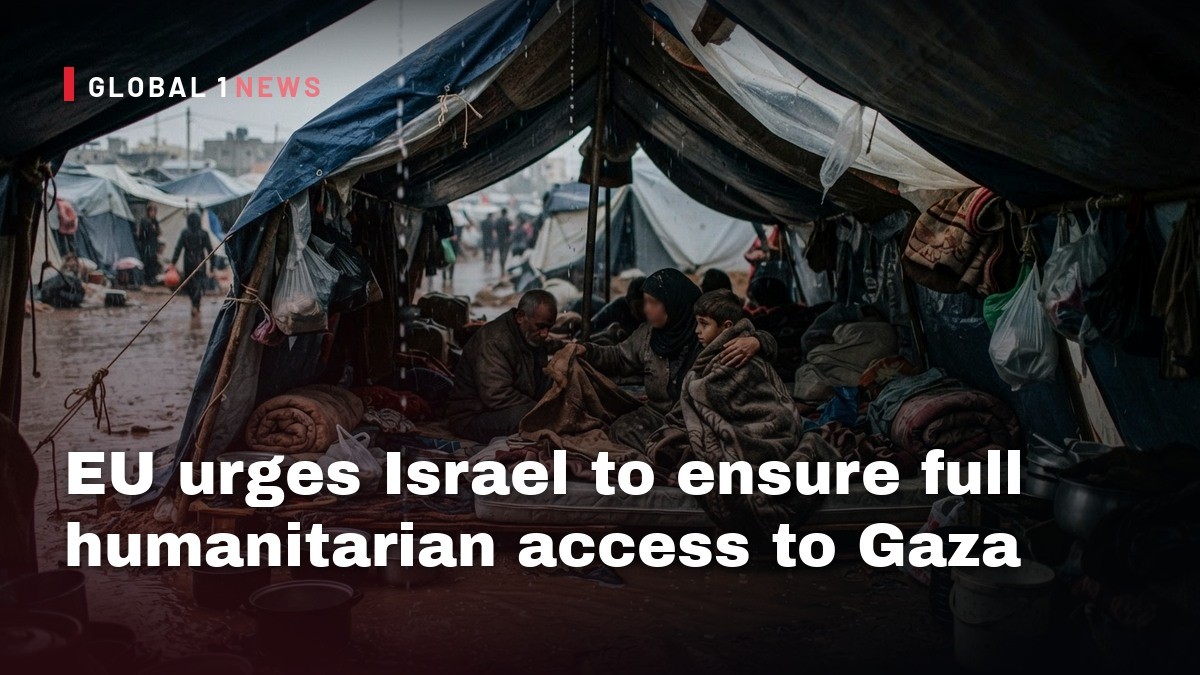
In the cramped tented camps of Gaza City, families are now battling not only the devastation of war but also relentless rain that fills their makeshift shelters with water. The latest heavy downpours, combined with an approaching winter, have turned already precarious living conditions into a dire humanitarian emergency. As the European Union publicly urged Israel to open all crossings for aid, the reality on the ground underscores how restricted access amplifies suffering, exposing displaced Palestinians to health hazards, cold, and the constant threat of disease.
Flooded shelters and the human cost of blocked crossings
The scene captured on November 7, 2026, shows displaced Palestinians desperately trying to drain water from tents that have become miniature pools. The images, taken by a photographer for Anadolu Agency, illustrate the immediate physical danger of flooding: waterlogged floors, soaked belongings, and the constant fear of collapse. For families already living without heating or adequate protection, the added weight of water makes each night a battle for survival.
European Commission spokesperson Eva Hrncirova highlighted that “not all the crossings are open for humanitarian aid,” a statement that directly links the inability to evacuate flood‑water and receive essential supplies to the limited number of operational entry points. When aid convoys cannot reach the most affected neighborhoods, displaced families are left to improvise, often with inadequate tools and limited medical support, increasing the risk of water‑borne illnesses and pest infestations.
Winter’s looming threat and health risks
Beyond the immediate inconvenience of water‑filled tents, the EU warned that the combination of flooding and harsh winter weather could expose displaced families to further health risks. Cold temperatures, coupled with damp living conditions, create an environment ripe for respiratory infections and the spread of disease. The spokesperson warned that “flooding and harsh winter weather could expose displaced families to further health risks, including diseases and increased pest infestations,” underscoring the compounded vulnerability of a population already traumatized by conflict.
Medical Aid for Palestinians has documented how restricted humanitarian access exacerbates these health threats. When aid deliveries are delayed or denied, essential medicines, clean water, and sanitation supplies cannot reach those most in need, turning a temporary flood into a long‑term public health crisis.
Scale of need: shelter and non‑food assistance
According to Hrncirova, the majority of Gaza’s population now requires shelter and non‑food assistance, with around 60 % of those in need facing critical conditions. This figure reflects a sharp rise in demand for basic protection as winter approaches. The need for dry, insulated shelters has become urgent, as families continue to live in tents that offer little defense against rain, wind, and cold.
The EU’s humanitarian assistance, amounting to nearly €700 million since the crisis began in October 2023, represents a substantial financial commitment. However, the spokesperson’s call for “rapid, safe, and unhindered access” signals that funding alone cannot resolve the crisis without the physical ability to deliver aid through open crossings.
Impact of the war on infrastructure and vulnerability
Since October 2023, Israel’s war on Gaza has resulted in the death of more than 74 000 Palestinians and injuries to over 175 000, according to Palestinian health authorities. The conflict has also devastated civilian infrastructure, leaving homes, schools, and health facilities in ruins. This destruction has forced large numbers of people into temporary shelters that are ill‑equipped to withstand severe weather.
The loss of infrastructure means that even basic services such as electricity, water treatment, and waste management are severely compromised. Without functional sewage systems, floodwater can become contaminated, heightening the risk of disease outbreaks. The combination of war‑induced destruction and weather‑related damage creates a perfect storm for humanitarian disaster.
EU’s diplomatic pressure and the call for full access
During a midday briefing in Brussels, Hrncirova reiterated the EU’s repeated calls to the Israeli government at “every level and opportunity” to allow full humanitarian access. The spokesperson’s emphasis on “full humanitarian access” reflects a broader diplomatic effort to pressure Israel to open all crossings, not just a limited few.
The EU’s stance is grounded in the principle that humanitarian aid must be delivered without obstruction, a tenet of international humanitarian law. By highlighting the worsening conditions caused by restricted crossings, the EU aims to frame the issue not merely as a logistical challenge but as a violation of the right to life and health for Gaza’s civilian population.
Human stories behind the statistics
Behind every percentage and figure lies a personal story of loss and resilience. Families huddle together in tents that are now half‑filled with rain, trying to protect children from the cold and damp. Mothers worry about the health of their infants, fearing that exposure to water‑logged conditions could trigger illnesses that they cannot treat due to the lack of medical supplies.
These lived experiences illustrate how the abstract notion of “humanitarian access” translates into concrete needs: dry bedding, heating sources, clean water, and medical care. When crossings are closed, each of these necessities becomes harder to obtain, turning ordinary winter hardships into life‑threatening emergencies for those already traumatized by conflict.
Looking ahead: the urgent need for unhindered aid
The convergence of war‑induced displacement, infrastructure collapse, and now severe weather underscores the urgency of the EU’s appeal. Without immediate action to open all crossings, the risk of a large‑scale health crisis looms large. The international community must recognize that the humanitarian situation in Gaza is not static; it evolves with each new challenge, from artillery strikes to flooding.
As winter deepens, the call for “rapid, safe, and unhindered access” becomes more than diplomatic language—it is a plea for the preservation of life. The EU’s financial contributions, while significant, must be matched by the physical ability to deliver aid. Only then can the tide of suffering be stemmed, allowing displaced Palestinians to find shelter from both the storm outside and the storm of conflict that has uprooted their lives.
This article was produced with AI-assisted research and editorial support. Reporting is based on the source material cited below. Sources: Middle East Monitor; middleeastmonitor.com; Global1.News (10 November 2026).
By Fatima Al-Rashid, Staff Writer
What's Your Reaction?
 Like
0
 Dislike
0
 Love
0
 Funny
0
 Wow
0
 Sad
0
 Angry
0
Gulf/MENA Correspondent at Global1.News. Based in Doha, covering Gulf politics, energy markets, diplomacy, and development across the Middle East and North Africa. Tracks the economic transformation of the Gulf states.











Comments (0)