
Smith urges Ottawa to resume U.S. trade talks before...
Alberta Premier Danielle Smith is calling on the federal government to get back to the negotiating table with the United States before Canada's retaliatory tariffs take effect in two weeks, warning that further escalation risks harming workers and businesses across the country.
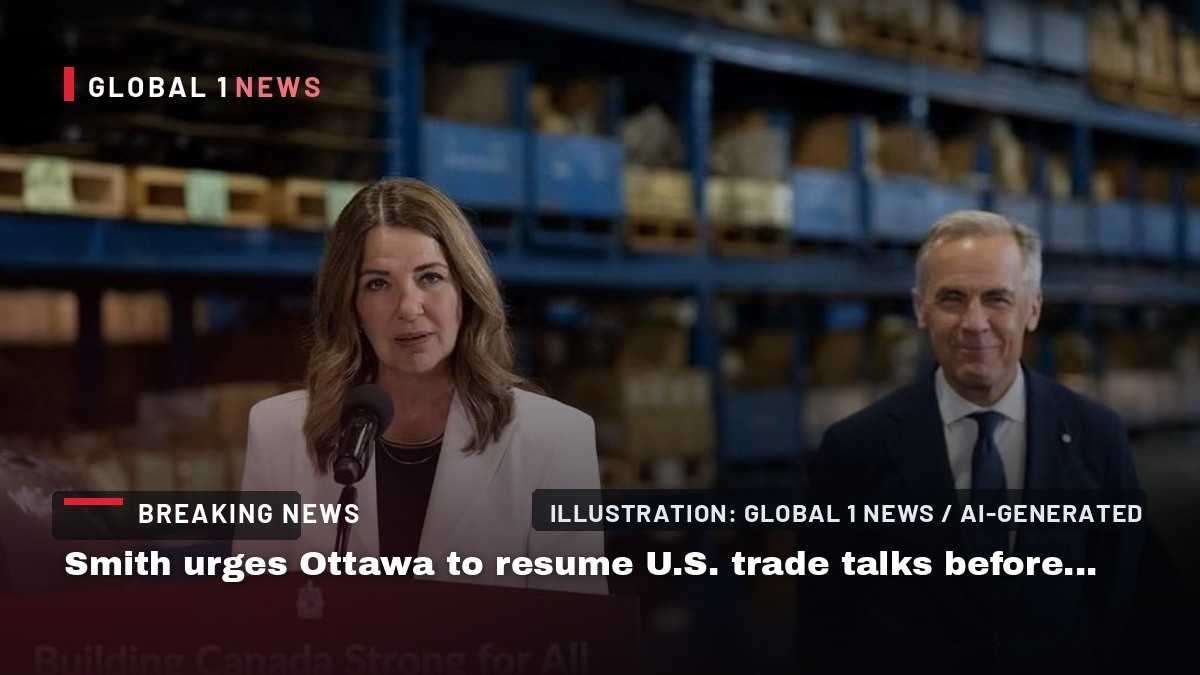
Smith presses Ottawa to return to talks before counter-tariffs land Sept. 8
Alberta Premier Danielle Smith is calling on the federal government to get back to the negotiating table with the United States before Canada's retaliatory tariffs take effect in two weeks, warning that further escalation risks harming workers and businesses across the country.
In a statement posted online Tuesday, Smith said tariffs and counter-tariffs only risk deepening the trade war between Canada and its southern neighbour. Her remarks come as Ottawa prepares to impose its own levies on a range of U.S. exports starting Sept. 8, a move announced by the federal government the same day.
The federal plan targets American goods including steel, aluminum, smartphones and golf clubs, and is paired with relief and support measures designed to help Canadian businesses withstand the ongoing trade fight. The counter-tariffs are being phased in as a "dollar-for-dollar" response to the 50 per cent tariffs the United States imposed over the weekend on roughly $28 billion in Canadian goods, including natural honey and other products.
Smith acknowledged Ottawa's effort to support businesses but said her government is also examining whether provincial relief is necessary. "Alberta's government remains concerned that tariffs and counter-tariffs increase costs, disrupt supply chains, put pressure on businesses and workers, and ultimately risk escalation to even higher and broader tariffs that will impact even more Canadians," she said in the statement.
A holdout among premiers on the federal response
Smith has been a notable holdout among provincial and territorial leaders when it comes to endorsing Prime Minister Mark Carney's plan for counter-tariffs. The U.S. tariffs came into effect Saturday after Carney called off negotiations, citing what his office described as unacceptable terms being sought by U.S. President Donald Trump's administration.
The premier said Tuesday that her focus remains on protecting jobs and businesses in Alberta, a province heavily reliant on energy exports and cross-border trade. Alberta's government was not immediately able to respond to questions about what impact Ottawa's retaliatory tariffs could have on the province's economy.
Smith's position stands in contrast to that of Saskatchewan Premier Scott Moe, who said earlier Tuesday that Ottawa was making the right decision despite the expected impact on his province. Moe noted the counter-tariffs will cover 11.3 per cent of Saskatchewan's annual imports from the United States, totalling $1.5 billion worth of goods.
Saskatchewan backs the plan, honey producers feel the sting
Moe's endorsement of the federal approach reflects a split among western premiers on how to handle the escalating trade dispute. While Smith is urging caution and renewed diplomacy, Moe has signalled support for a measured retaliatory response, even as the costs to his province are expected to be significant.
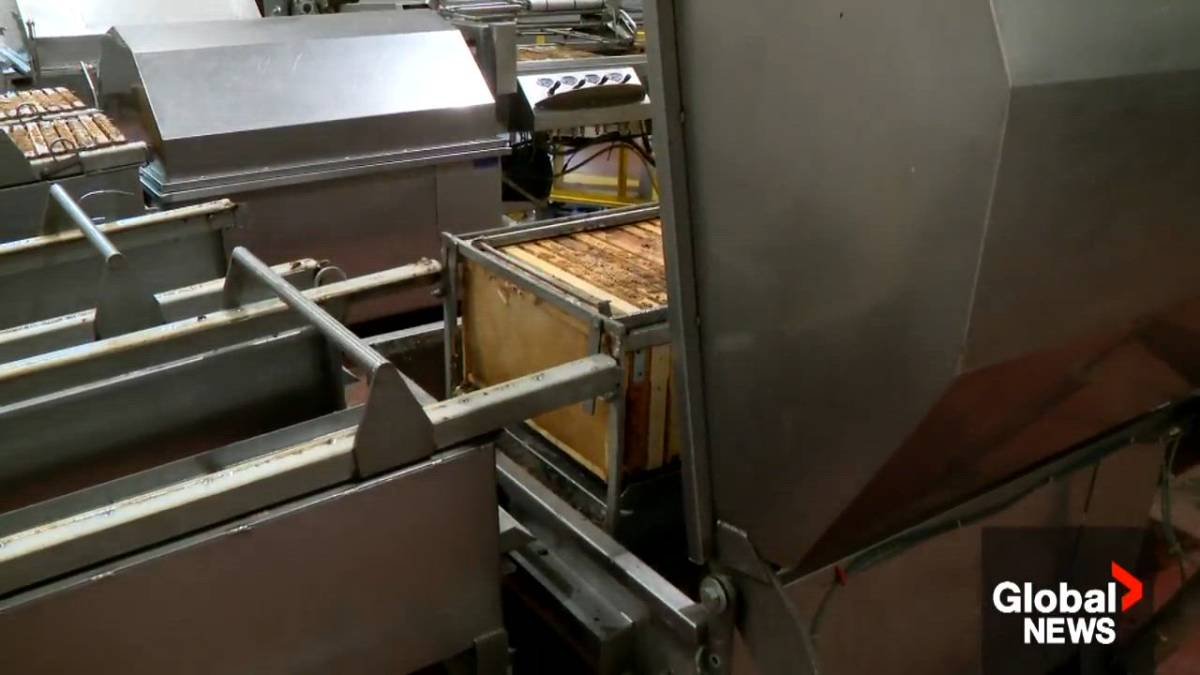
For Saskatchewan's agricultural sector, the trade war is already having real consequences. Hannigan Honey, an 84-year-old family operation near Shellbrook, sends between 20 and 40 per cent of its product to the United States. The business is now looking to diversify into European and Japanese markets as it feels the sting of the new tariffs.
The honey producer's situation illustrates the broader challenges facing Canadian exporters caught in the crossfire of the trade dispute. Small and medium-sized operations, in particular, lack the resources to quickly pivot to new markets, making the federal relief measures all the more critical.
Ontario moves to protect workers and businesses
In Ontario, Premier Doug Ford appeared with steel workers Monday to reassure businesses that his government would "spare no expense" protecting workers affected by the new tariffs. Ford said the province is expanding eligibility for its "Protect Ontario" financing program to include workers and businesses impacted by the trade fight.
The Ontario premier dismissed opposition calls to recall the legislature as "gutter politics," choosing instead to focus on direct support measures. His approach reflects a broader provincial strategy of complementing federal relief efforts with targeted local assistance.
The federal government's announcement Tuesday included relief and support measures for businesses, though specific details of those programs have not been fully outlined. The combination of federal and provincial supports is intended to cushion the blow for Canadian companies facing higher costs and disrupted supply chains.
What's at stake for the Canadian economy
The escalating trade dispute carries significant risks for the Canadian economy, which remains deeply integrated with the United States. The U.S. tariffs on Canadian goods took effect Saturday after talks to secure an agreement fell apart, and President Trump has threatened additional tariffs if a resolution is not reached.
Canada's "dollar-for-dollar" response is designed to signal resolve while leaving room for negotiation. However, the Sept. 8 implementation date gives both sides a two-week window to potentially return to the table, a point Smith emphasized in her statement.
"There is still time before these counter-tariffs take effect on Sept. 8, and I am urging the federal government to use that time to get back to the negotiating table with the United States," Smith said.
Federal-provincial tensions emerge over trade strategy
The divergence between Smith and Moe highlights the delicate balance Prime Minister Carney must strike as he navigates the trade dispute. While Saskatchewan has accepted the economic costs of counter-tariffs as a necessary measure, Alberta is pressing for a more conciliatory approach.
Smith's statement stops short of outright opposition to the federal plan, instead framing her position as a plea for continued diplomacy. She said she appreciates Ottawa's plan to support businesses and that her government is working to determine whether provincial relief is also necessary.
The coming two weeks will be critical in determining whether Canada and the United States can find common ground or whether the trade war will escalate further. For Canadian businesses and workers, the stakes could not be higher.
As the Sept. 8 deadline approaches, all eyes will be on Ottawa and Washington to see whether negotiations resume or whether the counter-tariffs are implemented as planned. The outcome will shape the economic landscape for Canadians across the country, from honey producers in Saskatchewan to steel workers in Ontario.
Tags: Danielle Smith, counter-tariffs, Mark Carney, trade war, Alberta, Saskatchewan, Scott Moe, Doug Ford, Sept. 8, U.S. tariffs, Canada-U.S. trade, retaliatory tariffs, Protect Ontario, Hannigan Honey, federal-provincial relations
By Alex Thompson, Staff Writer
This article was produced with AI-assisted research and editorial support. Reporting is based on sources cited in the article.
What's Your Reaction?
 Like
0
Like
0
 Dislike
0
Dislike
0
 Love
0
Love
0
 Funny
0
Funny
0
 Wow
0
Wow
0
 Sad
0
Sad
0
 Angry
0
Angry
0

Canada Correspondent at Global1.News. Based in Toronto, covering Canadian politics, energy, trade, and US-Canada relations. Provides the Canadian perspective on North American and global affairs.














Comments (0)