
Six Years After the UAE Deal: Israelis Back the Abraham Accords, But the Saudi Prize Remains Elusive
The video captures a spectrum of everyday opinions—from praise for economic and security dividends to pointed questions about the Palestinians, and a clear hope that Saudi Arabia will be the next to join. Today, August 13, 2026, marks exactly six years since that breakthrough moment, and the street-level sentiment reflects a nation that has embraced the accords while remaining deeply aware of their limits.
In a recent i24NEWS English report, the crew took to the streets of Tel Aviv to ask Israelis directly how they view the Abraham Accords six years after the historic normalization announcement with the UAE. The video captures a spectrum of everyday opinions—from praise for economic and security dividends to pointed questions about the Palestinians, and a clear hope that Saudi Arabia will be the next to join. Today, August 13, 2026, marks exactly six years since that breakthrough moment, and the street-level sentiment reflects a nation that has embraced the accords while remaining deeply aware of their limits.
Six Years After the UAE Deal: Israelis Back the Abraham Accords, But the Saudi Prize Remains Elusive
Jerusalem, Israel – August 13, 2026 — Six years after then-US President Donald Trump announced the normalization agreement between Israel and the United Arab Emirates, the Abraham Accords have become a cornerstone of Israeli statecraft. Yet as Israelis mark the anniversary, the regional landscape has shifted dramatically—with a new Saudi-led defense pact, a stalled Gaza peace plan, and a White House demanding Riyadh join the fold. The question on every analyst's mind is no longer whether the accords worked, but whether they can survive the region's mounting turbulence.
Six Years of Normalization: Trade, Tourism, and Security Ties
The numbers tell a story of tangible success. Direct flights between Tel Aviv and Abu Dhabi, Dubai, Manama, and Casablanca are now routine, a far cry from the pre-2020 reality when Israeli passports were unwelcome in Gulf airports. Israel opened its embassy in Abu Dhabi and a consulate in Dubai, while the UAE established its own diplomatic mission in Tel Aviv. Trade volumes have grown exponentially across sectors—from cybersecurity and agriculture to tourism and fintech—with bilateral trade between Israel and the UAE alone reaching billions of dollars annually.
Security cooperation has been equally transformative. Intelligence sharing between Jerusalem and Abu Dhabi has deepened, particularly regarding Iranian drone and missile programs. The IDF and UAE military have conducted joint exercises, and Israeli defense firms have found willing partners in the Gulf. Morocco, which normalized ties in December 2020, has expanded cooperation on regional security and intelligence, while Bahrain hosts Israeli naval visits and maintains active security channels. Sudan's accession, though complicated by its internal political turmoil, remains a diplomatic achievement on paper.
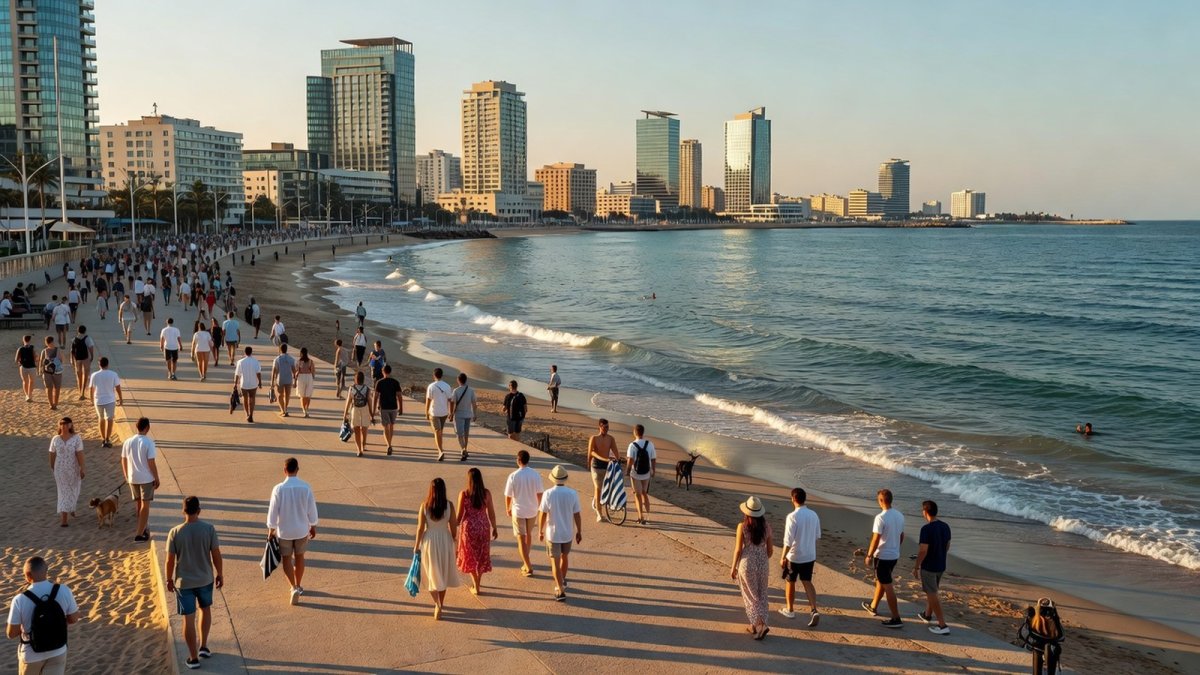
The accords have also reshaped Israeli tourism. Emirati and Bahraini visitors now stroll through Jerusalem's Old City and Tel Aviv's beaches, while Israeli travelers flock to Dubai's malls and Abu Dhabi's cultural sites. The economic dividends are visible in Israeli export figures and in the growing number of joint ventures between Israeli startups and Gulf investment funds. For many Israelis, the accords have normalized the idea of the Gulf as a partner rather than a threat—a psychological shift as significant as the diplomatic one.

Voices From Tel Aviv: Support, Skepticism, and the Saudi Hope
The i24NEWS street interviews in Tel Aviv captured a nuanced public mood. Many respondents praised the accords for delivering security and economic benefits, citing the ease of travel and the strategic alliance against Iran. One Tel Aviv resident told i24NEWS he can finally do business with neighbors across the region, describing the accords as peace with the region even if not yet peace with the Palestinians. Others expressed skepticism, noting that the accords have not resolved the core Israeli-Palestinian conflict and that the UAE's criticism of Israel over Gaza remains a source of friction.
The polling data reinforces this complexity. A Council for a Secure America survey conducted in early June 2026 among 557 Jewish Israelis (margin of error +/-4 points) found that 81% favor expanding the Abraham Accords and further normalization with Arab states. Yet the same survey revealed that only about 22% of Jewish Israelis support Palestinian statehood—a striking disconnect between regional peace and a two-state solution. Israelis, it seems, have separated the two concepts: they want normalization with the Arab world, but they do not see it as contingent on Palestinian statehood.
When asked which country they hope will join the accords next, the answer from Tel Aviv was nearly unanimous: Saudi Arabia. The answer from Tel Aviv was nearly unanimous, with respondents describing Saudi Arabia as the ultimate prize: if Riyadh joins, everything changes. This sentiment echoes across the Israeli political spectrum, from the Knesset to the street. The prospect of normalization with Riyadh is viewed in Jerusalem as the ultimate prize—a deal that would reshape the Middle East's strategic architecture and cement Israel's integration into the region.
The Saudi Question: Mecca Pact, Trump's Demand, and Riyadh's Conditions
The road to Riyadh, however, has become more complicated. On August 7, 2026—just six days before the anniversary—Saudi Arabia, Turkey, and Pakistan signed the Mecca Joint Defense Agreement in Mecca. The mutual-defense pact stipulates that an armed attack against any of the three signatories is treated as an attack on all. While the pact is not explicitly anti-Israel, its timing and composition have raised eyebrows in Jerusalem.
Dr. Yoel Guzansky, head of the Gulf Research Field at the Institute for National Security Studies (INSS), told The Jerusalem Post that the Mecca Pact "doesn't shut the door completely on normalization" between Riyadh and Jerusalem. But he emphasized that it reflects Saudi hedging as trust in Washington wanes. "The Saudis feel that they cannot count on the US... they need more. This is hedging," Guzansky said. The pact, in his view, is a signal to both Washington and Tehran that Riyadh has alternatives—and that it will not be taken for granted.
Complicating matters further, the White House has made Saudi normalization a condition of a proposed US-Saudi nuclear deal announced in July 2026. President Trump has demanded that Riyadh normalize relations with Israel as part of the agreement, a condition that could create a roadblock. Saudi Arabia has publicly conditioned normalization on a credible pathway to Palestinian statehood and an end to the Gaza war—terms that Riyadh has rejected under the current framework. The nuclear deal, which would give Saudi Arabia civilian nuclear capabilities, is now entangled with the normalization question, creating a high-stakes diplomatic knot.
Israeli officials remain cautiously optimistic. Prime Minister Benjamin Netanyahu's office has repeatedly stated that normalization with Saudi Arabia is "a matter of when, not if." But the Mecca Pact and the nuclear deal linkage suggest that Riyadh is playing a longer game, balancing its security needs against its regional and domestic constraints. The Saudis, like the Emiratis before them, are seeking a deal that serves their interests—and they are not willing to sign on to terms that would alienate their own public or their Palestinian allies.
Regional Context: Iran, Gaza, and the Limits of Normalization
The anniversary comes amid a volatile regional environment. Iran-related conflict continues to simmer across the Middle East, with Israeli strikes on Iranian proxies in Syria and Lebanon occurring with regularity. The IDF has maintained a high state of readiness along the northern border, and the threat of a broader conflagration with Hezbollah remains ever-present. The Abraham Accords have not insulated Israel from these threats—they have, however, provided new partners in countering them.
The Gaza war, meanwhile, remains a source of friction. In early August 2026, the UAE and several Muslim-majority governments accused Israel of undermining the Gaza peace plan—a reminder that the accords have not shielded Jerusalem from criticism over the Palestinian arena. The UAE, despite its normalization with Israel, has maintained a vocal stance on Palestinian rights, and its criticism has stung in Jerusalem. The accords, it seems, have created a framework for cooperation but not a blank check for Israeli policy.
Israel's reputation in the region is also under scrutiny. The Gaza war has fueled anti-Israel sentiment across the Arab world, and even Gulf partners have faced domestic pressure to distance themselves from Jerusalem. The accords have survived this pressure, but they have not been immune to it. Israeli analysts describe the current moment as one of opportunity but also of regional turbulence—Iran-related conflict, questions about US reliability, and Palestinian diplomacy all weigh on the prospects for further normalization.
Diplomatic and International Reactions: Washington's Role and Gulf Hedging
Washington remains the central broker in the normalization process. The Trump administration has made the Abraham Accords a signature foreign policy achievement, and the proposed US-Saudi nuclear deal is now explicitly linked to Saudi-Israeli normalization. But the administration's approach has drawn criticism from both sides: Gulf states view the linkage as coercive, while some Israeli officials worry that the nuclear deal could undermine Israel's qualitative military edge.
Congress has largely supported the accords, with bipartisan resolutions praising the agreements and calling for their expansion. But the Gaza war has complicated this support, with some lawmakers pressing for conditions on US arms sales to Gulf states that have criticized Israel. The accords, once a unifying issue in Washington, have become entangled in the broader debate over US policy in the Middle East.
Gulf states, for their part, are hedging. The Mecca Pact is one example, but so is the UAE's continued engagement with both Washington and Beijing. The Gulf monarchies have learned that US commitments are not guaranteed, and they are diversifying their security partnerships accordingly. This hedging does not preclude normalization with Israel—indeed, the accords have proven resilient—but it does mean that Jerusalem cannot take its Gulf partners for granted.
Analysis and What This Means: The Anniversary's Lessons and the Road Ahead
The six-year anniversary of the Abraham Accords offers a clear lesson: Israelis overwhelmingly support normalization, but they do not see it as a substitute for resolving the Palestinian issue. The 81% support for expanding the accords, combined with the low support for Palestinian statehood, suggests that Israeli public opinion has embraced a pragmatic regionalism—one that prioritizes security and economic ties over territorial compromise. This is a significant shift from the Oslo era, when peace with the Palestinians was seen as the key to regional integration.
But the accords' future depends on factors beyond Israeli public opinion. The Saudi question is the most consequential: a normalization deal with Riyadh would transform the region, but it requires a credible pathway for the Palestinians—a condition that Israel's current government has shown little appetite for. The Mecca Pact, meanwhile, signals that Saudi Arabia is not waiting for Washington or Jerusalem; it is building its own security architecture, one that includes Turkey and Pakistan.
For Israeli policymakers, the path forward is clear but difficult. The accords have delivered real benefits, but they have also created expectations—both in Israel and in the Gulf—that cannot be met without addressing the Palestinian arena. The UAE's criticism over Gaza is a warning: normalization does not mean immunity. And the Saudi conditionality is a reminder that the ultimate prize requires a political price.
As the sun sets over Tel Aviv on this anniversary, the street interviews capture a nation that is proud of its achievements but aware of its challenges. Israelis want more normalization, they want Saudi Arabia, and they want security. Whether they are willing to pay the price—in terms of Palestinian statehood, US pressure, or regional concessions—remains the open question. The next six years will tell.
The Abraham Accords changed the region. But as the i24NEWS video makes clear, Israelis are still debating what they want the accords to become. The answer will shape the Middle East for decades to come.
By Hannah Berg, Staff WriterThis article was produced with AI-assisted research and editorial support. Reporting is based on sources cited in the article.
What's Your Reaction?
 Like
0
Like
0
 Dislike
0
Dislike
0
 Love
0
Love
0
 Funny
0
Funny
0
 Wow
0
Wow
0
 Sad
0
Sad
0
 Angry
0
Angry
0

Israel Correspondent at Global1.News. Based in Tel Aviv, covering Israeli politics, security, technology, and society. Provides balanced, deeply-sourced reporting on one of the most closely-watched regions in the world.











Comments (0)