
Saudi Vision 2030 Enters Execution Phase as Non-Oil GDP Hits 55%
Saudi Arabia's Vision 2030 has entered its execution phase: non-oil GDP reached 55% in 2025, the PIF pivots to returns, and giga-projects recalibrate ahead of Riyadh Expo 2030 and the 2034 FIFA World Cup, an Al Arabiya English report finds.
The Kingdom of Saudi Arabia has crossed a critical threshold in its decade-long transformation. According to a recent Al Arabiya English report featuring Ali Hammad, Vice President at Maximus Gulf, Vision 2030 has "clearly entered the EXECUTION PHASE," shifting from ambitious planning to the delivery of tangible economic results. This pivot comes as Riyadh closes the books on Phase Two (2021-2025) and launches Phase Three (2026-2030), a period anchored by fixed global deadlines—the Riyadh Expo 2030 and the 2034 FIFA World Cup—that will force the pace of change across the Gulf's largest economy.
Saudi Arabia's Vision 2030 Shifts to Delivery Mode: Non-Oil Growth, PIF Returns, and the Mega-Project Reckoning
Riyadh, Saudi Arabia – August 12, 2026 — The data confirms the narrative shift. The Vision 2030 Annual Report 2025, unveiled by the Saudi Press Agency in late April, shows the non-oil economy reached approximately 55% of GDP in 2025, up from roughly 50% in 2024, with the sector growing 4.9% annually. Real GDP expanded 4.5% in 2025, while the private sector now contributes 51% of GDP, a significant jump from 44% in 2016. These figures suggest that Crown Prince Mohammed bin Salman's original bet—that the Kingdom could survive and thrive beyond hydrocarbons—is yielding measurable dividends, even as the fiscal break-even oil price has climbed above US$90 per barrel due to sustained mega-project spending.
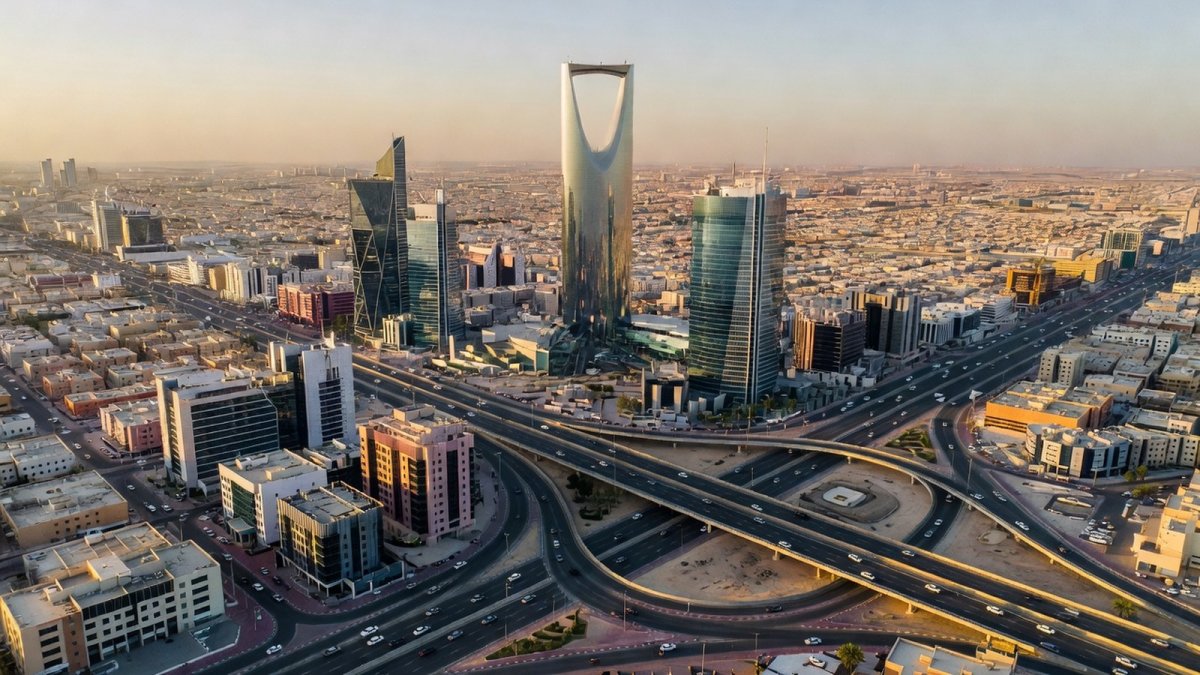
Execution Phase: From Planning to Performance Metrics
The transition to Phase Three (2026-2030) is not merely administrative. The 2025 report covers 1,290 active initiatives and 390 key performance indicators, with 93% of indicators meeting or exceeding annual targets. Of these, 935 initiatives have been fully implemented, with 225 progressing on schedule. This is a marked shift from the early years of Vision 2030, which were characterized by grand announcements and foundational work. Ali Hammad of Maximus Gulf, a firm that has trained over 600,000 people in workforce transformation programs, argues that the next big test is human capital. Hammad and his firm, which has trained more than 600,000 people in workforce transformation programs, argue that human capital is the next big test: the delivery phase depends on Saudi talent and a deeper private-sector labor market, a theme he develops in the Al Arabiya English report.
The execution phase is also defined by a recalibration of the Public Investment Fund (PIF). The newly approved 2026-2030 strategy pivots from building new assets at scale to generating returns from existing holdings, with the private sector positioned as a co-investor. This is a subtle but significant admission: the era of blank-check spending on speculative megaprojects is yielding to a more disciplined, return-on-investment approach. PIF assets under management stand at approximately US$930 billion in 2026, still far from the US$2 trillion target for 2030, but the fund's strategic direction is now focused on monetization and yield.
Historical Background: A Decade of Transformation
Launched in April 2016 by Crown Prince Mohammed bin Salman, Vision 2030 was a comprehensive plan to end Saudi dependence on oil, diversify the economy, and develop public services in health, education, infrastructure, recreation, and tourism. The early years saw landmark achievements: the world's largest IPO of Saudi Aramco in 2019, the lifting of the female driving ban in 2018, and a dramatic opening of the entertainment sector. Female workforce participation surged from approximately 17% in 2016 to 35.5% in 2025, exceeding the 30% target. Homeownership among Saudi families reached 66.24%, up from 47% at the launch.
However, the path has not been linear. The 2017 construction pause on the Jeddah Tower (formerly Kingdom Tower), designed to exceed 1,000 meters, symbolized the gap between ambition and execution. The oil price shocks of 2020 and the subsequent fiscal pressures tested the Kingdom's resolve. Yet, the 2025 data suggests a resilience that was not evident in the early years. Foreign direct investment (FDI) stock grew 119% since 2017, reaching US$78.2 billion, with inflows rising fivefold to US$35.5 billion in 2025 versus US$7.5 billion in 2017. More than 700 international companies have established regional headquarters in Saudi Arabia, up from just 44 in 2021.
Regional Dynamics: Gulf Competition and the US$3 Trillion Question
Saudi Arabia's execution phase unfolds against a backdrop of intense regional competition. The UAE and Qatar are also investing heavily in diversification, with Gulf sovereign wealth funds collectively managing roughly US$3 trillion. Abu Dhabi's Mubadala and ADQ, along with Qatar's Investment Authority, are pursuing similar strategies in technology, renewable energy, and logistics. The competition is not just economic; it is a contest for regional primacy in the post-oil era.
The geopolitical environment has added urgency. The February 2026 Iran war and the March 2026 Hormuz closure created additional fiscal pressure, even as higher oil prices temporarily boosted Saudi revenue. Brent crude is trading around US$89-90 per barrel in August 2026, providing a cushion but also masking structural vulnerabilities. Defense spending has increased, and Riyadh is forging a new security axis—the "Mecca Pact" with Türkiye and Pakistan, endorsed by Qatar—signaling a realignment of regional alliances that goes beyond the traditional Gulf Cooperation Council framework.
Strategic Calculus: What Each Side Wants
The strategic calculus for Riyadh is clear: demonstrate that Vision 2030 is not a mirage. The Kingdom wants to attract foreign investment, create private-sector jobs, and reduce unemployment from its current approximate 11% toward the 7% target. The leverage lies in the sheer scale of the domestic market and the PIF's US$930 billion war chest. However, the second-order effects are complex. The fiscal break-even oil price above US$90 per barrel means Saudi Arabia remains vulnerable to oil price volatility, despite diversification progress.
For the private sector, both domestic and international, the execution phase represents an opportunity to co-invest in a maturing market. The SME base has surpassed 1.7 million businesses, employing 8.8 million people and contributing 22.9% of GDP. The Tadawul stock market has grown into an MSCI Emerging Market component, providing a liquid exit for investors. The Riyad Bank Saudi Arabia PMI remained robust at 57 in March 2026, with non-oil growth projected at 4.5-5% in 2026, according to S&P Global.
Mega-Projects Reality: The NEOM Recalibration
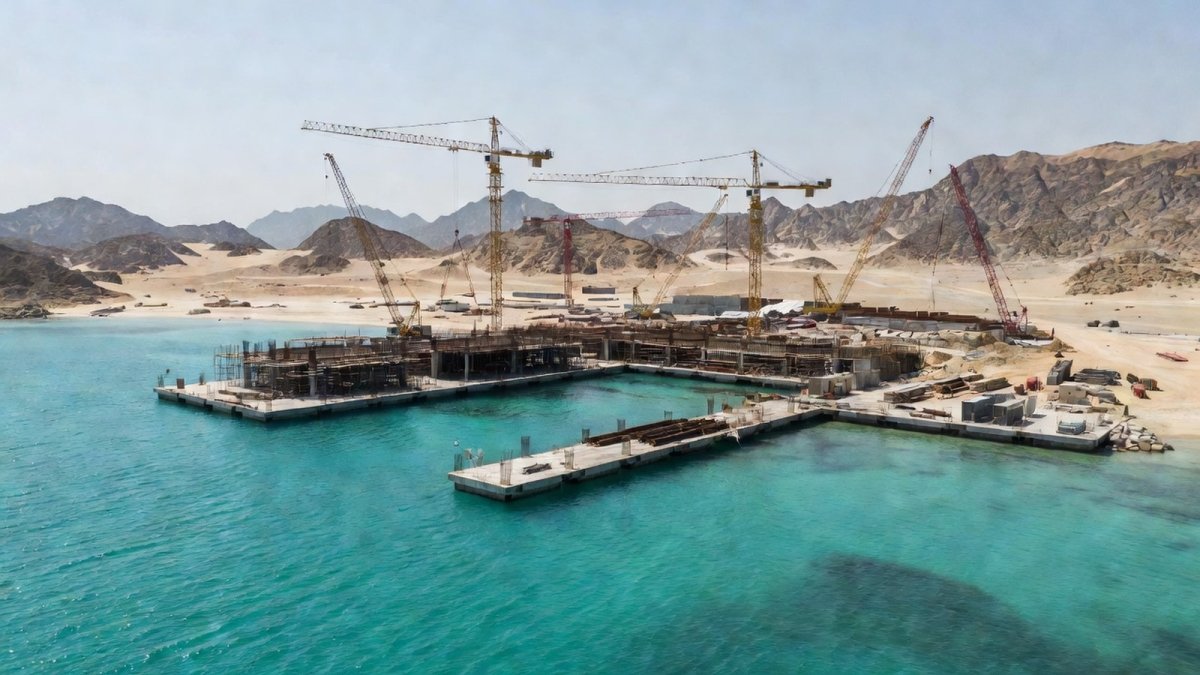
The most visible test of the execution phase is NEOM. The Line, the 170-kilometer linear city with a US$500 billion budget (independent estimates suggest US$1-2 trillion), had its construction suspended in September 2025 after completing only 2.4 kilometers of foundation. The population target has been slashed from 1.5 million to under 300,000. This is not a failure but a recalibration. NEOM's total spending through early 2026 is estimated at US$40-60 billion, and the focus has shifted to deliverable assets: Sindalah Island (75-80% complete, expected opening late 2026/early 2027 with an 86-yacht berth marina and three luxury hotels), Trojena (35-40% complete, selected to host the 2029 Asian Winter Games), and Oxagon, which has been scaled back to a coastal industrial zone with a green hydrogen partnership involving Air Products and ACWA Power.
The Red Sea tourism project is behind its original timeline but Phase 1 is opening. Diriyah Gate is largely on track. The message from Riyadh is pragmatic: deliver what is feasible, defer what is not, and anchor everything to the 2030 global events. The Riyadh Expo 2030 and the 2034 FIFA World Cup are not just spectacles; they are hard deadlines that will force the completion of infrastructure, hospitality, and logistics projects.
Regional Implications: Stability, Energy Markets, and Alliances
The execution phase of Vision 2030 has profound implications for Middle East stability. A diversified Saudi economy is a more resilient Saudi state, less prone to the boom-and-bust cycles that have historically destabilized the region. The shift toward private-sector-led growth, with the PIF as a co-investor rather than a sole financier, signals a maturation of the Saudi economic model. This is likely to attract further FDI, particularly from Asian and European partners seeking stable returns in a volatile region.
Energy markets remain the wildcard. Saudi Arabia's continued investment in oil capacity, even as it diversifies, ensures it remains a swing producer. The temporary Hormuz closure in March 2026 underscored the fragility of Gulf energy exports, even as Saudi Arabia's alternative export capacity helped cushion the shock for global markets. The "Mecca Pact" with Türkiye and Pakistan, endorsed by Qatar, suggests a new security architecture that could reduce reliance on traditional Western security guarantees.
For the broader Middle East, the success of Vision 2030's execution phase is a bellwether. If Saudi Arabia can demonstrate that a Gulf state can transition from hydrocarbon dependence to a diversified, private-sector-led economy, it will provide a template for other regional states. Conversely, a failure to deliver on the 2030 targets would embolden skeptics and could trigger a regional economic downturn. The stakes are high, but the trajectory is clear: Vision 2030 has entered its execution phase, and the world is watching.
By Malik Hassan, Staff Writer
This article was produced with AI-assisted research and editorial support. Reporting is based on sources cited in the article.
What's Your Reaction?
 Like
0
Like
0
 Dislike
0
Dislike
0
 Love
0
Love
0
 Funny
0
Funny
0
 Wow
0
Wow
0
 Sad
0
Sad
0
 Angry
0
Angry
0
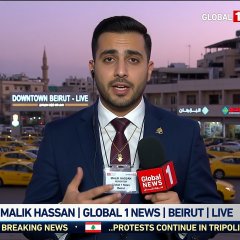
Middle East Correspondent at Global1.News. Based in Beirut, covering politics, conflict, energy, and society across the Middle East. Brings context and depth to a region often reduced to headlines.










Comments (0)