
Mecca Pact: Türkiye, Saudi Arabia, Pakistan Forge New Defense Axis as Qatar Endorses Regional Security Shift
Qatar threw its diplomatic weight behind the new trilateral defense pact linking Türkiye, Saudi Arabia and Pakistan on Tuesday, framing the agreement as a vital step toward collective security in a region beset by unpredictability and external pressure. The endorsement from Doha, delivered by...
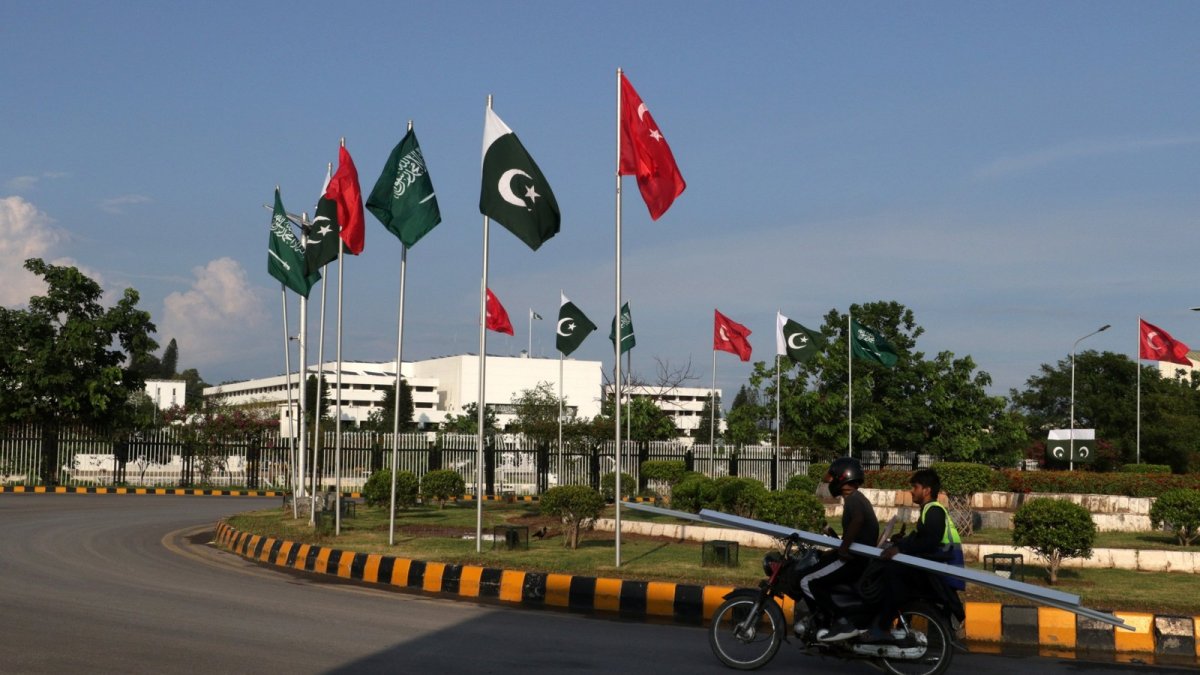
Qatar threw its diplomatic weight behind the new trilateral defense pact linking Türkiye, Saudi Arabia and Pakistan on Tuesday, framing the agreement as a vital step toward collective security in a region beset by unpredictability and external pressure. The endorsement from Doha, delivered by Foreign Ministry spokesman Majed Al-Ansari, signals that the Mecca Joint Defense Agreement—signed Aug. 7 in the holy city—is being received not as a provocative bloc but as a stabilizing architecture by key Gulf actors.
Mecca Pact: Türkiye, Saudi Arabia, Pakistan Forge New Defense Axis as Qatar Endorses Regional Security Shift
Doha, Qatar – August 12, 2026 — "We welcome any regional cooperation that strengthens security, stability and defense among the countries of the region," Al-Ansari told a weekly news conference, adding that the three signatories are nations with which Qatar shares "strategic relations and fraternal ties based on a shared destiny and common concerns." His remarks underscore a quiet but significant realignment: as Washington's security guarantees grow less predictable, Muslim-majority states are exploring indigenous frameworks for mutual defense.
The Pact Itself: A Mutual Defense Commitment in Mecca
The agreement, signed by Turkish President Recep Tayyip Erdoğan, Saudi Crown Prince Mohammed bin Salman and Pakistani Prime Minister Shehbaz Sharif, establishes a collective security framework that goes beyond traditional diplomatic declarations. At its core, the pact stipulates that an armed attack on any of the three countries "shall be regarded as an attack against them all," a formulation that Turkish Foreign Minister Hakan Fidan has explicitly compared to Article 5 of the NATO alliance.
The Mecca pact is not merely a symbolic gesture. It includes concrete defense arrangements under which the three nations will support one another's security, develop cooperation in the defense industry, and enhance military interoperability. The agreement explicitly aims to "strengthen collective deterrence against any act of aggression" while emphasizing that it does not target any specific country but rather seeks to preserve peace, stability and prosperity at regional and global levels.
This is a departure from previous regional security initiatives, which often relied on external guarantors. The Mecca pact reflects the will of regional powers rather than global powers, signaling a structural shift in how Middle Eastern and South Asian states conceptualize their security. It is, in essence, an attempt to construct a new security architecture at a time when the region and the world are undergoing significant structural dynamics.
The Three Pillars: Complementary Strengths of Ankara, Riyadh and Islamabad
The strategic logic of the pact rests on the complementary capabilities of its three signatories, each a dominant power in its respective subregion. Saudi Arabia brings immense financial capacity and religious legitimacy as the custodian of Islam's two holiest cities, Mecca and Medina. This gives Riyadh outsized influence among Muslim populations worldwide and the fiscal resources to underwrite large-scale defense initiatives.
Türkiye contributes high-tech military products, a robust defense industry, and a strategic position bridging Europe, the Middle East and the Caucasus. Ankara's drone technology, naval capabilities and operational experience have made it a sought-after security partner across the region. Pakistan, the world's second-most populous Muslim-majority nation with over 220 million citizens, offers a large standing military and, critically, nuclear capabilities—making it the only Muslim-majority state with atomic weapons and a high degree of strategic autonomy.
Together, these three states span Anatolia, the Arabian Peninsula and South Asia, collectively exerting influence across a vast geographical arc. Their powers are not redundant but complementary: Saudi financial muscle, Turkish technological sophistication, and Pakistani military heft create a synergy that no single state could achieve alone.
Why Now: Declining US Predictability and Israeli Expansionism
The timing of the Mecca pact is no accident. It was signed amid profound instability and uncertainty in the Middle East and beyond. The source material points to several converging factors that compelled the three leaders to formalize their defense relationship.
First, the pact is a direct response to declining American influence and confidence in the region. Despite international criticism of the humanitarian catastrophe in Gaza, the U.S. government has continued to provide unconditional support to Israel. American military bases in the Gulf have not prioritized the protection of host countries, and U.S. power has become increasingly unpredictable. This declining predictability has generated acute insecurity for regional states that previously relied on Washington's security umbrella.
Second, the agreement responds to Israeli expansionism and aggression against neighboring countries. Over the past three years, Israel has unilaterally attacked Palestine—both Gaza and the West Bank—as well as Lebanon, Syria, Iraq, Iran and Yemen. Israeli authorities and Western commentators have begun openly discussing Türkiye as the next target. This rhetoric, combined with Western support for Israeli actions, has created an environment in which regional powers feel compelled to formalize their mutual defense commitments.
The pact also comes as Israel and its supporters pressure Saudi Arabia to sign the Abraham Accords, which would establish a regional order under Israeli leadership. The Mecca pact can be read, in part, as Riyadh's assertion of an alternative vision—one rooted in Muslim-majority solidarity rather than normalization on Israeli terms.
Strategic Objectives: Regional Ownership and Strategic Autonomy
The Mecca pact pursues several critical political and military objectives that extend beyond simple mutual defense. Foremost among these is the principle of "regional ownership," a perspective championed by Türkiye. The agreement seeks to prevent any regional state or global power from controlling the Middle East order, recognizing that the dominance of a single state creates strategic vulnerability for all others. The three signatories aim to become joint security providers, addressing the problems facing Muslim states through mechanisms established and managed by Muslim states themselves.
A second objective is increasing the collective strategic autonomy of member states. By blocking security risks and mobilizing complementary resources, the pact attempts to improve interdependencies among the three nations and enhance their strategic resilience. This represents an explicit effort to break free from dependency on external powers, particularly the American security umbrella that has historically defined Gulf and South Asian defense postures.
Third, the pact functions as a deterrent bloc against revisionist policies pursued by actors such as Iran, India and the United Arab Emirates. The agreement establishes what the source material describes as an "axis of stability" that will counter any actors seeking to block prospects of a peaceful, stable and prosperous future for regional peoples. As an additional step, a multinational maritime defense coalition has been formed under Saudi leadership with the participation of 13 countries from the Middle East, South Asia and East Africa.
Regional Reactions and Frictions: Iran, India, UAE and the Abraham Accords
The Mecca pact inevitably generates friction with regional actors who view the new alignment with suspicion. Iran, which has its own network of proxies and strategic depth across the region, may perceive the trilateral agreement as a Sunni counterweight to Shia influence. India, a rising power with its own tensions with Pakistan, will watch the pact closely given Islamabad's nuclear capabilities and its new formalized ties with Ankara and Riyadh. The UAE, which has pursued its own assertive regional policy, may see the agreement as limiting its room for maneuver.
Qatar's endorsement, however, suggests that not all Gulf states view the pact as threatening. Doha's characterization of the agreement as a positive framework for regional security indicates that the Mecca pact may attract broader support among Muslim-majority states. The agreement is explicitly open to all other peace-loving countries, leaving the door open for future expansion.
The pressure on Saudi Arabia to sign the Abraham Accords remains a critical backdrop. The Mecca pact gives Riyadh leverage in any future normalization negotiations, signaling that the kingdom has alternative security arrangements that do not depend on Israeli or American goodwill. This does not foreclose normalization, but it changes the terms under which it might occur.
Broader Implications: Energy Markets, Gulf Security and the Regional Order
The strategic implications of the Mecca pact extend well beyond the three signatories. For global energy markets, the agreement introduces a new variable: Saudi Arabia, the world's leading oil exporter, now has formalized defense ties with two major Muslim-majority military powers. Any future conflict involving the kingdom would trigger collective defense obligations from Türkiye and Pakistan, potentially drawing these states into Gulf security dynamics in unprecedented ways.
For Gulf security more broadly, the pact represents a diversification of security partnerships. The Gulf monarchies have historically relied on the United States for protection, but the Mecca pact offers an alternative framework rooted in regional solidarity. This does not necessarily mean the end of American basing rights or security cooperation, but it does mean that Washington can no longer take Gulf security for granted.
The agreement also has implications for the broader Muslim world. By establishing a security architecture among three of the most powerful Muslim-majority states, the pact creates a potential model for collective action that could be extended to other countries. It reflects a vision in which Muslim states address their own security challenges through their own mechanisms, reducing dependence on external guarantors whose interests may not align with regional stability.
Regional Implications: A New Axis of Stability or a Source of Tension?
The Mecca Joint Defense Agreement represents a significant evolution in Middle East security architecture. By formalizing mutual defense commitments among Türkiye, Saudi Arabia and Pakistan, the pact creates a new pole of power that could reshape regional dynamics. Its emphasis on regional ownership and strategic autonomy reflects a broader trend among Muslim-majority states to reduce their dependence on external security providers.
Yet the agreement also carries risks. It could deepen divisions with Iran, India and the UAE, potentially escalating regional rivalries. It may complicate American and Israeli strategic calculations, leading to countermeasures. And its effectiveness will ultimately depend on the willingness of the three signatories to honor their commitments in times of crisis—a test that has yet to come.
For now, the Mecca pact stands as a statement of intent: three major Muslim-majority powers have decided that their security is their own responsibility. Qatar's endorsement suggests that this vision resonates beyond the signatories. As the region continues to grapple with Israeli expansionism, American unpredictability and great power competition, the Mecca pact offers a template for collective action that other states may choose to follow. Whether it becomes a genuine axis of stability or a source of new tensions will depend on how the signatories navigate the complex strategic landscape they have chosen to shape.
Reporting is based on sources cited in the article.
By Malik Hassan, Staff WriterThis article was produced with AI-assisted research and editorial support. Reporting is based on sources cited in the article.
What's Your Reaction?
 Like
0
Like
0
 Dislike
0
Dislike
0
 Love
0
Love
0
 Funny
0
Funny
0
 Wow
0
Wow
0
 Sad
0
Sad
0
 Angry
0
Angry
0
Middle East Correspondent at Global1.News. Based in Beirut, covering politics, conflict, energy, and society across the Middle East. Brings context and depth to a region often reduced to headlines.











Comments (0)