
Israel Police Deploy Drones to Combat Arab Crime Wave
Israel Police deploy VTOL surveillance drones in southern Israel to fight organized crime and record homicide rates in Arab communities, as the cabinet approves a NIS 497 million Shin Bet-backed crackdown.
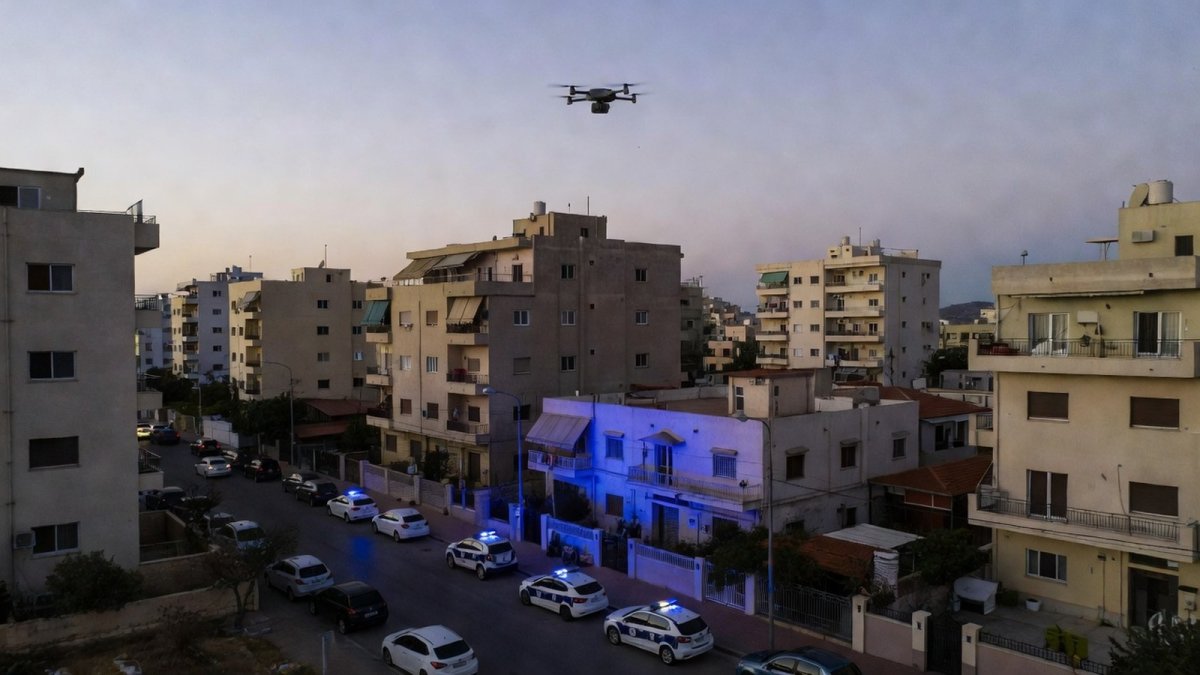
In a recent i24NEWS English report, the Israeli police force showcased its expanding use of drone technology to combat a surging wave of crime, particularly in the country’s southern region. The segment, published this week, highlights how aerial surveillance has moved from a niche military tool to a frontline policing asset, with the Southern District Police deploying advanced unmanned aircraft over the Negev. This development marks a significant tactical shift for law enforcement, which is grappling with record homicide rates and sophisticated criminal networks that have long exploited the region’s porous borders and vast open spaces.
From Rahat to the Negev: Drones Take Center Stage in Israel’s War on Crime
Jerusalem, Israel — The Israel Police confirmed in May 2026 the official deployment of drones to fight crime in southern Israel, following a successful trial run near Rahat, the Bedouin city in the Negev that has been a focal point of violent clashes and organized crime. The announcement, made by Southern District Police Commander Chief Superintendent Haim Bublil, signals a new era in domestic security operations, one that leverages Israeli innovation to address a crisis that has claimed hundreds of lives in recent years. The initiative, funded by the National Security Ministry and approved by National Security Minister Itamar Ben-Gvir and Police Commissioner Danny Levi, is now a permanent fixture in the district’s operational playbook.
The drones in question are not your average consumer quadcopters. According to police specifications, they feature vertical takeoff and landing (VTOL) capabilities, can fly for tens of kilometers over several hours, and are equipped with advanced day and night surveillance systems. They operate quietly, allowing for covert deployment, and provide precise, continuous real-time situational data to commanders on the ground. This technology allows police to track suspects across the rugged terrain of the Negev, a region that has historically been a challenge for ground-based patrols due to its size and sparse population density.
A Direct Warning to Criminals in the South
Commander Bublil did not mince words when announcing the deployment. “Anyone choosing to engage in violence, shootings, or serious crime should know: There is nowhere to hide,” he stated. “The long and determined arm of the Southern District Police will reach them, and the response will be rapid, decisive, and uncompromising.” The message is aimed squarely at the criminal clans operating in and around Rahat, as well as in the mixed cities of the Negev, where turf wars over weapons trafficking and narcotics have turned residential streets into battlegrounds.
Police sources described the drone program as “a game-changing tool, which provides forces in the field with broad and continuous coverage, real-time intelligence collection, and rapid closure against criminal operations.” This is not merely about chasing suspects after a shooting; it is about preventing attacks by maintaining a persistent aerial presence that deters criminals from even attempting to move weapons or stage an ambush. The quiet nature of the drones is particularly crucial, allowing police to observe a suspect’s compound or a smuggling route without alerting the entire neighborhood.
The timing of this technological push is no accident. In May 2026, police and the Shin Bet dismantled a major criminal network that had been smuggling weapons and narcotics into Israel from Egypt and Jordan. The operation, which involved the Shin Bet and the police’s Central Unit of the Negev, resulted in the arrest of six Israeli citizens. Investigators revealed that the smugglers were using hidden vehicle compartments—and, notably, their own drones—to ferry contraband across the border. The smuggling operation, which dated back to early 2024, involved pistols, military rifles, heavy machine guns, ammunition, and significant quantities of narcotics.
The Shin Bet Enters the Domestic Arena
The drone deployment is just one pillar of a broader, more aggressive national strategy. In July 2026, the Israeli cabinet approved a landmark plan to bring the Shin Bet into the fight against crime in the Arab sector, a move that had been debated for years but was finally greenlit amid public pressure and rising death tolls. The plan, led by Prime Minister Benjamin Netanyahu, National Security Minister Itamar Ben-Gvir, and Social Equality Minister May Golan, involves diverting approximately NIS 497 million from the five-year development plan for Arab society to fund security operations.
Of that sum, NIS 364.5 million (roughly $122 million) will go to the Shin Bet to establish a dedicated unit focused on combating smuggling and weapons trafficking, along with enhanced intelligence-gathering capabilities. An additional NIS 132.4 million (about $44 million) will be allocated to the Israel Police to create a dedicated national unit to combat crime in Arab society, including investments in technological infrastructure and advanced operational equipment. The plan also adds 130 personnel positions to the Shin Bet starting in 2026, with a permanent annual budget of NIS 35 million to sustain the effort.
Prime Minister Netanyahu framed the decision as a watershed moment. “Involving the Shin Bet in the fight against crime in Arab society, which has become a national plague, is dramatic news and a significant step in the all-out war we are waging against criminal organizations,” he said. The move effectively treats organized crime in the Arab sector as a national security threat on par with terrorism, a classification that grants the Shin Bet broader surveillance and operational powers than standard police work.
A Deadly Toll: The Numbers Behind the Crisis
The urgency of these measures is underscored by grim statistics. In 2025, 252 Arab citizens were murdered across 218 criminal incidents, making it the deadliest year on record for the community. This represents a roughly 10% increase from the 230 killed in 2024. The Abraham Initiatives, a non-profit that tracks these figures, reported that 88% of the victims were killed by gunfire, and a record 23 women were among the dead. Approximately 5% of the victims were minors, a chilling indicator of how deeply the violence has penetrated family life.
Geographically, the violence is concentrated in the north and center of the country. The Abraham Initiatives recorded 141 murders in the north, including in Haifa and its surrounding Arab towns, and 72 in the central region around Tel Aviv. The south, including the Negev and Rahat, accounted for 35 murders. The official police count for all homicides in Israel in 2025 was 309, with 241 victims in the Arab sector and 47 in the Jewish sector. Given that Arabs make up roughly 21% of Israel’s population, they account for a vastly disproportionate share of the murder victims.
Perhaps the most damning statistic is the clearance rate. Police have solved only 12-15% of homicides in Arab communities, compared to about 65% in Jewish communities. This disparity has fueled a deep mistrust between the Arab public and the police, with many residents believing that law enforcement simply does not prioritize their safety. The low solve rate also emboldens criminals, who know that the odds of being caught for a murder are slim.
From Sakhnin to the Knesset: A National Emergency
The public’s frustration boiled over in January 2026, when tens of thousands of protesters gathered in Sakhnin, a city in the Galilee, to demand action against the violence. The protest, one of the largest Arab-sector demonstrations in recent memory, put immense political pressure on the government to move beyond rhetoric. In February 2026, Police Commissioner Daniel Levi formally declared Arab-sector crime a state of national emergency, a designation that allows for expedited resource allocation and inter-agency cooperation.
The murder rate in the Arab community has roughly doubled since late 2022, a surge that coincides with the political instability and the weakening of traditional clan authority structures. The proliferation of illegal weapons, many of them smuggled across the Sinai and Jordanian borders, has turned disputes that were once settled with fists or knives into fatal shootings. The smuggling routes themselves have deep historical roots; Ottoman-era and British Mandate records describe police and military units intercepting weapons, narcotics, and even livestock shipments along these same desert paths. The problem is not new, but the scale and lethality are unprecedented.

Israeli Innovation Meets a Domestic Challenge
Israel’s status as a global leader in drone technology—both in the military and civilian sectors—makes the police’s adoption of these tools a natural fit. Companies like Elbit Systems and Rafael have long supplied the IDF with cutting-edge unmanned systems, and the civilian market has boomed with agricultural and security applications. The police’s new VTOL drones are likely adapted from these existing platforms, customized for law enforcement needs such as tracking vehicles across open terrain or providing overwatch during high-risk arrests.
However, the use of drones domestically raises civil liberties questions, particularly in Arab communities where trust in the state is already low. Privacy advocates have warned that persistent aerial surveillance could be used to monitor entire neighborhoods, not just criminal suspects. Police have countered that the drones are used strictly for operational purposes and are subject to oversight, but the lack of a clear legal framework for domestic drone use remains a point of contention. The Shin Bet’s new role in the Arab sector adds another layer of concern, as the agency’s methods are traditionally opaque and not subject to the same public scrutiny as police work.
For residents of Rahat, Lod, and Umm al-Fahm, the debate over surveillance is secondary to the immediate fear of gunfire. The drones offer a tangible promise of protection, a visible sign that the state is finally paying attention. For the police, they represent a force multiplier in a fight where they have been outgunned and outmaneuvered. The combination of aerial surveillance, Shin Bet intelligence, and a dedicated national police unit represents the most comprehensive response to date.
What This Means for Daily Life in Israel
The implications of this crackdown extend far beyond the Arab sector. The smuggling networks that bring weapons into Israel are the same pipelines that supply criminal organizations in Jewish communities, and the violence in Arab towns often spills over into mixed cities like Lod and Acre. A reduction in the flow of illegal weapons would have a stabilizing effect on the entire country. Moreover, the success or failure of this initiative will shape the relationship between the state and its Arab citizens for a generation. If the Shin Bet and police can reduce the murder rate and bring perpetrators to justice, it could begin to repair the trust that has been eroded by years of neglect. If they fail, the alienation will only deepen.
The drone program in the south is already operational, and the national unit is expected to be fully staffed by the end of the year. The coming months will be a test of whether technology, intelligence, and political will can reverse a trend that has claimed too many lives. For now, the skies over the Negev are being watched, and for the first time in years, the criminals of Rahat have reason to look up.
By Hannah Berg, Staff Writer
This article was produced with AI-assisted research and editorial support. Reporting is based on sources cited in the article.
What's Your Reaction?
 Like
0
Like
0
 Dislike
0
Dislike
0
 Love
0
Love
0
 Funny
0
Funny
0
 Wow
0
Wow
0
 Sad
0
Sad
0
 Angry
0
Angry
0

Israel Correspondent at Global1.News. Based in Tel Aviv, covering Israeli politics, security, technology, and society. Provides balanced, deeply-sourced reporting on one of the most closely-watched regions in the world.















Comments (0)