
Saudi Red Sea Coalition: A New Maritime Order Emerges
Saudi Arabia launched a 43-nation maritime coalition on Thursday to protect Red Sea shipping from Houthi blockade and attacks. With at least 14 nations confirmed, oil near $90, and the Strait of Hormuz already closed, the dual maritime crisis threatens Saudi Vision 2030 and global energy markets. The coalition signals Riyadh's shift toward independent security leadership amid the widening Iran proxy conflict.
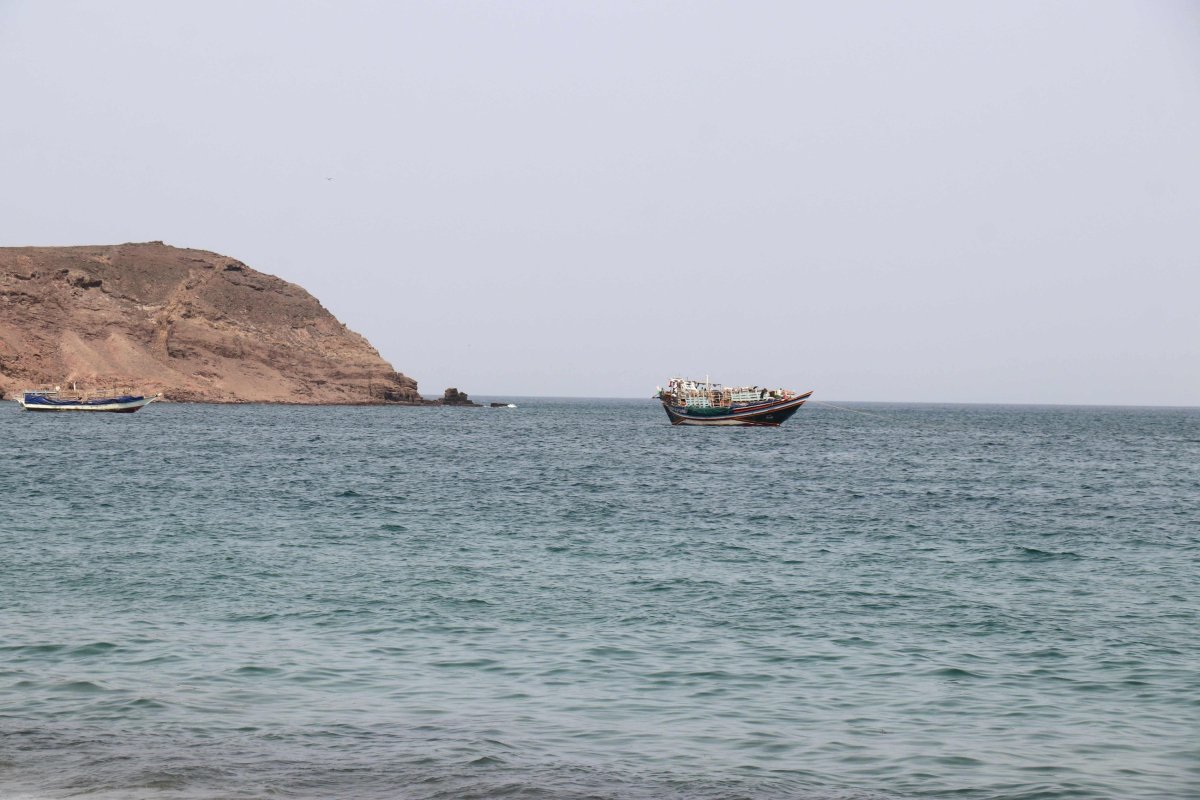
Riyadh, Saudi Arabia — Saudi Arabia on Thursday announced the formation of a multinational maritime defence coalition aimed at safeguarding freedom of navigation in the Red Sea and the Bab al-Mandeb Strait, marking the kingdom's most assertive move yet to counter Iran-backed Houthi attacks on international shipping lanes. The initiative, involving up to 43 nations with at least 14 confirmed participants in its inaugural Riyadh meeting, comes as the Houthi blockade of Saudi-linked shipping enters its second week and oil prices hover near $90 per barrel.
The coalition represents a critical escalation in the regional response to the Houthi maritime campaign, which has effectively closed both the Bab al-Mandeb Strait and, by extension, the Suez Canal to Saudi shipping since the blockade was announced on July 20. At least one Saudi-owned oil tanker has been attacked by ballistic missile, with the Houthis claiming additional strikes on two Saudi vessels on July 23.
Yemen's Iran-aligned Ansar Allah movement, known internationally as the Houthis, imposed the maritime blockade after months of escalating rhetoric against Saudi Arabia amid the wider US-Iran war that has already closed the Strait of Hormuz since February 2026. The cumulative effect of both chokepoint closures has sent shockwaves through global energy markets and threatens the economic foundations of Saudi Arabia's Vision 2030 diversification agenda.
The Coalition Structure: 43 Nations, 14 Confirmed
The Saudi-led coalition held its founding meeting in Riyadh on Thursday, bringing together representatives from nations spanning the Middle East, Africa, Asia, and Europe. While Saudi officials have invited 43 countries to participate, the inaugural session confirmed at least 14 nations as active members, with additional states expected to join in the coming weeks as the coalition's operational framework takes shape.
The grouping's mandate encompasses the Red Sea, the Bab al-Mandeb Strait, and the Gulf of Aden — a tripartite maritime zone through which approximately 12 percent of global trade and an estimated 30 percent of container traffic normally transits. The coalition's stated objective is defensive: protecting commercial vessels, ensuring freedom of navigation, and deterring further Houthi attacks on shipping. However, the precise rules of engagement, command structure, and the extent of each member's military contribution remain under negotiation, with officials describing the arrangement as a "framework in formation."
The coalition is distinct from the US-led Operation Prosperity Guardian, launched in December 2023, and the European Union's ASPIDES naval mission, both of which have operated in the Red Sea with limited success in deterring Houthi attacks. Saudi Arabia's direct assumption of leadership signals a strategic shift: Riyadh is no longer content to rely solely on external naval coalitions to protect its maritime interests and is instead building its own security architecture for the Red Sea.
The Houthi Blockade: A Strategic Escalation
The Houthi blockade of Saudi shipping, announced on July 20, represents a qualitative escalation in the Yemeni group's maritime campaign. Since November 2023, the Houthis have attacked over 100 commercial vessels in the Red Sea and Gulf of Aden, ostensibly in solidarity with Palestinians in Gaza. But the July 20 blockade declaration specifically targets Saudi-linked vessels — a direct challenge to the kingdom's sovereignty and economic lifeline.
On July 23, the Houthis claimed responsibility for missile and drone attacks on two Saudi ships in the Red Sea, which the rebels said had violated their blockade. Six days later, on July 29, the group claimed a ballistic missile strike on a Saudi oil tanker, forcing the vessel to take evasive action. The attacks have already forced several Saudi-owned tankers to divert to longer, costlier routes around the Cape of Good Hope, adding weeks to transit times and millions of dollars in additional fuel and insurance costs.
The Houthis have also signaled their intention to impose transit fees on vessels passing through the Red Sea, a move that would effectively replicate the toll-collection model that Iran has long employed through its control of the Strait of Hormuz. According to reports from Reuters, the group is actively considering a fee structure for ships that wish to pass without being targeted — a de facto taxation of international trade that, if implemented, would set a dangerous precedent for maritime security.
The Military Dimension: Offensive Preparations Underway
Beyond the coalition announcement, multiple independent reports indicate that Saudi Arabia is preparing for a broader military campaign against the Houthis. The Guardian reported Thursday that Saudi forces are planning a "major offensive" against the group in central Yemen, potentially involving both naval and ground operations. Yemeni sources have confirmed significant Saudi force redeployments from eastern governorates — including Mahra, Seiyun, and Mukalla — in what analysts interpret as the repositioning of assets for a strike into Houthi-held territory.
The redeployments are significant because they reverse years of Saudi military disengagement from Yemen. Since the 2022 UN-brokered truce, Saudi Arabia had progressively reduced its direct military footprint in the country, focusing instead on diplomatic engagement with the Houthis through Omani-mediated channels. That diplomatic track collapsed in mid-2026 as the Houthis intensified their maritime campaign and rejected Saudi demands for a cessation of Red Sea attacks.
The Saudi-led coalition also conducted airstrikes on Houthi positions in central Yemen this week, according to regional media reports, suggesting that Riyadh is already moving beyond deterrence toward active military operations. A combined naval-ground offensive would represent the most significant Saudi military action in Yemen since the early years of the 2015 intervention and carries substantial risks of escalation, including potential Iranian retaliation through proxy networks in Iraq, Lebanon, and Syria.
Economic Shockwaves: Oil Markets and Vision 2030 Under Threat
The convergence of the Hormuz closure and the Red Sea blockade has created a two-front maritime crisis unprecedented in modern Middle East history. Oil prices have surged toward $90 per barrel, adding inflationary pressure to global markets already strained by two and a half years of elevated energy costs. For Saudi Arabia, the impact is paradoxical: higher oil revenues from elevated prices are offset by the disruption of its own export capacity and the rising cost of alternative shipping routes.
The Red Sea route is critical not only for Saudi oil exports but also for the kingdom's broader economic transformation. Vision 2030, Crown Prince Mohammed bin Salman's ambitious diversification program, relies heavily on the Red Sea as a conduit for non-oil trade, tourism, and foreign investment. The NEOM megacity project on the Red Sea coast, the Red Sea luxury tourism developments, and the kingdom's aspirations to become a global logistics hub all depend on secure maritime access. A prolonged blockade threatens to undermine the confidence of international investors who have poured billions into Saudi megaprojects.
The European Union's naval mission in the Red Sea has already raised its threat assessment for the North Red Sea, while insurance premiums for vessels transiting the region have increased fivefold since the blockade was announced. Chatham House, the London-based think tank, warned this week that the Houthi blockade marks a "dangerous new phase" that risks a "prolonged crisis followed by a breakdown in maritime security cooperation." The cost of inaction, the analysis suggests, could be the effective severing of one of the world's most vital trade arteries.
Regional Dynamics: Sunni-Shia Competition and the Iran Factor
The Red Sea crisis cannot be understood in isolation from the broader Iran-Saudi Arabia proxy conflict that has defined Middle Eastern geopolitics for over four decades. The Houthis are the most militarily capable of Iran's proxy networks, armed with ballistic missiles, drones, and anti-ship cruise missiles supplied by Tehran. Their blockade of Saudi shipping is, in effect, an Iranian blockade — executed by proxy but serving Tehran's strategic objective of pressuring Riyadh without triggering a direct Iran-Saudi confrontation.
The timing of the escalation is no coincidence. With the Strait of Hormuz effectively closed by the US-Iran war and Iran's own navy asserting control over the Gulf's maritime chokepoint, the Houthi blockade completes a pincer movement that traps Saudi Arabia between two closed straits. This dual blockade strategy — Hormuz in the east, Bab al-Mandeb in the west — gives Tehran enormous leverage over Riyadh without requiring Iranian forces to directly engage Saudi assets.
Egypt and Jordan, both of which depend on Red Sea trade routes, have expressed support for the Saudi initiative, though neither has confirmed military participation. Egypt's Suez Canal Authority has reported a 60 percent decline in canal revenues since the Houthi attacks began in late 2023, and the complete closure of Bab al-Mandeb to Saudi shipping threatens to deepen Cairo's foreign exchange crisis. Turkey, which has maintained a careful balancing act between its NATO obligations and its economic relationship with Iran, has not publicly commented on the coalition but is reportedly monitoring developments closely.
Strategic Calculus: What Each Side Wants
For Saudi Arabia, the imperative is clear: restore freedom of navigation in the Red Sea before the economic and reputational damage becomes irreversible. The coalition serves multiple strategic objectives: it distributes the military burden across multiple nations, provides political cover for potential offensive operations, and signals to both the Houthis and Iran that Riyadh is prepared to lead rather than follow on maritime security. For Crown Prince Mohammed bin Salman, who has staked his political future on Vision 2030, the blockade represents an existential threat to his reform agenda.
For the Houthis, the blockade serves both tactical and strategic purposes. Tactically, it pressures Saudi Arabia to halt its airstrikes and resume diplomatic negotiations on terms favorable to the group. Strategically, it demonstrates the Houthis' ability to project power beyond Yemen's borders and positions them as a regional actor capable of disrupting global trade — a status that, they hope, will translate into political legitimacy and economic concessions. The group's consideration of transit fees suggests an ambition to institutionalize its control over the Red Sea passage, transforming a military capability into a permanent revenue stream.
For Iran, the calculus is more complex. The Houthi blockade serves Tehran's interests by pressuring Saudi Arabia without direct Iranian involvement, but a prolonged crisis carries risks of escalation that could draw Iran into a wider confrontation. The IRGC's Quds Force, which has trained and equipped the Houthis for years, is likely weighing the benefits of continued disruption against the costs of a full-scale Saudi offensive that could degrade its most valued proxy asset.
Regional Implications: A New Maritime Security Paradigm
The Saudi-led coalition represents a potential paradigm shift in Middle Eastern maritime security. For decades, the United States served as the guarantor of freedom of navigation in the region's waterways. But the US Navy's resources are increasingly stretched thin by the Indo-Pacific pivot, the war in Ukraine, and the broader US-Iran confrontation. Saudi Arabia's decision to build its own coalition reflects a recognition that Washington's capacity — and perhaps willingness — to defend Gulf maritime interests has limits.
This emerging Saudi-led security architecture could reshape regional alliances. Gulf Arab states that have long relied on the US security umbrella may look increasingly to Riyadh for leadership on maritime defense. Conversely, the coalition's success or failure will have implications for the UAE, Qatar, and Oman, each of which has pursued distinct approaches to the Houthi challenge — from Abu Dhabi's support for secessionist factions in southern Yemen to Muscat's traditional role as a mediator between Riyadh and Sanaa.
The coming weeks will be critical. If the coalition can rapidly establish a credible deterrent presence in the Red Sea and deter further attacks, it may create the conditions for renewed diplomacy. If Houthi attacks continue unabated, the region could face a widening conflict that draws in multiple actors and permanently alters the balance of power in one of the world's most strategically important waterways.
By Malik Hassan, Staff Writer
This article was produced with AI-assisted research and editorial support. Reporting is based on sources cited in the article.
What's Your Reaction?
 Like
0
Like
0
 Dislike
0
Dislike
0
 Love
0
Love
0
 Funny
0
Funny
0
 Wow
0
Wow
0
 Sad
0
Sad
0
 Angry
0
Angry
0

Middle East Correspondent at Global1.News. Based in Beirut, covering politics, conflict, energy, and society across the Middle East. Brings context and depth to a region often reduced to headlines.












Comments (0)