
Saudi Cabinet Activates Maritime Defense Alliance, Condemns Iran Attacks
The Gulf's maritime arteries are hardening into a new front line. As the US-Israel war on Iran enters its sixth month, Saudi Arabia has moved decisively to consolidate a defensive naval architecture that could reshape the balance of power in the Red Sea and the Arabian Gulf.
The Gulf's maritime arteries are hardening into a new front line. As the US-Israel war on Iran enters its sixth month, Saudi Arabia has moved decisively to consolidate a defensive naval architecture that could reshape the balance of power in the Red Sea and the Arabian Gulf.
Saudi Arabia Activates Multinational Maritime Defense Alliance as Cabinet Condemns Iranian Attacks on Commercial Shipping
Riyadh, Saudi Arabia - August 18, 2026 — Saudi Arabia's Cabinet, chaired by King Salman in Riyadh, formally welcomed the operational activation of the Multinational Maritime Defense Alliance on Tuesday, marking a significant escalation in the Kingdom's efforts to secure critical sea lanes against Iranian and Iran-backed threats. The council simultaneously condemned repeated Iranian attacks on commercial ships and tankers as a "dangerous escalation" and a direct threat to maritime security, according to the Saudi Press Agency.
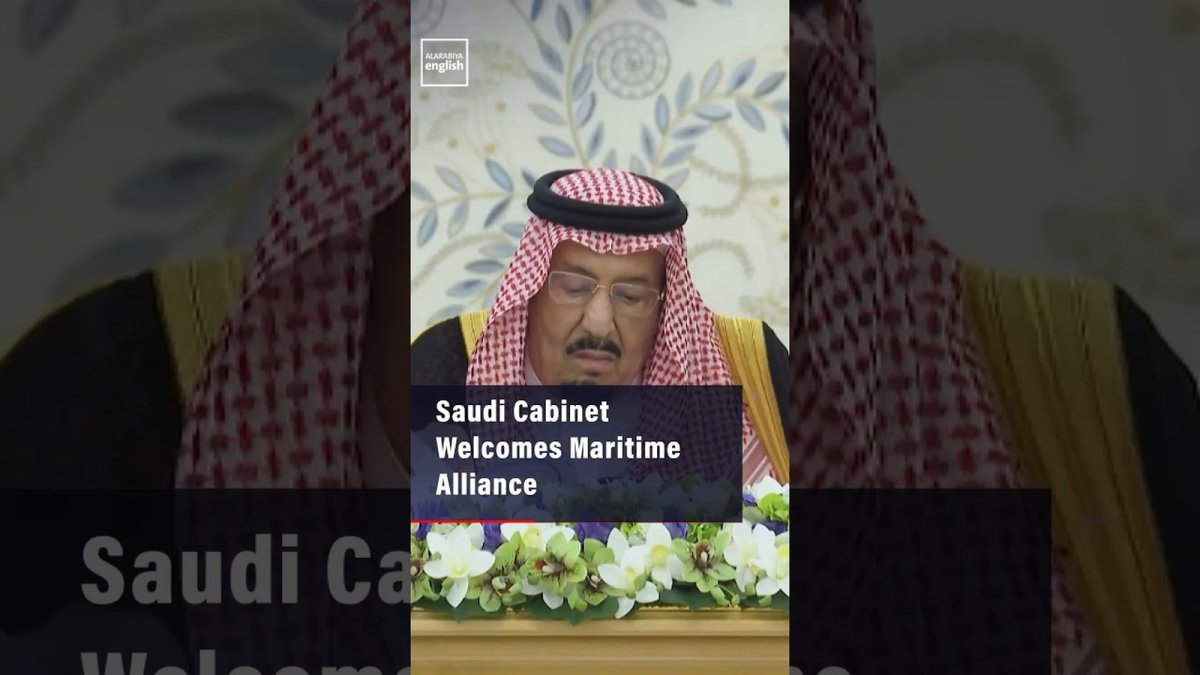
The Cabinet's statement described the Iranian attacks as a grave violation of international law and a blatant challenge to a UN Security Council resolution requiring respect for the navigation rights of commercial vessels transiting the Strait of Hormuz. The council warned that such attacks threaten the security and safety of maritime navigation and condemned any threats or measures that could obstruct freedom of navigation through the strategic waterway. In a parallel move, the Cabinet approved agreements with Malaysia, Kuwait, and Tunisia to strengthen bilateral cooperation, signaling Riyadh's broader diplomatic push to build a coalition of partners across the Islamic and Arab worlds.
A Coalition Takes Shape: From Riyadh Declaration to Operational Command
The Multinational Maritime Defense Alliance traces its origins to July 30, 2026, when the Saudi Ministry of Defence announced its creation following a Riyadh meeting of military representatives from 43 nations. Described as "an open international coalition," the framework was designed to provide collective maritime defence cooperation across the Bab al-Mandeb Strait, the Red Sea, and the Gulf of Aden. By August 13, the alliance had convened its third meeting in Jeddah, where 15 countries signed the joint statement, 13 completed national procedures, signed the coalition charter, and officially announced their accession.
The founding members include Bahrain, Bangladesh, Comoros, Djibouti, Egypt, Jordan, Kuwait, Pakistan, Qatar, Saudi Arabia, Somalia, Sudan, Turkiye, and Yemen. The coalition has appointed Rear Admiral Abdullah bin Salem Al-Shehri as its commander, who emphasized in early August that the alliance is "purely defensive" and not directed against any country, organization, or alliance. The operational headquarters and planning functions are based in Jeddah, positioning Saudi Arabia at the center of the maritime security architecture.
What the Alliance Will Actually Do
According to the Saudi Ministry of Defence, member states will exchange information and intelligence, develop operational planning, conduct joint naval exercises and drills, build military capabilities, and carry out joint naval operations. The scope is deliberately defensive, focused on protecting freedom of navigation and maritime routes and straits, while supporting the continuity of international trade and global supply chains. The alliance's activation comes after weeks of organizational and planning arrangements, with the institutional framework now formally in place.
Ahmed Nagi, senior analyst for Yemen at the International Crisis Group, told Al Jazeera that the alliance could be significant but depends on its effectiveness. "It is largely defensive so far," Nagi said. "The goal is to raise the cost of Houthi attacks and create a stronger deterrent. Riyadh wants the response framed as a global issue, not just a Saudi one." This framing is critical: by internationalizing the threat, Saudi Arabia seeks to avoid being seen as acting unilaterally while building a broad-based coalition that includes both Gulf neighbors and extra-regional partners like Turkiye and Bangladesh.
The Strategic Context: A Waterway Under Siege
The alliance's activation cannot be understood outside the context of the US-Israel war on Iran, which began with strikes on Tehran on February 28, 2026. The war has upended the energy and civil infrastructure of the Gulf region, with the Strait of Hormuz emerging as a central flashpoint. The virtual closure of the route, which formerly carried about 20 percent of global oil and natural gas exports, is weighing heavily on the global economy. Gulf News reported on August 9 that the strait is on high alert, with 84 incidents logged and tanker traffic collapsed amid repeated attacks.
Iran has effectively upheld a blockade on the Strait of Hormuz and has signaled its intention to charge tolls for passage, a demand that Gulf states and the international community reject as a violation of international law. The situation escalated dramatically on the night of August 13, when Iran attacked two ADNOC (Abu Dhabi National Oil Company) vessels crossing the strait. No injuries were reported, but the UAE Foreign Ministry strongly condemned the attack, stating it violated UN Security Council Resolution 2817, which guarantees freedom of navigation.
UN Security Council Dynamics: Resolution 2817 and the Vetoes
UN Security Council Resolution 2817, adopted March 11, 2026, condemned Iran's "egregious attacks" against the Arab states of the Persian Gulf — Bahrain, Kuwait, Oman, Qatar, Saudi Arabia, the UAE — and Jordan during the 2026 Iran war. The resolution reaffirmed firm support for their territorial integrity, sovereignty, and political independence. A separate UN Security Council draft text (S/2026/273) deplored attacks and threats on merchant and commercial vessels in and near the Strait of Hormuz by Iran, in violation of international law, and highlighted the disruption of maritime security and adverse impact on international trade, energy security, supply chains, and the global economy.
However, in April 2026, Russia and China vetoed a Security Council resolution on the Strait of Hormuz, underscoring the geopolitical fault lines that complicate any unified international response. The vetoes signal that Moscow and Beijing are unwilling to endorse measures that could be seen as legitimizing military action against Iran, even as their own commercial interests in Gulf energy supplies remain significant. This diplomatic deadlock has effectively pushed maritime security efforts toward regional and coalition-based frameworks, of which the Saudi-led alliance is the most prominent.
Historical Background: From Abqaiq to the Tanker War
The current crisis echoes earlier episodes of Gulf maritime conflict. In September 2019, Iran-backed forces attacked Saudi Aramco's Abqaiq and Khurais facilities, temporarily halting about half of the Kingdom's oil production. That attack, which targeted the heart of Saudi energy infrastructure, demonstrated Iran's willingness to strike at economic assets directly. The 1980s Tanker War during the Iran-Iraq War saw both sides attack commercial shipping in the Gulf, prompting US naval escorts and the reflagging of Kuwaiti tankers under the American flag.
More recently, the Houthi campaign in the Red Sea since 2023-2024 has targeted commercial vessels with missiles and drones, disrupting shipping through the Bab al-Mandeb Strait. Saudi-flagged ships in the Bab al-Mandeb-Red Sea-Gulf of Aden route have come under repeated attack from Iran-backed Houthi fighters in Yemen, who took control of the capital Sanaa in 2014 and have been fighting the Saudi-backed, internationally recognized government based in Aden. The Houthi attacks have forced major shipping companies to reroute vessels around the Cape of Good Hope, adding weeks to transit times and significantly increasing costs.

Strategic Calculus: What Each Side Wants
Riyadh's strategic objective is clear: secure collective maritime security without being dragged into a wider war. The Kingdom has learned from the 2019 Abqaiq attacks that deterrence requires both military capability and international legitimacy. By building a broad coalition that includes Gulf neighbors, Arab states, and Muslim-majority countries like Pakistan and Bangladesh, Saudi Arabia is creating a framework that raises the cost of any future attack while distributing the burden of response. The alliance's defensive posture is deliberate — it signals to Iran that the coalition will not initiate hostilities but will respond forcefully to any aggression against commercial shipping.
Iran's calculus is more complex. Tehran seeks to use its control over the Strait of Hormuz as leverage in negotiations, both with the United States and with Gulf states. The effective blockade and the demand for tolls are designed to pressure the international community into concessions, particularly regarding sanctions relief and the future of Iran's nuclear program. However, Iran's strategy carries significant risks: continued attacks on commercial shipping could trigger a broader military response, and the economic damage to Iran's own economy from disrupted oil exports is substantial.
Washington's interests align with Riyadh on freedom of navigation, but the US-Israel war on Iran complicates the picture. The United States has historically led maritime security efforts in the Gulf, including the International Maritime Security Construct (IMSC) and CENTCOM's naval operations. However, the current war has stretched US military resources and created political complications, particularly given the role of Israeli strikes in triggering the conflict. The Saudi-led alliance can be seen as a hedge — a regional framework that can operate independently of US leadership while remaining compatible with American interests.
Second-Order Effects: Oil Prices, Insurance, and Vision 2030
The closure of the Strait of Hormuz and the ongoing attacks in the Red Sea have profound economic implications. Oil prices have remained elevated, and the disruption of tanker traffic has driven up shipping insurance rates dramatically. The 84 incidents logged in the strait have created a risk premium that affects not just energy shipments but all goods moving through the region. For Gulf economies, including Saudi Arabia's Vision 2030 diversification agenda, the maritime crisis poses a direct threat to the ambitious economic transformation plans that depend on stable trade flows and foreign investment.
The alliance's success in restoring some measure of security could help stabilize insurance markets and encourage shipping companies to resume normal routes. However, the effectiveness of the coalition will depend on its ability to conduct credible patrols and respond to incidents in real time. The exchange of intelligence and joint exercises are positive steps, but the proof will come in the operational domain — whether the alliance can actually deter attacks and protect commercial traffic.
Regional Implications: Deterrence, Energy Markets, and the Road Ahead
The activation of the Multinational Maritime Defense Alliance represents a significant shift in Gulf security architecture. For the first time, a Saudi-led coalition with broad regional participation is taking responsibility for maritime security in the Red Sea and the approaches to the Gulf. This development has implications beyond the immediate crisis: it signals a maturing of Gulf defense cooperation and a willingness to take collective action without relying solely on great power protection.
The alliance's impact on Iran and the Houthis remains to be seen. Ahmed Nagi's caution about effectiveness is well-founded — coalitions are only as strong as their operational capabilities and political cohesion. The Houthis, who have demonstrated resilience and a willingness to absorb significant costs, may not be easily deterred. However, the alliance's framing of the threat as a global issue could help build broader international pressure on Iran and its proxies, potentially opening space for diplomatic solutions.
Looking forward, the alliance will likely play a role in any eventual negotiations over the Strait of Hormuz. The Qatar-mediated US-Iran talks, which have been ongoing despite the war, could benefit from a credible security framework that addresses Iran's stated concerns while protecting the interests of Gulf states. The alliance's defensive posture and broad membership provide a foundation for confidence-building measures, should diplomatic channels open.
For now, the immediate priority is operational: the alliance must demonstrate that it can protect commercial shipping and raise the cost of attacks. The Cabinet's endorsement on August 18 provides political legitimacy and resources, but the real test will come at sea. As the US-Israel war on Iran continues and the Strait of Hormuz remains effectively closed, the Multinational Maritime Defense Alliance represents the most significant regional effort to restore stability to the world's most critical energy artery.
By Malik Hassan, Staff Writer
This article was produced with AI-assisted research and editorial support. Reporting is based on sources cited in the article.
What's Your Reaction?
 Like
0
Like
0
 Dislike
0
Dislike
0
 Love
0
Love
0
 Funny
0
Funny
0
 Wow
0
Wow
0
 Sad
0
Sad
0
 Angry
0
Angry
0

Middle East Correspondent at Global1.News. Based in Beirut, covering politics, conflict, energy, and society across the Middle East. Brings context and depth to a region often reduced to headlines.












Comments (0)