
Israel's Multi-Front Escalation: From Gaza's Shattered Ceasefire to the Skies of Syria and the Gulf
The Middle East is once again teetering on the edge of a broader conflagration, as Israel executes a coordinated escalation across multiple theaters. Within a 24-hour window, Israeli forces launched a deadly drone strike on a Gaza City cafe, bombed a Syrian military airbase near the Turkish border, and triggered a rare nationwide missile alert in the United Arab Emirates.
The Middle East is once again teetering on the edge of a broader conflagration, as Israel executes a coordinated escalation across multiple theaters. Within a 24-hour window, Israeli forces launched a deadly drone strike on a Gaza City cafe, bombed a Syrian military airbase near the Turkish border, and triggered a rare nationwide missile alert in the United Arab Emirates. These events, unfolding against the backdrop of unresolved U.S.-Iran tensions and heightened Strait of Hormuz shipping risks, signal a deliberate strategy by Tel Aviv to reshape its security environment through force, even as diplomatic efforts to stabilize the region falter.
Israel's Multi-Front Escalation: From Gaza's Shattered Ceasefire to the Skies of Syria and the Gulf
Beirut, Lebanon – August 18, 2026 — In this analysis for Global1.News, Malik Hassan examines the strategic calculus behind Israel's multi-front escalation — the Gaza cafe strike, the Abu al-Duhur airbase bombing, and the Gulf missile alert — and what it means for regional stability, energy security and the alignment of Middle East powers.
The Gaza Strike: A Ceasefire Shattered in the Port District
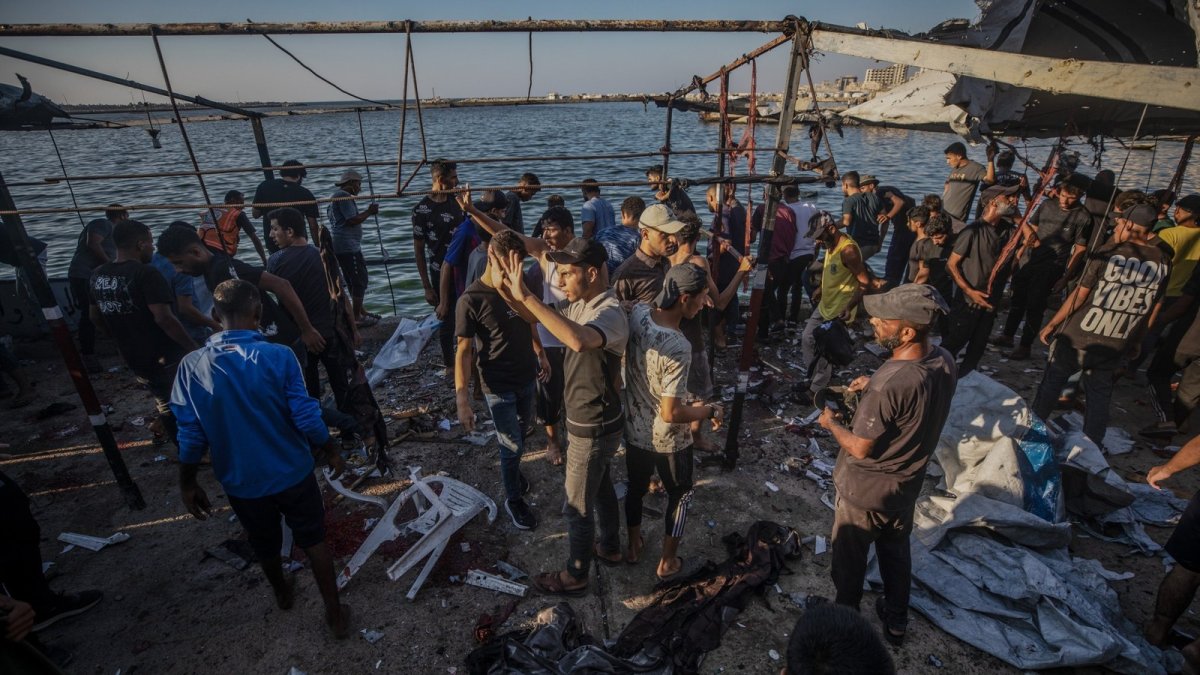
The human cost of this escalation was most acutely felt in Gaza City, where an Israeli drone strike on a cafe in the port area killed six Palestinians, including a child, and wounded more than a dozen others. According to witnesses who spoke to Anadolu Agency, the attack involved the firing of at least two missiles, turning a civilian gathering spot into a scene of carnage. Medical sources confirmed that the bodies of the dead and severely injured were rushed to nearby hospitals, underscoring the brutal efficiency of the strike.
The Israeli army claimed the attack targeted a gathering of Hamas commanders in the Al-Shati area west of Gaza City, alleging the group was planning attacks on Israeli forces. Israeli Army Radio, citing an unnamed security source, asserted that the strike killed four Hamas commanders, including a "company commander" and three "faction commanders." As of this writing, Hamas has not issued a statement on these claims, leaving a vacuum of verification that is typical of the fog of war in the enclave.
This strike is not an isolated incident but rather the latest violation of a cease-fire deal that ostensibly went into effect last October. The numbers paint a grim picture of the truce's fragility: according to Gaza's Health Ministry, repeated Israeli breaches of the agreement have killed 1,266 Palestinians and left another 4,200 injured. These figures compound the staggering toll of the broader conflict, which has seen more than 73,000 Palestinians killed and over 174,000 injured since October 2023. The port-area cafe strike is a stark reminder that the "ceasefire" is, in practice, a pause punctuated by periodic violence.
Ceasefire Under Strain: The Kushner Factor and Qatari Pressure
The timing of the Gaza strike is particularly significant, coming just a day after U.S. President Donald Trump's envoy, Jared Kushner, concluded an inconclusive meeting with Israeli Prime Minister Benjamin Netanyahu. TRT World reported that Kushner urged Netanyahu not to derail the Gaza plan, a clear indication that Washington is struggling to manage its closest ally even as it seeks to project an image of regional stewardship. The inconclusive nature of the meeting suggests that Netanyahu is resistant to external pressure, prioritizing domestic political considerations and security doctrines over the diplomatic track.
Qatar, which has long served as a key mediator between Israel and Hamas, has stepped up its push for full implementation of the Gaza ceasefire. Doha's intensified efforts reflect a growing frustration with the piecemeal application of the truce and a recognition that the current trajectory is unsustainable. The Qatari role is crucial, as the Gulf state possesses the financial leverage and diplomatic channels to influence both parties, yet even its efforts appear insufficient to halt the cycle of violence. The Kushner meeting and the subsequent strike suggest a disconnect between American diplomatic messaging and Israeli military action, a dynamic that undermines U.S. credibility in the region.
Escalation in Syria: The Abu al-Duhur Airbase Strike
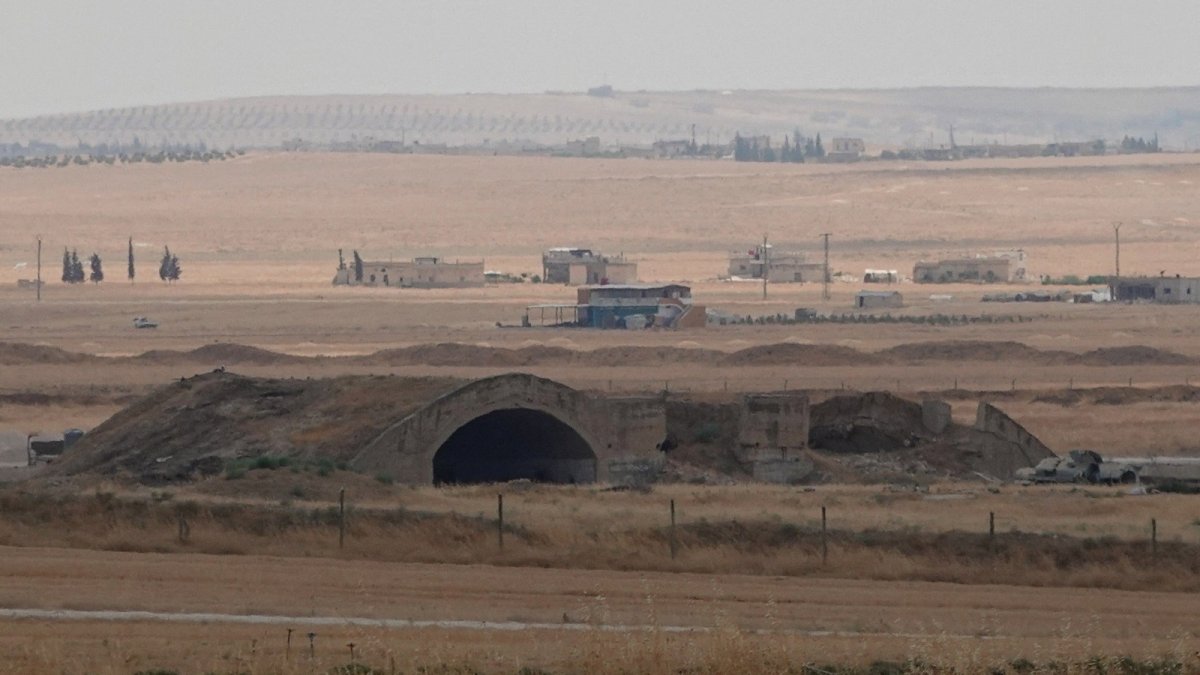
In a parallel escalation, Israeli warplanes struck the Abu al-Duhur Military Air Base in the Idlib countryside of northwestern Syria in the early hours of Tuesday. Syrian state media, citing a military source, reported that Israel carried out eight airstrikes targeting the runway and storage facilities. While a separate military source and a civilian living near the base reported no casualties, the strike's strategic significance is immense. It appears to be Israel's first strike on Syrian government assets since March, signaling a resumption of a campaign that had been paused.
The base, located approximately 70 kilometers from the Turkish border, has been out of service as a dedicated military airfield since 2013 and changed hands several times during Syria's 14-year civil war. Its selection as a target is therefore not about degrading an active threat but about sending a message. Israel views Syria's new rulers with deep suspicion due to their Islamist militant roots, despite President Ahmed al-Sharaa's warm ties with the West. The strike on Abu al-Duhur is a clear signal that Israel will not tolerate the rebuilding of Syrian military capabilities, particularly its air force.
This concern was amplified by reports that Syria conducted air exercises in northern Syria in early August using Russian-made MiG-21 fighter jets—the first such exercises since Assad's ousting. Israel's Kan public broadcaster reported on August 11 that security officials detected signs of Syria accelerating efforts to rebuild its air force, including recruiting new pilots and flight training. The Abu al-Duhur strike is a preemptive measure designed to set back these efforts and deter Damascus from pursuing a military modernization path that Israel views as a threat.
Regional Reaction: Turkiye's Condemnation and Washington's Unease
The Syrian strike drew immediate and sharp condemnation from Ankara, which has become one of al-Sharaa's main allies. Turkiye's Foreign Ministry issued a strongly worded statement, declaring that "Israel recklessly continues its attacks that target Syria's infrastructure and capabilities, and violate its territorial integrity and unity." Ankara called on the international community "to take a more decisive stance to put an end to Israel's aggression against Syria, which is taking on new dimensions, and to ensure accountability for these actions that completely disregard international law."
Presidential Communications Director Burhanettin Duran echoed this sentiment, stating that "these attacks targeting Syria's sovereignty, territorial integrity and infrastructure are a continuation of a reckless policy of aggression that threatens regional peace and stability." Turkiye's vocal response is rooted in its strategic position as a NATO member with the alliance's second-largest army and its recent defence pact with Pakistan and Saudi Arabia. Ankara has invested heavily in training Syria's army and helping rebuild state institutions, making Israeli strikes a direct challenge to Turkish influence in the region.
Notably, the United States expressed public unease with the strike. U.S. special presidential envoy for Syria and Iraq, Ambassador Tom Barrack, stated on X: "We are deeply concerned that the confirmed Israeli airstrikes on Abu al-Duhur Airbase constitute an unnecessary escalation that does not advance regional stability... The United States continues to believe that restraint and engagement offer the more constructive course." This public rebuke from a Trump administration official is significant, suggesting a divergence between Washington's desire for stability and Israel's aggressive posture. Syrian Foreign Minister Assad al-Shibani called for the attacks to stop, asserting that "these attacks don't have security justifications" and vowing to continue the diplomatic path to force Israel to halt its aggression.
The UAE Missile Alert: Gulf Security in the Crosshairs
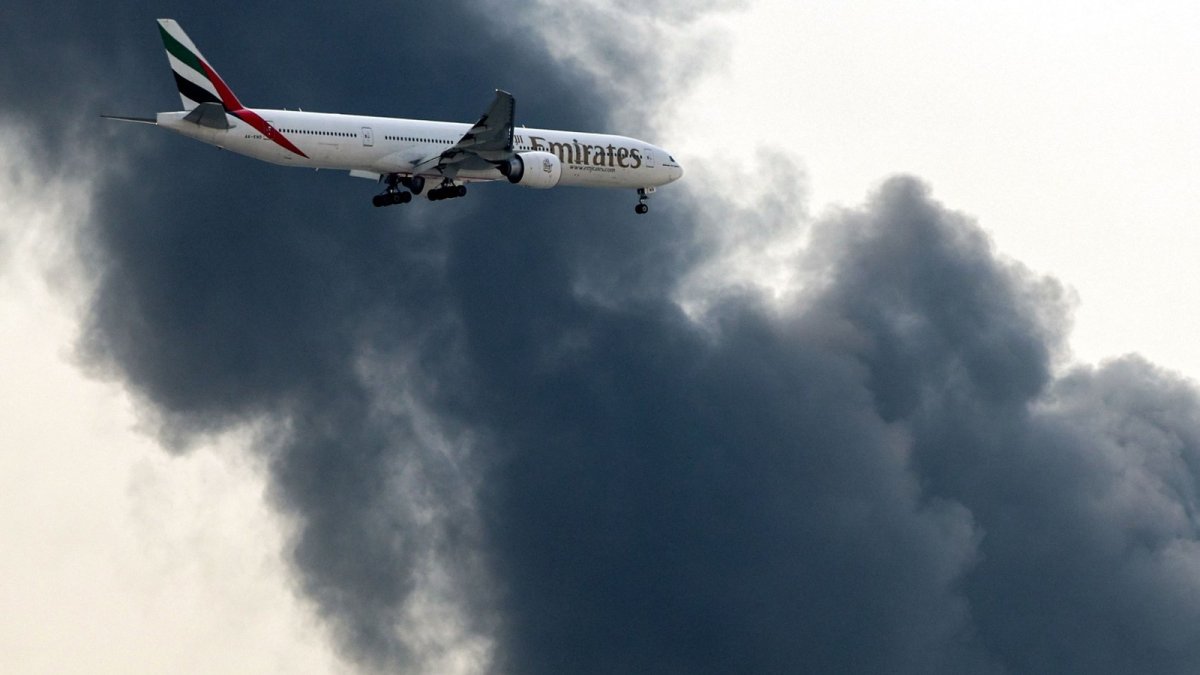
Adding to the regional tension, the UAE issued a nationwide mobile phone alert on Tuesday warning residents of potential missile threats—the country's first such warning in months. The interior ministry alert read: "Due to the current situation, potential missile threats, immediately seek a safe place in the closest secure building." The Emirati defense ministry confirmed it had "detected a missile threat directed towards the country." This alert, the first since a false alarm in June, underscores the precarious security environment in the Gulf.
The alert comes amid heightened regional tensions and an unresolved U.S.-Iran conflict, with military and maritime tensions remaining high around the Strait of Hormuz. Khaleej Times framed the period as "US-Israel-Iran-Lebanon war-peace deal day 62," while TRT World's ticker noted a "vessel struck by unknown projectile in Strait of Hormuz." The UAE, which has sought to position itself as a hub for diplomacy and economic diversification, is now confronting the reality that it sits on the front lines of a potential conflict. The missile alert is a stark reminder that the Gulf states, despite their efforts to normalize relations with Israel, remain vulnerable to the broader regional conflagration.
Strategic Calculus: What Each Side Wants
The multi-front escalation reveals a clear strategic calculus from Israel. In Gaza, the strike serves to maintain military pressure on Hamas while signaling to domestic audiences that the government remains tough on security, even as diplomatic efforts to extend the ceasefire continue. In Syria, the Abu al-Duhur strike is designed to degrade Damascus's military reconstruction and deter any future threat, while also sending a message to Turkiye that Israel will not tolerate a strengthened Syrian military. Israeli Defence Minister Israel Katz has issued direct warnings to President Erdogan, stating that Israel would not allow steps that strengthened Syria's military capabilities in ways that could pose a threat to Israel.
For Turkiye, the response is about asserting its role as a regional power and protector of Syria's new government. Ankara's condemnation is not merely rhetorical; it reflects a deep strategic investment in Syria's stability and a desire to counter Israeli influence. The defence pact with Pakistan and Saudi Arabia further bolsters Turkiye's position, creating a potential counterweight to Israeli military superiority. For the UAE, the missile alert is a wake-up call that its security is inextricably linked to the broader U.S.-Iran confrontation, despite its efforts to maintain a degree of diplomatic independence.
Regional Implications: Energy, Alliances, and the Road Ahead
The implications of this multi-front escalation are profound. The Strait of Hormuz, through which a significant portion of global oil supplies transit, remains a flashpoint. The reported vessel strike and the UAE missile alert highlight the fragility of maritime security in the region. Any sustained disruption to Hormuz shipping would have immediate and severe consequences for global energy markets, driving up prices and potentially triggering a broader economic crisis.
The escalation also reshapes regional alliances. Turkiye's deepening ties with Syria, Pakistan, and Saudi Arabia create a new axis that could challenge Israeli and U.S. influence. The public U.S. rebuke of the Syrian strike suggests that Washington is wary of being dragged into a wider conflict, yet its ability to restrain Israel appears limited. The unresolved U.S.-Iran conflict adds another layer of volatility, with Iran's Foreign Minister Seyed Abbas Araghchi active on the diplomatic track even as military tensions simmer.
In this environment, the prospects for stability are bleak. The Gaza ceasefire is a fiction, the Syrian front is re-opening, and the Gulf is on high alert. Israel's strategy of preemptive strikes and military pressure may achieve short-term tactical goals, but it risks igniting a multi-front war that no single actor can control. The international community, particularly the United States, faces a stark choice: exert meaningful pressure on Israel to de-escalate, or watch as the region descends into a conflict with unpredictable and catastrophic consequences. For now, the sound of drones over Gaza, jets over Syria, and sirens in the Gulf suggests that the latter outcome is tragically more likely.
By Malik Hassan, Staff WriterThis article was produced with AI-assisted research and editorial support. Reporting is based on sources cited in the article.
What's Your Reaction?
 Like
0
Like
0
 Dislike
0
Dislike
0
 Love
0
Love
0
 Funny
0
Funny
0
 Wow
0
Wow
0
 Sad
0
Sad
0
 Angry
0
Angry
0

Middle East Correspondent at Global1.News. Based in Beirut, covering politics, conflict, energy, and society across the Middle East. Brings context and depth to a region often reduced to headlines.














Comments (0)