
Russian Central Bank Holds Key Rate at 14%
Russia’s central bank left its key interest rate unchanged at 14 percent on 11 September 2026, citing a confluence of fuel‑price volatility and a temporary dip in production capacity as the principal obstacles to taming inflation.
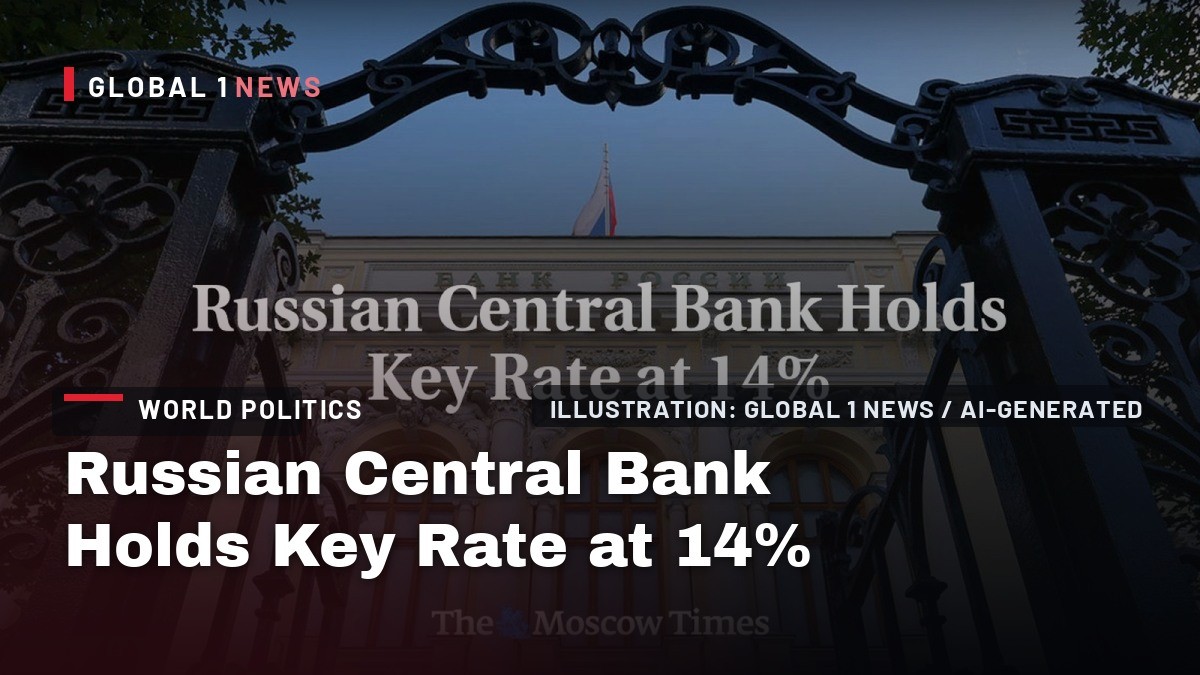
Russia’s central bank left its key interest rate unchanged at 14 percent on 11 September 2026, citing a confluence of fuel‑price volatility and a temporary dip in production capacity as the principal obstacles to taming inflation. The decision, framed by Governor Elvira Nabiullina as a “pause” in the rate‑cutting cycle, reflects the delicate balancing act the Kremlin faces: containing price growth while averting a deeper slowdown in an economy already strained by war‑induced supply shocks.
Inflation dynamics and the fuel shock
The central bank reported that annual consumer‑price inflation reached 6.3 percent on 7 September, a figure that sits just above its own full‑year forecast of 6 to 7 percent. In its press release, the regulator highlighted the outsized influence of “volatile components, including motor fuel, fruit and vegetables,” on recent price dynamics. This attribution aligns with the bank’s assessment that Ukrainian drone attacks on Russian oil refineries have driven up motor‑fuel costs, thereby feeding into broader price pressures.
Governor Nabiullina warned that the initial spike in pump prices has now generated “second‑round effects” as higher transportation costs ripple through the economy, lifting the price of a wider range of goods and services. The central bank’s language underscores a shift from a narrow fuel‑price shock to a more generalized cost‑push inflation, a development that complicates the path to the 4 percent target set for the next year.
Monetary policy stance and the rate‑holding decision
At its July 24 meeting, the bank lowered the key rate from 14.25 percent to 14 percent, marking the most recent easing step. The September decision to hold the rate steady therefore represents a cautious pause rather than a reversal of the earlier cut. Nabiullina explicitly linked any future easing to “clear evidence that underlying inflation is cooling” and to the finalisation of the government’s 2027 budget plan, signalling that the central bank will not resume cuts until both price dynamics and fiscal policy are stabilised.
This stance mirrors a broader trend among central banks confronting post‑pandemic inflation: a reluctance to lower rates amid persistent price pressures, even as growth prospects dim. The European Central Bank’s recent 0.25 percentage‑point hike to 2.5 percent, noted in the same release, illustrates a coordinated tightening environment that limits the room for Russia to diverge sharply from global monetary trends.
Impact of fuel imports and ruble weakness
Nabiullina noted that Russia has been forced to increase imports of petroleum products to rebuild depleted stocks after the drone‑induced outages. The surge in imports, combined with export bottlenecks, has weakened the ruble over the summer. A weaker ruble, in turn, raises the domestic price of imported goods and fuels the inflationary cycle, creating a feedback loop that the central bank must monitor closely.
The regulator’s emphasis on import pressures highlights a strategic dilemma: sustaining domestic fuel supplies without exacerbating currency depreciation. As the ruble’s value erodes, the cost of imported inputs for Russian manufacturers rises, potentially dampening industrial output and further constraining growth.
Growth outlook amid high borrowing costs
Projected GDP growth for 2026 remains near‑stagnant, with estimates ranging from 0 to 1 percent. This modest outlook reflects the twin burdens of elevated borrowing costs and the lingering effects of fuel shortages on production and logistics. Business leaders have been pressing for a lower key rate to stimulate investment, yet the central bank’s priority remains price stability.
The tension between growth and inflation control is a classic policy trade‑off. In Russia’s case, the high‑cost environment has already weighed down economic activity, suggesting that any premature easing could reignite inflationary pressures without delivering a meaningful boost to output.
Government budget considerations
The central bank’s caution is also tied to the government’s fiscal planning for the coming year. Nabiullina indicated that the bank will keep the rate steady until the budget plan is finalised, implying that fiscal deficits or spending priorities could influence monetary policy. A budget that relies heavily on borrowing could amplify inflationary risks, while a tighter fiscal stance might support a future rate cut.
Given the ruble’s weakness and the need to fund defence‑related expenditures, the government faces pressure to balance fiscal stimulus with macro‑economic stability. The central bank’s insistence on seeing the budget finalized before resuming cuts underscores the interdependence of fiscal and monetary policy in the current Russian context.
Geopolitical backdrop and external price pressures
Beyond domestic factors, external developments continue to shape Russia’s inflationary environment. The war in Iran has driven global oil prices above $100 per barrel, a level reinforced by renewed threats in the Strait of Hormuz. Higher world oil prices feed back into Russia’s domestic fuel market, compounding the impact of the Ukrainian drone attacks on refinery capacity.
These geopolitical shocks amplify the central bank’s challenge: even if domestic production were restored, global price spikes could sustain high motor‑fuel costs, limiting the effectiveness of any supply‑side remedies. The interplay of regional conflicts and energy markets therefore remains a critical variable in Russia’s inflation outlook.
Outlook and policy implications
Looking ahead, the central bank’s next rate meeting on 23 October will be a litmus test for the effectiveness of its pause strategy. If inflation expectations among households, businesses and financial market participants begin to ease, as the regulator hopes, the path to a gradual rate reduction could reopen. However, persistent fuel‑price volatility or a weaker ruble could keep inflation expectations elevated, reinforcing the bank’s current stance.
In the broader picture, the central bank’s decision reflects the Kremlin’s overarching priority: preserving price stability in a context of war‑driven supply disruptions and external price shocks. The delicate balance between curbing inflation and supporting growth will continue to shape Russia’s monetary policy trajectory throughout the remainder of 2026 and into the next year.
This article was produced with AI-assisted research and editorial support. Reporting is based on the source material cited below. Sources: The Moscow Times; themoscowtimes.com; Global1.News (12 September 2026).
By Irina Volkov, Staff Writer
What's Your Reaction?
 Like
0
Like
0
 Dislike
0
Dislike
0
 Love
0
Love
0
 Funny
0
Funny
0
 Wow
0
Wow
0
 Sad
0
Sad
0
 Angry
0
Angry
0
Russia/Eastern Europe Correspondent at Global1.News. Covering Russian politics, energy, security, and the shifting dynamics of the post-Soviet space. Provides clear-eyed analysis on one of the world's most opaque regions.












Comments (0)