
Google launches first datacenter satellite and research that finds orbiting bit barns can work
Google just dropped its first “Suncatcher” datacenter satellite into orbit, and the hype train is already sputtering. Sound slick? Sure. The Register’s coverage notes that SpaceX has been shaving launch costs by about 20 % every time it doubles the cumulative mass it has lofted.
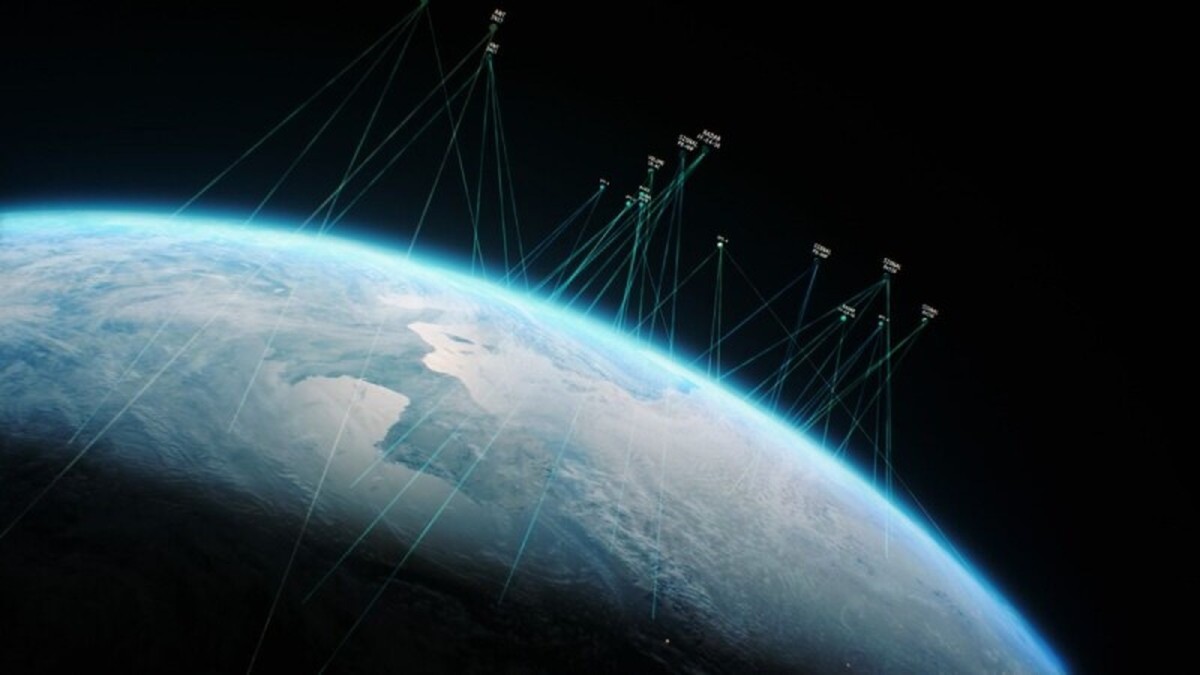
Google just dropped its first “Suncatcher” datacenter satellite into orbit, and the hype train is already sputtering. The big‑g brainiacs are betting that the endless solar power up there could someday make the cost of running servers in space comparable to the electricity bill we pay on the ground. Sound slick? Sure. But when you strip away the glossy press release, the reality is a long, ugly list of technical hurdles that any independent hosting provider should treat as a cautionary tale.
Why the $200‑per‑kilogram myth matters
Google’s paper leans heavily on the idea that launch costs need to drop to roughly $200 per kilogram for orbital datacenters to make sense. That figure isn’t pulled from thin air – it mirrors the threshold SpaceX and other launch firms have touted as the break‑even point for space‑based compute. The Register’s coverage notes that SpaceX has been shaving launch costs by about 20 % every time it doubles the cumulative mass it has lofted. To hit the $200‑kg sweet spot, Google assumes SpaceX would need to launch an additional 370,000 t of mass – the equivalent of roughly 1,800 Starship flights – while re‑using components a hundred times.
Even if those optimistic launch‑cost trajectories hold, the math is razor‑thin. Google admits it doesn’t yet know how heavy its future satellites will be, only that a second‑generation Starlink sat weighs about 575 kg. If a “Suncatcher” ends up in that ballpark, the launch price alone could already eat up a sizable chunk of any cost advantage over terrestrial power. For us running real hosting infrastructure, that’s a red flag: the economics are still speculative, not a proven business case.
The networking nightmare that no one talks about
The paper concedes that today’s network tech isn’t up to the task of stitching together a fleet of compute‑laden satellites. Existing inter‑satellite links were built for low‑throughput telemetry, not the petabytes per second that AI workloads demand. Google’s own researchers flag the need for “rapid comms between satellites” and a formation flight “significantly larger and entail much closer” than any current constellation. In plain English, they’re saying we’d need a whole new class of satellite‑to‑satellite networking that simply doesn’t exist yet.
Even NASA’s TBIRD experiment, which hit 200 Gbps in a ground‑to‑LEO link, is a single‑hop demonstration. Scaling that to a mesh of dozens or hundreds of satellites, each needing sub‑millisecond latency for AI inference, is a mountain of engineering work. Independent providers can’t rely on a future “optical network” that’s still in the research phase – the risk of a broken link in a space‑based cluster is far higher than a fiber cut on Earth.
Thermal and power integration – more than a solar panel
Google’s design today still assumes a conventional stack: discrete compute payload, satellite bus, thermal radiator, and solar panel. That’s fine for a proof‑of‑concept, but the paper hints that true scale will demand a level of integration akin to a smartphone SoC – a compute‑radiator‑power chip all in one. The notion of “neural cellular automata” substrates is tantalising, but it’s a theoretical future, not a near‑term reality.
From a hosting perspective, the thermal challenge is massive. Spacecraft radiators have to dump heat into the vacuum, and the more compute you pack in, the larger the radiator you need. That adds mass, which pushes launch costs back up. It’s a classic catch‑22: you can’t get the compute density without a bigger radiator, and you can’t afford the bigger radiator unless launch costs drop further. The paper acknowledges this, underscoring that the whole system must evolve in lockstep – a timeline that is anything but certain.
Optical ground‑to‑satellite links – a fragile bridge
The researchers also flag “robust optical satellite‑ground communications” as a make‑or‑break factor. Atmospheric turbulence, high‑speed relative motion, and precision beam tracking are all listed as hurdles. TBIRD’s 200 Gbps demo proves the concept, but it was a controlled experiment with a single ground station. In a production environment you’d need a global network of optical ground stations, each capable of tracking fast‑moving LEO satellites with sub‑centimetre accuracy.
For an independent hosting outfit, building that ground infrastructure is a non‑starter. Even large hyperscalers would need to invest billions to roll out a worldwide optical ground network. The risk is that any disruption – weather, laser interference, or a mis‑aligned dish – could knock out a chunk of your compute capacity. That’s a reliability nightmare compared to the mature, redundant fiber backbone we already rely on.
What the hype masks: a long research runway
Google’s conclusion is clear: “realizing its space datacenter ambitions will require sustained research, iterative refinement of our design, and the achievement of several critical future milestones.” In other words, we’re looking at a multi‑year, possibly multi‑decade R&D programme before any commercial service can be offered. The paper’s own tone is cautious, not celebratory.
That timeline matters for anyone watching the market. While Google and other big players throw money at the idea, the payoff is still speculative. Independent providers should treat space‑based compute as a distant, high‑risk research frontier, not a near‑term competitive threat. The hype can distract from more immediate concerns: energy costs, cooling efficiency, and edge latency – the real levers that affect margins today.
Business‑risk lens: why you shouldn’t chase the orbit
From a founder’s seat, the risk‑reward calculus is stark. The upside – a few percent cost saving on power if launch costs hit the $200‑kg mark and the networking, thermal, and optical challenges are solved – is dwarfed by the massive capital outlay, regulatory hurdles, and technical uncertainty. The paper itself admits that many of the required technologies are “largely theoretical.” That’s a red flag for any venture that lives on thin margins.
Moreover, the dependency on a single launch provider (SpaceX) for cost reductions adds a supply‑chain concentration risk. If launch pricing stalls or the cadence of Starship flights slows, the whole business case collapses. Independent hosting firms should diversify away from speculative orbital ventures and focus on proven efficiencies on the ground.
Actionable takeaways for independent hosting founders
First, keep an eye on launch‑cost trends, but don’t let them drive your strategy. The $200‑kg threshold is a moving target tied to SpaceX’s launch cadence and re‑use rates. Second, invest in improving your own energy‑efficiency and cooling stack – the tangible savings there beat any speculative orbital discount. Third, watch the optical‑ground research, but treat it as a long‑term watchlist item, not a near‑term procurement plan.
Finally, when evaluating any hype‑driven “future tech” pitch, ask: do we have a clear path to production, or are we still in the research‑paper phase? Google’s own paper says the latter. Until the networking, thermal, and integration challenges are solved and launch costs truly hit the $200‑kg sweet spot, the orbit remains a playground for big‑tech experiments, not a viable market for independent hosting providers.
— Allan Ali, Founder
This article was produced with AI-assisted research and editorial support. Reporting is based on the source material cited below. Sources: The Register; theregister.com; Global1.News (02 October 2026).
By Allan Ali, Global1.News
What's Your Reaction?
 Like
0
Like
0
 Dislike
0
Dislike
0
 Love
0
Love
0
 Funny
0
Funny
0
 Wow
0
Wow
0
 Sad
0
Sad
0
 Angry
0
Angry
0

Publisher of Global1.News. Automation architect, systems builder, and the guy making sure the truth gets published.










Comments (0)