
Putin Arrives at Bharat Mandapam for BRICS Summit, Modi Holds Bilateral Talks
The 18th BRICS Summit has convened in New Delhi’s Bharat Mandapam, and the arrival of Russian President Vladimir Putin was marked by a brief but closely watched bilateral session with Prime Minister Narendra Modi, according to India Today’s coverage on 12 September 2026.
The 18th BRICS Summit has convened in New Delhi’s Bharat Mandapam, and the arrival of Russian President Vladimir Putin was marked by a brief but closely watched bilateral session with Prime Minister Narendra Modi, according to India Today’s coverage on 12 September 2026. The meeting, which lasted roughly forty‑five minutes, took place a day after Modi also welcomed Chinese President Xi Jinping ahead of their own scheduled talks. While the summit’s agenda officially spans global stability, economic cooperation and the evolving international order, the footage and commentary from the India Today report highlight how the India‑Russia dialogue is being positioned within India’s broader diplomatic and strategic framework.
Strategic Context of the Modi‑Putin Bilateral
The India Today video notes that Putin’s arrival at Bharat Mandapam was “set to meet Prime Minister Narendra Modi,” underscoring the importance India places on its relationship with Moscow within the BRICS grouping. For the Ministry of External Affairs, the bilateral encounter offers an opportunity to reaffirm long‑standing defence and energy ties that have deepened since the early 2000s, especially in the context of sanctions that have pushed Russia to seek alternative partners.
From a policy perspective, the Ministry of Defence and the Defence Research and Development Organisation (DRDO) are likely to use the dialogue to discuss ongoing joint projects, such as the BrahMos missile collaboration and the development of aerospace components. Although the video does not detail specific agreements, the very act of holding a bilateral meeting at the summit signals a willingness to keep these channels active, which is consistent with India’s broader “strategic autonomy” narrative articulated by the Ministry of External Affairs.
Economic cooperation also features prominently in the summit’s focus on “global stability” and “economic cooperation.” The Ministry of Commerce and Industry, together with the Reserve Bank of India, will be monitoring any discussions on trade facilitation, especially in commodities where Russia is a major supplier, such as oil and fertilizers. The India Today footage shows the leaders exchanging pleasantries, a customary diplomatic gesture that often precedes more substantive trade talks.
In the health sector, the Indian Council of Medical Research (ICMR) may look to leverage the partnership for joint research on vaccine production and pandemic preparedness, an area that has seen increased collaboration since the COVID‑19 crisis. While the video does not mention health, the broader BRICS agenda on “global stability” often encompasses health security, suggesting that the bilateral could touch on these themes.
Implications for Indian Industry and Technology
The presence of Putin at the summit, captured in the India Today report, carries weight for Indian technology firms that are part of the broader BRICS economic ecosystem. Companies in the information technology and aerospace sectors, many of which have ties to Indian Institutes of Technology (IITs) and DRDO laboratories, may anticipate new avenues for joint ventures or technology transfer.
For instance, the Ministry of Electronics and Information Technology (MeitY) could view the summit as a platform to discuss standards for digital infrastructure, especially as BRICS nations explore alternatives to Western-dominated platforms. Although the video does not specify any agenda items, the broader context of “managing differences and the evolving international order” hints at conversations around data sovereignty and cybersecurity, areas where Indian policy has been increasingly assertive.
In the energy domain, the Ministry of New and Renewable Energy may seek to align with Russian expertise in nuclear technology and hydrocarbon extraction. The bilateral meeting’s timing—immediately after Modi’s welcome to Xi—suggests an effort to balance relations with both Russia and China, ensuring that India can negotiate favorable terms for technology imports and joint research.
From an educational standpoint, the Indian Ministry of Education could leverage the summit to promote student exchange programmes, particularly in science and engineering fields. The presence of two major world leaders at Bharat Mandapam underscores the importance of international exposure for Indian students, a narrative that aligns with the ministry’s push for global competency.
Geopolitical Significance of the BRICS Gathering
India Today’s description of the summit emphasizes “questions of global stability, economic cooperation, managing differences and the evolving international order.” For New Delhi, hosting the 18th BRICS Summit is a diplomatic milestone that showcases India’s role as a bridge between the Global South and established powers. The Ministry of External Affairs has framed the event as an opportunity to shape the agenda on issues such as climate change, trade reform and security architecture.
The bilateral meetings with both Putin and Xi, as highlighted in the video, illustrate India’s balancing act. By engaging Russia and China in separate but concurrent dialogues, India signals its intent to maintain strategic autonomy while fostering cooperation with each partner. This approach aligns with the “multi‑aligned” foreign policy articulated by the Ministry of External Affairs, which seeks to avoid over‑reliance on any single nation.
In terms of security, the BRICS platform offers a venue for India to discuss counter‑terrorism and maritime security with Russia, a key supplier of defence equipment, and with China, a neighbour with shared maritime interests. While the video does not delve into specifics, the broader summit focus on “global stability” suggests that these topics are on the table.
Economically, the BRICS nations together represent a substantial share of global GDP. The summit’s emphasis on “economic cooperation” provides India an avenue to push for reforms in global financial institutions, a long‑standing demand of the Ministry of Finance. By aligning with Russia and China on this front, India hopes to strengthen its bargaining position in institutions such as the IMF and World Bank.
Domestic Policy Reflections and Public Perception
The India Today footage captures a moment that will resonate across Indian media and civil society. The Ministry of Information and Broadcasting is likely to highlight the bilateral with Putin as a testament to India’s growing diplomatic clout, especially as the country prepares for the upcoming general elections. The narrative of “global stability” and “evolving international order” dovetails with the government’s messaging on India’s role as a responsible global power.
Public opinion, as gauged through social media trends and commentary on news channels, often reflects a mix of pride and caution. While many view the engagement with Russia positively, especially given the historical defence partnership, there are also concerns about aligning too closely with a nation facing Western sanctions. The Ministry of Home Affairs may monitor any public discourse that could affect communal harmony, ensuring that diplomatic overtures do not fuel polarisation.
From an economic perspective, the Indian Ministry of Commerce is expected to communicate any trade benefits that arise from the summit, such as reduced tariffs on Russian fertilizers or enhanced energy security. Such outcomes would be framed as direct benefits to Indian farmers and industry, reinforcing the government’s narrative of tangible gains from multilateral diplomacy.
In the health sector, the ICMR could use the summit’s focus on “global stability” to advocate for increased funding for pandemic preparedness, arguing that international cooperation is essential for safeguarding Indian public health. This aligns with the ministry’s ongoing push for a stronger health infrastructure, a priority that has been amplified since the COVID‑19 experience.
Future Trajectories for India‑Russia Relations
The brief bilateral encounter captured by India Today, lasting roughly forty‑five minutes, is likely a prelude to more detailed follow‑up meetings between ministries. The Ministry of External Affairs will probably schedule sector‑specific talks involving the Ministry of Petroleum and Natural Gas, the Ministry of Defence and the Ministry of Commerce to translate diplomatic goodwill into concrete agreements.
One area of potential growth is the joint development of energy infrastructure, particularly in the context of India’s ambition to diversify its energy sources. Russian expertise in nuclear technology, coupled with India’s expanding civilian nuclear programme under the Department of Atomic Energy, could see renewed collaboration, especially as both countries seek to reduce dependence on Western technology.
Another promising avenue is defence co‑production. Existing projects like the BrahMos missile and the development of fighter aircraft under the Hindustan Aeronautics Limited (HAL) and Russian partners could be expanded, with the Ministry of Defence looking to deepen technology transfer and joint research. The DRDO’s ongoing projects may also benefit from Russian inputs in areas such as missile guidance and aerospace materials.
Finally, the cultural and educational exchange dimension, though not highlighted in the video, is a logical extension of the diplomatic outreach. The Ministry of Education could negotiate scholarship programmes for Indian students in Russian universities, particularly in fields like engineering, medicine and space science, thereby strengthening people‑to‑people ties that underpin long‑term strategic partnership.
Conclusion: The Summit as a Lens on India’s Global Role
The India Today report of Putin’s arrival at Bharat Mandapam and his bilateral with Prime Minister Modi offers a snapshot of India’s evolving diplomatic posture at the 18th BRICS Summit. While the video focuses on the immediate event, the broader implications span defence, energy, technology, trade and health sectors, each intersecting with the mandates of key Indian ministries and institutions.
By hosting the summit and engaging directly with both Russian and Chinese leaders, India underscores its ambition to shape the “evolving international order” from a position of strategic autonomy. The Ministry of External Affairs, in coordination with the Ministry of Finance, Ministry of Commerce, Ministry of Defence and the ICMR, will likely translate the diplomatic goodwill into sector‑specific initiatives that aim to benefit Indian citizens, students and taxpayers.
As the BRICS leaders continue their deliberations on “global stability” and “economic cooperation,” the outcomes of the summit will be closely watched by Indian policymakers and the public alike. The bilateral with Putin, though brief, signals a willingness to deepen ties with a key global player, while the simultaneous engagement with Xi Jinping reflects India’s nuanced balancing act. In the months ahead, the real test will be how these high‑level dialogues are operationalised through concrete policies, joint projects and institutional collaborations that advance India’s national interests within the broader BRICS framework.
By Dr. Raj Patel, Staff Writer
This article was produced with AI-assisted research and editorial support. Reporting is based on the source material cited below. Sources: India Today video report (12 September 2026); India Today; Global1.News
What's Your Reaction?
 Like
0
Like
0
 Dislike
0
Dislike
0
 Love
0
Love
0
 Funny
0
Funny
0
 Wow
0
Wow
0
 Sad
0
Sad
0
 Angry
0
Angry
0
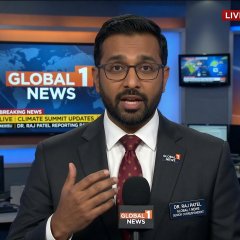
India/South Asia Correspondent at Global1.News. Analytical voice with a background in science and health journalism. Based in New Delhi, covering Indian politics, education, healthcare, technology, and policy. Breaks down complex data into clear, actionable reporting.










Comments (0)