
Russia Relinquishes Tartous and Hmeimim as Syria Reshapes the Kremlin's Mediterranean Footprint
Syria and Russia signed a memorandum ending Moscow's exclusive control of the Tartous naval base and Hmeimim air base after 18 months of talks. Damascus takes over civilian facilities while military sites become joint training centers, reshaping Russia's Mediterranean footprint.
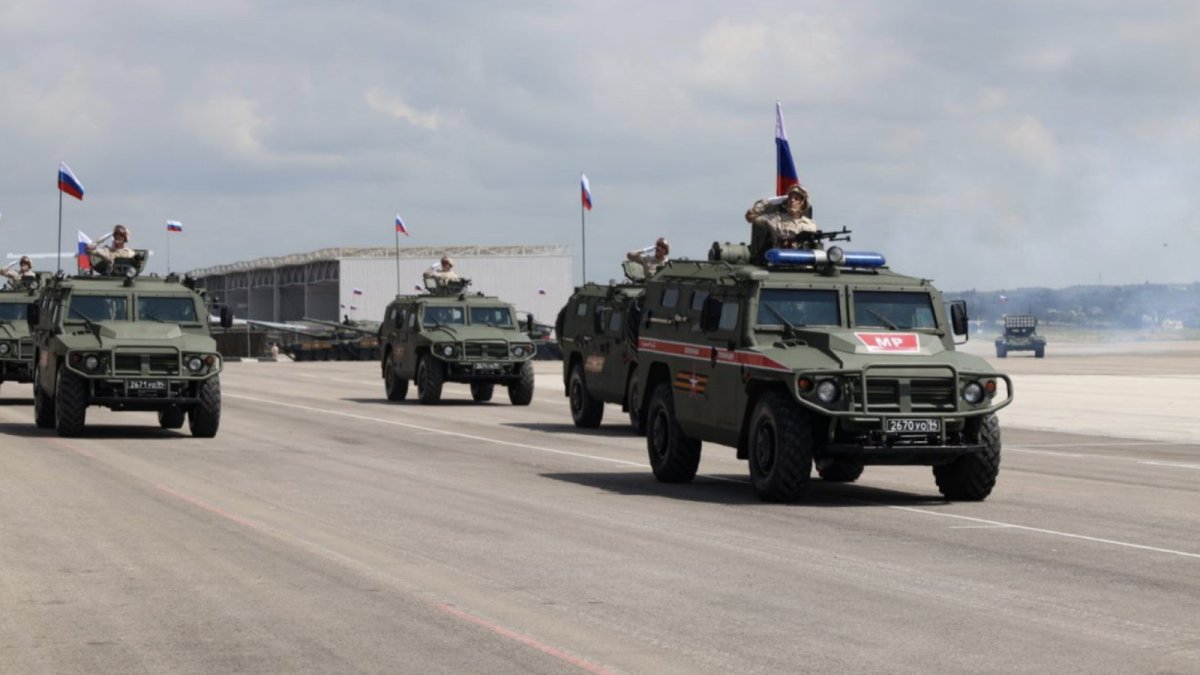
On Sunday, the Syrian Foreign Ministry announced a memorandum of understanding with Moscow that will end Russia’s exclusive military control over its two principal bases on the Mediterranean coast — the Tartous naval facility and the Hmeimim air base near Latakia. The deal, which transfers management of civilian infrastructure to Syrian authorities and redesigns remaining military sites as joint training centres, represents the most dramatic reconfiguration of the Kremlin’s Mediterranean footprint since the Soviet Union first established a permanent presence in Tartous in 1971.
Russia Relinquishes Tartous and Hmeimim as Syria Reshapes the Kremlin's Mediterranean Footprint
Moscow, Russia — After eighteen months of painstaking negotiations, Syria and Russia have finalised an accord that fundamentally alters the status of the bases that for decades projected Russian military power into the eastern Mediterranean. The Syrian Foreign Ministry confirmed the memorandum early Sunday via the state news agency, heralding what it described as “a new phase in Syrian-Russian relations.” The agreement, whose implementation is to be completed within three months, hands Damascus control of the commercial berth at Tartous port, the Hmeimim airport’s civilian operations, and rebrands all purely military facilities as shared training and qualification centres under joint arrangement.
The Terms of the Memorandum
The Syrian Foreign Ministry laid out a clear division of assets. Civilian facilities — including Hmeimim’s airport and the commercial quay at Tartous — will be gradually absorbed into Syria’s civil administration. Military infrastructure at both locations is to be repurposed into “joint training and qualification centres,” a formula that preserves a Russian presence but strips it of the unilateral character it held under the 49-year lease granted by ousted President Bashar al-Assad. Syria’s General Authority for Ports and Customs added that the state would take over commercial sites previously operated by Russia at Tartous, specifically Pier No. 4 and its adjoining warehouses and installations. Last month, Reuters had reported that Moscow was negotiating a commercial logistics hub at that very pier — a restricted zone just outside the naval base — but that any such operation would remain under Syrian oversight and require the approval of the port authority.
A Long-Running Negotiation Under a New Damascus
The talks that produced Sunday’s memorandum of understanding began almost as soon as Assad was toppled in December 2024. Syria’s new leadership, led by interim President Ahmad al-Sharaa, has walked a careful line: preserving a working relationship with Moscow, which provided Assad and his family safe haven, while rapidly rebuilding ties with the West and Arab neighbours. Al-Sharaa has travelled to Moscow twice since assuming power, with the fate of the two Mediterranean outposts dominating each visit. Russia did not immediately comment on the agreement announced by Damascus. The Kremlin has maintained public silence on the details, a stance that contrasts with the confident projection of permanent Mediterranean basing it cultivated throughout the Syrian civil war.
Reorganising, Not Withdrawing
In its statement, the Syrian Foreign Ministry characterised the new arrangement as a “reorganizing of the Russian presence” rather than an eviction. Western and regional analysts note that this phrasing serves both parties: it allows Damascus to assert sovereignty over strategic national infrastructure while giving Moscow a face-saving narrative of continued cooperation. Russia’s military personnel will not vanish from the coastal strip. Instead, what was once an autonomous Russian air base capable of handling strategic bombers and a naval facility that serviced warships transiting from the Black Sea becomes a collection of training sites with an ambiguous command structure, subject to Syrian authorisation.
Tartous: Russia’s Only Mediterranean Seaport
The significance of Tartous for the Russian Navy can hardly be overstated. Since 1971, the small port on Syria’s coast served as the lone dedicated replenishment and repair point for the Soviet and later Russian fleets in the Mediterranean — one of only two Russian military installations outside the territory of the former Soviet Union. Under Assad, Moscow secured a long-term lease, allowing the modernisation of Pier No. 4 into a restricted naval zone. The loss of exclusive assured access to the port, combined with the transformation of Hmeimim air base into a civilian-controlled airport, means that for the first time in over half a century, Russia lacks a permanent, sovereign foothold on the Mediterranean’s eastern shore. The memorandum’s three-month transition clock has therefore set off intense debate inside the Defence Ministry and the Kremlin about the future viability of the navy’s standing Mediterranean task force.
The Straitjacket of the Turkish Straits
The practical consequences of the new deal are magnified by geography. Since the start of the full-scale war in Ukraine, Turkey has closed the Bosphorus and Dardanelles straits to all warships, citing the Montreux Convention. That closure severs the Black Sea Fleet from the Mediterranean, meaning that even if Russia retained Tartous, it could not rotate in fresh vessels from Sevastopol or Novorossiysk. Without a reliable Black Sea rear area, the Mediterranean flotilla already relied on ad‑hoc supply chains. Now, with Tartous reverting to Syrian civil control, any Russian naval logistics will require the consent of a government that has enthusiastically deepened ties with Washington and Paris. Military planners in Moscow are confronting the realisation that the Mediterranean squadron risks becoming a stranded, logistically orphaned force with no assured home port.
Syria’s Rapidly Shifting Alliances
Damascus has used the eighteen months since Assad’s overthrow to fundamentally reorient its foreign policy. The United States has lifted most of the crushing sanctions that hobbled the Syrian economy throughout the civil war, and in July, French President Emmanuel Macron visited Damascus and announced the appointment of ambassadors for the first time in fourteen years. Roads to Riyadh, Abu Dhabi, and Cairo have been reopened. This diplomatic normalisation has given Syrian negotiators tremendous leverage: they could credibly argue that inviting a permanent Russian military presence on the coast risked alienating the very Western and regional partners whose investment and political backing the war-ravaged country desperately needs. Sunday’s memorandum is, in many respects, a reflection of that new bargaining power.
What Analysts Say Might Come Next
Veteran observers of Russian strategy caution against writing an obituary for Moscow’s Mediterranean ambitions. The Kremlin has already deepened its engagement in eastern Libya, where the Africa Corps — the rebranded Wagner Group — controls airfields and port infrastructure. Sudan’s Red Sea coast remains an option, though years of on‑again, off‑again talks over a naval logistics centre have yet to produce a completed base. These alternatives, however, cannot replicate what Tartous offered: a sheltered deep‑water harbour with decades of familiar infrastructure, co‑located with an air base that allowed Moscow to project force across the Levant. Any new arrangement in Libya or Sudan would place Russian forces farther from European and Middle Eastern waterways, dependent on fragile local political deals, and subject to the same types of sovereign oversight that have now been imposed in Syria.
The View from Moscow and the Street
Inside Russia, the Defence Ministry has not publicly reacted to Sunday’s announcement, and state television has so far devoted little airtime to the memorandum. That silence may reflect an internal struggle over how to manage the narrative: acknowledging the loss of a permanent Mediterranean basing network would undercut years of triumphalist messaging about Russia’s return as a global naval power. For ordinary Russians, the practical impact is remote, but the psychological one is not. Tartous was more than a logistics hub; it was a symbol of Russia’s ability to operate far from its shores, a remnant of Soviet superpower status that outlasted the Cold War. Its effective downgrade — framed as training‑centre cooperation — will be difficult to spin as anything other than a strategic setback.
The memorandum of understanding signed on Sunday closes a chapter that began with Soviet engineers building quays in Tartous in the early 1970s and culminated in the brutal Syrian civil war that gave Moscow its largest overseas military enclave since the fall of the USSR. Syria’s new government has now exercised its sovereignty, recasting a relationship that was once defined by dependence on Russian military might. Whether Moscow can absorb this blow, recalibrate its African and Mediterranean ventures, and find a new stable equilibrium — all while the campaign in Ukraine drains its military resources — remains the most consequential unanswered question of the day.
By Irina Volkov, Staff Writer
This article was produced with AI-assisted research and editorial support. Sources: The Moscow Times (Reuters), CNN, Associated Press.
What's Your Reaction?
 Like
0
Like
0
 Dislike
0
Dislike
0
 Love
0
Love
0
 Funny
0
Funny
0
 Wow
0
Wow
0
 Sad
0
Sad
0
 Angry
0
Angry
0
Russia/Eastern Europe Correspondent at Global1.News. Covering Russian politics, energy, security, and the shifting dynamics of the post-Soviet space. Provides clear-eyed analysis on one of the world's most opaque regions.










Comments (0)