
Arturo García Bustos at 100: Frida's Student, Mexico's Public Artist
One hundred years after his birth in the heart of Mexico City, Arturo García Bustos still shapes the way millions of Mexicans see their own history.
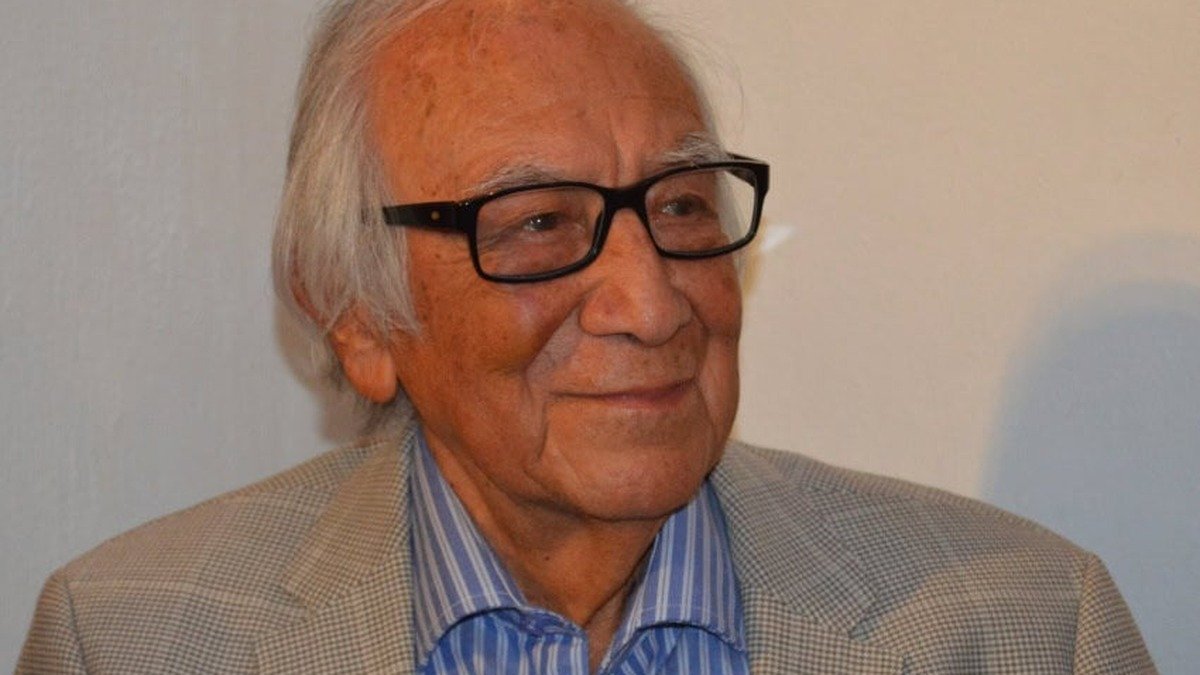
Arturo García Bustos at 100: Frida's Student, Mexico's Public Artist
One hundred years after his birth in the heart of Mexico City, Arturo García Bustos still shapes the way millions of Mexicans see their own history. His murals greet students and workers at Metro Universidad, his engravings carry the memory of labor struggles, and his teaching echoes through generations of artists. For families in barrios, colonias, and community cultural centers, his art was never distant — it was made to be lived with.
Tags: Arturo García Bustos, Frida Kahlo, Los Fridos, Mexican muralism, Taller de Gráfica Popular, Rina Lazo, Francisco Toledo, Mexican printmaking, Coyoacán, La Esmeralda, Oaxaca murals, Metro Universidad, National Museum of Anthropology, Mexican art centenary
A centenary for a public artist
Arturo García Bustos was born on August 8, 1926, in the heart of Mexico City, and died on April 7, 2017, in his home in Coyoacán — the same neighborhood where Frida Kahlo once turned her Casa Azul into a creative sanctuary. In the century since his birth, he has become an undeniably influential figure in modern Mexican art, recognized far beyond his status as one of Kahlo's devoted students.
His own words from a 1977 interview with El Día capture the essence of his life's work: "The love that Frida instilled in us towards Mexican culture, towards our roots and popular customs, is still alive and present in my work." That statement, made nearly five decades ago, still resonates this week as Mexico marks the 100th anniversary of his birth.
García Bustos was a printmaker, muralist, and educator whose legacy continues to inspire. His life crossed paths with some of the most important figures in Mexican art — Diego Rivera, Rina Lazo, Francisco Toledo, Rufino Tamayo — yet his work always pointed back to something simpler: the dignity of everyday Mexican people and their traditions.
From San Carlos to La Esmeralda
García Bustos's connection to public art began in childhood. Growing up in central Mexico City, he was surrounded by the monumental murals of the era, including Diego Rivera's cycles at the Secretaría de Educación Pública, the Ministry of Public Education — works that left a lasting mark on the young student. Little did he know that he would eventually marry one of Rivera's close collaborators, Rina Lazo, and become closer to the master muralist than he could have ever imagined.
Living downtown put him at the center of a growing metropolis, where he attended public concerts, frequented local libraries, and developed a keen eye for observing urban life. Ever the rebel, García Bustos broke away from the strict, rigid norms of the Academia de San Carlos, Mexico's most prestigious art academy at the time, and transferred to La Esmeralda — a decision that altered his life forever. There he found his true mentors and met Guatemalan-Mexican artist Rina Lazo, the woman he would marry and spend his life alongside.
In contrast with the San Carlos Academy, Frida Kahlo did not teach through theory. She avoided a clinical approach to creation, favoring a sensitive, vibrant perspective on the artistic process instead. She challenged her students to observe the world deeply, asking them to count the subtle colors hidden in everyday objects. When her failing health made her commute to La Esmeralda impossible, she transformed her beloved Casa Azul in Coyoacán into a creative sanctuary.
It was there that Arturo García Bustos became one of the four devoted pupils known as "Los Fridos." Kahlo's mentorship catalyzed a breakthrough that launched him into the Mexican art scene. She actively championed her students' careers, securing them local mural projects — like painting the walls of a nearby pulquería — and introducing their work to leading Mexican intellectuals.
Art for the people
La Esmeralda also connected García Bustos to artist collectives that defined the trajectory of his work: the Taller de Gráfica Popular (TGP) and Artistas Jóvenes Revolucionarios. These groups were not merely social clubs; they were part of a broader movement given voice by printmakers and painters who proudly viewed themselves as visual working-class laborers.
At just 18 years old, he joined the Taller de Gráfica Popular — founded by Leopoldo Méndez, Luis Arenal, and Pablo O'Higgins — to design flyers, posters, and newspapers that documented global struggles and amplified labor union demands. Through the TGP, García Bustos deepened his understanding of both printmaking and sociopolitical activism. Members divided their time equally between pulling prints and attending political assemblies or protests, bridging the gap between art and labor.
Simultaneously, young creators were forging their own spaces. The Artistas Jóvenes Revolucionarios collective brought together students seeking to display politically engaged artwork. Bypassing traditional galleries and museums, they exhibited in public parks and markets to invite direct dialogue with everyday citizens. This conviction — that art belongs in the streets, not only in institutions — never left García Bustos.
A life of teaching
Following in Kahlo's footsteps, Arturo dedicated years of his life to education. Two institutions stand out in his teaching journey: the Escuela Nacional de Artes Plásticas in Guatemala and the Escuela de Bellas Artes de Oaxaca. He was invited to Guatemala by writer and diplomat Luis Cardoza y Aragón — a move warmly supported by his wife, Rina Lazo.
During his residency in Guatemala, he established a printmaking workshop that produced socially critical work, though political upheaval soon forced him to return to Mexico. The experience deepened his conviction that graphic art could serve as a tool for communities facing injustice — a lesson he carried back to his homeland.
In Oaxaca, García Bustos shaped generations of talent through his dedicated work at the Escuela de Bellas Artes, inspiring respect for his mentorship. Among those he influenced was renowned artist Francisco Toledo, who would go on to become one of Mexico's most celebrated cultural figures and a fierce defender of Oaxacan heritage. The teacher's legacy lives on in the students who carried his lessons forward.
Murals that belong to everyone
There are two remarkable paths that García Bustos followed — or rather cultivated — throughout his career: muralism and printmaking. Perhaps at first sight they may seem far from one another, but they shared a common interest in getting art to the people. While the former is usually displayed publicly, the latter is, by nature, easy to reproduce repeatedly.
Regarding the first discipline, more than ten murals can be attributed — individually or collectively — to García Bustos. His motifs always revolve around Mexican history, Indigenous traditions, and social justice. One of his most significant murals, "Las Siete Regiones de Oaxaca," created for the National Museum of Anthropology, exemplifies his dedication to Mexican history and cultural identity.
When Arturo created the murals for the Palacio de Gobierno de Oaxaca in 1980, there was much discussion about whether a non-Oaxacan artist should paint them; one of the main opponents was Oaxacan artist Rufino Tamayo. The protests eventually ceased once supporters argued that García Bustos had already given a great deal to the state through his teaching at the Escuela de Bellas Artes in Oaxaca. The murals remain a landmark in the state capital.
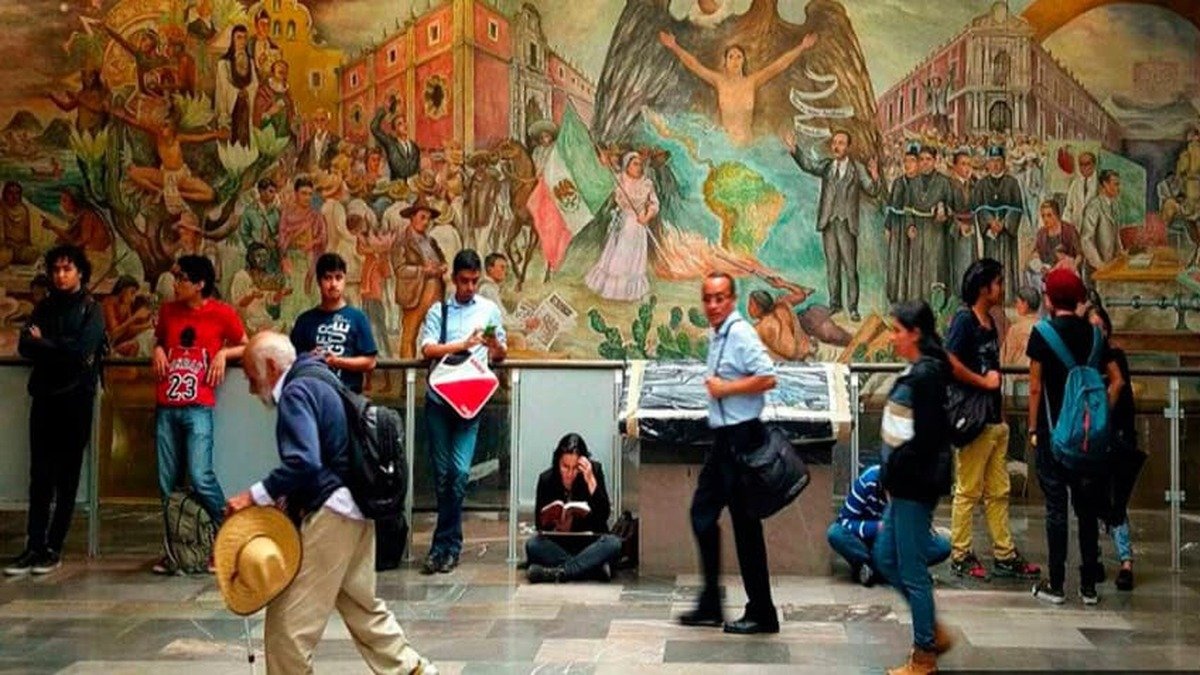
He also painted a stunning mural that thousands of people see every day at the Metro Universidad station in Mexico City, located at the heart of the Universidad Nacional Autónoma de México: "The University on the Threshold of the 21st Century." In this piece, Arturo journeys through the different means of knowledge and education in Mexico. He also portrays key historical figures such as Sor Juana Inés de la Cruz, his mentor Frida Kahlo, and his lifelong partner, Rina Lazo. Finally, one of his last murals adorns the walls of the Casa de Cultura de Azcapotzalco in Mexico City, where he enriches a community cultural space with iconic moments from Mexican history.
Why his legacy matters now
On the 100th anniversary of his birth, Arturo García Bustos stands as an undeniably influential figure in modern Mexican art, far beyond his status as one of Los Fridos. His legacy enriches Mexico's public spaces and the generations of artists he inspired alongside Rina Lazo. For families riding the Metro, for students walking through UNAM, for visitors to the National Museum of Anthropology, his work is part of the visual memory of the nation.
What made García Bustos extraordinary was not technical mastery alone but his conviction that art should serve the people. Whether through the printed flyers of the Taller de Gráfica Popular, exhibitions in public markets, or murals on government walls, he consistently chose accessibility over exclusivity. He believed, like his mentor Frida Kahlo, that love for Mexican culture, roots, and popular customs should be alive and present in every stroke.
This centenary is an invitation for all of us to rediscover his work — to look again at the murals we pass daily, to notice the colors Frida taught him to count, to remember that art can belong to everyone. In a moment when public spaces are more important than ever, García Bustos reminds us that culture is not a luxury but a right. His murals will keep greeting commuters, his prints will keep telling stories, and his example will keep inspiring young artists who, like him, believe that beauty and justice belong together.
This article was produced with AI-assisted research and editorial support. Sources: Mexico News Daily.
By Rosa Martinez, Staff Writer
What's Your Reaction?
 Like
0
Like
0
 Dislike
0
Dislike
0
 Love
0
Love
0
 Funny
0
Funny
0
 Wow
0
Wow
0
 Sad
0
Sad
0
 Angry
0
Angry
0
Latin America/Andes Correspondent at Global1.News. Based in Bogota, covering politics, environment, energy, and social movements across the Andean region. Passionate about environmental journalism and communities protecting their land.















Comments (0)