
Rubio Presses Mexico to Halt Its Own Citizens at Border
Washington, D.C. — The first face-to-face meeting between U.S. Secretary of State Marco Rubio and Mexico's Foreign Secretary Roberto Velasco Álvarez on Wednesday was framed publicly as a step forward on security cooperation.
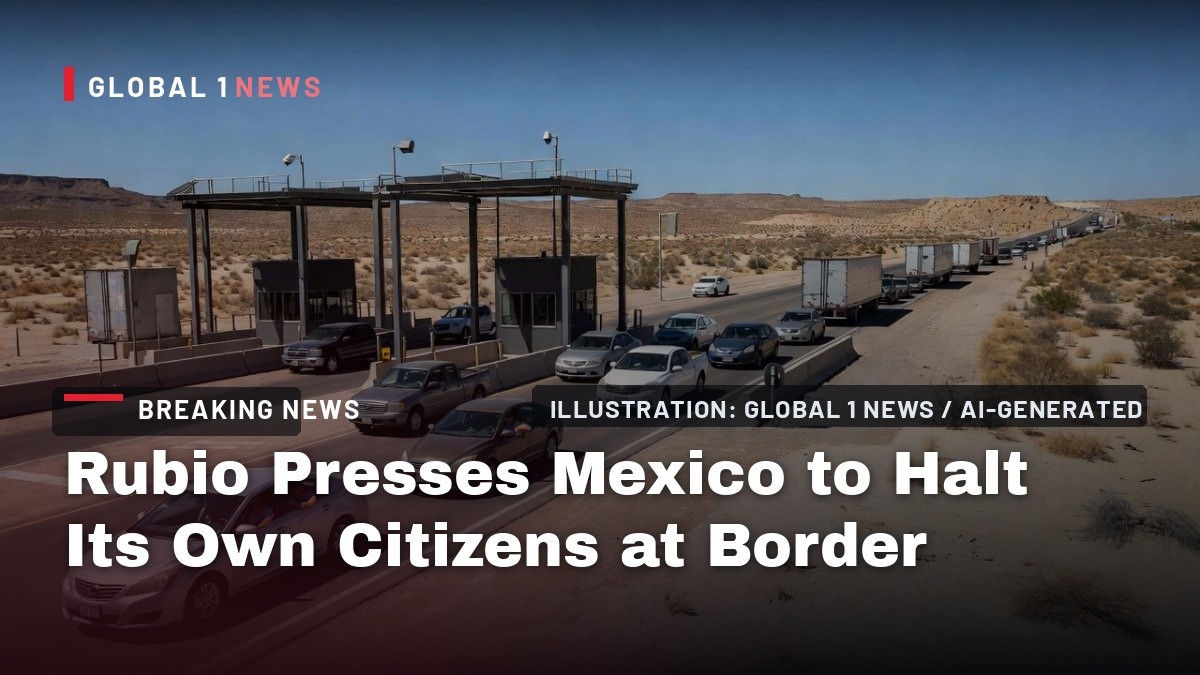
Rubio Presses Mexico to Halt Its Own Citizens at Border
Washington, D.C. — The first face-to-face meeting between U.S. Secretary of State Marco Rubio and Mexico's Foreign Secretary Roberto Velasco Álvarez on Wednesday was framed publicly as a step forward on security cooperation. But behind the closed doors of the State Department, a far more delicate conversation was taking place—one that strikes at the heart of Mexican sovereignty and the daily lives of millions of families in the country's poorest states.
According to a report from Bloomberg News, the Trump administration's central demand was not about fentanyl labs or cartel leaders, but about something more personal: that Mexico stop its own citizens from crossing the border. For President Claudia Sheinbaum's government, that request collides with a fundamental constitutional guarantee—the right of every Mexican to move freely within their own country.
A Meeting of Diplomats, A Clash of Visions
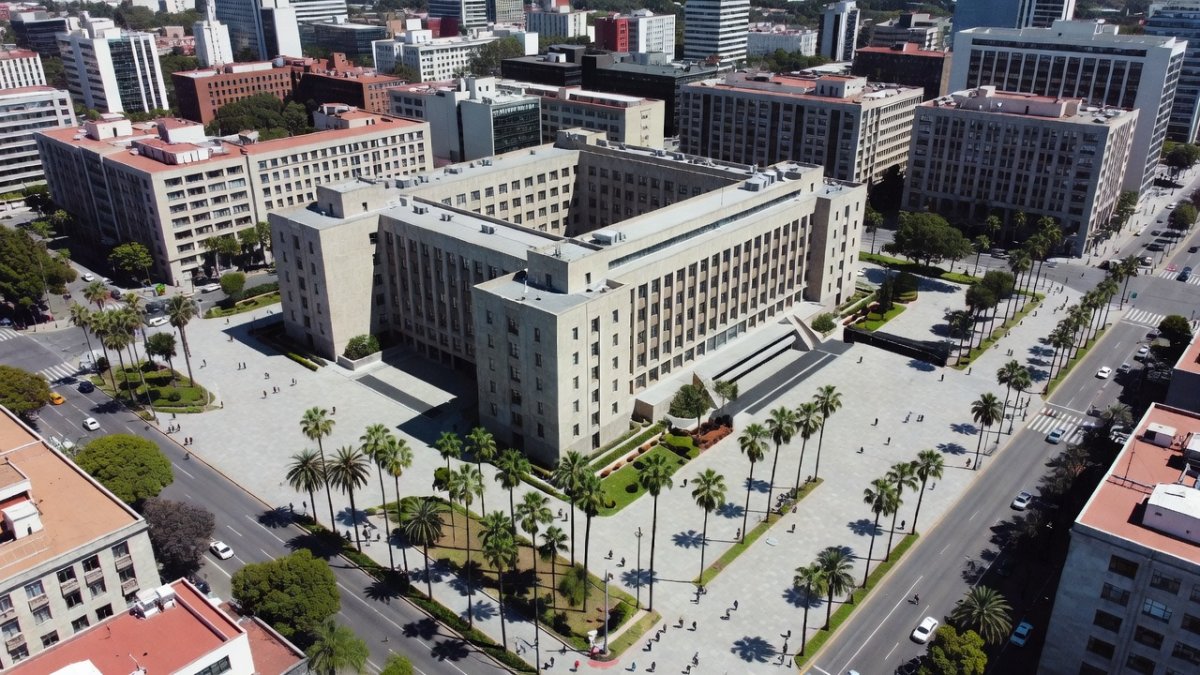
The meeting between Rubio and Velasco, held at the State Department in Washington, D.C., was the first time the two top diplomats had met face-to-face. Velasco arrived in the U.S. capital after what the SRE described as "two very productive days in Seoul," Republic of Korea, where he had been on an official visit. He was accompanied by Ambassador Roberto Lazzeri Montaño, Undersecretary for North America Cristina Planter Riebeling, and other senior officials from Mexico's Secretariat of Foreign Relations.
After the meeting, Rubio posted on X: "Met with Mexican Foreign Secretary @r_velascoa to discuss decisive actions to end illegal immigration, halt fentanyl trafficking, and dismantle Foreign Terrorist Organizations and cartels." The tone was firm, echoing the administration's hardline posture. State Department spokesman Tommy Pigott echoed that sentiment, saying Rubio called for "decisive action" on illegal immigration, fentanyl and other illicit drug trafficking, and cartel activity.
Yet the official readout from Mexico's SRE painted a slightly different picture. Both secretaries highlighted progress on regional security, particularly in combating the trafficking of drugs and weapons and transnational organized crime. Velasco reiterated the importance of continuing bilateral collaboration based on respect for sovereignty, shared responsibility, mutual trust, and collaboration without subordination. The two officials also addressed progress on irregular migration and continued dialogue on the protection of the human rights of Mexican people during migratory processes in the United States.
The Private Demand That Changes Everything
The public statements were diplomatic. The private conversations, according to Bloomberg News, were more pointed. Citing people familiar with the matter who asked not to be identified, the report indicated that the push is being led by White House Homeland Security Adviser Stephen Miller. The main U.S. demand was that Mexico stop its own citizens from crossing the border—a request that goes far beyond the usual bilateral discussions about border enforcement.
This demand comes at a time when apprehensions at the U.S.-Mexico border have reached the highest level of Trump's second term. White House spokeswoman Lauren Bis defended the administration's position, stating: "Thanks to President Trump's leadership, we have the most secure border in history. For 15 months, zero illegals have been released into the United States. As the President has said, it is also true that vicious cartels control vast swaths of territory in Mexico and present a danger to the safety and security of the United States."
Mexico's foreign ministry did not immediately respond to Bloomberg's request for comment on the private demand. But the silence speaks volumes about the sensitivity of the issue.
A Constitutional Wall Inside Mexico
For ordinary Mexicans, the U.S. demand is not just a diplomatic talking point—it is a direct challenge to a right enshrined in the country's constitution. Article 11 of the Mexican Constitution guarantees every person the right to enter and leave the Republic, to travel through its territory, and to change their residence without the need for a security card, passport, safe-conduct, or any other similar requirement.
This is not a technicality. It is the legal foundation that allows a young man from a rural community in Chiapas to board a bus to Tijuana or Ciudad Juárez in search of work. It is the right that allows a mother from Oaxaca to travel north to reunite with family or find better opportunities. Forcing the Mexican government to stop its own citizens from moving within their own borders would require a constitutional reform—a politically explosive prospect that the Sheinbaum administration has shown no appetite for.
The demand also lands heavily on the poorest states in Mexico. Chiapas, Oaxaca, and Guerrero are among the most economically marginalized regions in the country, with high rates of poverty and limited local employment opportunities. For generations, migration has been a survival strategy for families in these states—a way to send remittances home that sustain entire communities. The U.S. demand to halt this movement would effectively criminalize a way of life that has existed for decades.
The Sovereignty Debate in Mexico
The reported demand has reignited a fierce sovereignty debate in Mexico. President Sheinbaum, who has positioned herself as a defender of Mexico's independence on the world stage, faces a delicate balancing act. On one hand, she must maintain a working relationship with the United States, Mexico's largest trading partner. On the other, she cannot be seen as capitulating to U.S. pressure on matters that touch the core of Mexican national identity.
The concept of "collaboration without subordination"—a phrase Velasco used in the official readout—has become a mantra for the Sheinbaum administration. It reflects a deep-seated sentiment in Mexican politics, particularly within the Morena party, that Mexico must not be treated as a junior partner or a client state. The demand to stop Mexican citizens from crossing the border is viewed by many in Mexico City as exactly the kind of overreach that this principle was meant to resist.
This is not just a matter of political posturing. The sovereignty debate resonates in colonias across the country, in ejidos where communal land is still the basis of rural life, and in the tianguis where small merchants sell their wares. For many Mexicans, the right to move freely within their own country is not an abstract legal concept—it is a lived reality that defines their relationship with their nation.
Context of Tension: The Los Chapitos Demand
The meeting between Rubio and Velasco took place against a backdrop of significant bilateral tension. The U.S. government has asked Mexico to hand over 10 officials and former officials flagged by U.S. justice for alleged ties to the Los Chapitos faction of the Sinaloa Cartel. Among them is the governor of Sinaloa on leave, Rubén Rocha Moya.
This demand has created a delicate situation for the Sheinbaum government. While Mexico has cooperated with U.S. law enforcement on cartel matters, the request to extradite or hand over high-ranking Mexican officials touches on sensitive issues of national sovereignty and due process. The Mexican government has historically been resistant to U.S. pressure on such matters, and the Los Chapitos case is no exception.
The timing of the meeting also coincided with the visit to Washington of Mexico's Economy Secretary Marcelo Ebrard, who is negotiating with the U.S. administration an agreement to avoid the imposition of more tariffs on Mexican products. President Sheinbaum expressed optimism on Monday that the agreement could be reached that week. The confluence of these issues—migration, security, and trade—makes the bilateral relationship a complex web of competing interests.
What This Means for Mexican Families
For the families in southern Mexico who send their sons and daughters north, the U.S. demand is deeply personal. These are not faceless statistics; they are the young people who leave their villages in Chiapas, Oaxaca, and Guerrero to find work in the maquiladoras of the north or in the fields and kitchens of the United States. Their remittances are a lifeline for their families, paying for school supplies, medical care, and the construction of modest homes.
The demand to stop Mexican citizens from crossing the border would not just be a policy change—it would be a fundamental disruption of these family economies. It would force families to choose between staying in poverty at home or risking dangerous, unauthorized crossings that expose them to the very cartels the U.S. says it wants to dismantle.
The human dimension of this issue is often lost in the diplomatic language of "decisive action" and "shared responsibility." But for the families in the colonias of Tuxtla Gutiérrez, the rural communities of the Mixteca region, and the indigenous villages of Guerrero, this is not an abstract policy debate. It is about whether their children will have the same opportunities that previous generations had—or whether those opportunities will be closed off by a demand that challenges the very fabric of Mexican society.
The Road Ahead: Negotiation and Resistance
As the Sheinbaum administration processes the U.S. demand, the path forward remains uncertain. The Mexican government has shown a willingness to cooperate on security issues, particularly in the fight against fentanyl trafficking and cartel violence. But the demand to stop Mexican citizens from crossing the border is a red line that many in Mexico believe cannot be crossed without fundamentally altering the relationship between the two countries.
The meeting between Rubio and Velasco was described as productive, but the real work lies ahead. The U.S. administration, led by figures like Stephen Miller, appears determined to push for more aggressive action on migration. The Mexican government, for its part, must navigate the delicate balance between cooperation and sovereignty, between the demands of its northern neighbor and the constitutional rights of its own citizens.
The coming weeks will be critical. President Sheinbaum has staked her political capital on a relationship with the United States that is respectful of Mexican sovereignty. The U.S. demand, as reported by Bloomberg, will test that commitment in ways that previous administrations have not faced. For the people of Mexico—from the farmers in the ejidos to the workers in the maquiladoras—the outcome will determine not just the future of migration policy, but the very nature of Mexican identity in the 21st century.
Tags: Marco Rubio, Roberto Velasco, Mexico-US relations, immigration, fentanyl, cartels, sovereignty, Claudia Sheinbaum, Stephen Miller, border security, Los Chapitos, Marcelo Ebrard
By Rosa Martinez, Staff WriterThis article was produced with AI-assisted research and editorial support. Sources: Mexico News Daily, Bloomberg News, La Jornada, U.S. State Department.
What's Your Reaction?
 Like
0
Like
0
 Dislike
0
Dislike
0
 Love
0
Love
0
 Funny
0
Funny
0
 Wow
0
Wow
0
 Sad
0
Sad
0
 Angry
0
Angry
0
Latin America/Andes Correspondent at Global1.News. Based in Bogota, covering politics, environment, energy, and social movements across the Andean region. Passionate about environmental journalism and communities protecting their land.















Comments (0)