
Fedorov's Election Call Tests Zelensky's Wartime Grip
In a recent BBC News Global Story report, host Asma Khalid and BBC Monitoring's Vitaly Shevchenko examined a question that has convulsed Ukrainian politics: can Volodymyr Zelensky survive the most serious domestic challenge to his presidency since Russia's full-scale invasion?
In a recent BBC News Global Story report, host Asma Khalid and BBC Monitoring's Vitaly Shevchenko examined a question that has convulsed Ukrainian politics: can Volodymyr Zelensky survive the most serious domestic challenge to his presidency since Russia's full-scale invasion? The report, which aired this week, delved into the growing movement around former Defence Minister Mykhailo Fedorov, a 35-year-old political newcomer whose call for wartime elections has galvanised protesters and unnerved the presidential administration in equal measure. What began as a bureaucratic dismissal in mid-July has evolved into a full-blown political crisis, forcing Kyiv to confront uncomfortable questions about democracy, legitimacy, and governance while fighting for its very survival against Russian aggression.
The Campaign to Replace Zelensky: Fedorov's Wartime Election Gambit
Kyiv, Ukraine – 28 August 2026 — Ukraine's political landscape has been shaken this week by former Defence Minister Mykhailo Fedorov's public call for presidential elections to be held despite the ongoing war with Russia, a direct challenge to President Volodymyr Zelensky's authority that has split the country's political class. The 35-year-old, who was dismissed from his post in mid-July after just six months on the job, has tapped into widespread public frustration over corruption and governance failures, drawing thousands of protesters to the streets of Kyiv and other cities. With martial law having suspended all elections since the 2022 invasion, Fedorov's gambit represents the most significant test of Zelensky's wartime leadership to date.
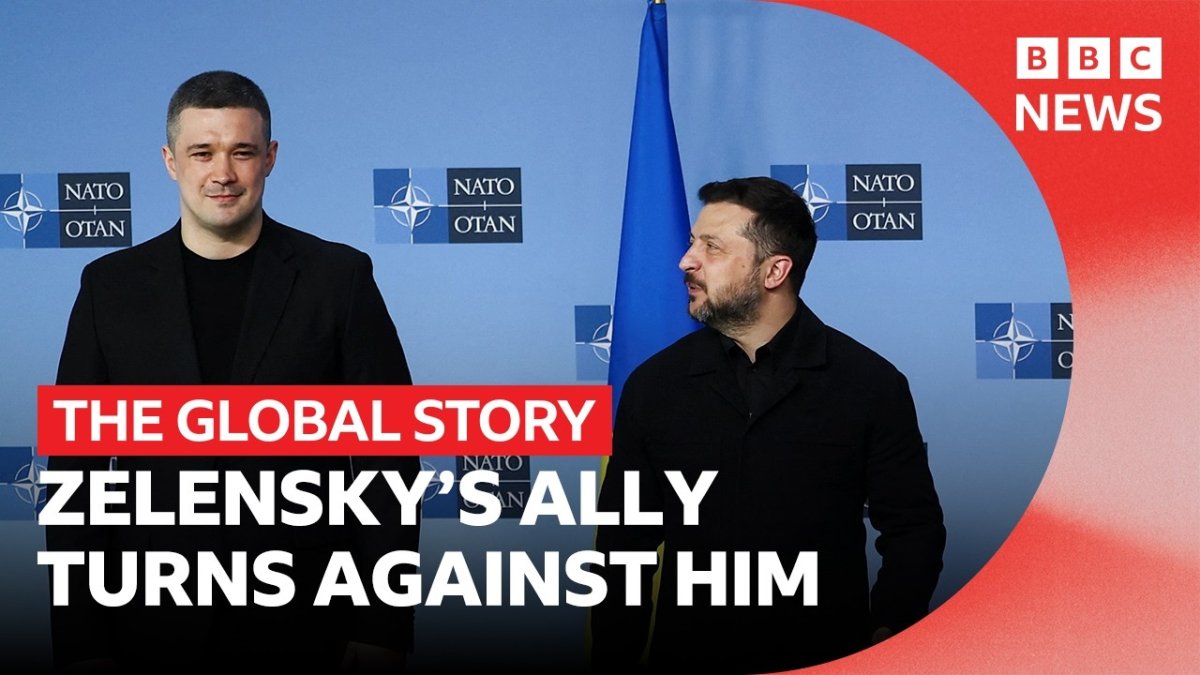
Fedorov's Challenge: Breaking a Wartime Taboo
Ukraine's popular ex-defence minister Mykhailo Fedorov, 35, called for wartime elections in a YouTube video posted this week, saying "Democracy cannot be held hostage by Russia" and that Ukraine is fighting "precisely because we want to remain a free European state." The video, which spread rapidly across Ukrainian social media, is widely seen as the biggest challenge to Zelensky's presidency since the 2022 invasion, breaking a taboo that has held since the imposition of martial law. Fedorov did not mention Zelensky by name in his address, a deliberate omission that analysts suggest was designed to frame the issue as one of principle rather than personality, though the implication was unmistakable to Ukrainian viewers. He complained that corruption is depriving the military of weapons and spoke of a "systemic crisis of governance," directly challenging the narrative of unity that the presidential administration has carefully cultivated throughout the war.
Since the war began in 2022, Ukraine has been under martial law, meaning elections are suspended indefinitely, a legal reality that has been accepted by Western allies as a necessary wartime measure. Fedorov did not offer a detailed roadmap for how voting could be conducted under Russian bombardment, instead calling for a "legal, safe, and realistic mechanism that will allow Ukraine to restore a full democratic process even amidst a prolonged war." He warned it is "particularly dangerous when society develops the feeling that the main criterion for an appointment is not professionalism, results, or the ability to transform the country, but personal loyalty to the system," a pointed reference to the patronage networks that critics say have flourished within Zelensky's administration. The former minister, who previously served as digital transformation minister and created the IT Army of Ukraine and the Army of Drones, has positioned himself as a reformer willing to challenge the status quo, a message that resonates with younger Ukrainians who have grown increasingly disillusioned with the pace of change.
The Sacking That Split the Government
Fedorov was unexpectedly fired in mid-July, just six months after his appointment as defence minister, a decision that sent shockwaves through Ukrainian political circles and triggered the current crisis. His dismissal is believed to have resulted from tensions between him and army commander-in-chief Oleksandr Syrskyi, who reportedly resented Fedorov's aggressive push to modernise the military and root out corruption within the procurement system. Within days, Syrskyi was also replaced, as mounting protests calling for Fedorov's reinstatement piled pressure on the president, creating a leadership vacuum at the highest levels of Ukraine's defence establishment. Fedorov was offered other posts, including deputy prime minister for military innovation, but made clear he would only return as defence minister, a stance that has been interpreted as a direct challenge to Zelensky's authority and a signal of his political ambitions.
The dismissal sparked protests across the country that have continued weekly, with demonstrators gathering in central Kyiv and other major cities to voice their discontent. About 100 protesters gathered outside parliament this week chanting "bring back Fedorov as minister of defence" and "we are fed up, we want dialogue," their signs and slogans reflecting a growing frustration with the political establishment. Younger Ukrainians have been especially disappointed to see the established armed forces chief favoured over the fresh-faced digital innovator, viewing the decision as a victory for the old guard over the reformist wing of the government. During his tenure Fedorov was credited with energising the ministry, heading a drive against corruption, and transforming the battlefield with drones and new technology, achievements that have made him a folk hero to many Ukrainians who see him as the future of their country's defence establishment.
Corruption, Mudra, and the Anti-Corruption Raids
Ukraine's two anti-corruption agencies launched a special operation this week targeting current and former MPs as well as an unnamed official in the presidential office, a development that has added fuel to Fedorov's argument that systemic graft is undermining the war effort. Hours later, deputy head of Zelensky's office Iryna Mudra was dismissed amid local media reports of a raid on her premises, a move that the presidential administration characterised as routine but which critics saw as an attempt to contain the political damage. MP Vadym Stolar, whose home was searched as part of the operation, said he was cooperating with investigators, though the full scope of the investigation remains unclear. Fedorov argues corruption is depriving the military of weapons and equipment, making it harder for Kyiv to win the war, a message that has resonated with a public weary of scandals and eager for accountability.
Carnegie analysts note the corruption allegations — including lurid stories about bags of cash discovered during raids — have lent weight to Fedorov's call for elections, providing concrete evidence for his claims of systemic dysfunction. The timing of the anti-corruption operation, coming just days after Fedorov's video address, has raised questions about whether the presidential administration is attempting to co-opt the reform agenda or simply responding to mounting public pressure. The dismissal of Mudra, who was seen as a close ally of the president, has been interpreted by some observers as an attempt to demonstrate that the administration is serious about tackling corruption, though sceptics argue it is too little, too late. The intersection of the corruption scandal and the political crisis has created a volatile atmosphere in Kyiv, with many Ukrainians wondering whether their leaders are more focused on fighting each other than on defeating the Russian invasion.
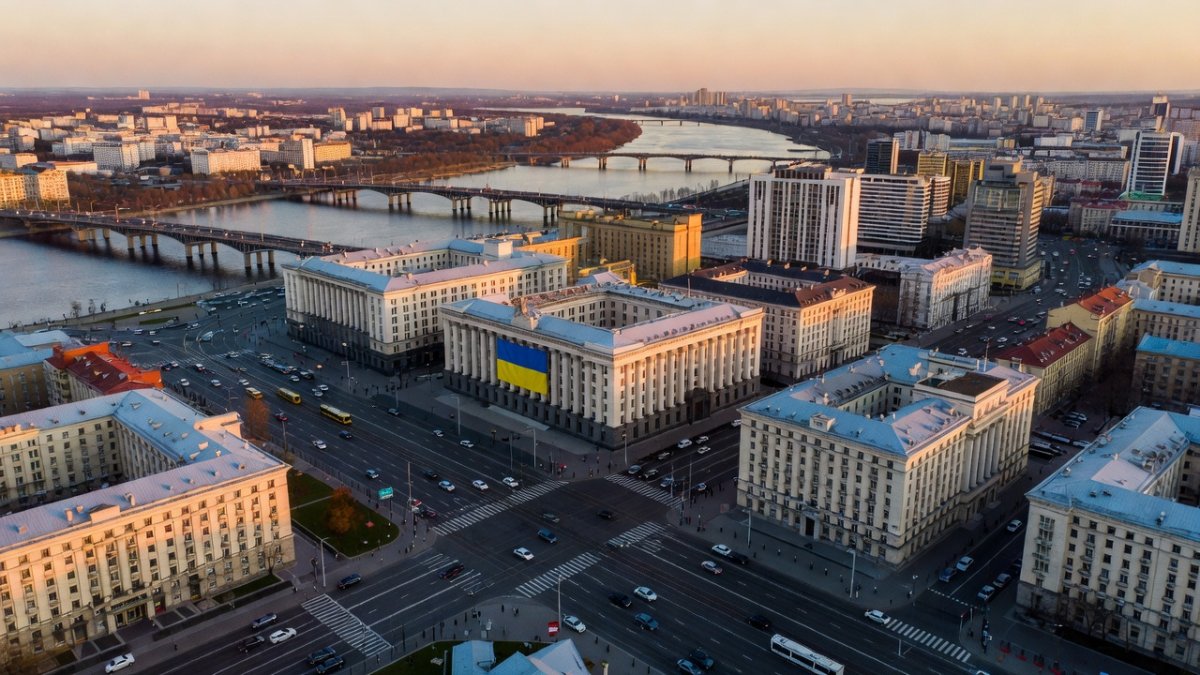
Zelensky's Response: A 'Tsunami' That Would Split Ukraine
Zelensky's first public response came this week, and it was characteristically blunt: "Elections right now are a tsunami for the state that will split Ukraine," the president declared, adding, "If we want to destroy the country, then we can move towards elections during these times of war." The president's language was carefully chosen to frame the issue as one of national survival rather than political convenience, appealing to Ukrainians' instinct for unity in the face of external aggression. A source in the presidential office told the BBC it was "highly bizarre to plan elections amidst missiles and drones. This demonstrates a complete lack of realism," reflecting the administration's view that Fedorov's proposal is either naive or deliberately provocative. The response suggests that Zelensky and his inner circle view Fedorov's challenge as a serious threat to their authority, one that cannot be dismissed with the usual dismissive rhetoric.
Pro-Zelensky MP Oleksandr Merezhko called the idea "very dangerous and unrealistic" and said it "plays into the hands of Putin," arguing that any political instability in Kyiv would be exploited by Moscow to undermine Ukraine's international standing. Opposition MP Volodymyr Aryev disagreed, saying "we have reached a point where we must choose between elections and chaos," a formulation that suggests the political opposition sees an opportunity to capitalise on public discontent. The split between pro-Zelensky and opposition MPs reflects a broader division within Ukrainian society, where the imperative of wartime unity increasingly clashes with demands for democratic accountability. Zelensky's five-year term ended in May 2024, and he has been under pressure from both Washington and Moscow to hold new elections, with the Kremlin repeatedly questioning his legitimacy as a negotiating partner. The president's refusal to countenance elections during wartime has been supported by many Western allies, who argue that stability is paramount, but the growing chorus of domestic critics suggests that patience is wearing thin.
The Logistics of Voting Under Fire
Zelensky has faced mounting pressure from both Washington and Moscow to hold new elections, a situation that has become increasingly untenable as the war drags into its fifth year. When US President Donald Trump suggested last year that Kyiv was "using war" to avoid a vote, Zelensky said Ukraine was ready for elections within 60-90 days if allies helped guarantee security, a conditional offer that was widely seen as a diplomatic manoeuvre rather than a genuine commitment. Many Ukrainians saw Trump's remarks as reflecting Vladimir Putin's narrative that Zelensky is not a legitimate leader, a propaganda line that Moscow has pushed consistently since the invasion began. The practical challenges of holding elections during wartime are immense, with analysts questioning how voting could be organised for millions of Ukrainians who have fled the country and hundreds of thousands of soldiers on the front line.
Russian strikes continue to devastate Ukrainian cities, serving as a grim reminder of the dangers that any electoral process would face. This week a drone hit a minibus in Kherson killing four people, and a strike on a police headquarters in Zhytomyr killed two officers and injured twenty others, attacks that underscore the impossibility of guaranteeing safe voting conditions. The logistical nightmare of conducting elections under such circumstances — from printing ballots to securing polling stations to counting votes in areas under constant bombardment — has led many experts to conclude that any vote would be deeply flawed and open to challenge. Yet Fedorov's supporters argue that the longer elections are postponed, the more legitimacy Zelensky loses, creating a vacuum that could be filled by more extreme elements. The debate over elections has thus become a proxy for a deeper question about the nature of Ukrainian democracy and whether it can survive the pressures of war.
Analysis and Implications: What Comes Next
Fedorov has not explicitly said he will run against Zelensky, but his call for "a state where institutions are stronger than names" has made his name the one doing the rounds in political circles across Kyiv. Analysts suggest the challenge could reshape Ukraine's wartime politics even if elections remain impossible, forcing Zelensky to address the corruption concerns that Fedorov has so effectively articulated. The Kremlin's war of attrition and the corruption scandals interact with the democratic debate in complex ways, with Moscow watching closely for any signs of political instability that could be exploited on the battlefield or in diplomatic negotiations. Some Ukrainians, like protester Maya, 24, say Zelensky remains "the best choice, the safest option for all of us, but after the war ends I hope there will be a new president," a sentiment that captures the ambivalence many feel about the current crisis.
The coming weeks will be critical in determining whether Fedorov's challenge fades into the background or evolves into a sustained political movement capable of forcing real change. Zelensky's administration has shown little willingness to compromise, but the mounting pressure from protesters, opposition politicians, and international observers may eventually force a reckoning. The newly-confirmed Defence Minister Yevhenii Khmara faces the unenviable task of restoring confidence in the ministry while the political storm rages around him, a challenge that will test his leadership and his relationship with the presidential administration. For Ukraine's Western allies, the crisis presents a dilemma: supporting Zelensky's wartime leadership while acknowledging the legitimacy of democratic concerns raised by Fedorov and his supporters. The trajectory of the war itself may ultimately determine the outcome, with a successful counteroffensive potentially strengthening Zelensky's position while continued stalemate could embolden his critics. What is clear is that Ukraine's political landscape has been permanently altered, and the question of elections will not disappear until it is resolved.
By Irina Volkov, Staff Writer
This article was produced with AI-assisted research and editorial support. Reporting is based on sources cited in the article.
What's Your Reaction?
 Like
0
Like
0
 Dislike
0
Dislike
0
 Love
0
Love
0
 Funny
0
Funny
0
 Wow
0
Wow
0
 Sad
0
Sad
0
 Angry
0
Angry
0
Russia/Eastern Europe Correspondent at Global1.News. Covering Russian politics, energy, security, and the shifting dynamics of the post-Soviet space. Provides clear-eyed analysis on one of the world's most opaque regions.








Comments (0)