
TotalEnergies Exits Arctic LNG 2, Transfers Stake to Novatek
French energy giant TotalEnergies has completed its exit from the US-sanctioned Arctic LNG 2 project, transferring its 10% stake to NordLine, a subsidiary of Russia's Novatek. The move follows a .1 billion write-down and deepens Moscow's control of a key Arctic gas venture as Western firms withdraw.
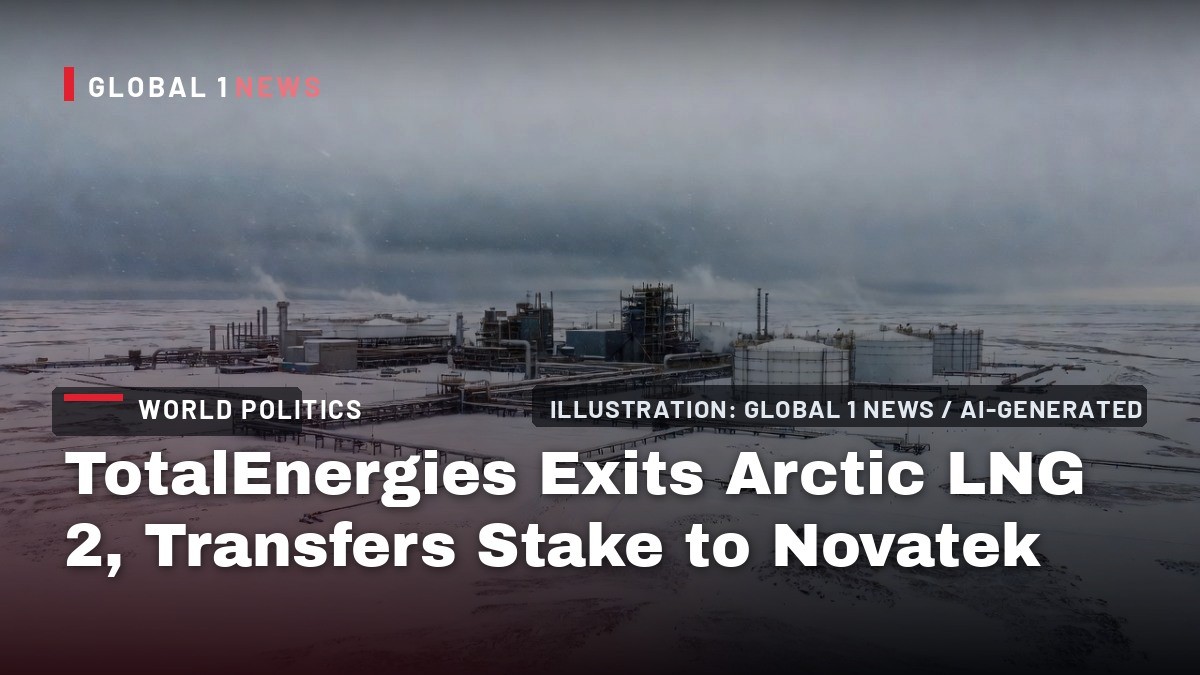
TotalEnergies Completes Exit From Sanctioned Arctic LNG 2, Handing 10% Stake to Novatek Subsidiary
Moscow, Russia – this week — French energy major TotalEnergies has finalized its departure from the Arctic LNG 2 project, transferring its 10% stake to a subsidiary of Russia's Novatek, the company confirmed on Thursday. The move closes a chapter for one of the last major Western shareholders in a project that has been crippled by US sanctions since November 2023.
The exit, first signaled by Chief Executive Patrick Pouyanne in July, marks a significant shift in the ownership structure of the Arctic liquefied natural gas venture on the Gydan Peninsula. TotalEnergies confirmed that its interest has been transferred to NordLine, a Novatek subsidiary, and that it is "therefore no longer a shareholder" in the project.
Exit Announcement and Official Confirmation
TotalEnergies issued a formal statement on Thursday confirming the completion of the transfer. "TotalEnergies confirms that the transfer of its 10% interest in Arctic LNG 2 to NordLine has been completed. TotalEnergies is therefore no longer a shareholder," the company said.
The statement follows Pouyanne's July announcement that the company planned to exit the project, and that Moscow had granted the necessary approval. The French firm had already written down $4.1 billion related to its Arctic LNG 2 stake in 2022, following Russia's full-scale invasion of Ukraine.
The company's departure had been widely anticipated in energy markets, given the mounting sanctions pressure and the practical difficulties of maintaining a stake in a project that Washington has actively sought to cripple.
The Sanctions Backdrop
The United States imposed sanctions on Arctic LNG 2 in November 2023, targeting both the project itself and its fleet of ice-class Arc7 LNG tankers. Washington has since expanded restrictions, aiming to prevent the project from securing the vessels and buyers needed to bring its three liquefaction trains online.
The sanctions have proven effective in hampering the project's development. Arctic LNG 2, designed to produce approximately 19.8 million tons of LNG per year across three trains of about 6.6 million tons each, has struggled to ship cargoes. The restrictions on its specialized Arc7 tankers, built to navigate Arctic ice, have been particularly damaging, as few alternative vessels can operate in the region's harsh conditions.
US officials have made clear that the project is a primary target in their broader strategy to constrain Russia's future energy revenues. The sanctions have also deterred potential buyers, with many Asian customers wary of secondary sanctions.
Terms of the Deal
The transfer of TotalEnergies' 10% stake to NordLine, a Novatek subsidiary, was executed following approval from Russian authorities. Pouyanne said in July that the company had recently received the necessary presidential authorization for the transaction.
While TotalEnergies has exited its equity position, the company noted that it retains the right to reimbursement of $1.3 billion in loans it provided to the project alongside other shareholders. However, the company indicated that repayment is unlikely in the near term.
"Such reimbursement might be implemented in the future subject to applicable sanctions," TotalEnergies said in its statement, acknowledging the legal and practical obstacles to recovering the funds.
The loan situation underscores the complexity of unwinding Western investments in Russia. Even after an equity exit, financial entanglements can persist, leaving companies exposed to sanctions risk and uncertain repayment prospects.
The Wider Western Exit Landscape
TotalEnergies' departure from Arctic LNG 2 is part of a broader pattern of Western companies seeking to leave Russia since the 2022 invasion of Ukraine. Many firms quickly sold, suspended, or scaled back their Russian operations in the immediate aftermath of the invasion.
However, Moscow has made the exit process increasingly difficult. A 2022 decree requires presidential authorization for foreign asset sales, giving the Kremlin significant leverage over the terms of Western departures. Russian authorities have used this approval process to extract concessions, impose discounts, and control the pace of exits.
The requirement has slowed the exodus and, in some cases, forced Western companies to sell at steep discounts or accept unfavorable terms. The Kremlin's approach reflects a broader strategy of maintaining control over strategic assets while managing the optics of Western companies leaving.
For TotalEnergies, the approval process was a necessary step in completing the Arctic LNG 2 transfer. The company's ability to secure authorization suggests that Moscow was willing to facilitate the exit, likely recognizing that the project's future depends on consolidating ownership under Russian control.
TotalEnergies' Remaining Russian Exposure
Despite completing its exit from Arctic LNG 2, TotalEnergies retains significant exposure to Russia. The company still holds a 19.4% stake in Novatek itself, as well as a 20% stake in the Yamal LNG project, which it jointly launched with Novatek in 2013.
TotalEnergies has stated that it cannot sell these stakes under the current sanctions regime against Russia. The company's position reflects the legal constraints that continue to bind Western firms with Russian assets, even as they seek to reduce their presence.
The Yamal LNG project, which ships LNG to Europe, remains operational and profitable. However, its continued operation raises questions about TotalEnergies' compliance with the spirit of Western sanctions, even if the company maintains that its involvement is legally permissible.
Pouyanne has previously defended the company's remaining Russian holdings, arguing that they are subject to existing contracts and that exiting would be impractical under current conditions. The company's ongoing relationship with Novatek, chaired by Leonid Mikhelson, remains a point of scrutiny for Western regulators and activists.
What This Means for Arctic LNG 2's Future
The consolidation of Arctic LNG 2 ownership under Novatek and its subsidiaries represents a significant shift for the project. With TotalEnergies' exit, the ownership structure is now dominated by Russian interests, alongside Chinese and Japanese stakeholders.
Before the transfer, the project's ownership was roughly: Novatek 60%, TotalEnergies 10%, China's CNPC 10%, CNOOC 10%, and a Japanese consortium of Mitsui & Co. and JOGMEC 10%. The Chinese and Japanese stakes remain, though their continued participation is uncertain given the sanctions environment.
The project's future remains highly uncertain. Sanctions on its tanker fleet and the difficulty of securing buyers have severely limited its operational capacity. Novatek has sought alternative arrangements, including using non-sanctioned vessels and exploring new markets, but progress has been slow.
Industry analysts suggest that Arctic LNG 2 may struggle to reach full production capacity without a significant easing of sanctions or the development of alternative export routes. The project's location on the Gydan Peninsula, across the Ob Bay from the Yamal Peninsula, presents logistical challenges that are compounded by the sanctions regime.
Analysis and Implications
TotalEnergies' exit from Arctic LNG 2 could signal a broader trend of Western companies disentangling themselves from sanctioned Russian energy projects. The move reflects the growing legal and reputational costs of maintaining exposure to Russian assets, particularly in the LNG sector.
Analysts suggest this could indicate that other foreign stakeholders in Arctic LNG 2, including the Chinese and Japanese partners, may face increasing pressure to reconsider their positions. However, China and Japan have different geopolitical calculations than Western Europe, and their companies may be more willing to weather sanctions risk.
The transfer to NordLine also consolidates Novatek's control over the project, potentially enabling the Russian company to pursue alternative strategies without the constraint of Western partners. This could include seeking new buyers in Asia or developing shadow-fleet arrangements to circumvent sanctions.
However, the practical challenges remain formidable. The sanctions on Arc7 tankers have created a significant bottleneck, and the project's ability to export LNG at scale is doubtful without a resolution to this issue. The $1.3 billion in loans that TotalEnergies is unlikely to recover also highlights the financial toll that sanctioned projects can exact on Western companies.
For the broader energy market, the exit reinforces the division between Western and Russian energy systems. The Arctic LNG 2 project, once envisioned as a major source of LNG for global markets, now appears destined to serve primarily Russian and non-Western customers, if it can overcome its operational hurdles.
Looking Ahead
The completion of TotalEnergies' exit from Arctic LNG 2 marks a definitive moment in the project's troubled history. With Western ownership now eliminated, the project's fate rests in the hands of Novatek and its remaining international partners.
The coming months will be critical in determining whether Arctic LNG 2 can overcome the sanctions obstacles and achieve meaningful production. Novatek's ability to secure vessels, find buyers, and navigate the complex sanctions environment will be tested as never before.
For TotalEnergies, the exit allows the company to focus on its other global operations, though its remaining Russian stakes continue to cast a shadow. The company's ability to eventually divest from Novatek and Yamal LNG will depend on the evolution of the sanctions regime and the broader geopolitical landscape.
As the Arctic LNG 2 project moves forward under Russian control, the international community will be watching closely to see whether sanctions can effectively constrain Russia's LNG ambitions, or whether Moscow will find ways to adapt and persist.
By Irina Volkov, Staff Writer
This article was produced with AI-assisted research and editorial support. Sources: The Moscow Times, Interfax, company statements.
What's Your Reaction?
 Like
0
Like
0
 Dislike
0
Dislike
0
 Love
0
Love
0
 Funny
0
Funny
0
 Wow
0
Wow
0
 Sad
0
Sad
0
 Angry
0
Angry
0
Russia/Eastern Europe Correspondent at Global1.News. Covering Russian politics, energy, security, and the shifting dynamics of the post-Soviet space. Provides clear-eyed analysis on one of the world's most opaque regions.











Comments (0)