
Royal Barge Procession Rehearsals Begin for Historic Kathin Ceremony Honouring Queen Suthida
The first rehearsal for the 2026 Royal Barge Procession took place on the Chao Phraya River on Aug 17, with 2,200 Royal Thai Navy personnel practising the intricate manoeuvres required for the Nov 6 royal kathin ceremony honouring Her Majesty Queen Suthida Bajrasudhabimalalakshana's 4th-cycle birthd
The first rehearsal for the 2026 Royal Barge Procession took place on the Chao Phraya River on Aug 17, with 2,200 Royal Thai Navy personnel practising the intricate manoeuvres required for the Nov 6 royal kathin ceremony honouring Her Majesty Queen Suthida Bajrasudhabimalalakshana's 4th-cycle birthday. The rehearsal unfolded at the foot of Rama VIII Bridge in Bangkok's Bang Phlat district, marking the start of a 12-session preparation schedule leading up to one of Thailand's most sacred and visually spectacular royal traditions.
Royal Barge Procession Rehearsals Begin for Historic Kathin Ceremony Honouring Queen Suthida
Bangkok, Thailand — The Royal Thai Navy held the first full rehearsal for the Royal Barge Procession on Monday, Aug 17, mobilising 2,200 personnel including senior naval commanders and royal barge oarsmen at the foot of Rama VIII Bridge in Bangkok's Bang Phlat district. The practice session, which began at approximately 14.30 hrs, is the first of 12 scheduled rehearsals ahead of the main ceremony on Nov 6, when His Majesty the King will present kathin robes to Buddhist monks at Wat Arun Ratchawararam in honour of Her Majesty Queen Suthida's 48th birthday anniversary, celebrated on June 3, 2026.
The Rehearsal on the Chao Phraya
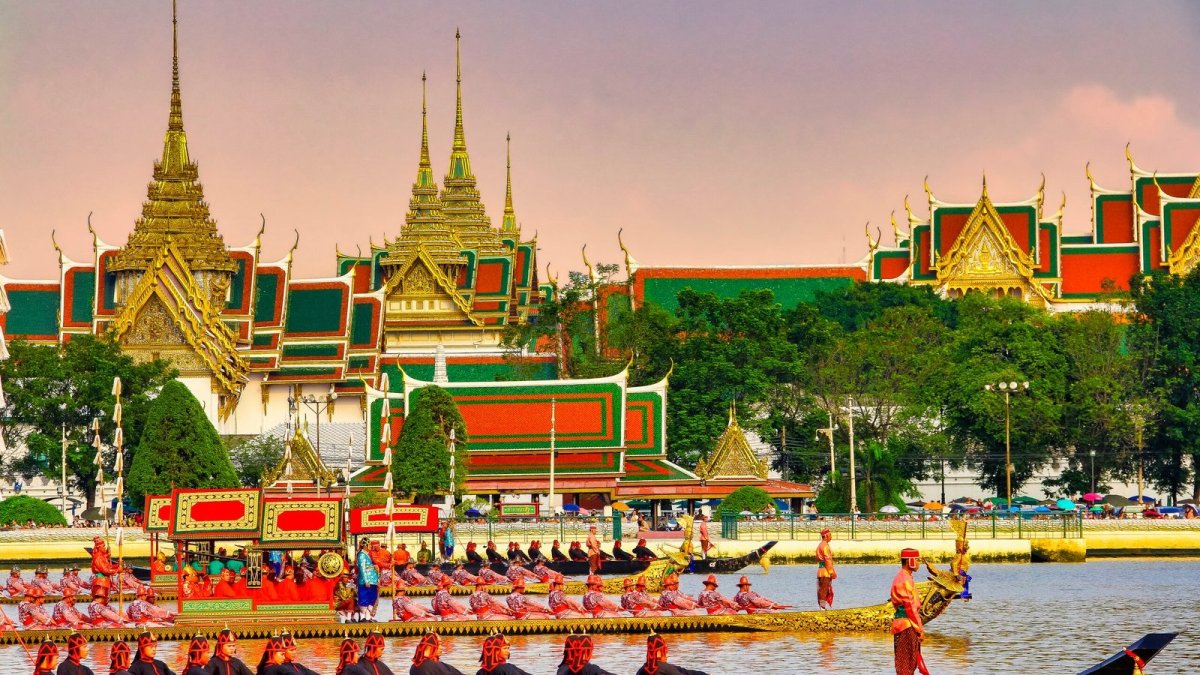
The Aug 17 rehearsal saw the Royal Thai Navy's finest oarsmen and commanders synchronise their movements along the Chao Phraya River, with the iconic Rama VIII Bridge serving as the backdrop. The navy has scheduled 10 minor rehearsals on Aug 17, 20 and 27; Sep 3, 8, 17 and 23; and Oct 2, 8 and 15, followed by two full-dress rehearsals on Wednesday Oct 21 and Wednesday Oct 28. Each session begins at 14.30 hrs, allowing crews to practise the precise timing and coordination required for the ceremonial procession.
For the residents of Bang Phlat district, the sight of the golden barges gathering beneath the Rama VIII Bridge is both familiar and deeply moving. Many local families have lived along this stretch of the Chao Phraya for generations, and the sound of the oarsmen's rhythmic chants carries across the water as a reminder of the kingdom's enduring heritage. The choice of this location for the first rehearsal is significant, as the bridge itself — named after King Ananda Mahidol, the eighth monarch of the Chakri dynasty — stands as a modern landmark against the ancient traditions unfolding beneath it.
A Rare Royal Spectacle
The 2026 procession will feature 52 royal barges manned by more than 2,200 Royal Thai Navy personnel, arranged in five columns and three lines to form a majestic formation approximately 1,280 metres long and 90 metres wide. Four principal royal barges will lead the procession: Suphannahong (Golden Swan), Anantanakkharat (Multi-headed Naga), Narai Song Suban King Rama IX, and Anekkachatphutchong (Innumerable Naga Figures). The barges will depart from Wasukri Pier and proceed along the Chao Phraya River, passing Phra Sumen Fort, Somdet Phra Pinklao Bridge, Siriraj Hospital, the Grand Palace and the Royal Thai Navy Auditorium before arriving at Wat Arun Ratchawararam — a route established during the reign of King Bhumibol Adulyadej the Great.
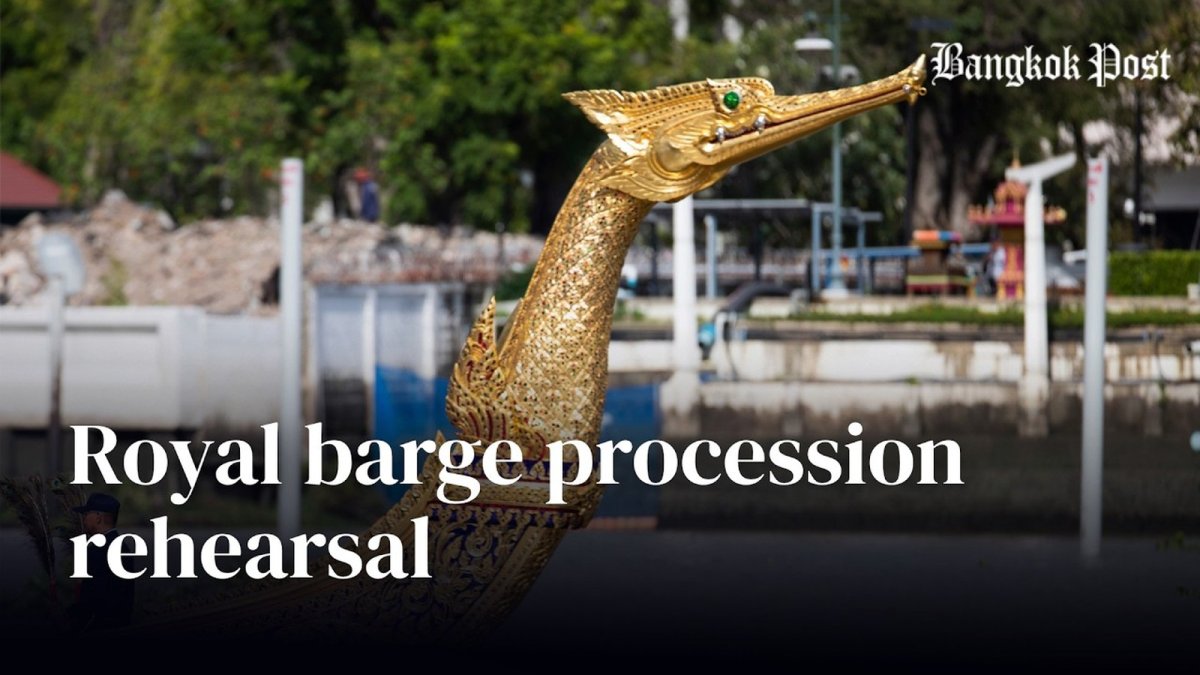
The sheer scale of the procession is difficult to comprehend until one witnesses it firsthand. The 52 barges, when fully assembled in formation, stretch for more than a kilometre along the river, their gilded bows and intricate carvings catching the afternoon light. The Suphannahong, or Golden Swan, is perhaps the most celebrated of the royal barges, its majestic swan figurehead having become an enduring symbol of Thai royal tradition. The Anantanakkharat, with its multi-headed naga serpent design, draws upon the rich mythology of Thai Buddhism, where the naga is revered as a protector of the Buddha and a guardian of waterways.
For many Thai people, the Royal Barge Procession is not merely a spectacle but a living connection to the kingdom's past. The barges themselves are treated with the same reverence afforded to sacred objects, and the oarsmen who man them undergo rigorous training that includes not only physical conditioning but also instruction in the proper etiquette and ceremonial protocols. The procession route, which passes some of Bangkok's most historic landmarks, was deliberately chosen to showcase the city's heritage. As the barges glide past Phra Sumen Fort, one of the last remaining bastions of the old city walls, and Siriraj Hospital, Thailand's oldest medical institution, they trace a path through the layers of Bangkok's history, from the founding of the Rattanakosin Kingdom to the present day.
Kathin Robes and Buddhist Merit
The Royal Kathin Ceremony is an annual Buddhist merit-making tradition that follows the end of Buddhist Lent, when robes and other offerings are presented to monks. When performed by the monarch, it becomes a Royal Kathin Ceremony of profound significance. This year's ceremony carries special meaning as it honours Her Majesty Queen Suthida Bajrasudhabimalalakshana, born June 3, 1978, whose fourth-cycle — or 48th — birthday anniversary falls in 2026. His Majesty the King will personally present the kathin robes to monks at Wat Arun, one of Thailand's most revered temples, in a gesture that underscores the deep connection between the monarchy and the Buddhist faith.
The kathin ceremony is one of the most important annual observances in the Buddhist calendar, a time when laypeople express their gratitude to the monastic community through offerings of new robes, alms bowls and other necessities. The word "kathin" itself refers to the wooden frame used in ancient times to stretch and sew cloth into robes, and the ceremony traditionally involves the presentation of a single set of robes to a community of monks who have completed their three-month rains retreat. In Thailand, where over 90 percent of the population identifies as Buddhist, the kathin season is observed with particular devotion, and the Royal Kathin Ceremony represents the highest expression of this tradition.
Wat Arun, the Temple of Dawn, holds a special place in Thai Buddhist consciousness. Its towering prang, or Khmer-style tower, is one of the most recognisable landmarks in Bangkok, its surface covered in colourful porcelain fragments that glitter in the morning light. The temple's name, which means "Temple of the Dawn," reflects its position on the western bank of the Chao Phraya River, where it catches the first rays of sunrise. For centuries, Wat Arun has been associated with the Chakri dynasty, and its role as the destination for this year's Royal Kathin Ceremony reinforces the enduring bond between the monarchy and the Buddhist sangha. The choice of Wat Arun also carries a poetic resonance, as the procession will arrive at the temple as the sun begins to set, transforming the river into a golden pathway leading to the sacred site.
Centuries of Tradition
The Royal Barge Procession dates back to the Ayutthaya period (1350-1767), when royal barges were used for both ceremonial and military purposes. The tradition has been preserved through the centuries, though it remains a rare spectacle — during the 70-year reign of King Bhumibol Adulyadej the Great, only 16 barge processions were held. Recent processions include the 2019 coronation ceremony and the October 2024 kathin ceremony at Wat Arun. Each procession requires months of preparation, with oarsmen training extensively to maintain the perfect rhythm and alignment that has defined this royal tradition for generations.
The origins of the Royal Barge Procession lie in the martial traditions of the Ayutthaya Kingdom, when fleets of war barges patrolled the Chao Phraya and its tributaries, defending the realm from invaders. Over time, these practical vessels evolved into works of art, their hulls adorned with mythological creatures and their oarsmen dressed in ceremonial uniforms. The transition from military to ceremonial use reflects a broader transformation in Thai society, as the kingdom's focus shifted from territorial expansion to cultural and spiritual development. The barges themselves are considered sacred objects, and the construction of a new royal barge is accompanied by elaborate rituals designed to invoke the blessings of the spirits and deities associated with the waterways.
The rarity of the procession adds to its significance. During the long reign of King Bhumibol Adulyadej the Great, the procession was reserved for the most momentous occasions — coronations, major royal anniversaries and significant religious ceremonies. This restraint ensured that each procession remained a special event, eagerly anticipated by the Thai people and watched by audiences around the world. The 2019 procession, held as part of the coronation ceremonies of His Majesty King Maha Vajiralongkorn, marked the beginning of a new chapter in this royal tradition, and the October 2024 procession demonstrated the continuity of the practice under the current reign. The 2026 procession, honouring Queen Suthida, continues this legacy while adding a new dimension of meaning through its connection to the Queen's birthday anniversary.
Precision, Craftsmanship and Naval Skill
Behind the beauty of the Royal Barge Procession lies an extraordinary feat of naval engineering and human coordination. The 2,200 personnel involved in the procession include not only the oarsmen who power the barges but also helmsmen, navigators, ceremonial officers and support staff who ensure that every aspect of the procession proceeds without flaw. The oarsmen, drawn from the ranks of the Royal Thai Navy, undergo months of intensive training that begins long before the first public rehearsal. They must learn to row in perfect unison, their strokes timed to the beat of traditional drums and the chanting of the boat leaders, maintaining a rhythm that has been passed down through centuries of practice.
The coordination required to manoeuvre 52 barges in formation along a busy river is a testament to the skill of the Royal Thai Navy. The barges must maintain precise spacing and alignment, adjusting for currents, wind and the wake of passing vessels.
A Draw for Visitors and Thai Families
The Nov 6 procession is expected to draw thousands of spectators, with public viewing available along both banks of the Chao Phraya River between Krung Thon Bridge and Wat Arun Ratchawararam. The Tourism Authority of Thailand (TAT) is promoting the event as a highlight of the kingdom's cultural calendar, encouraging both domestic and international visitors to witness the spectacle. For Thai families, the procession offers a rare opportunity to connect with royal tradition and Buddhist heritage, while for ASEAN and global visitors, it represents an unforgettable glimpse into Thailand's living cultural legacy. The TAT Contact Centre at 1672 and the @1672travelbuddy service provide up-to-date information for those planning to attend.
For Thai families, attending the Royal Barge Procession is often a multigenerational experience, with grandparents sharing memories of past processions with their children and grandchildren. The event serves as a living lesson in Thai history and culture, reinforcing the values of respect for the monarchy, devotion to Buddhism and pride in national heritage. The atmosphere is one of celebration and reverence, with the crowd falling silent as the first barge comes into view, then erupting in applause and cheers as the full majesty of the procession unfolds.
Regional Significance for Southeast Asia
The Royal Barge Procession holds significance that extends beyond Thailand's borders, resonating with the shared cultural heritage of Southeast Asia. The region's riverine civilisations — from the Ayutthaya Kingdom to the Khmer Empire and the Srivijaya maritime realm — all developed traditions of royal waterborne processions, and the Thai ceremony is one of the few such traditions to have survived into the modern era. For visitors from Cambodia, Laos, Myanmar and Vietnam, the procession offers a glimpse of a shared past, when rivers were the highways of the region and royal power was displayed through magnificent fleets of decorated vessels.
The international attention generated by the procession also contributes to Thailand's soft power and its position as a cultural leader in Southeast Asia. The event is covered by media outlets around the world, and images of the golden barges gliding along the Chao Phraya River have become iconic representations of Thai culture. For the millions of tourists who visit Thailand each year, the procession offers a rare opportunity to witness a living tradition that has been preserved for centuries, and many plan their travel itineraries specifically to coincide with the event. The TAT's promotional efforts, including the 1672 Contact Centre and the @1672travelbuddy service, are designed to ensure that visitors have the information they need to make the most of their experience.
What to Watch For
With 10 minor rehearsals and two full-dress rehearsals scheduled through October, the Royal Thai Navy will continue to refine every detail of the procession. The full-dress rehearsals on Oct 21 and Oct 28 will offer the public a preview of the complete spectacle, with all 52 barges in formation. Visitors planning to watch the main ceremony on Nov 6 should arrive early to secure viewing spots along the riverbanks, and are advised to check TAT updates for recommended locations and timing. The procession is expected to begin in the late afternoon, with the barges gliding past Bangkok's historic landmarks as the sun sets over the Chao Phraya.
For those unable to attend in person, the rehearsals and the main ceremony will be covered extensively by Thai and international media, with live broadcasts and online streaming expected to reach audiences around the world. The Royal Thai Navy has also announced that the full-dress rehearsals will be open to public viewing, providing an opportunity for those who cannot attend the main ceremony to experience the procession. Spectators are advised to dress respectfully, as the event is a royal ceremony of deep religious significance, and to follow the guidance of officials regarding viewing locations and safety protocols.
The 2026 Royal Barge Procession represents more than a ceremonial display — it is a reaffirmation of Thailand's enduring royal traditions, Buddhist values and national identity. For a kingdom navigating the complexities of the modern world, the sight of 52 golden barges moving in perfect harmony along the Chao Phraya River serves as a powerful reminder of the continuity and resilience of Thai culture. As the rehearsals continue through the coming weeks, the anticipation builds for what promises to be one of the most significant royal ceremonies of the decade.
This article was prepared with the assistance of AI tools and reviewed by editors.
By Ann Srisawat, Staff Writer
This article was produced with AI-assisted research and editorial support. Reporting is based on sources cited in the article.
What's Your Reaction?
 Like
0
Like
0
 Dislike
0
Dislike
0
 Love
0
Love
0
 Funny
0
Funny
0
 Wow
0
Wow
0
 Sad
0
Sad
0
 Angry
0
Angry
0

Southeast Asia Correspondent at Global1.News. Based in Bangkok, covering Thai and Southeast Asian politics, economy, technology, and culture. Deep regional perspective on one of the world's most dynamic regions.














Comments (0)