
RFK Jr. thinks AI will free us from the "tyranny" of medical facts, expertise
When Robert F. As a founder who has spent a decade wrestling with real‑world production servers, I see the same pattern play out in our industry: glossy promises, thin‑skinned “best practices,” and a sudden rush to slap a shiny new service on a legacy stack without testing the fallout.
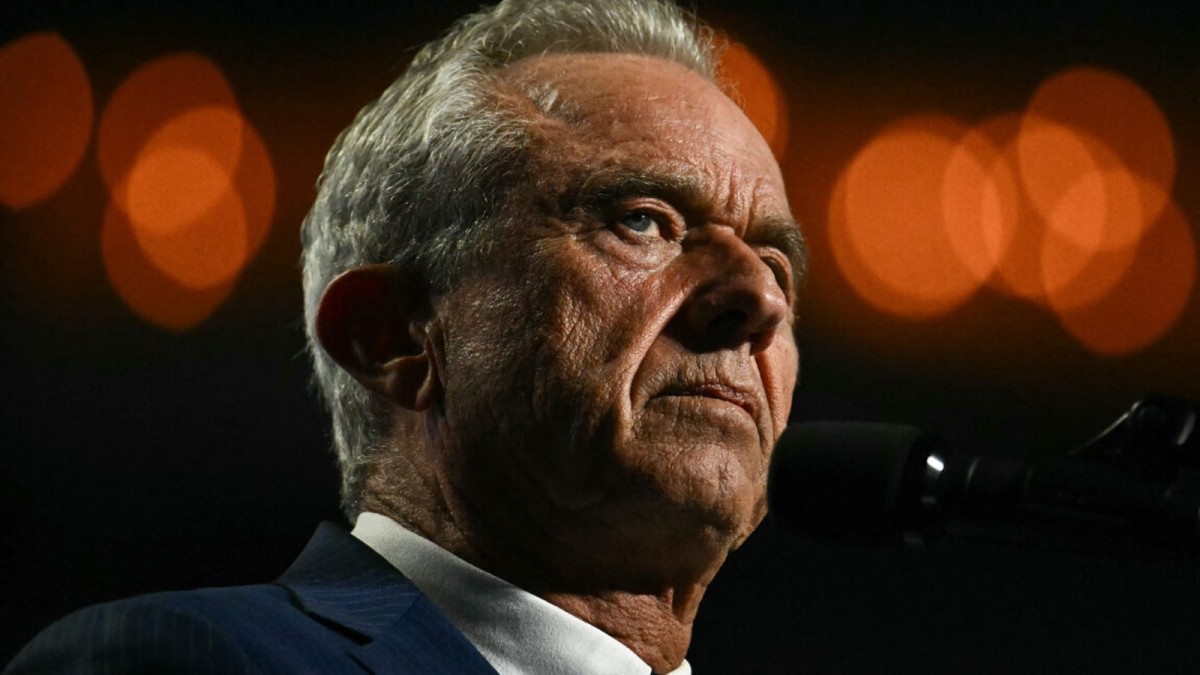
When Robert F. Kennedy strutted onto the Waldorf Astoria stage at the Make America Healthy Again summit and started preaching that artificial intelligence would free Americans from the “medical tyranny” of doctors, I heard a familiar echo of the hype that haunts every independent hosting provider: “the tech will solve everything, just trust the algorithm.” The problem isn’t the AI itself – it’s the way political operatives weaponize it to bypass expertise, and the way the same crowd that claims to hate corporate capture suddenly sells sponsorship packages to the very AI firms they tout. As a founder who has spent a decade wrestling with real‑world production servers, I see the same pattern play out in our industry: glossy promises, thin‑skinned “best practices,” and a sudden rush to slap a shiny new service on a legacy stack without testing the fallout.
AI as a political cudgel, not a medical miracle
Kennedy’s “fireside chat” with Vice President JD Vance was supposed to be about weight loss and acid, but it turned into a sermon on AI. He claimed the Trump administration was “making it easy for every American to use AI” and that the technology would let citizens “check their own medical advice,” positioning AI as a weapon against “public officials” who “tell us trust the experts.” This rhetoric mirrors the same playbook we see in the hyperscaler world: promise a democratizing tool while ignoring the reality that the tool is only as good as the data and models that power it.
The claim that AI is “better informed than any doctor in the country” is a bold one, but the actual chatbot responses from Google’s Gemini and OpenAI’s ChatGPT tell a different story. When asked whether masks work, both models gave textbook answers that aligned with public‑health consensus, complete with caveats about fit and adherence. The same happened for social distancing and vaccines. The bots did not “correct” expert guidance; they echoed it, with the usual qualifiers that any responsible scientist would add. In other words, the AI didn’t magically become a better authority – it simply regurgitated the prevailing expert narrative.
The sponsorship paradox: selling credibility to the very players you claim to distrust
The summit’s sponsor list reads like a who’s‑who of the health‑tech ecosystem: OpenAI, Anthropic, Walmart, Grail, UnitedHealth, Elevance, Hims & Hers, and even a panel on psychedelics. Bloomberg Law reported sponsorship packages priced up to $300,000, which included guaranteed speaking slots and private dinners with Kennedy and Mehmet Oz. That level of corporate involvement undercuts the anti‑establishment brand that MAHA tries to project. It’s the same story we see when a cloud‑native startup promises “no‑vendor lock‑in” while its investors are the same venture firms that push for proprietary services to lock you in.
For independent hosting providers, the lesson is clear: if you’re going to sell a narrative of freedom from “big tech tyranny,” you can’t be cashing checks from the very giants you criticize. The conflict of interest is not just a moral quibble; it translates into product roadmaps that favor sponsor‑driven features over real‑world reliability. When a sponsor demands a speaker slot, the agenda shifts from technical rigor to political theater.
AI’s “downsides” are more than a footnote
Kennedy did acknowledge that AI has “some downsides,” yet he also quoted OpenAI CEO Sam Altman saying it would be malpractice for a doctor to diagnose without at least checking AI. This is a classic example of cherry‑picking a quote to bolster a narrative while glossing over the broader context. The medical community has long warned that AI can amplify bias, hallucinate facts, and give a false sense of certainty. In production hosting, we see the same pattern: AI‑driven autoscaling, predictive maintenance, and security alerts sound great until the model misclassifies traffic spikes as attacks, or worse, auto‑patches a critical service based on a faulty prediction.
What the Kennedy spiel forgets is that “checking AI” is not a free lunch. It requires skilled engineers to validate outputs, monitor drift, and roll back when the model goes rogue. The cost of that oversight is often hidden in the hype. Independent providers that rely on AI‑powered third‑party services without building the necessary guardrails are essentially outsourcing risk to a black box – a risky move when your customers’ uptime and data integrity are on the line.
From “better informed” to “dangerously uninformed”
The core of Kennedy’s argument is that AI will let every American “check their own medical advice,” thereby sidestepping doctors. In practice, the AI tools he champions are still trained on the same expert‑generated data that underpins the consensus he claims to undermine. The real danger is not that AI will overturn public‑health guidance, but that untrained users will over‑trust a conversational interface and ignore the nuanced qualifiers that even the best models provide.
In hosting, we see a parallel when customers start using AI‑driven dashboards to “self‑diagnose” performance issues without understanding the underlying metrics. The result is a flood of false positives, wasted engineering time, and in worst‑case scenarios, a misconfiguration that takes a service offline. The lesson for founders is to treat AI as an assistive tool, not a replacement for human expertise. Build processes that require a human in the loop, and make that requirement explicit to your customers.
The fallout of “expert‑free” rhetoric on regulatory compliance
The summit also featured executives from UnitedHealth, Elevance, and Grail – companies that operate under heavy regulatory scrutiny. Their presence signals that even the most anti‑establishment health groups recognize the need to play within the rules. Yet Kennedy’s rhetoric pushes a narrative that sidesteps those rules, encouraging individuals to “check” medical advice themselves. In the hosting world, regulators are beginning to look at AI‑driven decision‑making, especially in sectors like finance and health. If you’re offering AI‑enhanced services without a clear compliance framework, you could find yourself on the wrong side of emerging regulations.
Independent providers should start documenting how AI outputs are validated, what data sources feed the models, and how you handle model drift. Treat AI as a regulated component, not a free‑form feature you can toss into a product roadmap because a sponsor asked for it.
War stories: when hype crashed the ship
Over the past decade I’ve watched hyperscalers roll out AI‑powered auto‑scaling that promised to “eliminate over‑provisioning.” The first time we tried it on a high‑traffic e‑commerce site, the model misread a marketing email blast as a DDoS attack and throttled the front‑end, causing a revenue loss that took weeks to recover. The fix was to add a manual override and a tighter alerting threshold – a classic case of “the best‑intended AI broke the business.”
Another time a client insisted on using a vendor’s AI‑driven security scanner that claimed to “detect zero‑day exploits.” The scanner flagged a benign library update as malicious, leading the ops team to roll back a critical patch and expose the system to a known vulnerability. The lesson? AI can be a powerful ally, but only when you understand its limits and have a fallback plan.
Actionable takeaways for independent hosting founders
First, treat AI as a supplement, not a substitute for expertise. Build human‑in‑the‑loop processes for any AI‑driven decision that affects uptime, security, or compliance. Second, scrutinize sponsorships and partnerships. If a vendor’s funding source aligns with a political agenda that undermines scientific consensus, you risk being pulled into a narrative that can damage your brand and your customers’ trust.
Third, invest in model governance. Keep track of data provenance, version your models, and set up regular validation against known baselines. Fourth, communicate clearly with customers about what AI can and cannot do. Avoid the “AI will fix everything” hype that has made many providers look foolish when a model fails.
Finally, stay grounded in real‑world performance metrics, not marketing fluff. The same way Kennedy’s claim that AI is “better informed than any doctor” fell flat when the chatbots simply echoed expert guidance, your customers will see through any promise that isn’t backed by measurable outcomes. Keep your infrastructure solid, your processes transparent, and your AI tools honest – that’s the only way to survive the next wave of hype.
— Allan Ali, Founder
This article was produced with AI-assisted research and editorial support. Reporting is based on the source material cited below. Sources: Ars Technica; arstechnica.com; Global1.News (01 October 2026).
By Allan Ali, Global1.News
What's Your Reaction?
 Like
0
Like
0
 Dislike
0
Dislike
0
 Love
0
Love
0
 Funny
0
Funny
0
 Wow
0
Wow
0
 Sad
0
Sad
0
 Angry
0
Angry
0

Publisher of Global1.News. Automation architect, systems builder, and the guy making sure the truth gets published.















Comments (0)