
Quebec Election: Leaders Clash Over Taxes, Trade and Leave
Quebec Election Campaign Heats Up as Leaders Trade Blows Over Taxes, Trade and Parental Leave MONTREAL — The first full day of the Quebec election campaign delivered a flurry of policy promises and pointed attacks on Friday, as the four main party leaders sought to define the race ahead of the Oct. 5 vote. Taxes, parental leave and the ongoing U.S. trade war dominated the agenda, with Coalition Avenir Québec Leader Christine Fréchette facing fire from all sides.
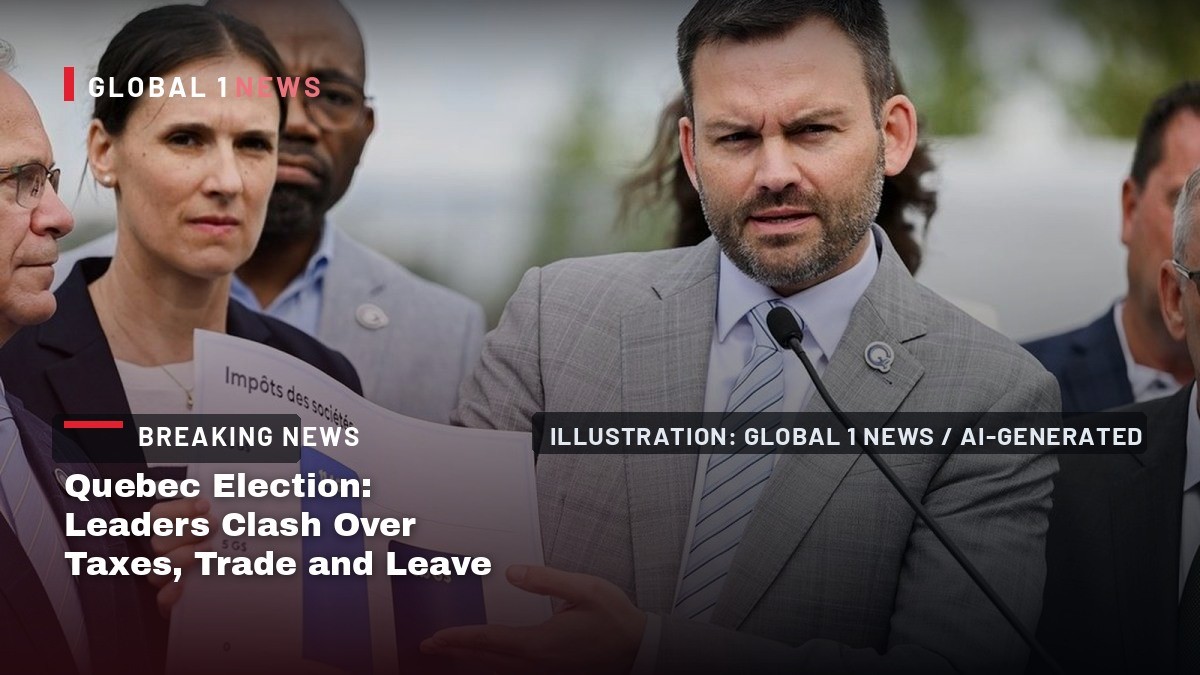
Quebec Election Campaign Heats Up as Leaders Trade Blows Over Taxes, Trade and Parental Leave
MONTREAL — The first full day of the Quebec election campaign delivered a flurry of policy promises and pointed attacks on Friday, as the four main party leaders sought to define the race ahead of the Oct. 5 vote. Taxes, parental leave and the ongoing U.S. trade war dominated the agenda, with Coalition Avenir Québec Leader Christine Fréchette facing fire from all sides.Fréchette, who was energy minister when the Northvolt project was scrapped, spent the day defending her government’s record while also rolling out new proposals of her own. Her rivals, however, were quick to paint her as a continuation of a tired administration that has lost its way on the economy and on Quebec’s place within Canada.
The campaign trail was marked by sharp exchanges, with Parti Québécois Leader Paul St-Pierre Plamondon, Quebec Liberal Leader Charles Milliard, Québec solidaire and Conservative Leader Éric Duhaime all taking aim at the CAQ’s eight years in power. The tone suggests a competitive and unpredictable race, with recent polling showing the PQ and CAQ running neck and neck.
PQ Pledges 20 Per Cent Business Tax Cut at Northvolt Site
St-Pierre Plamondon chose a symbolic location for his major economic announcement: the site of the cancelled Northvolt electric battery plant in McMasterville, east of Montreal. The Swedish company’s bankruptcy and the subsequent scrapping of the project have become a recurring theme for the PQ leader, who described the site as a symbol of the CAQ government’s “economic interventionism.”
The Quebec government had pledged up to $2.9 billion in financing for the project, including a $270-million investment in the Swedish parent company that was lost when it went bankrupt. Fréchette was energy minister when the project was scrapped, a fact that St-Pierre Plamondon was quick to highlight.
“A PQ government will shut off the tap of subsidies to foreign multinationals and focus on Quebec small and medium businesses,” he said at the site, promising to reduce taxes for Quebec businesses by 20 per cent in his first term as premier if his party wins the election.
The promise is a significant one, and St-Pierre Plamondon framed it as a fundamental shift in how the province approaches economic development. He argued that the CAQ’s strategy of courting large foreign corporations with generous subsidies has failed Quebec workers and taxpayers, and that a PQ government would instead prioritise homegrown enterprises. The message appears aimed at voters frustrated with the CAQ’s economic stewardship, particularly in the regions outside Montreal where the battery plant had been touted as a major job creator.
Liberals Target Trade Diversification Amid U.S. Tariff Threats
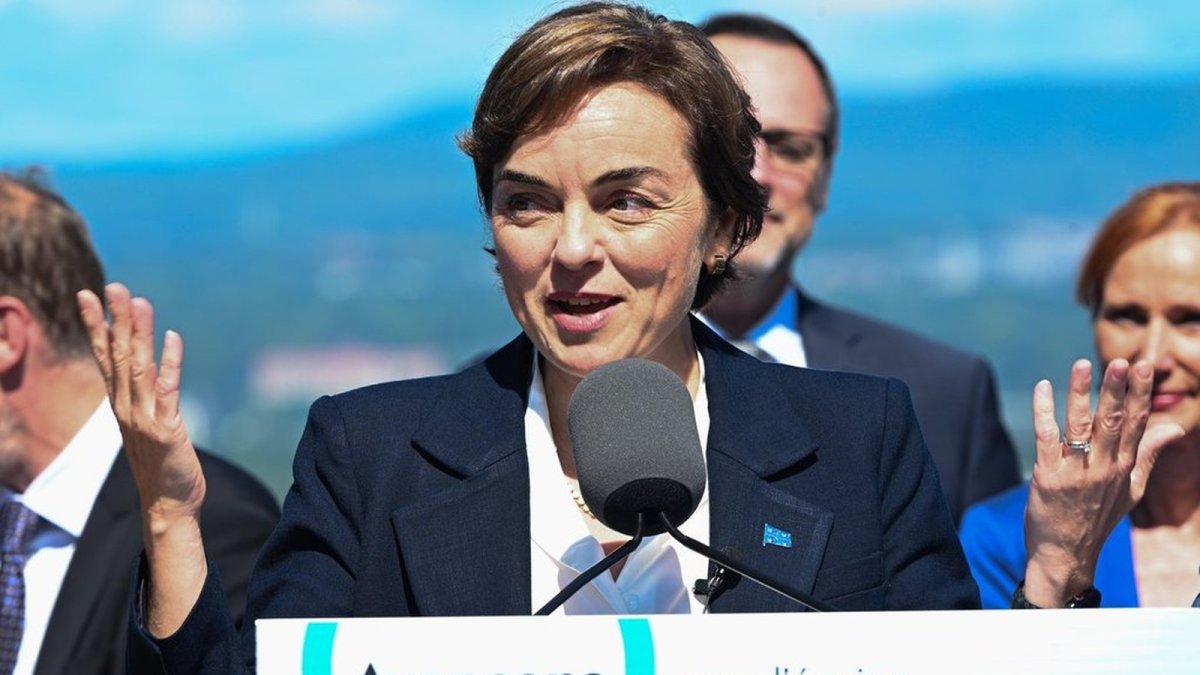
Quebec Liberal Leader Charles Milliard focused his attention on the ongoing trade war with the United States, pledging to reduce the share of Quebec exports going to the U.S. by at least 15 per cent through a strategy of market diversification. He made the announcement alongside candidate Madeleine Féquière, who served until recently as Canada’s Consul General in Chicago and will run for a seat in the Laval area, north of Montreal.
Féquière’s diplomatic experience is clearly intended to bolster the Liberal message on trade, a file that has become increasingly important as the United States has imposed tariffs on Canadian goods amid the ongoing trade war. Milliard argued that Quebec cannot afford to remain so heavily dependent on a single trading partner, and that a Liberal government would actively pursue new markets in Europe, Asia and elsewhere.
Milliard also brushed off the results of a new Synopsis-La Presse survey that indicates his party has lost ground, as well as a suggestion that the province’s federalists are turning to the CAQ. The survey showed the PQ and CAQ running neck and neck, representing a significant rise in support for Fréchette’s party and a drop for the Liberals.
“Federalists would do well to remember that if one is serious about the issue of belonging to Canada — about helping Quebec grow within Canada — it takes a leader and a team that haven’t shied away from saying so,” he said. He noted that several of the candidates flanking Fréchette “certainly aren’t the apostles of federalism,” in reference to several cabinet ministers who have previously refused to say how they would vote in an eventual sovereignty referendum.
This line of attack is a familiar one for the Liberals, who have long positioned themselves as the only true federalist party in the province. With the PQ surging in the polls, Milliard is clearly trying to consolidate the federalist vote, even as some observers suggest that voters concerned about the U.S. trade war may be gravitating toward the CAQ as a stable, experienced option.
Fréchette Unveils Parental Leave Enhancements, Goes on Offensive in Bellechasse
Fréchette, meanwhile, rolled out a promise to boost the Quebec parental insurance plan, offering an additional two weeks of leave for fathers as well as more flexibility and bereavement leave. Her proposed changes include allowing parents to transfer some of their leave to another involved adult, such as a grandparent. She said the changes could be made without increasing premiums.
The parental leave proposal is a classic CAQ-style policy: family-focused, fiscally responsible and designed to appeal to a broad swath of voters. By allowing leave to be transferred to grandparents, Fréchette is also acknowledging the changing nature of families in Quebec and the important role that extended family members often play in childcare.
As she faced criticism from the other leaders, Fréchette was on the offensive herself, going to campaign south of Quebec City in the Bellechasse riding where Conservative Leader Éric Duhaime is running. The visit is a clear signal that the CAQ is not taking any seat for granted and is willing to challenge the Conservatives on their home turf.
Fréchette’s presence in Bellechasse also serves to highlight the CAQ’s strength in the regions, where the party has traditionally performed well. By directly confronting Duhaime in his own riding, she is attempting to project an image of confidence and strength, even as her opponents question her record.
Québec Solidaire and Conservatives Offer Contrasting Visions
In Sherbrooke, Québec solidaire expanded on a promise to open a network of 15 public grocery stores, as part of a plan to lower the cost of food. The proposal, which has been a key part of the party’s platform, is aimed at addressing concerns about food affordability and the power of large grocery chains. The party argues that public grocery stores would help to stabilise prices and provide consumers with more options, and the pledge is likely to be a topic of debate in the coming weeks as the campaign progresses.
The Conservatives, campaigning in Quebec City, announced what Duhaime called a “historic” tax cut that would include raising the basic personal amount in Quebec’s income tax brackets from $18,952 to $35,242. The proposal would effectively remove many lower-income Quebecers from the provincial tax rolls entirely, a move that Duhaime argued would put more money back into the pockets of working families.
Duhaime also went after Fréchette, saying that “the real threat over the last eight years is the Fréchette threat” when asked if voters were turning to the CAQ leader amid the U.S. trade war. The Conservative leader is clearly trying to position himself as the true alternative to the CAQ, arguing that his party offers a more radical break from the status quo.
The Conservative tax proposal is a significant one, and it is likely to appeal to voters who feel overtaxed and under-served by the current government. However, it also raises questions about how the party would pay for the cut, and whether it would lead to reductions in public services.
A Competitive and Unpredictable Race Takes Shape
As the first full day of campaigning drew to a close, it was clear that the Quebec election is shaping up to be a competitive and unpredictable race. The PQ is surging in the polls, the CAQ is fighting to hold onto its support, the Liberals are trying to consolidate the federalist vote, and the Conservatives and Québec solidaire are both vying for attention with bold policy proposals.
The issues of taxes, trade and parental leave are likely to remain at the forefront of the campaign, but other topics, such as healthcare, education and the environment, are also expected to play a significant role. With the election scheduled for Oct. 5, the parties have just over five weeks to make their case to Quebec voters.
The coming days will be crucial as the leaders prepare for the first debates and continue to roll out their platforms. The Synopsis-La Presse survey, which showed the PQ and CAQ running neck and neck, is likely to be a source of anxiety for the Liberal and Conservative camps, and it may prompt them to sharpen their attacks on the front-runners.
For Fréchette, the challenge is to defend her government’s record while also presenting a forward-looking vision for Quebec. For St-Pierre Plamondon, the challenge is to convince voters that the PQ is a credible alternative to the CAQ, and that a sovereignist government can effectively manage the province’s economy. For Milliard, the challenge is to rally federalist voters and prevent them from drifting to the CAQ. And for Duhaime and Nadeau-Dubois, the challenge is to break through the noise and make their parties relevant in a crowded field.
One thing is certain: the next five weeks will be filled with promises, attacks and debates, and the outcome of the election is far from certain. Quebec voters will have a clear choice to make on Oct. 5, and the decisions they make will shape the province’s future for years to come.
Tags: Quebec election 2026, Christine Fréchette, Coalition Avenir Québec, Paul St-Pierre Plamondon, Parti Québécois, Charles Milliard, Quebec Liberal Party, Éric Duhaime, Conservative Party of Quebec, Québec solidaire, Gabriel Nadeau-Dubois, Northvolt, parental leave, U.S. trade war, tax cuts, Bellechasse, McMasterville, Laval, Sherbrooke, Quebec City
This article was produced with AI-assisted research and editorial support. Sources: The Canadian Press, Global News.
By Alex Thompson, Staff Writer
What's Your Reaction?
 Like
0
Like
0
 Dislike
0
Dislike
0
 Love
0
Love
0
 Funny
0
Funny
0
 Wow
0
Wow
0
 Sad
0
Sad
0
 Angry
0
Angry
0
Canada Correspondent at Global1.News. Based in Toronto, covering Canadian politics, energy, trade, and US-Canada relations. Provides the Canadian perspective on North American and global affairs.














Comments (0)