
McDonald's Colaba Licence Suspended: FDA Finds 18 of 20 Hygiene Violations Unfixed
The Maharashtra Food and Drug Administration (FDA) has suspended the food business licence of the McDonald's outlet at Metro House in Colaba, Mumbai, effective August 19, 2026, after inspections uncovered live cockroaches, rotting food waste near preparation areas, and systemic hygiene failures.
The Maharashtra Food and Drug Administration (FDA) has suspended the food business licence of the McDonald's outlet at Metro House in Colaba, Mumbai, effective August 19, 2026, after inspections uncovered live cockroaches, rotting food waste near preparation areas, and systemic hygiene failures. The suspension, executed under Section 32(2) of the Food Safety and Standards Act, 2006, follows the outlet's submission of a 148-page compliance report on August 12 that claimed all deficiencies had been rectified — a claim the FDA's reinspection categorically disproved.
McDonald's Colaba Shut Down: FDA Finds 18 of 20 Hygiene Violations Uncorrected After False Compliance Claim
Mumbai, Maharashtra - August 29, 2026 — The Maharashtra FDA's action against Hardcastle Restaurants Pvt. Ltd., which operates the McDonald's Family Restaurant kiosk at Ground Floor, Metro House, Shahid Bhagat Singh Road, Colaba, represents one of the most significant enforcement actions of the state's 'Safe Food, Safe Drug, Safe Maharashtra' campaign. The outlet's FSSAI licence (number 11518001000315) stands suspended, and the FDA has explicitly stated that granting additional time for corrective action "will not be considered." The suspension order, issued under Section 32(2) of the FSS Act 2006 read with Regulation 2.1.8(1) of the Food Safety and Standards Regulations, 2011, directs the outlet to cease all activities involving manufacturing, sale, or distribution of food during the suspension period.

The Inspection Findings: A Catalogue of Systemic Failures
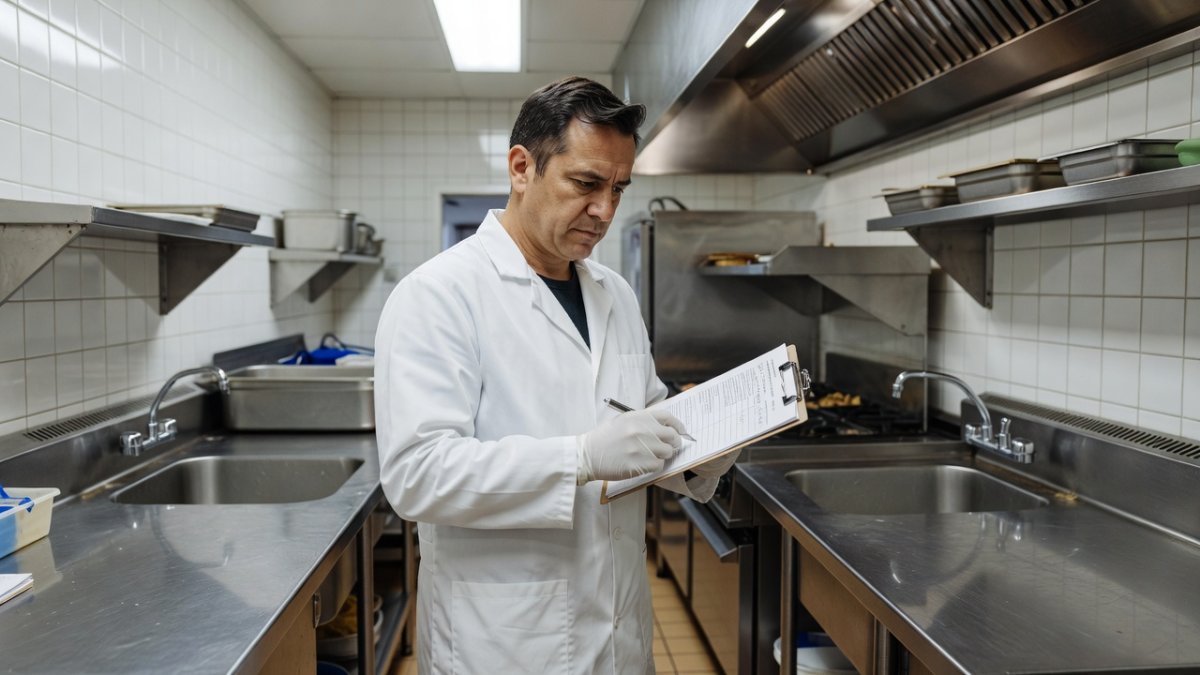
The FDA's inspection team documented conditions that go far beyond routine regulatory non-compliance. At the Colaba outlet, inspectors found live cockroaches in food storage and preparation areas, with rotting food waste accumulating on the kitchen floor in close proximity to ingredients. Temperature control protocols were found to be inadequate, creating conditions for bacterial proliferation in ready-to-eat items. Cross-contamination risks were identified as a persistent hazard, exacerbated by staff hygiene failures that included handling dirty footwear and soiled cleaning cloths before touching ready-to-eat food without washing hands.
Pest control measures were found to be missing or ineffective, waste management practices were poor, and cleaning equipment itself was dirty. These findings are particularly damning given that the outlet had submitted a 148-page compliance report on August 12, 2026, asserting that all previously identified deficiencies had been rectified. The subsequent reinspection revealed that 18 of the 20 deficiencies originally identified had NOT been corrected. The FDA has characterised this as submitting false information to the licensing authority, which constitutes an offence under Section 61 of the Food Safety and Standards Act, 2006.
Legal Framework: Section 32(2) and the Consequences of False Compliance
The legal basis for this suspension is precise. Section 32(2) of the FSS Act, 2006 empowers the licensing authority to suspend a food business operator's licence if the licensee fails to comply with conditions of the licence or if the food business poses a risk to public health. Regulation 2.1.8(1) of the FSS Regulations, 2011, further specifies the grounds for suspension, including failure to maintain hygienic conditions as mandated under Schedule 4 of the regulations.
The FDA's invocation of Section 61 is a significant escalation. This provision criminalises the furnishing of false information to the licensing authority, carrying penalties that can include imprisonment. By explicitly stating that violations could lead to prosecution for operating without a valid licence, the FDA has signalled that continued operation during the suspension would be treated as a fresh offence, not merely a continuation of the original violations. Surveillance of the premises continues, according to the FDA order.
Beyond McDonald's: The Bombay Presidency Radio Club and the Wider Crackdown
The Colaba McDonald's was not the only high-profile establishment to face suspension. The Bombay Presidency Radio Club, a historic institution in Mumbai, also had its licence suspended after inspectors found live flies and dead cockroaches in the kitchen, food stored directly on the floor, unclean refrigerators, chemicals kept in proximity to food items, and poor kitchen facility maintenance including peeling paint and plaster. These conditions represent fundamental failures of the most basic food safety principles.
These actions are part of a coordinated enforcement drive. Between August 19-20, 2026, the FDA inspected 89 hotels, restaurants, and dhabas across Maharashtra. The results were stark: improvement notices were issued to 71 establishments, and licences were suspended for 13 outlets. The enforcement actions spanned Mumbai, the Pune division, Nagpur, Nashik, and Chhatrapati Sambhajinagar, targeting sanitation and storage violations across the state's food service sector.
What This Means for India: The Intensifying Enforcement Regime
This action must be understood within a broader context of escalating food safety enforcement across India in 2026. The Karnataka FDA has suspended licences of major e-commerce and quick-commerce platforms including Amazon, Swiggy, and BigBasket over compliance failures. The FSSAI has been cracking down on misleading health claims on packaged products, most notably targeting beverages like Bournvita. Maharashtra's own enforcement drives have been intensifying throughout the year.
For Indian consumers, this represents a meaningful shift from paper-based compliance to physical verification. The McDonald's Colaba case is particularly instructive: a 148-page compliance report was submitted, yet physical reinspection revealed that 90 percent of the identified deficiencies remained uncorrected. This suggests that the era of "compliance by documentation" is ending. State FDAs are now prioritising unannounced physical inspections and treating false declarations as criminal offences rather than administrative oversights.
For food business operators, the implications are clear. The FSSAI's licensing framework, which covers over 50 lakh food businesses across India, has always mandated compliance with Schedule 4 hygiene requirements. What has changed is the willingness of enforcement agencies to act decisively on violations. The suspension of a flagship international brand like McDonald's, operated by Hardcastle Restaurants Pvt. Ltd., sends a signal that no operator is too large to face consequences.
Trend Analysis: From Advisory to Prosecution in Indian Food Safety
The trajectory of Indian food safety enforcement has moved through distinct phases. The period from 2011 to 2019 was characterised by capacity building — training inspectors, establishing testing laboratories, and creating awareness about the FSS Act. The period from 2020 to 2024 saw increasing use of improvement notices and advisory mechanisms. What we are witnessing in 2026 is a third phase: aggressive enforcement with real consequences.
The 'Safe Food, Safe Drug, Safe Maharashtra' campaign exemplifies this shift. The statistics from August 19-20 alone — 89 inspections, 71 improvement notices, 13 suspensions — demonstrate an enforcement density that was unprecedented even two years ago. The inclusion of smaller establishments like dhabas alongside international franchises indicates that the FDA is applying standards uniformly across the food service spectrum.
This enforcement intensity aligns with FSSAI's national priorities. The central authority has been pushing state FDAs to increase inspection frequency, particularly for high-risk categories like meat processing, dairy, and food service. The suspension of licences for e-commerce platforms in Karnataka and the action against misleading health claims on packaged foods are part of the same national pattern: the FSSAI and state FDAs are moving from a reactive, complaint-based model to a proactive, surveillance-based model.
Stakeholder Reactions and Industry Implications
Consumer rights groups have welcomed the Maharashtra FDA's action, viewing it as a necessary correction to years of inadequate enforcement. The specific finding that a 148-page compliance report was largely fictional has raised questions about the integrity of self-declaration mechanisms in the food safety framework. If a major operator like Hardcastle Restaurants can submit false compliance documentation, the credibility of the entire self-certification system comes under scrutiny.
Industry observers note that the suspension of a McDonald's outlet carries particular weight. McDonald's operates in India through two master franchisees — Hardcastle Restaurants Pvt. Ltd. for the west and south, and Connaught Plaza Restaurants for the north and east. The Colaba outlet is part of the Hardcastle network, which operates over 350 restaurants. A suspension of this nature, with explicit findings of false compliance, could have implications for the brand's broader operations and its relationship with the FSSAI licensing framework.
The FDA's position that "granting additional time for corrective action will not be considered" is a departure from the usual regulatory practice of allowing rectification periods. This hardline stance suggests that the FDA is now treating repeated violations and false declarations as matters of integrity rather than mere technical non-compliance. For the broader industry, this signals that the cost of non-compliance is rising substantially — not just in fines, but in operational disruption and reputational damage.
The Bottom Line
The suspension of the McDonald's Colaba outlet's FSSAI licence (11518001000315) under Section 32(2) of the FSS Act, 2006, with the additional invocation of Section 61 for false information, marks a watershed moment in Indian food safety enforcement. With 18 of 20 deficiencies uncorrected despite a 148-page compliance claim, and with 13 licences suspended across Maharashtra in a single two-day inspection window, the message is unambiguous: documentation without physical compliance will no longer suffice. For the estimated 50 lakh food businesses operating under the FSSAI framework, the lesson is that the 'Safe Food, Safe Drug, Safe Maharashtra' campaign — and its counterparts in other states — represents a permanent escalation in enforcement intensity. Indian consumers, who have long demanded safer food, are finally seeing regulatory action that matches the scale of the problem.
— By Dr. Raj Patel, Staff Writer
This article was produced with AI-assisted research and editorial support. Reporting is based on sources cited in the article.
What's Your Reaction?
 Like
0
Like
0
 Dislike
0
Dislike
0
 Love
0
Love
0
 Funny
0
Funny
0
 Wow
0
Wow
0
 Sad
0
Sad
0
 Angry
0
Angry
0

India/South Asia Correspondent at Global1.News. Analytical voice with a background in science and health journalism. Based in New Delhi, covering Indian politics, education, healthcare, technology, and policy. Breaks down complex data into clear, actionable reporting.













Comments (0)