
Qatar Tells Gulf States: US Alliance Is 'Important, But Not Enough' for Security
The Gulf stands at a generational crossroads, caught between a six-month-old US-Iran war that refuses to end and a slow-burning realization that the American security umbrella — however indispensable — can no longer be the sole guarantor of regional stability.
The Gulf stands at a generational crossroads, caught between a six-month-old US-Iran war that refuses to end and a slow-burning realization that the American security umbrella — however indispensable — can no longer be the sole guarantor of regional stability. That tension moved from quiet strategic deliberation to open public debate on Monday, when a senior Qatari official told a packed forum in Abu Dhabi that Gulf states must pursue "self-sufficiency" in security even as they maintain their alliances with Washington.
"Allies Are Not Enough": Qatar's Top Diplomatic Spokesman Calls for Gulf Security Self-Reliance Amid US-Iran War Stalemate
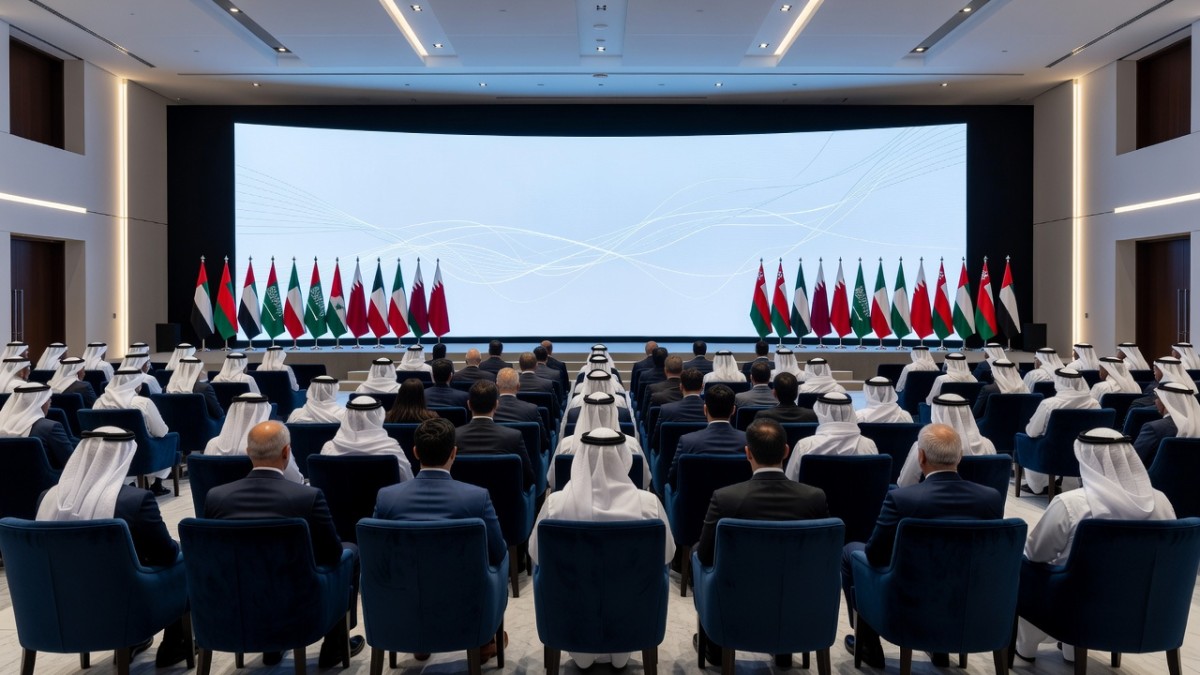
Abu Dhabi, UAE – September 7, 2026 — Dr. Majed Al-Ansari, adviser to Qatar's prime minister and spokesperson for the Ministry of Foreign Affairs, delivered a stark message to regional policymakers on Monday: the Gulf's long-standing reliance on international forces and the US strategic alliance is "very important, but is not enough." Speaking on a panel about Gulf regional security complexes at the third annual Hili Forum in Abu Dhabi, Al-Ansari framed the current moment as a decisive test of the region's strategic maturity.
"We need to realise in the Gulf that having international forces in the region, having a strategic alliance with the United States, is very important, but is not enough," Al-Ansari said, according to remarks reported by AFP and Reuters. "Self-sufficiency when it comes to security is the only way forward. Yes, we need our partners. Yes, we need our allies. But we cannot depend on them alone for our security."
The forum, themed "Gulf at Crossroads: Conflict, Consequences and Course Correction," is co-organized by the Emirates Center for Strategic Studies and Research (ECSSR) and the Anwar Gargash Diplomatic Academy (AGDA). Running September 7-8, it features more than 60 speakers from over 35 countries across 20-plus sessions. Prominent participants include Dr. Anwar bin Mohammed Gargash, Diplomatic Adviser to the UAE President, and Jasem Mohamed AlBudaiwi, Secretary-General of the Gulf Cooperation Council (GCC).
A Region Under Fire: The Stalemated US-Iran War
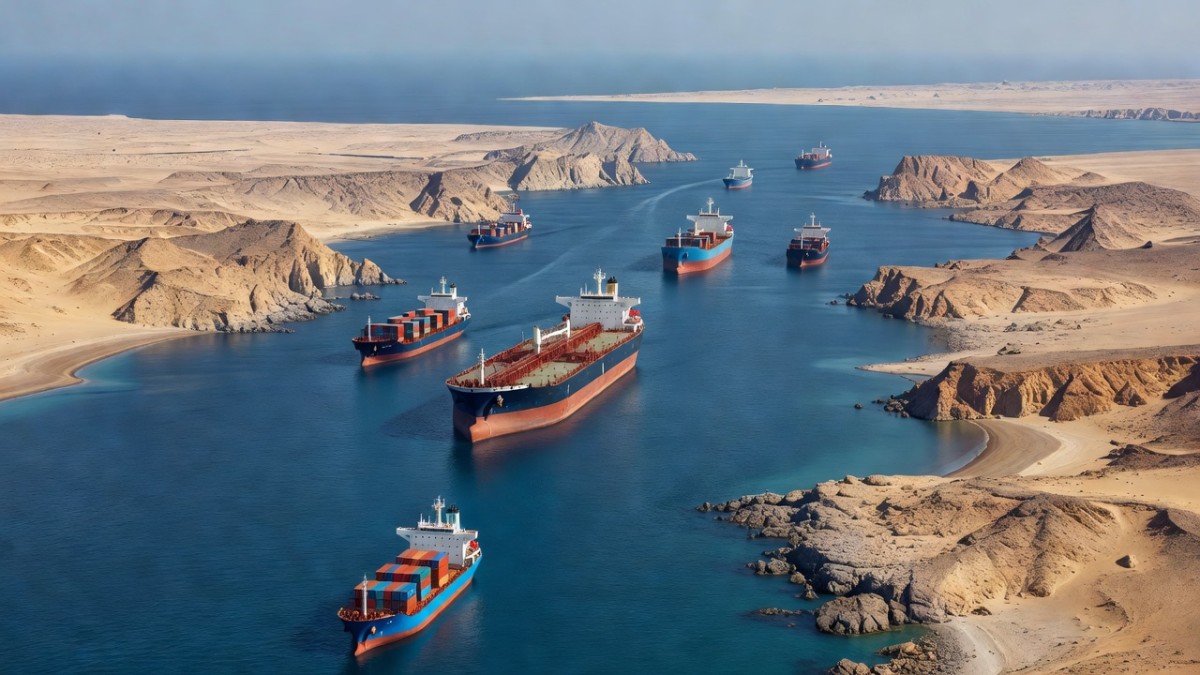
Al-Ansari's remarks land in an environment of acute, ongoing vulnerability. The US-Iran conflict, now in its sixth month, has settled into a grinding stalemate. Iran has persistently disrupted shipping through the Strait of Hormuz — the chokepoint carrying roughly a fifth of the world's oil — while the United States has pressed a counter-blockade of Iranian ports. The result is a dual economic squeeze that has sent shockwaves through global energy markets and tested the patience of Gulf capitals.
Throughout the war, Iran has responded to US strikes by attacking American military sites and regional energy facilities. Qatar itself has been a direct target: on March 3, 2026, missiles were seen streaking across the skies over Doha, striking energy infrastructure. Qatar and other Gulf states have condemned these Iranian attacks as violations of international law and the UN Charter. Yet the strikes have also underscored a bitter irony — the very states hosting US forces and supporting diplomatic tracks are the ones absorbing Iranian retaliation.
For the Gulf, the war has exposed the limits of the traditional security bargain. Since the 1991 Gulf War, the region has anchored its defense in the US alliance, hosting bases, purchasing advanced weaponry, and coordinating intelligence. But the current conflict has revealed that this arrangement carries costs as well as benefits. When Washington and Tehran trade blows, the Gulf's energy facilities and civilian populations become collateral in a broader strategic contest.
Qatar's Dual Role: Mediator and Target
No state embodies this contradiction more acutely than Qatar. Doha has served as a key mediator in the US-Iran conflict, leveraging its unique relationships with both Washington and Tehran. Alongside Pakistan, Qatar helped secure an April 2026 ceasefire and a June 2026 Memorandum of Understanding between Iran and the United States. Both agreements have since collapsed, underscoring the fragility of diplomatic breakthroughs in a conflict driven by deep-seated mutual distrust.
Last month, Qatar's Prime Minister and Foreign Minister Sheikh Mohammed bin Abdulrahman Al Thani travelled to Tehran as part of continued mediation efforts. This diplomatic push came after Iran and Oman — which borders the Strait of Hormuz — announced they were discussing a temporary shipping corridor and a joint mine-clearing project. These initiatives, while preliminary, signal that regional actors are exploring practical mechanisms to de-escalate the maritime crisis independent of Washington's military posture.
Yet Qatar's mediation role exists alongside its status as a target. The country hosts Al Udeid Air Base, the largest US military installation in the Middle East, and is one of the world's largest LNG exporters. This dual position — indispensable ally and vulnerable energy supplier — has forced Doha to walk a tightrope. Al-Ansari's public call for self-sufficiency reflects a broader recognition that Qatar's security cannot be outsourced entirely, even to its most powerful partner.
The Shifting US Reliability Calculus
Doubts about Washington's reliability have been building for years, but they crystallized dramatically on September 9, 2025, when Israel launched a strike on a residential building in Doha — the first Israeli attack on a GCC member state. The United States subsequently reaffirmed its security guarantees to Qatar, but the episode sent a chill through Gulf capitals. If Israel could strike a US ally hosting American forces, what did that say about the depth of Washington's commitment?
By early 2026, Saudi Arabia, Qatar, Kuwait, and the UAE had all signalled they would not allow the United States to use their territory or airspace for strikes on Iran. This was a remarkable departure from previous decades, when Gulf states generally facilitated US military operations against regional adversaries. The message was clear: the Gulf would not be a launching pad for a war whose consequences it would disproportionately bear.
Analysts at the Quincy Institute have argued that Qatar and Saudi Arabia — historically the two largest buyers of US defense technology — are recalibrating their dependence on Washington. Neither sees a fully viable replacement for the American umbrella, but both are preparing for a future in which the United States is less dependable. This is not a wholesale pivot away from the US alliance; rather, it is a hedging strategy designed to reduce vulnerability to shifts in American policy and priorities.
Diversification: Saudi Arabia's Defense Portfolio
Saudi Arabia has moved furthest in diversifying its security relationships. The Kingdom has signed a defense pact with Pakistan, a nuclear-armed state with deep military ties to the Gulf. It has acquired South Korean air-defense systems, adding a new layer of technological capability beyond its traditional US-supplied arsenal. And Riyadh has been exploring Chinese and Sino-Pakistani weapons platforms, signalling a willingness to source military hardware from a broader range of suppliers.
This diversification is not merely transactional. It reflects a strategic judgment that the United States, while still the preeminent military power in the region, may not always be willing or able to defend Gulf interests at the level required. The Saudi approach is to build redundancy into its security architecture — multiple partners, multiple supply chains, multiple options — so that no single relationship becomes a point of failure.
The UAE has pursued a similar path, investing heavily in its domestic defense industry and forging partnerships with non-Western powers. Kuwait and Bahrain, while more cautious, have also signalled interest in expanding their security options. The trend is unmistakable: the Gulf is moving from a unipolar security model toward a multipolar one, even as the US alliance remains the central pillar.
GCC Collective Security: Rhetoric vs. Reality
Al-Ansari's call for self-sufficiency also raises questions about the GCC's collective security framework. The Gulf Cooperation Council, founded in 1981 by six states — Saudi Arabia, UAE, Qatar, Kuwait, Bahrain, and Oman — has long aspired to deeper military integration. Yet progress has been slow, hampered by intra-Gulf rivalries, divergent threat perceptions, and the historical reliance on external protectors.
The current crisis has given new urgency to these discussions. GCC Secretary-General Jasem Mohamed AlBudaiwi's presence at the Hili Forum underscores the organization's desire to project unity. But the reality is more complex. Qatar and Saudi Arabia have different relationships with Iran; Oman maintains its own channels with Tehran; the UAE has its own strategic priorities. A truly collective security arrangement would require a level of trust and coordination that has proven elusive.
Nevertheless, the war has created a shared experience of vulnerability that could catalyze greater cooperation. If Gulf states cannot rely solely on the United States, and if they cannot individually match Iranian or Israeli military capabilities, then collective action becomes more attractive. The challenge is translating this recognition into concrete institutional mechanisms — joint command structures, integrated air defenses, shared intelligence — rather than rhetorical commitments.
The Iran File: Nuclear Program, Hormuz, and the Limits of Pressure
Any discussion of Gulf security inevitably circles back to Iran. The Islamic Republic's nuclear program has been a central driver of Western and Israeli pressure for two decades, and it remains a flashpoint in the current conflict. The US-Iran war has not resolved this issue; if anything, it has made a negotiated settlement more distant while increasing the risk of nuclear escalation.
The Strait of Hormuz is another critical dimension. Iran's disruption of shipping through the strait has demonstrated its ability to impose costs on the global economy and on Gulf energy exporters. The proposed Iran-Oman shipping corridor and mine-clearing project, if realized, could provide a partial solution. But such initiatives require Iranian cooperation, which is unlikely to be forthcoming while the war continues.
For the Gulf, the Iran file is not simply a security challenge; it is also a diplomatic one. Qatar's mediation efforts reflect a belief that engagement, rather than isolation, offers the best path to stability. This approach has its critics, particularly among those who see Iran as an irredeemable adversary. But the failure of maximum pressure campaigns — from sanctions to military strikes — has strengthened the case for pragmatic engagement.
Economic Transformation and the Security Imperative
The Gulf's security calculations are also shaped by ambitious economic transformation agendas. Saudi Vision 2030, the UAE's economic diversification strategy, and Qatar's post-World Cup development plans all require stability and foreign investment. A prolonged war, disrupted shipping lanes, and the constant threat of missile strikes are fundamentally incompatible with these goals.
This economic imperative explains why Gulf states have been so active in pursuing diplomatic solutions to the US-Iran conflict. They cannot afford a war that scares away investors, disrupts energy exports, and undermines their long-term development plans. Al-Ansari's call for self-sufficiency is thus not just about military capability; it is about creating the conditions for economic resilience in a volatile region.
The challenge is that self-sufficiency is a long-term project, while the threats are immediate. Building domestic defense industries, diversifying suppliers, and developing indigenous capabilities take years, if not decades. In the meantime, the Gulf must manage its dependence on the United States while preparing for a future in which that dependence is reduced. This is a delicate balancing act, requiring diplomatic skill, strategic patience, and a willingness to make difficult choices.
As the Hili Forum continues through Tuesday, the themes of conflict, consequences, and course correction will remain central. The Gulf is not abandoning its alliances, but it is renegotiating them. The question is whether the region can build a security architecture that is both self-reliant and cooperative — one that reduces dependence on any single power while maintaining the partnerships that have kept the peace for decades. Al-Ansari's remarks suggest that Gulf leaders are asking this question seriously. The answers they develop will shape the region's future for generations.
This article was produced with AI-assisted research and editorial support. Sources: AFP, Reuters, Al Arabiya English.
By Malik Hassan, Staff Writer
What's Your Reaction?
 Like
0
Like
0
 Dislike
0
Dislike
0
 Love
0
Love
0
 Funny
0
Funny
0
 Wow
0
Wow
0
 Sad
0
Sad
0
 Angry
0
Angry
0

Middle East Correspondent at Global1.News. Based in Beirut, covering politics, conflict, energy, and society across the Middle East. Brings context and depth to a region often reduced to headlines.











Comments (0)