
Gasoline Price Cut to NIS 7.75: A 50-Agorot Election Gift or Economic Relief?
The price of 95-octane gasoline at Israeli self-service pumps dropped by 50 agorot per liter beginning at midnight on Sunday, following an order signed by Finance Minister Bezalel Smotrich. The move brings the regulated price down from NIS 8.25 to NIS 7.75 per liter, offering immediate relief to drivers who had faced a record-high price just days earlier.
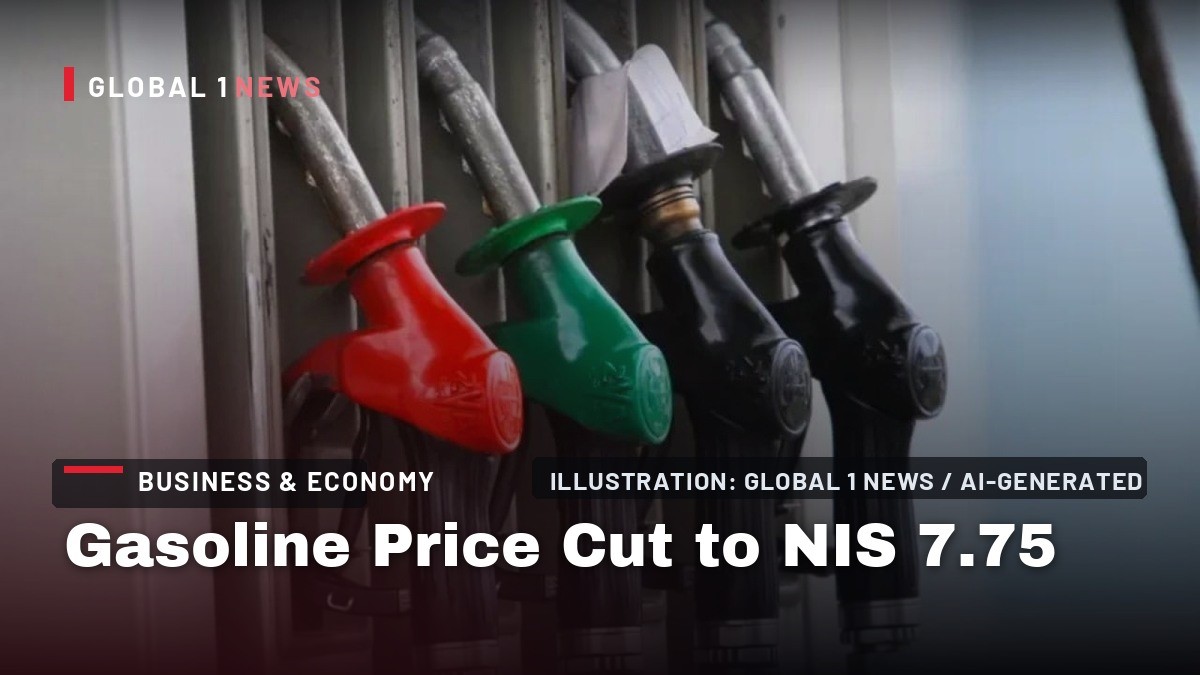
The price of 95-octane gasoline at Israeli self-service pumps dropped by 50 agorot per liter beginning at midnight on Sunday, following an order signed by Finance Minister Bezalel Smotrich. The move brings the regulated price down from NIS 8.25 to NIS 7.75 per liter, offering immediate relief to drivers who had faced a record-high price just days earlier. The reduction, which runs until October 31, is being funded by a temporary relinquishment of part of the excise tax the state collects on fuel. While the measure provides tangible relief for household budgets, its timing—less than two months before the October 27 election—has sparked debate over whether this is sound economic policy or classic election economics.
A Record High Prompts a Swift Response
The decision came less than a week after gasoline prices jumped to a level matching the all-time record set in Israel in September 2012. That sharp increase was driven by a convergence of global factors: higher international gasoline prices, increased refining margins, and a less favorable dollar-shekel exchange rate. Domestically, the price was also pushed upward by the linkage of the excise tax to the Consumer Price Index, as well as an update to the marketing margin and the full-service surcharge. For Israeli motorists, the jump meant that filling a standard family car with 50 liters of fuel would cost over NIS 400, a significant outlay in a country where the cost of living is already a central concern for many households. Immediately after the new price was announced, Smotrich instructed Finance Ministry officials to find a way to reduce by 50 agorot the amount drivers pay at gas stations. The chosen solution was a temporary reduction in the excise tax, one of the main components of gasoline prices in Israel. Rather than having drivers bear the full weight of the increase, the state will forgo some tax revenue over the coming weeks. The order was signed on Sunday and took effect at midnight, meaning drivers across the country—from Tel Aviv to Haifa and Jerusalem—began benefiting from the lower price at the start of this week.The Legal and Political Path to a Price Cut
The timing of the move, however, complicated the decision. With elections scheduled for October 27, cutting the price of gasoline by 50 agorot per liter less than two months before voters go to the polls raised immediate concerns that the measure could amount to election economics. Critics argue that such a visible, pocketbook-friendly policy is designed to curry favor with voters rather than address structural issues in the fuel market. The Finance Ministry’s legal adviser, however, determined that the price reduction could be implemented during this period, citing, among other things, the precedent set when Avigdor Liberman served as finance minister and the excise tax was reduced close to a previous election. Attorney-General Gali Baharav-Miara also approved the move, clearing the way for its implementation. The order will remain in effect until October 31, four days after the election. This means drivers will receive the discount beginning Sunday night and will continue to benefit from it throughout the entire election campaign. For Smotrich, this provides an opportunity to present the public with an immediate and noticeable reduction in one of the more significant expenses faced by households. For voters, it means that the price at the pump will be a live issue throughout the campaign season, with the discount serving as a tangible reminder of the government’s ability—and willingness—to intervene in the cost of living.Beyond the Pump: The Broader Economic Rationale
Finance Ministry officials say the goal is not only to ease the burden on drivers. Expensive fuel also raises transportation, distribution, and shipping costs, which can quickly translate into higher prices for food, deliveries, and services. In a country where supply chains are relatively short but heavily dependent on road transport, the cost of diesel and gasoline feeds directly into the price of goods on supermarket shelves and the cost of online deliveries. Lowering the price of fuel is intended to reduce at least some of that pressure and prevent the increase at gas stations from spilling over into the prices of other products. This broader perspective is important for understanding the move beyond its immediate political optics. For families in Tel Aviv or Jerusalem, the cost of a weekly grocery shop is influenced by the cost of transporting goods from central distribution centers to neighborhood stores. For small businesses in Haifa or the periphery, delivery costs are a significant line item. By reducing the excise tax temporarily, the government hopes to provide a buffer against a broader wave of price increases that could have followed the record-high fuel prices. Whether this buffer will be sufficient remains to be seen, but the intention is clear: to stabilize not just the price at the pump, but the wider cost of living.The Fiscal Irony of Tax Relief
Ultimately, the move contains a certain irony. The state imposes a heavy tax on every liter of gasoline, and to shield the public from what had become a record-high price, it is now temporarily giving up 50 agorot of the tax it imposed in the first place. This is not a new dynamic in Israel, where fuel carries a heavy excise tax that is indexed to the Consumer Price Index. The Finance Ministry has the authority to adjust the tax by order, and it has used that authority in this case to provide relief. But the irony is not lost on economists and commentators: the state is effectively forgoing revenue from a tax it chose to levy, in order to offset a price increase that was partly driven by the indexation of that very tax. The fiscal implications are worth noting. Every agorot of excise tax forgone is revenue that will not flow into state coffers. Over the period the order is in effect, this could amount to a meaningful sum, though the Finance Ministry has not published a specific estimate. The move also sets a precedent: if the government can reduce the excise tax before an election, voters may reasonably ask why it cannot do so at other times. This is a question that opposition politicians, including former finance minister Liberman, may well raise in the coming weeks. Liberman, who previously reduced the excise tax close to an election, is in a position to both defend the precedent and criticize its current application, depending on the political calculus.Election Economics or Prudent Policy?
The charge of election economics is difficult to dismiss entirely. The timing of the order—signed on Sunday, taking effect at the start of this week, and running until October 31—means that the discount will be in place throughout the final stretch of the election campaign. Smotrich will be able to point to the lower price at the pump as evidence of his commitment to easing the cost of living. For voters who are feeling the pinch of high prices for housing, food, and fuel, this is a tangible benefit that arrives just before they cast their ballots. However, the government and its supporters argue that the move is not merely political. The record-high price of gasoline was a genuine economic shock that affected households and businesses alike. Allowing it to stand would have risked a broader increase in the cost of living, as higher transport costs fed through to food prices, delivery fees, and services. By acting swiftly, the Finance Ministry argues, it has prevented a potential cascade of price increases that would have hurt the most vulnerable households. In this reading, the timing is unfortunate but coincidental; the policy is sound, and the election is simply happening to occur during a period of high fuel prices.What Drivers Can Expect Until October 31
For the average driver, the practical effect of the order is straightforward. As of the start of this week, the self-service price of 95-octane gasoline is NIS 7.75 per liter, down from NIS 8.25. This 50-agorot reduction will remain in effect until October 31, meaning that anyone filling up between now and then will pay the lower price. For a driver who fills up once a week with 40 liters of fuel, the savings amount to NIS 20 per week, or roughly NIS 80 over the course of a month. Over the full period of the order, which runs for several weeks, the cumulative savings could be significant for households that rely heavily on private vehicles. The reduction applies to the self-service price, which is the benchmark regulated by the state. Full-service stations, which charge a surcharge, will also see their prices adjusted accordingly. The state will absorb the difference by temporarily relinquishing part of the excise tax it collects from drivers, meaning that the cost of the measure will be borne by the public purse rather than by fuel companies or station owners. This is a deliberate choice: the government wants the benefit to reach drivers directly, without intermediaries capturing the margin.Regional Context and the Cost of Living
Gasoline is a politically sensitive household cost in Israel, and this is not the first time a government has intervened to control its price. The central regulation of fuel prices means that the state has a direct lever over this particular expense, and it is a lever that has been pulled before. The precedent set by Liberman, when the excise tax was reduced close to an election, is now being cited as legal justification for the current move. But the broader context is the persistent challenge of the cost of living in Israel, which remains a top concern for voters across the political spectrum. In Tel Aviv, where many households rely on cars for commuting and family logistics, the price at the pump is a daily reminder of the broader economic pressures. In Jerusalem, where public transportation is often inadequate for the needs of families, the cost of fuel is a direct factor in household budgeting. In Haifa and the northern periphery, where distances are greater and public transport options are more limited, the impact of fuel prices is even more pronounced. By cutting the price by 50 agorot, the government is offering a small but visible measure of relief in a landscape where many costs continue to rise.Looking Ahead: The Order’s Expiry and Beyond
The order will remain in effect until October 31, four days after the election. This means that the discount will be available to drivers throughout the campaign and for a brief period after the votes are counted. What happens after October 31 is unclear. If global fuel prices remain high, the excise tax could be restored to its previous level, and the price at the pump could rise again. If prices fall, the discount may be less necessary. The Finance Ministry has not indicated whether it intends to extend the order, and much will depend on the outcome of the election and the composition of the next government. For now, drivers can take advantage of the lower price, and the government can claim a victory for the cost of living. But the underlying issues—the heavy tax burden on fuel, the indexation of the excise tax to the Consumer Price Index, and the exposure of Israeli prices to global market fluctuations—remain unresolved. The temporary nature of the order is a reminder that this is a stopgap measure, not a structural reform. Whether it is seen as prudent policy or election economics will likely depend on one’s political perspective, but for the millions of Israelis who fill up their cars each week, the 50-agorot cut is a welcome, if temporary, relief. This article was produced with AI-assisted research and editorial support. Sources: The Jerusalem Post, September 6, 2026. By Hannah Berg, Staff WriterWhat's Your Reaction?
 Like
0
Like
0
 Dislike
0
Dislike
0
 Love
0
Love
0
 Funny
0
Funny
0
 Wow
0
Wow
0
 Sad
0
Sad
0
 Angry
0
Angry
0

Hannah Berg
Israel Correspondent at Global1.News. Based in Tel Aviv, covering Israeli politics, security, technology, and society. Provides balanced, deeply-sourced reporting on one of the most closely-watched regions in the world.














Comments (0)