
UAE Vows Energy Exports Will Not Be 'Held Hostage' as It Builds Hormuz Bypass Routes
UAE adviser Anwar Gargash says energy exports won't be held hostage by Iran war, as bypass pipelines and Fujairah port expansion accelerate amid record-low Hormuz traffic and fresh US-Iran tanker strikes.
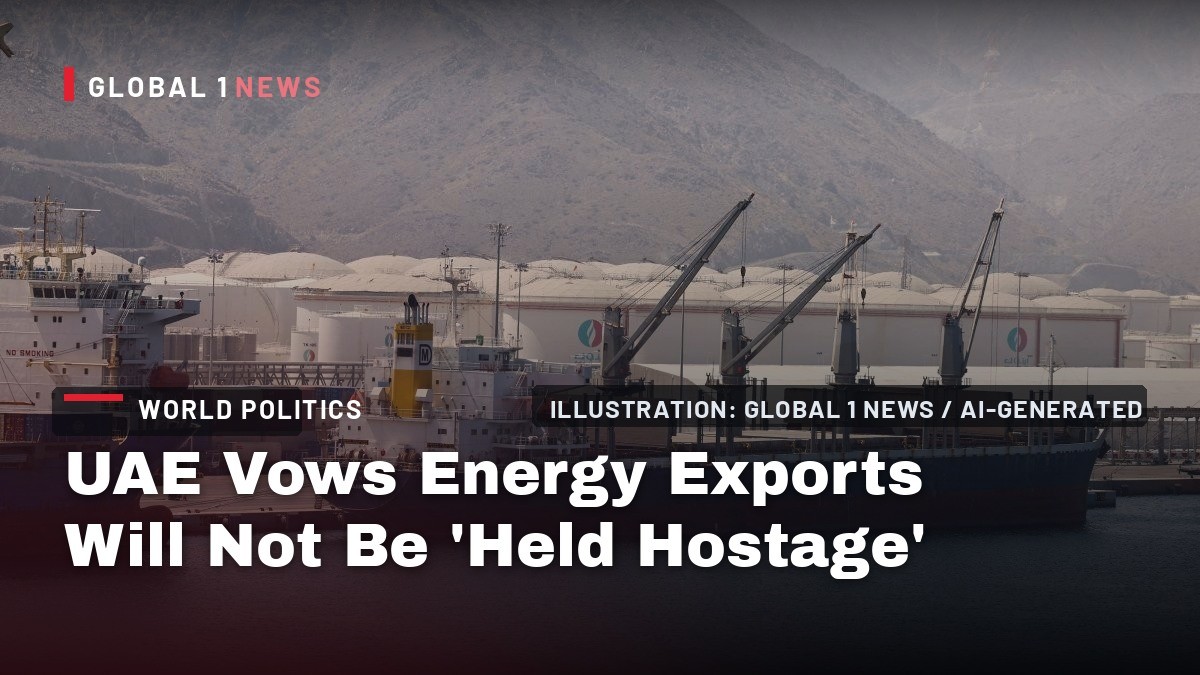
ABU DHABI — The United Arab Emirates is accelerating the construction of alternative export and trade corridors to ensure its economy is not "held hostage" by the ongoing war with Iran, a top presidential adviser said Monday, as new shipping data showed traffic through the Strait of Hormuz at its lowest level since May.
Speaking at the Hili Forum in Abu Dhabi, UAE presidential adviser Anwar Gargash delivered a blunt assessment of the conflict's toll on the Gulf state, which has faced Iranian missile attacks and repeated strikes on its oil tankers since the war began in late February 2026. "Our energy exports will not be held hostage, nor will our trade and economic activity," Gargash said, according to Reuters.
The remarks come at a critical juncture. Over the past ten days, an average of only about ten commodity ships per day transited the Strait of Hormuz — the lowest figure since May — according to analytics firm Kpler data cited by Reuters on September 6-7. Just two vessels passed on Saturday, September 5, and six on Sunday, September 6, as the United States and Iran exchanged fresh strikes on tankers in and around the chokepoint.
Bypass Infrastructure Takes Center Stage
Gargash's comments highlight a strategic pivot that has been underway for months: the UAE's effort to reroute its energy exports away from the Strait of Hormuz, the narrow waterway through which roughly one-fifth of global crude exports once flowed. The centerpiece of this effort is the Abu Dhabi Crude Oil Pipeline (ADCOP), which runs from Habshan in Abu Dhabi to the port of Fujairah on the Gulf of Oman, entirely bypassing the strait.
The pipeline has a nameplate capacity of about 1.5 million barrels per day, with current capacity reported near 1.8 million barrels per day, according to the International Energy Agency. The UAE has typically exported about 1.1 million barrels per day of its domestic Murban crude via this route, leaving room for up to 700,000 barrels per day more in the event of a full closure. Bloomberg reported on May 15 that ADNOC, the Abu Dhabi National Oil Company, is accelerating construction of a second pipeline line designed to roughly double bypass export capacity by 2027.
The UAE's exit from OPEC earlier in 2026 has freed it from production quotas, allowing the state to push its overall crude capacity toward 5 million barrels per day even as it diversifies its export routes. Fujairah, the UAE's only Indian Ocean access point, has become the focal point of this strategy. The port is already one of the world's largest bunkering hubs, alongside Singapore and Rotterdam, and serves as a critical export gateway for Asian markets, particularly India.
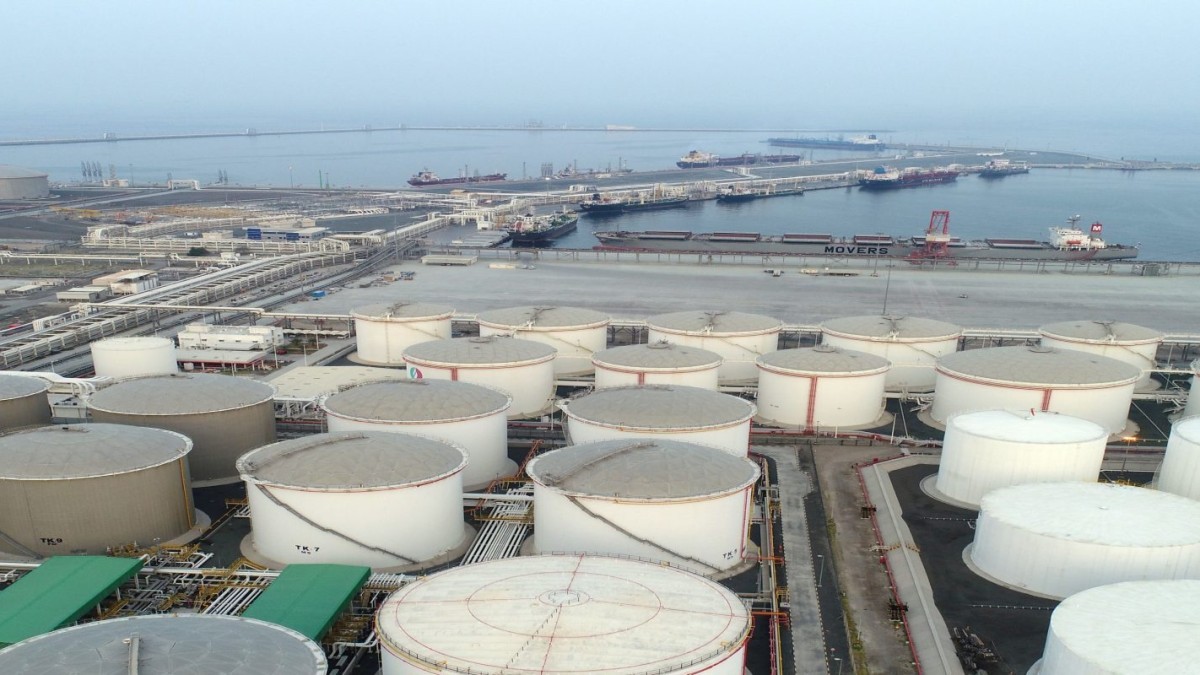
Fujairah's Vulnerability and the Limits of Bypass
Yet the bypass strategy carries inherent risks, as recent events have demonstrated. Fujairah itself has been attacked repeatedly during the war. Strikes in March 2026 suspended loading and bunkering operations several times, and a later attack on the Fujairah Petroleum Industries Zone caused a fire that sent oil prices surging. The Islamic Revolutionary Guard Corps (IRGC) has published maps claiming expanded control in the strait area, with lines extending ominously toward Fujairah and Umm Al Quwain.
Analysts cited by DW have noted that bypass routes themselves are vulnerable. Iranian drones and those of its Houthi allies in Yemen can reach both Fujairah and Red Sea terminals, meaning the UAE's alternative corridors are not immune to attack. The comparison with Saudi Arabia is instructive: Riyadh has redirected substantial crude volumes away from Hormuz via its East-West Pipeline, which runs from eastern fields to Yanbu on the Red Sea with a capacity of about 5 million barrels per day. Red Sea exports rose from 29.6 million to 54.8 million tons in the relevant period, according to DW analysis. But that route, too, remains exposed.
For Qatar, Kuwait, and Bahrain, the problem is more acute. None of these Gulf states has coastlines outside the Persian Gulf, meaning any alternative export route would require cooperation with neighbors — a politically fraught proposition in the current environment. Fitch Ratings has noted that the strait is not formally closed, but vessels are increasingly avoiding it amid cancelled war-risk insurance policies.
Trust Deficit With Iran May Take Decades to Heal
Gargash's remarks on Monday went beyond infrastructure, addressing the deeper diplomatic rupture between the UAE and Iran. The UAE, which had served as a critical economic lifeline for Iran through its Dubai re-export trade, suspended all financial and economic transactions with Tehran in August. The UAE Foreign Ministry, through spokesperson Afra Al Hameli, Director of Strategic Communications, announced on August 18 that all trade, commercial exchanges, and financial transactions with Iran were halted "until further notice," citing "regional escalations that undermine regional and international peace and security."
The suspension followed a series of provocations: attacks on two ADNOC vessels in the Strait of Hormuz on August 13, another ADNOC vessel attack on August 15 that the UAE blamed on Iran, and two Iranian ballistic missiles fired toward the UAE on August 18 that Emirati air defenses intercepted, with remnants falling in and around territorial waters. Brent crude settled around $91.29 a barrel on August 18, roughly a quarter above pre-war levels, with the strait operating at a fraction of its pre-war throughput.
Gargash struck a notably cautious tone about the prospects for reconciliation. "A functional relationship with Iran can and must be restored, but rebuilding trust is another matter," he said, according to Reuters. He suggested that the damage done by Iranian attacks on Gulf neighbors could take decades to repair, even if diplomatic and economic ties are eventually reestablished.
Gulf Collective Security Falls Short
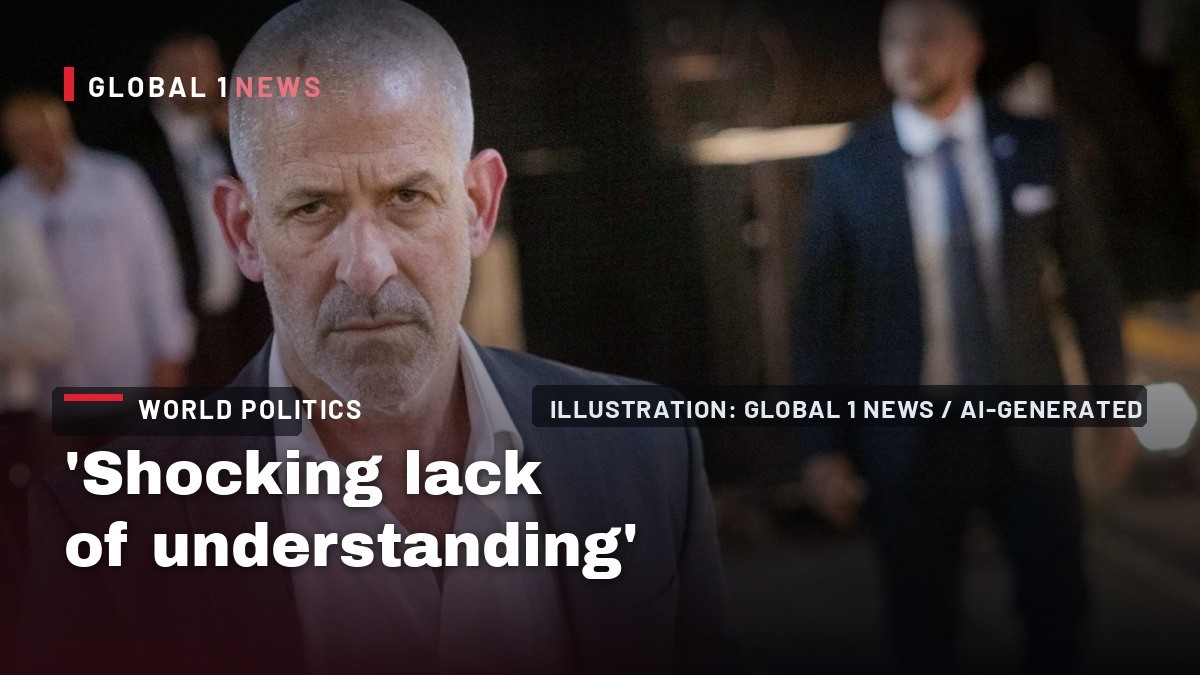
The presidential adviser also offered a rare moment of self-criticism regarding the Gulf Cooperation Council's response to the Iranian threat. "For many years we broadly agreed on the nature of the challenge posed by Iran. The problem was therefore not a lack of understanding," Gargash said. "Where we fell short in confronting this historic challenge was translating this shared understanding into a sufficiently united and strategic response."
The admission reflects a broader frustration across the Gulf. The war has exposed the limits of GCC collective security arrangements, with each member state pursuing its own hedging strategies. The UAE's decision to exit OPEC earlier in 2026, while primarily an economic move, also signaled a desire for greater strategic autonomy. Saudi Arabia has focused on its Red Sea export capacity. Qatar, Kuwait, and Bahrain remain dependent on Hormuz transit and the goodwill of their neighbors.
The June memorandum of understanding that temporarily eased attacks on the UAE collapsed as regional hostilities intensified, and the UAE earlier recalled its ambassador from Tehran and closed Iran-linked schools and a hospital in Dubai. The pattern suggests a progressive decoupling of two economies that were once deeply intertwined.
Escalation Risks and the Road Ahead
The immediate security picture remains volatile. Over the weekend, U.S. forces struck three Iranian oil tankers, including one off Kharg Island, Iran's key oil export hub, according to U.S. Central Command. In retaliation, the IRGC navy said it targeted three oil tankers travelling unauthorized routes in the strait plus three additional U.S. vessels. The Saturday exchanges were described as a "major escalation" by observers tracking the conflict.
Before the war, roughly 20 million barrels of oil and petroleum products passed through the Strait of Hormuz daily, about a fifth of global crude exports, with roughly half of that crude destined for China and India. The current throughput of about ten commodity ships per day represents a fraction of that volume, and the trend is moving in the wrong direction.
For the UAE, the strategic calculus is clear: the country must complete its bypass infrastructure as quickly as possible while managing the immediate security risks to Fujairah and other eastern coast facilities. Gargash's remarks suggest that Emirati leaders are thinking in terms of years, not months, about the post-war regional order. The expansion of port capacity along the eastern coast, the acceleration of pipeline construction, and the development of alternative trade corridors are all long-term investments designed to ensure that the UAE never again finds its economy dependent on a waterway controlled by Tehran.
The second-order effects for global energy markets are significant. If the UAE succeeds in doubling its bypass capacity by 2027, it will have effectively insulated itself from Hormuz closure — but the same cannot be said for Qatar's liquefied natural gas exports, Kuwaiti crude, or Bahraini refined products. The war has fundamentally reshaped the geography of Gulf energy exports, and the UAE is positioning itself to emerge as the region's most resilient exporter.
Whether that resilience translates into diplomatic leverage remains an open question. Gargash's acknowledgment that rebuilding trust with Iran "may take decades" suggests that the UAE is preparing for a prolonged period of confrontation, even as it keeps the door open for a functional relationship. The immediate priority, however, is clear: finish the bypass, protect Fujairah, and ensure that the UAE's economic future is not held hostage to the strait — or to Tehran.
By Malik Hassan, Staff Writer
This article was produced with AI-assisted research and editorial support. Sources: Daily Sabah/Reuters, Reuters, DW, Bloomberg via gCaptain.
What's Your Reaction?
 Like
0
Like
0
 Dislike
0
Dislike
0
 Love
0
Love
0
 Funny
0
Funny
0
 Wow
0
Wow
0
 Sad
0
Sad
0
 Angry
0
Angry
0

Middle East Correspondent at Global1.News. Based in Beirut, covering politics, conflict, energy, and society across the Middle East. Brings context and depth to a region often reduced to headlines.









Comments (0)