
Puerto Rico Rations Water as Historic Drought Deepens
San Juan, Puerto Rico — Puerto Rico launched rotating 48-hour water rationing on Friday, August 7, 2026, as a historic drought intensified by a strengthening El Nino drove reservoirs to critical lows and left more than 180,000 customers—roughly 500,000 people—without reliable access across the San Juan metro area. Seven municipalities supplied by the Carraizo Reservoir now face alternating days with and without water until levels recover.
San Juan, Puerto Rico — Puerto Rico launched rotating 48-hour water rationing on Friday, August 7, 2026, as a historic drought intensified by a strengthening El Nino drove reservoirs to critical lows and left more than 180,000 customers—roughly 500,000 people—without reliable access across the San Juan metro area. Seven municipalities supplied by the Carraizo Reservoir now face alternating days with and without water until levels recover. Governor Jenniffer Gonzalez Colon declared a State of Emergency on July 31 and activated the National Guard to distribute supplies after a major line failed.
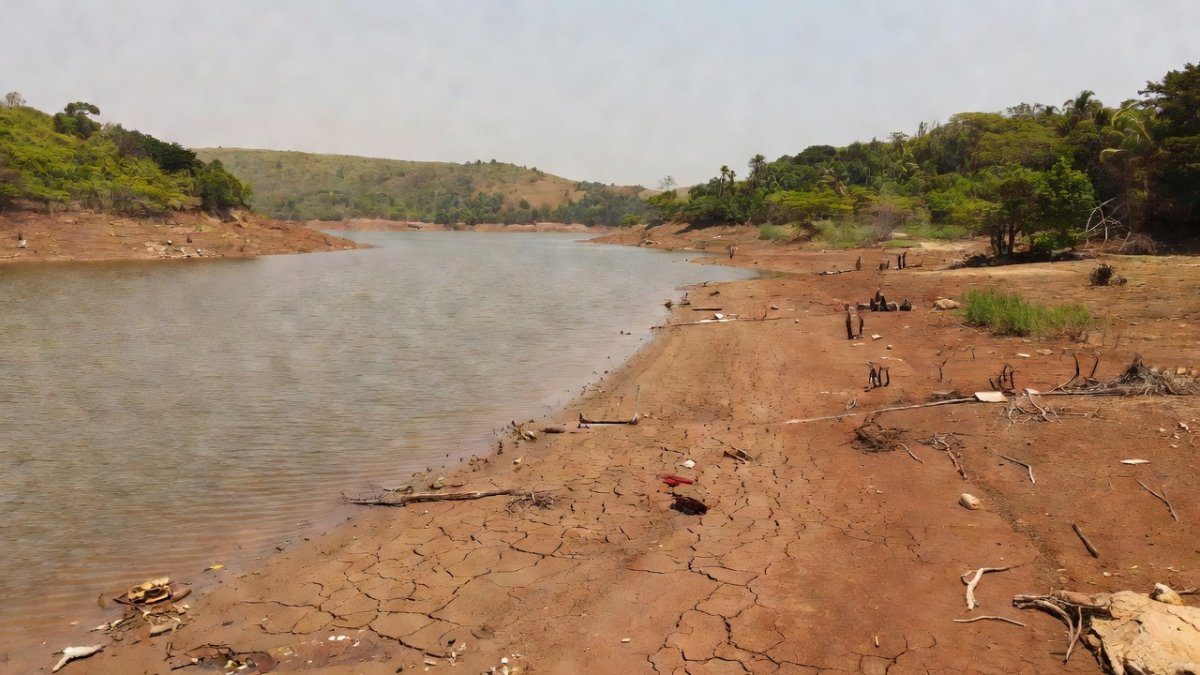
Rationing Begins: 48 Hours On, 48 Hours Off
The island’s water authority implemented the strict rotating schedule beginning Friday, August 7, 2026, giving customers 48 hours with service followed by 48 hours without until the Carraizo Reservoir rebounds. More than 180,000 utility customers, representing approximately 500,000 residents, are directly affected in San Juan, Carolina, Juncos, Gurabo, Trujillo Alto, Canovanas, and Loiza. The Sergio Cuevas filtration plant, which draws from Carraizo, supplies these communities and has been forced into emergency conservation mode.
Governor Jenniffer Gonzalez Colon declared a State of Emergency on July 31 after months of declining inflows. She immediately activated National Guard units to deliver bottled and trucked water to priority sites. “This situation is out of our hands,” she stated Tuesday. “Nothing prevents this from worsening.” The declaration followed damage to a major transmission line that compounded the already severe shortage. Officials emphasize the schedule will remain in place until rainfall restores operational levels at the reservoir, which sits more than 11 feet below full pool.
Regional water managers stress that the 48-hour cycle is the most equitable method to stretch limited supplies across the densely populated north coast. Trucks will prioritize hospitals, schools, and residences housing older adults. This marks the third time in roughly a decade that Puerto Rico has imposed island-wide rationing, underscoring how recurring climate shocks continue to strain Caribbean infrastructure and daily life.
Reservoirs on the Brink: The Driest July in 128 Years
San Juan recorded its driest July since record-keeping began in 1898, receiving just half an inch—about 13 millimeters—of rain for the entire month. July 2026 also ranked as the second-hottest July on record for the capital, accelerating evaporation from already depleted reservoirs. The Carraizo Reservoir, the primary source for the San Juan metropolitan area, now stands more than 11 feet below full pool after the drought began developing in late April.
According to the US Drought Monitor, approximately 25 percent of Puerto Rico is in severe drought while another 36 percent sits in moderate drought. By late July, more than 82 percent of the island was classified as abnormally dry or worse, with impacts reported across roughly 60 percent of the territory. These conditions have reduced streamflow, lowered groundwater tables, and forced the water authority to draw emergency reserves that cannot be replenished without sustained rainfall.
The combination of record-low precipitation and extreme heat has pushed the island’s water system to the edge. Experts note that such rapid reservoir declines are becoming more frequent across the Caribbean, where small land masses and limited storage capacity leave populations especially vulnerable to multi-month dry spells. Without significant relief, officials warn that additional municipalities may soon join the rationing rotation.
El Nino's Caribbean Grip — A Climate Pattern at Historic Strength
NOAA officially declared El Nino conditions in June, and forecast models now suggest the event could become the strongest since record-keeping began in 1950. The “Super El Nino” threshold requires sea-surface temperatures at least 2 degrees Celsius above average for three consecutive months. Current projections give a 97 percent chance the phenomenon lasts through spring 2027, with peak intensity likely between October and December.
El Nino’s strong westerly winds tear apart cloud tops and limit thunderstorm development across the Caribbean basin while producing large-scale sinking air that suppresses rainfall. National Weather Service meteorologist Maria Novoa Garcia in San Juan reports that precipitation over the next two to three weeks will be at least 50 percent below average. Dry conditions are expected to persist until at least September, coinciding with a milder 2026 Atlantic hurricane season that offers little hope for drought-breaking storms.
Governor Gonzalez Colon directly blamed the intensifying El Nino, along with increased forest fires, hotter baseline temperatures, and plumes of Saharan dust crossing the Atlantic. These factors compound the island’s water deficit and mirror similar drying trends now affecting Central America and northern South America. Climate scientists emphasize that this El Nino arrives atop already elevated global temperatures, raising the risk of unprecedented regional impacts.
Hospitals and the Most Vulnerable: Public Health on the Front Line
Hospitals across the affected municipalities have activated emergency protocols to maintain operations during the rotating outages. Tania Conde Sterling, president of Puerto Rico’s Association of Health Services Administrators, stated that facilities remain prepared. “We do not improvise at hospitals. We have manuals of rules and procedures, as well as protocols for every type of scenario.” Backup water storage and generator systems are being monitored around the clock.
Luis Gonzalez Delgado, president of Puerto Rico’s water and sewer authority, confirmed that large tanker trucks will distribute potable water with priority given to hospitals and residences for older people. Community leader Marcia Soler Paris, 61, described the situation as chaos. “It’s truly pitiful,” she said, expressing particular concern for bedridden residents who cannot haul heavy water buckets up stairwells or across damaged roads.
Public-health officials across Latin America and the Caribbean are watching the crisis closely, noting that prolonged water insecurity quickly escalates risks of waterborne disease and heat-related illness. The Pan American Health Organization has already linked El Nino-driven drying to increased vulnerability in similar island and coastal communities. Puerto Rico’s experience highlights how infrastructure gaps can turn a climate event into a sustained public-health emergency.
The Crumbling Infrastructure Beneath the Drought
More than half of Puerto Rico’s water supply is lost daily to leaky underground pipes, according to government estimates. Experts identify the root cause as decades of deferred maintenance driven by the island’s chronic budget shortfalls and a documented history of corruption within public utilities. These systemic failures mean that even normal rainfall cannot reliably reach households once it enters the distribution network.
Some San Juan neighborhoods have endured dry taps for 13 consecutive months. Resident Dhara Rivera reported 123 interrupted days without water over the past year. “It changed your life totally,” she said. “Water is essential for living.” In late May, San Juan Mayor Miguel Romero sued the island’s Water and Sewer Authority over outages unrelated to the current drought, while Representative Domingo J. Torres Garcia threatened additional court action to force accountability.
The combination of aging pipes, limited capital investment, and governance challenges has left Puerto Rico’s water system far less resilient than those in peer Caribbean nations that invested earlier in leak detection and storage upgrades. As the drought deepens, these pre-existing weaknesses convert a manageable shortage into a prolonged humanitarian strain felt most acutely by low-income and elderly households.
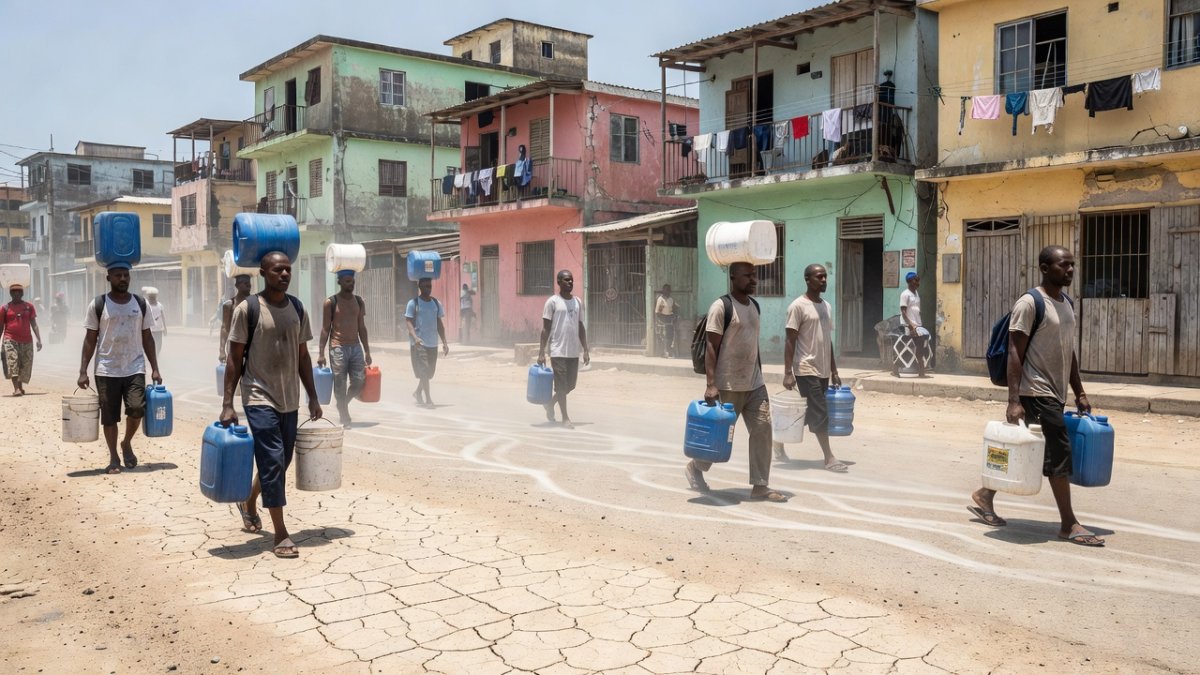
Voices from the Ground: Anger, Exhaustion, Survival
Protesters gathered in the capital carrying empty water bottles and bundles of unwashed laundry, chanting the governor’s name in frustration. The demonstrations reflect widespread exhaustion after months of unpredictable service that disrupts cooking, hygiene, and medical care. Many residents describe the rationing as a return to the hardships of 2015, when some 400,000 customers received water only every third day, and 2020, when similar restrictions were imposed.
Dhara Rivera’s account of 123 days without water captures the cumulative toll. Families must now coordinate around the 48-hour cycle, storing what they can and traveling long distances for trucked supplies. Older adults and people with disabilities face the greatest barriers, often relying on neighbors or community leaders like Marcia Soler Paris to carry heavy containers.
These lived experiences mirror water-access struggles across Latin America and the Caribbean, where climate variability collides with underfunded utilities. Residents emphasize that the crisis is not only meteorological but also political, demanding urgent investment in resilient infrastructure rather than repeated emergency measures.
What This Means for Latin America and the Caribbean
The Caribbean Climate Outlook Forum warned on July 31 of recurrent heatwaves and drought through August–October, conditions that extend far beyond Puerto Rico. The Pan American Health Organization has documented how El Nino consistently produces drier weather across Central America, the Caribbean, and northern South America, elevating risks of food insecurity and disease outbreaks in vulnerable communities.
Climate scientists note that the current El Nino overlays higher baseline global temperatures. Projections indicate it could push monthly global average temperatures past 2 degrees Celsius of warming for the first time in early 2027. Such thresholds would intensify drought frequency and severity throughout the region, threatening agricultural output and urban water supplies from Mexico to northern Brazil.
Puerto Rico’s rationing therefore serves as an early warning for neighboring islands and coastal nations already experiencing similar reservoir declines. Coordinated regional responses through CariCOF and PAHO will be essential to share early-warning data, strengthen infrastructure, and protect public health as the climate pattern evolves.
The Bottom Line — What Comes Next
Forecasters anticipate limited relief by next Wednesday, with up to an inch of rain possible along the north coast and 3 to 5 inches in the central mountains. While any precipitation will help, experts caution that amounts remain insufficient to end the drought or lift the 48-hour rationing schedule before September at the earliest.
Longer-term recovery depends on both the trajectory of El Nino and sustained investment in leak reduction and storage capacity. Without these upgrades, Puerto Rico and other Caribbean territories will face repeated cycles of emergency rationing as global temperatures continue to rise. The current crisis underscores the urgent need for climate-resilient water systems across Latin America.
By Elena Vasquez, Staff Writer
This article was produced with AI-assisted research and editorial support. Reporting is based on sources cited in the article.
What's Your Reaction?
 Like
0
Like
0
 Dislike
0
Dislike
0
 Love
0
Love
0
 Funny
0
Funny
0
 Wow
0
Wow
0
 Sad
0
Sad
0
 Angry
0
Angry
0

Latin America Correspondent at Global1.News. Based in Mexico City, covering politics, economics, energy, and culture across the region. Brings an on-the-ground perspective to stories spanning from the Rio Grande to Patagonia.













Comments (0)