
PQ Leader Vows Referendum Push Even Without Majority Government
The Parti Québécois leader has put the sovereignty question at the centre of the provincial election campaign, promising to move forward with a referendum on Quebec independence regardless of whether his party secures a majority or minority government on Oct. 5.
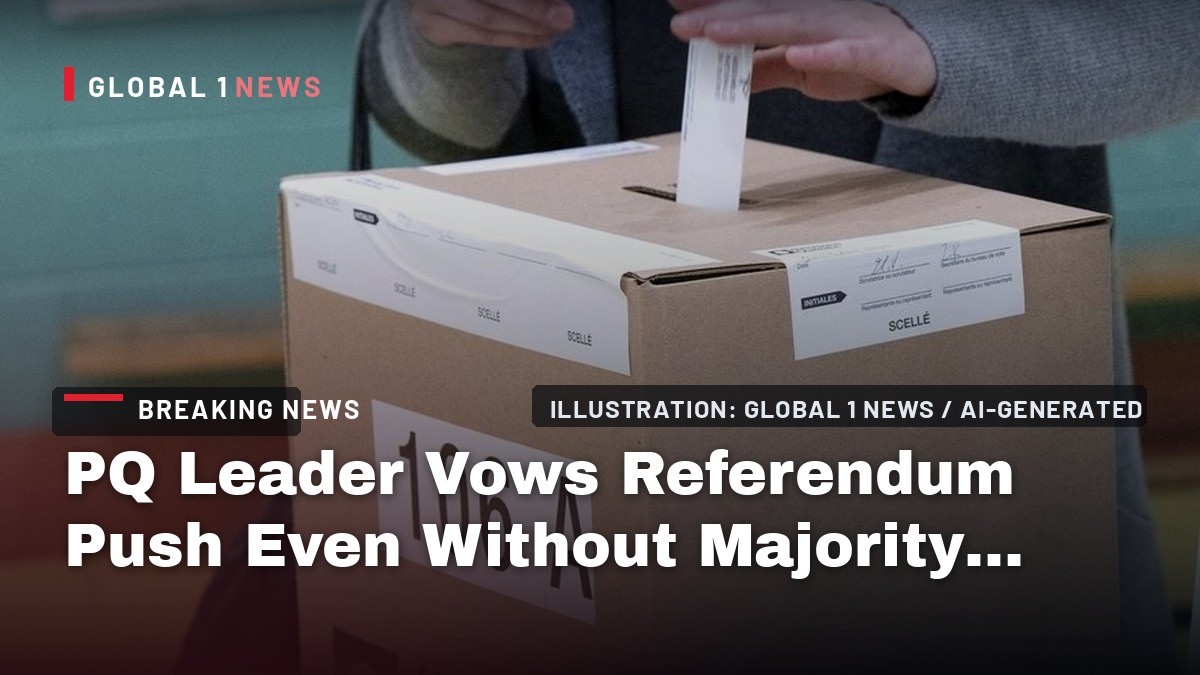
The Parti Québécois leader has put the sovereignty question at the centre of the provincial election campaign, promising to move forward with a referendum on Quebec independence regardless of whether his party secures a majority or minority government on Oct. 5.
Paul St-Pierre Plamondon made the comments while campaigning in Quebec City on Tuesday, with less than a month remaining before Quebecers head to the polls. His pledge drew immediate criticism from his political rivals, who accused him of prioritising a referendum over the issues dominating the campaign, including affordability and the threat of U.S. tariffs.
PQ Leader Vows Referendum Push Even Without Majority Government
Quebec City, Que. — Parti Québécois Leader Paul St-Pierre Plamondon said Tuesday that his party would pursue a sovereignty referendum whether it forms a minority or majority government after the Oct. 5 provincial election, a commitment that has sharpened the stakes of an already volatile campaign.
A Pledge That Does Not Change
Speaking to reporters in Quebec City, St-Pierre Plamondon was unequivocal about his party's intentions. "Whether we're in a minority or majority, that commitment doesn't change," he said, reaffirming the PQ's longstanding goal of holding a referendum on Quebec independence.
Despite the pledge, the PQ leader said he continues to urge voters to elect a majority PQ government, arguing that a stronger mandate would give his party greater freedom to act on issues including health, education and homelessness. He framed the referendum commitment as inseparable from the broader project of Quebec self-determination, a position that has defined the party since its founding.
The comments come at a pivotal moment in the campaign, with many voters still undecided and the five main party leaders scheduled to gather in Quebec City on Wednesday evening for back-to-back televised interviews airing on Radio-Canada.
The PQ's Historical Commitment to Sovereignty
The sovereignty referendum has been the defining mission of the Parti Québécois since its creation, and St-Pierre Plamondon's latest remarks are consistent with the party's platform. The PQ has governed Quebec twice before, and both times it held referendums on independence — in 1980 under René Lévesque and in 1995 under Jacques Parizeau. Both votes were defeated, with the 1995 result coming within a single percentage point of victory.
The federal Clarity Act, passed by Parliament in 2000, set out the terms under which the federal government would recognise a province's secession vote, requiring a clear question and a clear majority. The Supreme Court of Canada's 1998 reference on Quebec secession also established that a unilateral declaration of independence would be unconstitutional, while acknowledging that a clear vote in favour of secession would carry democratic weight.
St-Pierre Plamondon's pledge to pursue a referendum even in a minority government scenario is notable because it departs from the approach of some previous PQ leaders, who suggested that a strong majority would be necessary to legitimise such a vote. His comments suggest the party is prepared to test the constitutional framework regardless of the electoral outcome.
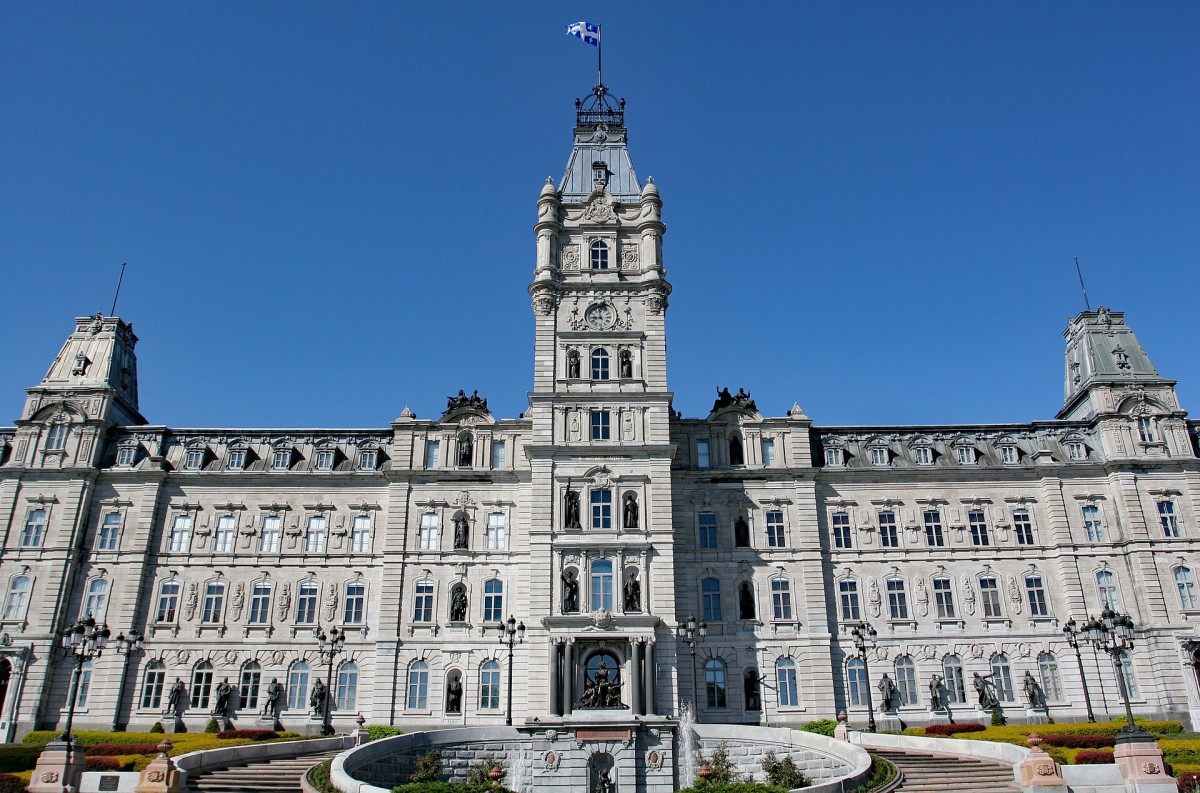
Conservative Leader Promises to Block Any Referendum
Conservative Party of Quebec Leader Éric Duhaime was quick to respond, calling on voters Tuesday to give his party the "balance of power" in a minority legislature so it could "block any referendum project."
"If they're a minority, I'm telling you right now, if we hold the balance of power, there won't be instability because there won't be a referendum," Duhaime said, positioning his party as the bulwark against another sovereignty vote.
Duhaime's Conservative Party has sought to appeal to voters who oppose independence but are dissatisfied with the traditional federalist options. His message on Tuesday was aimed squarely at those who might be tempted to vote PQ but are wary of another referendum, offering them a reason to support his party instead.
The Conservative leader's comments reflect a broader strategy of courting anti-referendum voters who may otherwise lean toward the Quebec Liberal Party or Coalition Avenir Québec. By promising to hold the balance of power and block a referendum, Duhaime is attempting to position his party as the decisive force in a potentially fractured legislature.
Liberal Leader Warns of a Single Obsession
Quebec Liberal Leader Charles Milliard also seized on St-Pierre Plamondon's remarks, accusing the PQ leader of having "one single obsession" — holding a referendum. Speaking in Magog on Tuesday, Milliard sought to rally federalist voters behind his party.
"I have a message for Quebecers: if people don't want a referendum, there's only one address, and that's the Quebec Liberal Party," Milliard said, drawing a clear line between his party's unequivocal federalism and the PQ's sovereignty project.
The Liberal leader's comments come as his party works to rebuild its support base after a series of disappointing electoral results. The Quebec Liberal Party has traditionally been the primary federalist option in provincial politics, but it has faced challenges from both the Conservatives on the right and the PQ on the sovereignty question.
Milliard's message in Magog was part of a broader effort to consolidate the anti-referendum vote, warning Quebecers that a vote for any party other than the Liberals could inadvertently pave the way for a PQ government and a future referendum.
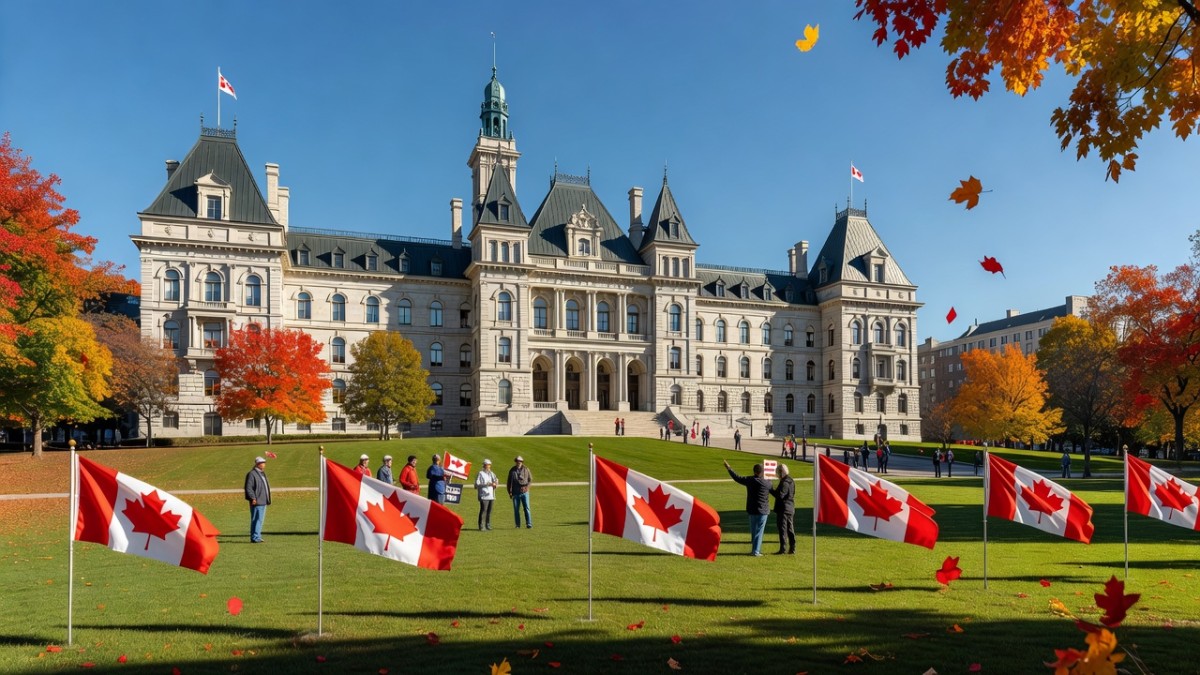
Campaign Context: Tariffs, Affordability and Debates
The referendum pledge lands in a campaign that has been dominated by concerns over U.S. tariffs, the cost of living, education and language. Polls show voters are paying close attention to how leaders are addressing affordability, which has become a central theme in the race.
The threat of U.S. tariffs has added an economic dimension to the campaign, with leaders from all parties promising to protect Quebec industries and jobs. Affordability has also emerged as a top concern for voters, alongside the education and language questions that have long shaped Quebec politics.
The leaders are scheduled to participate in their first debate, broadcast on TVA, on Sept. 15. The following day, they will face off in a second debate on Noovo. A final Radio-Canada debate will be held on Sept. 23, giving voters several opportunities to compare the party platforms before election day.
These debates are expected to be particularly contentious given the sharp divisions between the parties on the sovereignty question. St-Pierre Plamondon will likely face sustained attacks from Duhaime and Milliard, who are both eager to paint the PQ leader as a threat to Quebec's stability within Canada.
What a Referendum Push Would Mean for Ottawa
A PQ government in Quebec City, whether majority or minority, would fundamentally alter the dynamics of federal-provincial relations. The prospect of another sovereignty referendum would put Ottawa on alert, reviving constitutional questions that have lain dormant since the 1995 vote.
The federal government's position on Quebec secession is governed by the Clarity Act, which requires the House of Commons to determine whether a referendum question is clear before negotiations on secession could begin. The Supreme Court's 1998 reference also established that Quebec cannot unilaterally declare independence under either Canadian or international law.
Any future referendum would also raise the question of how Quebec would negotiate with Ottawa, a process shaped by the Clarity Act and the Supreme Court's 1998 ruling. St-Pierre Plamondon's latest comments suggest he is prepared to move forward even without a majority, which could create a period of significant constitutional uncertainty.
For Quebecers, the referendum question is deeply personal and historically charged. The 1980 and 1995 votes divided families and communities, and the narrow defeat of the 1995 referendum left a lasting imprint on the province's political culture. A new referendum campaign would reopen those debates, with consequences that would be felt far beyond Quebec's borders.
What Happens Next Before Oct. 5
With less than a month until election day, the campaign is entering its most intense phase. The leaders' interviews in Quebec City on Wednesday evening will be followed by three televised debates, giving voters ample opportunity to assess the candidates and their platforms.
St-Pierre Plamondon's referendum pledge is likely to remain a central issue throughout the campaign, particularly as his opponents seek to mobilise federalist voters. The PQ leader has shown no signs of backing away from the commitment, and his party's base remains deeply committed to the sovereignty project.
For undecided voters, the choice on Oct. 5 will be framed in stark terms: a PQ government that promises a referendum, a Conservative Party that promises to block one, or a Liberal Party that promises to prevent one from ever being held. The outcome of the election will determine not only who governs Quebec for the next four years, but also whether the province embarks on another chapter in its long and contentious relationship with the rest of Canada.
By Alex Thompson, Staff Writer
This article was produced with AI-assisted research and editorial support. Sources: Global News (globalnews.ca).
What's Your Reaction?
 Like
0
Like
0
 Dislike
0
Dislike
0
 Love
0
Love
0
 Funny
0
Funny
0
 Wow
0
Wow
0
 Sad
0
Sad
0
 Angry
0
Angry
0

Canada Correspondent at Global1.News. Based in Toronto, covering Canadian politics, energy, trade, and US-Canada relations. Provides the Canadian perspective on North American and global affairs.












Comments (0)