
US Border Wall Expansion Threatens Memory of Porvenir Massacre
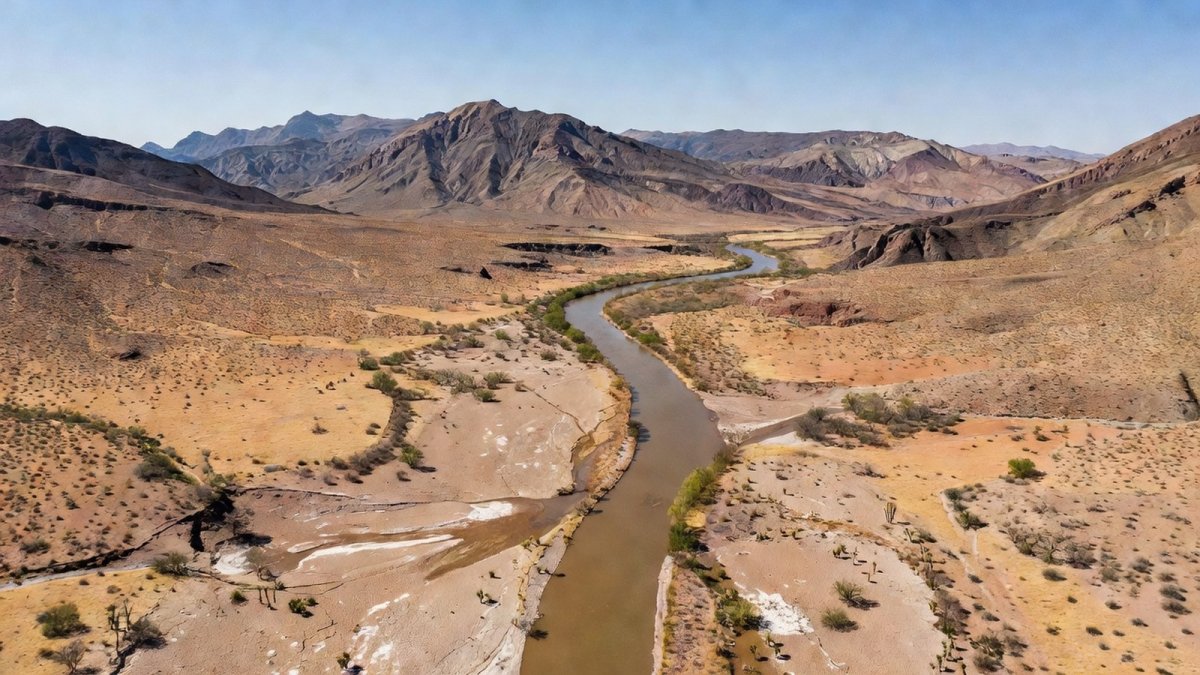
The ground remembers. That is what the descendants of Porvenir have always said—the dry, thorn-scrubbed earth of Presidio County, Texas, where the Rio Grande bends and the Chihuahuan Desert stretches toward Mexico, holds the memory of what happened on the night of January 28, 1918. On that night, Texas Rangers and local ranchers, with

US Border Wall Expansion Threatens Memory of Porvenir Massacre
The ground remembers. That is what the descendants of Porvenir have always said—the dry, thorn-scrubbed earth of Presidio County, Texas, where the Rio Grande bends and the Chihuahuan Desert stretches toward Mexico, holds the memory of what happened on the night of January 28, 1918. On that night, Texas Rangers and local ranchers, with the support of US Cavalry, pulled 15 unarmed Mexican American boys and men from their homes and executed them. Now, more than a century later, that same ground is under threat again—not from bullets, but from bulldozers.
Construction machinery from Southwest Valley Constructors moved into Big Bend National Park on Tuesday, August 4, 2026, and federal contractors began border barrier construction near Santa Elena Canyon on August 6, according to the Center for Biological Diversity. The project, stemming from a $1.72 billion contract awarded in May 2026—described as the largest-ever up-front award for first-time border wall construction—threatens to bulldoze what remains of the sensitive archaeological zone at Porvenir, a site that is still being studied by historians and archaeologists. For the families who lost their fathers, brothers, and sons that cold January night, and for the binational community that has fought for decades to honor their memory, this is not just about infrastructure. It is about whether the United States will allow the memory of a massacre to be buried under concrete and steel.
The Night That Changed Everything
To understand what is at stake, one must go back to the night of January 28, 1918. Outside the village of Porvenir in Presidio County, West Texas, a group of Texas Rangers and local ranchers, supported by US Cavalry, carried out one of the darkest chapters in Texas history. According to a report by Texas Monthly published last week, the victims were 13 men and two teenage boys, removed from their homes and executed without trial. Among them was Longino Flores, whose family was finally issued a death certificate by Presidio County in 2019—101 years after his murder. Another victim, Manuel Moralez, was 47 years old and possessed a deed to 1,600 acres of land. These were not strangers or outsiders; they were farmers, ranchers, and family men who had built their lives along the border.
The terror did not end with the shootings. Terrified survivors of the massacre fled across the Rio Grande to Mexico, where they sought help from the Mexican government. In a remarkable act of cross-border solidarity, the Mexican government took down depositions, testimony, and the names of the perpetrators, which led to an international investigation of the massacre. That investigation, in turn, prompted the Texas Legislature to launch its own inquiry, which ultimately resulted in a reorganization of the Texas Rangers. For the families, the Mexican government's role was not just bureaucratic—it was a lifeline. It was proof that their loved ones' deaths mattered, that someone on the other side of the river was listening.
A Long Fight for Recognition
For decades, the Porvenir massacre was a hidden wound, a story whispered in kitchens and at family gatherings but absent from textbooks and public monuments. That began to change in 2015, when descendants and historians applied for a historical marker with the Texas Historical Commission. The marker fight became a symbol of the struggle to commemorate Latino history in a state that has often preferred to forget it. After years of advocacy, a state historical marker now overlooks ranch land in northwestern Presidio County, a quiet testament to the men who died there.
But a marker is not the same as protection. Archaeological digs, including one led by the Center for Big Bend Studies at Sul Ross State University, have studied the site, and the archaeological zone is still being actively researched. Each dig has the potential to uncover new evidence, new names, new stories that could deepen our understanding of what happened. The site is not a static monument; it is a living archive, a place where the past is still being unearthed. And now, that work is in jeopardy.
The Wall Comes to Big Bend
The current threat comes from a massive border wall construction project that began last week. Based on analyses of US Customs and Border Protection's "Smart Wall Map," Texas Monthly reported that the 30-foot-tall steel wall would cut off access to the Porvenir massacre site, and the barrier's construction could bulldoze what remains of the sensitive archaeological zone. The project spans Big Bend National Park and extends into the Lower Canyons of the Rio Grande, an area of extraordinary natural beauty and ecological significance.
CBP has said it does not plan to build a 30-foot-high wall through the park itself, opting instead for a broader infrastructure project involving patrol roads and vehicle barriers. But those plans include hundreds of miles of paved road and vehicle barriers stretching into mountainous terrain, requiring dynamite blasting that environmental groups say could maim or kill protected wildlife, including at Mariscal Mountain. The Trump administration has waived environmental regulations for the border wall construction, meaning that the usual reviews and protections—the ones that might have caught the threat to Porvenir—have been set aside.
Big Bend National Park is the only US national park sharing a border with Mexico. It is home to protected species including black bears, mountain lions, and the endangered Mexican long-nosed bat. It is also home to a human history that predates the park itself, a history that includes indigenous peoples, Spanish explorers, Mexican settlers, and the families of Porvenir. The park is not just a natural treasure; it is a cultural landscape, a place where the stories of the borderlands are written into the very soil.
Community Concerns and Calls for Transparency
Environmental groups including the Center for Biological Diversity and local residents have voiced concerns about the lack of transparency surrounding the project. The contract was awarded in May 2026, and construction began in August—a remarkably fast timeline that has left little room for public input or archaeological review. For the descendants of Porvenir, the speed feels like a deliberate erasure, a way of burying the past before anyone can fully document it.
The concern is not limited to preservation groups. Historians who study the borderlands have warned that once construction equipment moves across the site, the archaeological record — including any evidence of the massacre that remains in the soil — could be lost before it is fully documented. The sentiment echoes across the border, where Mexican officials and historians have long viewed the Porvenir massacre as a shared tragedy, a moment when the two countries were bound together by grief and by the pursuit of justice.
For the families, the Mexican government's historical role is a source of pride. The depositions taken in 1918 are not just documents; they are proof that Mexico stood with its people, that the victims were not forgotten. The international investigation that followed was a rare moment of binational cooperation, a reminder that the border has always been a place of connection as well as division. To build a wall over that ground, to bulldoze the very soil where those men died, is to sever that connection.
What Happens Next
The construction is underway, but the fight is not over. Descendants, historians, and environmental groups are calling for a halt to construction in the Porvenir area until a full archaeological survey can be completed. They are also demanding transparency from CBP and the contractors, who have so far provided few details about the exact route of the roads and barriers. The Center for Biological Diversity has signaled that it may pursue legal action, despite the environmental waivers, arguing that the waivers do not exempt the government from complying with other federal laws, including those protecting historic sites.
The Porvenir massacre is not ancient history. It is living memory, carried in the names of the dead and the stories of the living. Longino Flores, Manuel Moralez, and the 13 others who died that night were not just victims; they were fathers, sons, brothers, and neighbors. Their descendants still live in the borderlands, on both sides of the river, and they have not forgotten. The question now is whether the United States government will remember them too—or whether it will pave over their memory in the name of a wall.
For the people of Presidio County and the communities across the Rio Grande in Chihuahua, the stakes could not be higher. The wall is not just a physical barrier; it is a statement about what we value, what we protect, and what we are willing to destroy. The ground remembers. The question is whether we will listen before it is too late.
Tags: Porvenir massacre, border wall, Big Bend National Park, Texas Rangers, Mexican American history, archaeological site, Southwest Valley Constructors, Center for Biological Diversity, Texas Historical Commission, Rio GrandeBy Rosa Martinez, Staff Writer
This article was produced with AI-assisted research and editorial support. Sources: Mexico News Daily, Texas Monthly, Center for Biological Diversity, U.S. Customs and Border Protection, Texas Historical Commission.
What's Your Reaction?
 Like
0
Like
0
 Dislike
0
Dislike
0
 Love
0
Love
0
 Funny
0
Funny
0
 Wow
0
Wow
0
 Sad
0
Sad
0
 Angry
0
Angry
0

Latin America/Andes Correspondent at Global1.News. Based in Bogota, covering politics, environment, energy, and social movements across the Andean region. Passionate about environmental journalism and communities protecting their land.













Comments (0)