
Focal HIFU for Prostate Cancer: 10-Year Evidence Reshapes Indian Care
Indian cancer care is crossing a threshold. With prostate cancer affecting 37,948 Indian men in 2022 — roughly 3 per cent of the 14 lakh new cancer cases registered nationwide — leading institutions are moving beyond the old choice between radical surgery and whole-gland radiation, toward treatments that preserve the organ and, with it, quality of life.
Indian cancer care is crossing a threshold. With prostate cancer affecting 37,948 Indian men in 2022 — roughly 3 per cent of the 14 lakh new cancer cases registered nationwide — leading institutions are moving beyond the old choice between radical surgery and whole-gland radiation, toward treatments that preserve the organ and, with it, quality of life.
Focal HIFU for Prostate Cancer: 10-Year Evidence Reshapes Indian Care
New Delhi, August 11, 2026 — The Rajiv Gandhi Cancer Institute and Research Centre (RGCIRC) in New Delhi has formally incorporated organ-preserving focal High-Intensity Focused Ultrasound (HIFU) into its multidisciplinary prostate cancer programme, citing a landmark 10-year international study that shows cancer-specific mortality of just 0.13 per cent among carefully selected patients. The move signals a significant shift in how Indian urologists and oncologists approach localised prostate cancer, moving beyond the traditional binary of radical surgery or whole-gland radiation.
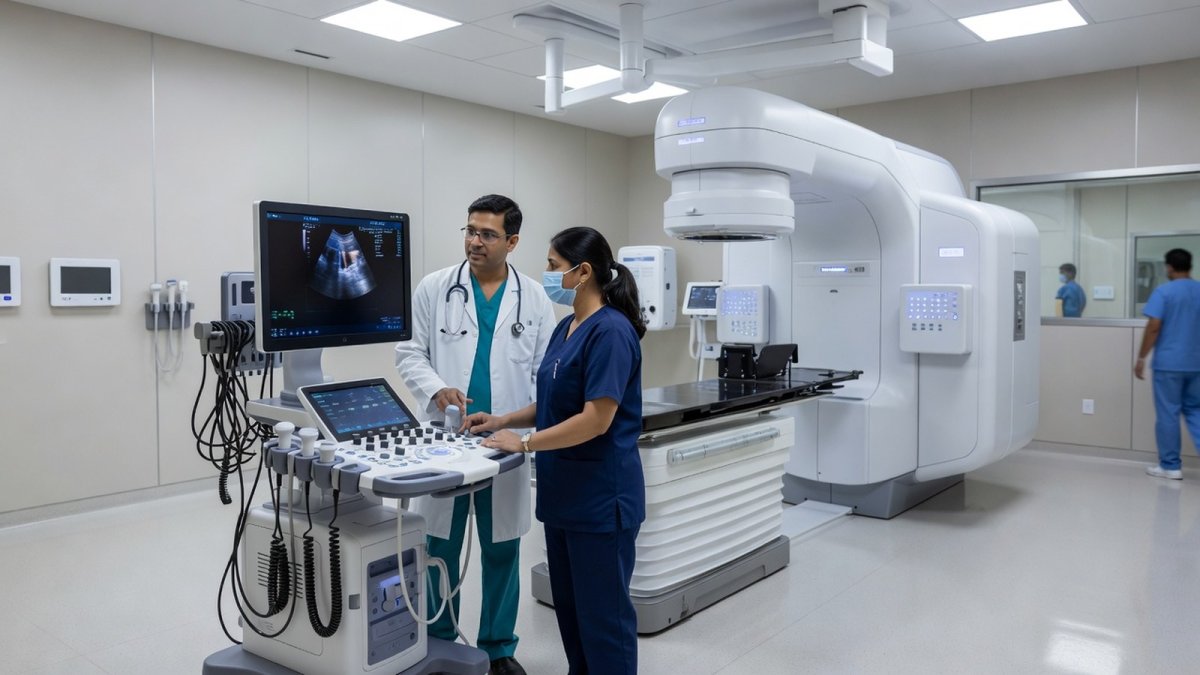 The decision, announced in an official statement on August 11, 2026, comes as Indian cancer registries report that nearly 57 per cent of prostate cancer cases are detected at a localised or locoregional stage — a cohort that may benefit from tissue-preserving strategies. RGCIRC’s integration of HIFU into its clinical pathway reflects a broader national trend, with the Society of Genitourinary Oncologists dedicating an entire session at its fifth annual conference, SOGOCON 2026, held in Hyderabad, to HIFU, cryotherapy, and irreversible electroporation.
The Evidence: A Decade of Registry Data
The clinical rationale for this shift rests on a comprehensive 10-year analysis published in the peer-reviewed journal European Urology. The study tracked 3,477 men treated between 2004 and 2024 through the United Kingdom’s prospective HEAT and ICE registries, with the majority of procedures performed using the Sonablate High-Intensity Focused Ultrasound platform. The long-term outcomes are striking. The 10-year cumulative incidence of metastatic disease was 3.3 per cent (42 events), all-cause mortality stood at 12 per cent (101 events), and prostate cancer-specific mortality was a mere 0.13 per cent — just two deaths among 3,477 patients. These figures, the researchers concluded, position organ-preserving focal HIFU as a credible first-line treatment option alongside radical prostatectomy and radiotherapy for appropriately selected patients with localised disease. The study’s investigators — including Professor Hashim Ahmed, Professor Mark Emberton, Dr Alexander Light, and Dr Taimur Shah — have long championed the concept of treating only the cancerous portion of the prostate. Professor Naren Sanghvi, Chief Science Officer of Sonablate Corp and founder of the Sonablate HIFU technology, has been instrumental in bringing this approach from experimental to mainstream.How Focal HIFU Works: Precision Without Extirpation
Unlike radical prostatectomy, which removes the entire prostate gland, focal HIFU uses focused ultrasound energy to destroy targeted cancerous tissue with sub-millimetric accuracy. The procedure combines pre-operative MRI data with real-time ultrasound imaging to map the prostate in three dimensions, allowing clinicians to ablate only the tumour while preserving surrounding healthy tissue. For suitable patients, the benefits are substantial: reduced treatment-related effects such as urinary incontinence and sexual dysfunction, a less invasive procedure, and faster recovery. Dr Sudhir Rawal, medical director and chief of genitourinary oncology at RGCIRC, explained the evolution: “HIFU has evolved from whole-gland treatment towards focal therapy, which targets the cancerous portion of the prostate while preserving healthy tissue where clinically appropriate. Encouraging long-term evidence must be considered alongside careful patient selection, high-quality multiparametric MRI, tumour characteristics and multidisciplinary evaluation.”Not for Everyone: The Selection Imperative
The critical caveat, emphasised by every Indian centre adopting this technology, is that not all prostate cancer patients are candidates. Suitability is determined by a constellation of factors: PSA levels, multiparametric MRI findings, targeted biopsy results, and the precise location and characteristics of the tumour. This is not a therapy for aggressive, high-volume, or high-risk disease. It is a precision tool for men with localised, organ-confined cancer who wish to avoid the morbidity of whole-gland treatments. The multidisciplinary tumour board — comprising urologists, radiation oncologists, medical oncologists, and radiologists — remains the gatekeeper for patient selection.Indian Adoption: From New Delhi to Pune
The adoption of focal HIFU in India is gathering pace. RGCIRC in New Delhi has integrated the technology into its prostate cancer programme, joining Ruby Hall Clinic in Pune, which introduced the Focal One Robotic HIFU system. Dr Himesh Gandhi, Consultant Uro-oncologist and Director of Robotic Surgery at Ruby Hall Clinic, describes the approach as bridging the gap between overtreatment and undertreatment. “Focal HIFU targets only cancerous prostate tissue, sparing healthy areas to minimise incontinence and erectile dysfunction,” Dr Gandhi said. “These are day-care procedures with rapid recovery, combining MRI data with real-time ultrasound to map the prostate in 3D and treat with sub-millimetric accuracy.” The momentum is visible in academic circles as well. At SOGOCON 2026, the fifth annual conference of the Society of Genitourinary Oncologists held in Hyderabad, a dedicated session examined HIFU, cryotherapy and irreversible electroporation for localised prostate cancer — a sign that Indian uro-oncologists are actively comparing organ-preserving modalities rather than treating focal therapy as a fringe option. The technology’s regulatory pedigree is robust. Sonablate became the first HIFU system cleared by the US FDA for prostate tissue ablation in 2015, and more than 100,000 patients have been treated worldwide, with regulatory approvals in more than 50 countries.The Indian Burden: Numbers That Matter
The context for this clinical shift is the growing burden of prostate cancer in India. According to WHO/GLOBOCAN 2022 data, prostate cancer affected 37,948 Indian men in 2022 — roughly 3 per cent of the 14 lakh (1.4 million) new cancer cases registered in the country. Globally, prostate cancer is the world’s second most frequent cancer in men and the fifth leading cause of cancer death among men, with 1.5 million new cases and 397,000 deaths in 2022. Indian clinical data, published in the Indian Journal of Surgical Oncology in February 2026 from Hospital Based Cancer Registries under the National Cancer Registry Programme (NCRP), paint a detailed picture. Some 75.6 per cent of prostate cancer cases occur in the 60-80 age group, with adenocarcinoma the most common histology (77 per cent). At presentation, 57 per cent of patients have localised (29.9 per cent) or locoregional (27 per cent) disease, while 43 per cent present with distant metastasis — a figure that underscores persistent delays in diagnosis. Treatment patterns show that 30 per cent of patients undergo surgery and 22 per cent receive radiation. Encouragingly, over 80 per cent commence treatment within two months of diagnosis, though referral delays persist. The high proportion of metastatic disease at presentation remains a public health challenge, highlighting the need for earlier detection through PSA testing, multiparametric MRI, and targeted biopsy.Addressing the Retreatment Question
No discussion of focal therapy is complete without addressing the issue of retreatment. A Business Insider report from July 27, 2026, noted a 10-year local retreatment rate of 33 per cent in the registry data. However, a post-hoc analysis revealed that for patients adhering to a protocol of up to two focal ablations, the rate of conversion to radical treatment was just 8.9 per cent. This is a crucial nuance for Indian patients and clinicians. Focal therapy is not necessarily a one-time event; it may require a second focal ablation if there is local recurrence. But the ability to retreat focally — while preserving the option of radical treatment later — is itself a form of organ preservation. The 8.9 per cent conversion rate suggests that the vast majority of men can avoid radical surgery or whole-gland radiation even in the long term.Implications for Indian Healthcare
For Indian patients, the availability of focal HIFU at centres like RGCIRC and Ruby Hall Clinic represents a genuine expansion of treatment choice. For the 57 per cent of men diagnosed with localised or locoregional disease, the option of a day-care procedure with rapid recovery and preserved sexual and urinary function is transformative. For Indian urologists and cancer centres, the adoption of HIFU requires investment in advanced imaging infrastructure — specifically multiparametric MRI — and the development of multidisciplinary teams capable of rigorous patient selection. This aligns with the broader trend towards precision oncology in India, where treatment is increasingly tailored to individual tumour biology rather than applied uniformly. For taxpayers and the public health system, the economics are more complex. HIFU equipment and training represent significant capital expenditure. However, if focal therapy reduces the long-term morbidity associated with radical treatment — including incontinence pads, erectile dysfunction management, and salvage therapies — it may prove cost-effective over a patient’s lifetime. The day-care nature of the procedure also reduces hospital bed occupancy.The Road Ahead: Awareness and Early Detection
The full potential of focal HIFU in India will only be realised with improved awareness and earlier detection. The fact that 43 per cent of Indian men present with distant metastasis at diagnosis is a sobering statistic. PSA testing, multiparametric MRI, and targeted biopsy are helping detect prostate cancer at earlier stages, when organ-preserving approaches may be considered.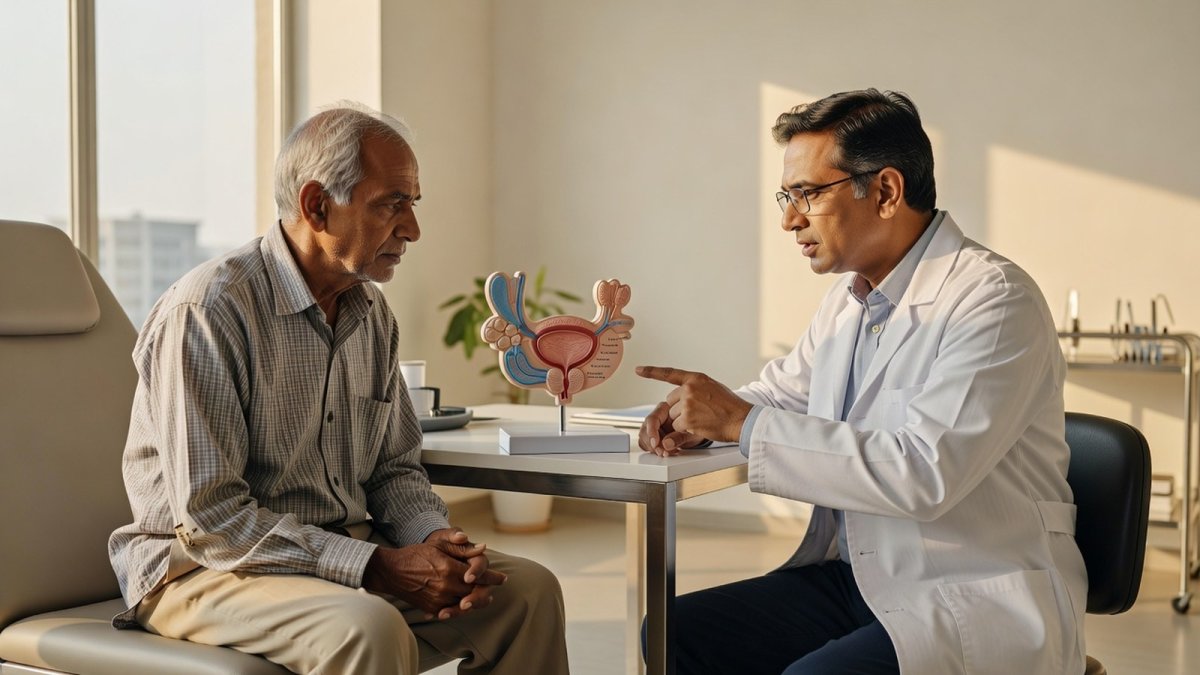 The India Today video report from August 9, 2026, titled “10-Yr Prostate Cancer Study Highlights Focal HIFU Benefits, Organ Preservation & Indian Adoption,” captures this momentum. As more Indian centres adopt the technology and more data emerges from Indian cohorts, the role of focal HIFU is likely to expand.
The message from RGCIRC, Ruby Hall Clinic, and the SOGOCON 2026 sessions in Hyderabad is clear: for carefully selected men with localised prostate cancer, organ preservation is no longer a compromise — it is a legitimate, evidence-based first-line strategy. The 0.13 per cent cancer-specific mortality at 10 years speaks for itself.
The India Today video report from August 9, 2026, titled “10-Yr Prostate Cancer Study Highlights Focal HIFU Benefits, Organ Preservation & Indian Adoption,” captures this momentum. As more Indian centres adopt the technology and more data emerges from Indian cohorts, the role of focal HIFU is likely to expand.
The message from RGCIRC, Ruby Hall Clinic, and the SOGOCON 2026 sessions in Hyderabad is clear: for carefully selected men with localised prostate cancer, organ preservation is no longer a compromise — it is a legitimate, evidence-based first-line strategy. The 0.13 per cent cancer-specific mortality at 10 years speaks for itself.
— By Dr. Raj Patel, Staff Writer
This article was produced with AI-assisted research and editorial support. Sources: India Today, Economic Times Health, Sonablate Corp, Medscape, WHO/GLOBOCAN, Indian Journal of Surgical Oncology.
What's Your Reaction?
 Like
0
Like
0
 Dislike
0
Dislike
0
 Love
0
Love
0
 Funny
0
Funny
0
 Wow
0
Wow
0
 Sad
0
Sad
0
 Angry
0
Angry
0

India/South Asia Correspondent at Global1.News. Analytical voice with a background in science and health journalism. Based in New Delhi, covering Indian politics, education, healthcare, technology, and policy. Breaks down complex data into clear, actionable reporting.














Comments (0)