
Russia's Rassvet Satellite System: Moscow's Answer to Starlink Deploys Faster Than Planned
Ukraine's military intelligence warns Russia is deploying its Rassvet satellite system, Moscow's answer to Starlink, faster than planned. With 292 satellites targeted by 2027 and SpaceX having cut off smuggled terminals, the Kremlin is racing for orbital independence.
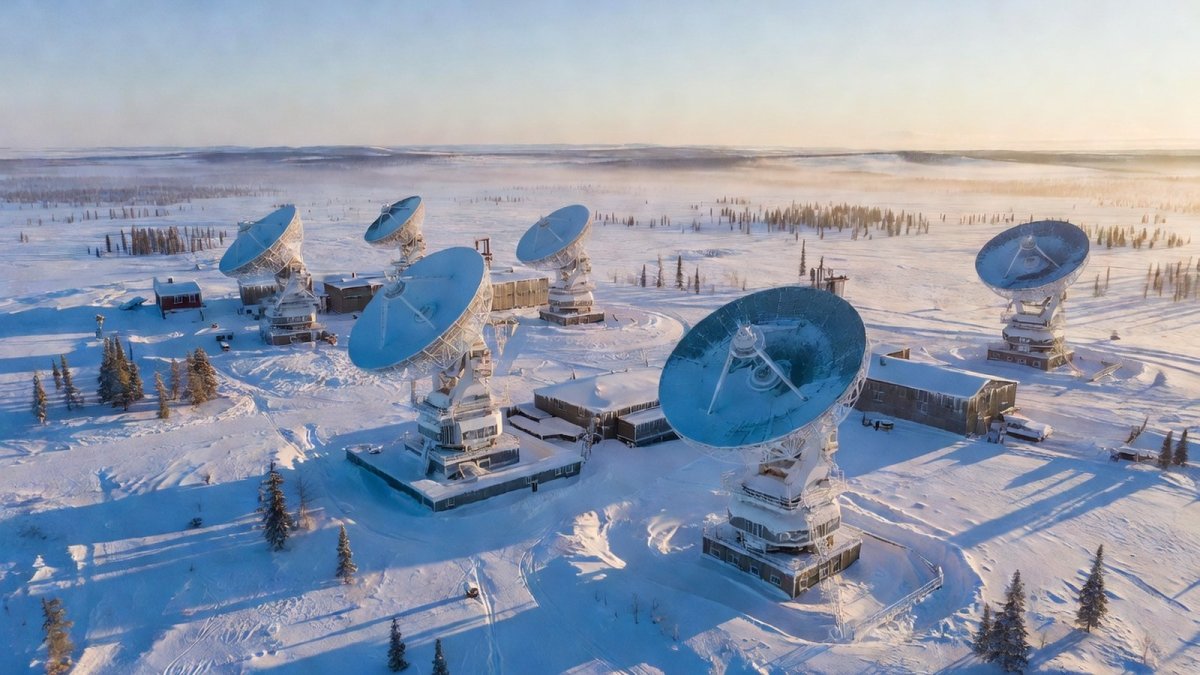
Russia is deploying its Rassvet satellite communications system — the Kremlin's direct answer to Starlink — significantly faster than its own internal timelines anticipated, according to Ukraine's military intelligence chief, who warned that Moscow is racing to close a critical technological gap that has defined the electronic warfare landscape of the war in Ukraine. The accelerated push comes as SpaceX's decision to deactivate smuggled Starlink terminals on the Russian side of the front line has forced the Kremlin to pursue full technological sovereignty in low Earth orbit, with billions in state and private funding now flowing into a constellation that could rival its American counterpart within two years.
Intelligence Warning: Rassvet Deployment Outpacing Kremlin Plans
Major General Vadym Skibitskyi, deputy chief of Ukraine's GUR military intelligence, told RBC-Ukraine on Monday that Russia is deploying its Rassvet satellite system much faster than its own plans anticipated. The warning carries particular weight given the GUR's track record of accurately tracking Russian military programs throughout the full-scale invasion that began in 2022.
"For now they can only operate sporadically when a satellite passes over our territory," Skibitskyi said. "When the Russians deploy a full satellite constellation, this system will function like Starlink." He added that "discussions are already under way on how to counter this," signaling that Kyiv's military planners are treating Rassvet as a strategic threat rather than a distant technological curiosity.
According to Skibitskyi, Russia has already placed 16 satellites into low Earth orbit in March of this year, with further launches planned to create a constellation of 292 satellites by 2027 and 924 by 2035. The first operational batch represents a proof of concept that Moscow intends to scale aggressively, despite Western sanctions designed to cripple its aerospace sector.
Rassvet: A $5.7 Billion Bet on Orbital Independence
Rassvet — Russian for "daybreak" — is built by Bureau 1440, a private Russian aerospace firm established in 2020 as a subsidiary of IKS Holding, a diversified technology conglomerate with deep ties to the Russian defense establishment. The program represents a combined government and private funding commitment of roughly $5.7 billion through 2030, according to figures cited by Ukrainian intelligence and corroborated by Russian corporate disclosures.
The funding breakdown is notable for what it reveals about Kremlin priorities: approximately 102.8 billion rubles (about $1.26 billion) in direct government commitment, supplemented by 329 billion rubles (about $4 billion) in private investment from Bureau 1440 itself. This public-private partnership model mirrors the structure that allowed SpaceX to develop Starlink, but with a critical difference — the Russian state is the anchor customer and the primary driver of the program's urgency.
Analysts suggest this level of investment signals that the Kremlin views satellite communications not as a luxury but as a military necessity. Since the 2022 full-scale invasion, Starlink terminals have become critical infrastructure for Ukrainian forces, enabling battlefield communications, drone operations, and command-and-control functions that Russian electronic warfare has struggled to disrupt.
From Plesetsk to Orbit: The March Launch That Changed the Calculus
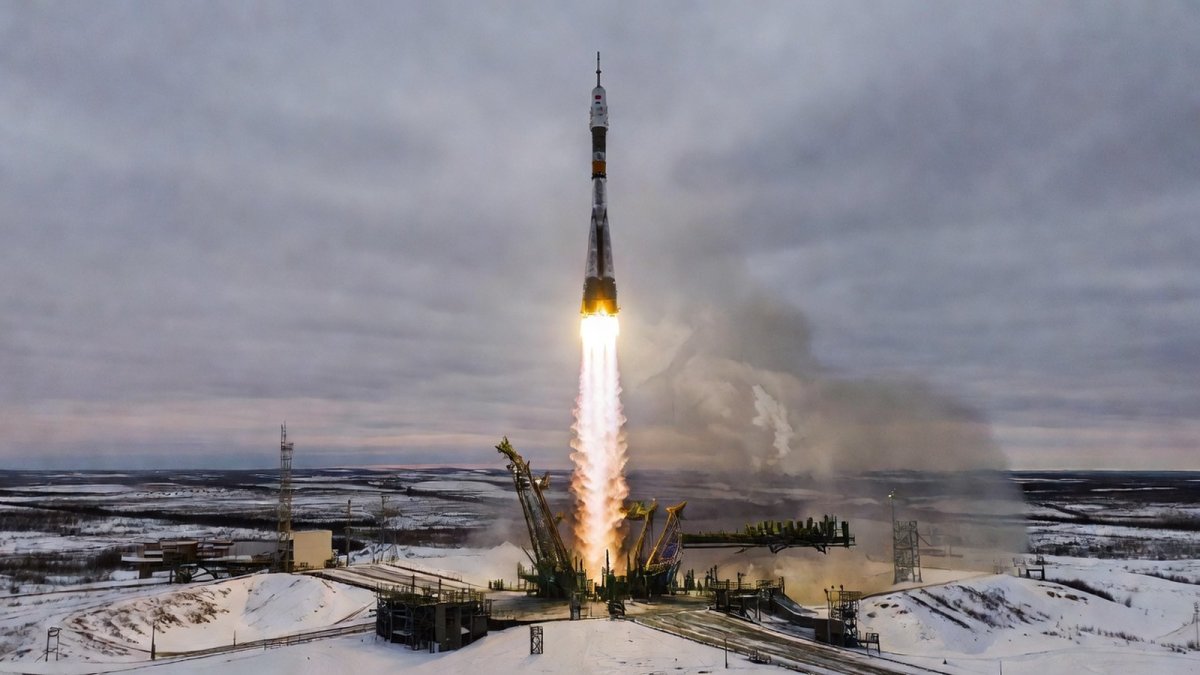
The first operational batch of 16 Rassvet satellites launched on March 23 aboard a Soyuz-2.1b rocket from Plesetsk Cosmodrome in Arkhangelsk Oblast, roughly 800 kilometers north of Moscow, at 17:24 UTC. Each satellite weighs approximately 370 kilograms and separated into a 511-kilometer orbit at 82.3 degrees inclination — a polar orbit that provides global coverage including the high-latitude regions where much of the fighting in Ukraine occurs.
The launch was originally scheduled for late 2025 but slipped to March 2026, a delay that Ukrainian officials initially interpreted as evidence of technical difficulties. In retrospect, the slip appears to have been a minor setback in an otherwise accelerated program. RBC-Ukraine reported that Russia was likely preparing to launch additional Rassvet satellites from Plesetsk between July 11 and 16, suggesting a cadence that could rapidly expand the constellation's operational capacity.
Bureau 1440 previously validated the platform with experimental satellites, achieving laser inter-satellite links at 10 Gbit/s in May 2024 and completing a first 5G non-terrestrial network user-terminal session in June 2024. These technical milestones demonstrated that the core architecture was sound, even if the production and launch pipeline required refinement.
The Starlink Crackdown: How SpaceX Forced Russia's Hand
The urgency behind Rassvet's accelerated deployment can be traced directly to a decision by SpaceX in early 2026 to deactivate smuggled Starlink terminals operating on the Russian side of the front line. Beginning in 2023, illicit Starlink terminals had appeared in Russian-controlled territory, imported through Central Asian intermediaries to circumvent international sanctions. Russian units had come to rely on these terminals for the same battlefield communications advantages that had proven so decisive for Ukrainian forces.
When SpaceX remotely deactivated those connections, Russian units lost connectivity in the middle of active combat operations. The disruption was immediate and severe, exposing the Kremlin's dependence on a technology owned and controlled by an American company with no obligation to maintain service for Russian forces. Russia subsequently banned the import of foreign satellite communication systems, including Starlink, formalizing a policy of technological self-sufficiency that had been discussed but not enforced.
This sequence of events — the reliance on smuggled terminals, the sudden deactivation, and the resulting operational chaos — provided the political justification for the massive state investment in Rassvet. The Kremlin could no longer tolerate a critical military capability that could be switched off by a foreign corporation at will.
Ukraine's Countermeasures: Preparing for a Starlink-Like Threat
Ukraine's presidential adviser on defense technology, Serhii "Flash" Beskrestnov, has been tracking Rassvet's development closely. In May, he reported that the system was in early stages without a sufficient number of satellites to pose a significant threat. That assessment may now be changing as additional launches come online.
Skibitskyi's acknowledgment that "discussions are already under way on how to counter this" suggests that Ukrainian military planners are developing electronic warfare and cyber capabilities specifically designed to degrade or disrupt Rassvet operations. The GUR has demonstrated sophisticated capabilities in both domains throughout the war, including successful cyber operations against Russian military infrastructure.
Mykola Kalinichenko, CEO of the defense analysis firm Adaptis, notes that the planned orbital altitude of the Rassvet constellation is higher than the main operating altitudes used by Starlink. This difference could have operational implications — higher orbits provide broader coverage per satellite but require more powerful user terminals and may be more susceptible to certain countermeasures.
Missile Production Surge: A Parallel Threat
In the same interview, Skibitskyi delivered a sobering assessment of Russia's missile production capabilities. Russia has already met its annual production targets for Zircon and Oniks missiles in the first seven months of the year and is exceeding its 2026 missile production goals by 10 to 20 percent. He estimated Russia's stockpile of Iskander-M ballistic missiles at around 130, with 65 new ones produced in July alone.
This production surge has direct implications for Ukraine's defense. Russia has been pounding Ukrainian cities and infrastructure with supersonic missiles as Kyiv has depleted its stock of interceptor missiles. Ukrainian air defenses downed 135 of 151 drones in one recent overnight attack but could not intercept ballistic missiles; only 29 of 195 ballistic missiles were intercepted in July, according to Ukraine's defense ministry.
Skibitskyi also revealed that Ukraine's emerging ballistic missile industry and drone production facilities have become a priority target for Russia's missile campaign. This suggests that Moscow is attempting to decapitate Ukraine's domestic defense industrial base before it can achieve meaningful production capacity.
Technological Sovereignty and the Future of the War
The Rassvet program represents more than a military capability — it is a statement of technological sovereignty in an era when space-based communications have become decisive on the modern battlefield. The Kremlin's willingness to commit $5.7 billion through 2030 reflects an understanding that the war in Ukraine has become a laboratory for the future of warfare, where control of the orbital domain can determine outcomes on the ground.
Rassvet is expected to become fully operational on a commercial basis around 2027, according to current projections. If the accelerated deployment continues, that timeline could shift earlier, potentially giving Russian forces a Starlink-equivalent capability within the next 12 to 18 months. The constellation's higher orbital altitude could provide advantages in coverage persistence, though it may require more sophisticated user terminals that could limit rapid battlefield deployment.
For Ukraine, the challenge is clear: the window to develop countermeasures is narrowing. The GUR's acknowledgment that discussions are underway suggests that electronic warfare specialists are already working on jamming, spoofing, and cyber intrusion techniques tailored to Rassvet's specific architecture. Whether those countermeasures will be ready before the constellation reaches operational capacity remains an open question.
The broader strategic implication extends beyond Ukraine. Russia's pursuit of an independent satellite communications capability signals that Moscow intends to maintain its status as a great power in space, regardless of Western sanctions or export controls. The Rassvet program, like the missile production surge, demonstrates that the Kremlin is willing to absorb significant economic costs to achieve military objectives — a calculation that will shape the trajectory of the war and the post-war security order in Europe.
By Irina Volkov, Staff Writer
This article was produced with AI-assisted research and editorial support. Reporting is based on sources cited in the article.
What's Your Reaction?
 Like
0
Like
0
 Dislike
0
Dislike
0
 Love
0
Love
0
 Funny
0
Funny
0
 Wow
0
Wow
0
 Sad
0
Sad
0
 Angry
0
Angry
0

Russia/Eastern Europe Correspondent at Global1.News. Covering Russian politics, energy, security, and the shifting dynamics of the post-Soviet space. Provides clear-eyed analysis on one of the world's most opaque regions.














Comments (0)