
PLO Accuses Israeli Legal Group of Funding Settler Violence in West Bank
The Palestine Liberation Organization has accused an Israeli legal organization of shielding settlers accused of violence against Palestinians in the occupied West Bank, while international pressure continues to target Palestinian payments to prisoners and their families. PLO Report Exposes Settler Support Network The Palestine Liberation Organization's National Office for Land Defense released its weekly report titled "Symbols of hatred in settlements incite more crimes" on Saturday.
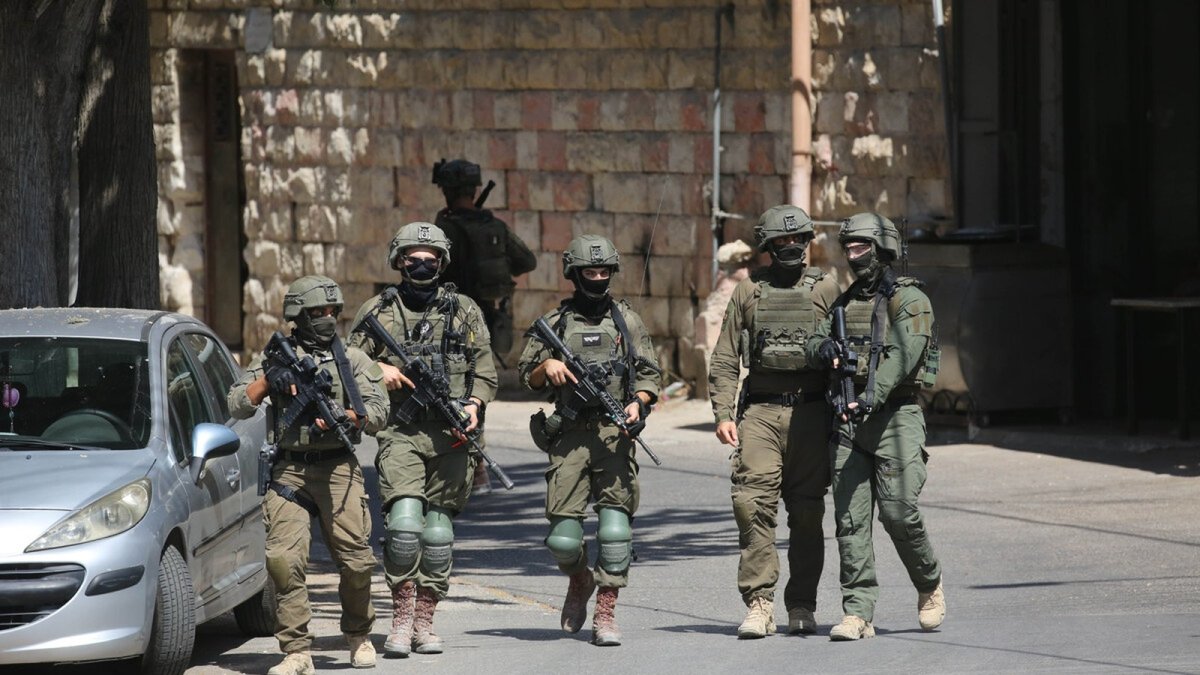
PLO Accuses Israeli Legal Group of Funding Settler Violence in West Bank
The Palestine Liberation Organization has accused an Israeli legal organization of shielding settlers accused of violence against Palestinians in the occupied West Bank, while international pressure continues to target Palestinian payments to prisoners and their families.
PLO Report Exposes Settler Support Network
The Palestine Liberation Organization's National Office for Land Defense released its weekly report titled "Symbols of hatred in settlements incite more crimes" on Saturday. The document details how the Israeli organization Honenu supplies legal defense and financial aid to settlers accused of attacks on Palestinians. The report frames these actions as part of a system that prevents accountability for violence in the West Bank.
The weekly report issued by the National Office for Land Defense systematically monitors settlement expansion, land issues, and related incidents across the West Bank. Its title, "Symbols of hatred in settlements incite more crimes," positions the document as an examination of how certain groups contribute to ongoing tensions through organized activities.
The report frames Honenu, founded in 2001 and self-described as providing legal aid for soldiers and citizens, as delivering legal support, litigation services, and free defense to settlers accused of violence. This assistance is presented as a structured mechanism that operates through court proceedings and representation.
By supplying these resources, the report states that Honenu seeks to thwart accountability for alleged actions, secure swift release of individuals involved, and thereby enable continued attacks. The analysis ties this role directly to the broader pattern of support that reduces legal consequences for those participating in settlement-related violence.
Honenu Operations Under Government Oversight
According to the PLO report, Honenu functions with the awareness of Israeli government bodies. It supplies free legal representation to settlers and extremist Jews charged with violent crimes and terrorist acts against Palestinians. The organization aims to secure quick releases and block prosecutions, allowing attacks to continue without interruption.
Direct Financial Support to Settler Families
Honenu maintains a policy of fixed monthly salaries and bonuses for families of settlers imprisoned for killing Palestinians or burning homes. According to the report, the organization operates "under the sight and hearing of the Israeli government," paying wives and families living expenses throughout a prisoner's sentence and regularly depositing money into the personal accounts of settlers inside prisons for daily necessities.
The aid extends to children, with bonuses covering school expenses, religious occasions and family celebrations to compensate for the absence of a breadwinner. Transportation costs are also funded for family members traveling from illegal settlements to Israeli prisons to visit relatives.
Online fundraising campaigns collect millions of shekels framed as "resilience grants" for families of settlers who have committed major crimes against Palestinians. These efforts draw on tax-exempt donations from wealthy individuals and right-wing organizations based in the US and Israel, alongside facilitation and indirect cover from extremist Israeli government bodies, according to the report.
The combination of regular stipends, targeted bonuses and external contributions forms a comprehensive network that addresses both immediate needs and longer-term family stability for those linked to settler activities in the West Bank.
Fundraising Campaigns and External Donations
The report describes online campaigns that raise millions of shekels for families of settlers involved in major crimes. These sums are presented as resilience grants. Funds originate mainly from tax-exempt donations by wealthy individuals and right-wing groups in the United States and Israel, with indirect facilitation from certain Israeli government entities.
Double Standards in International Pressure
The PLO statement highlights differing treatment by the European Union and the United States. These actors apply sanctions and pressure on the Palestinian Authority over payments to prisoners and families of those killed or wounded, yet overlook the settler support network. The report calls this approach inconsistent and damaging to accountability efforts.
Scale of Recent Attacks in the West Bank
During the first half of 2026, Israeli occupiers carried out 3,488 attacks in the West Bank, killing 17 Palestinians, completely or partially displacing 26 Bedouin and herding communities and establishing 42 new illegal settlement outposts, most of them pastoral, according to the Colonization and Wall Resistance Commission, a government body.
The numbers indicate a pattern of sustained pressure on Palestinian communities through repeated attacks and the physical expansion of outposts. Displacement of 26 communities points to direct effects on traditional herding and land-use practices in affected areas, where families have grazed livestock and farmed the same land for generations.
Taken together, the data reflect an intensified phase of settlement-related actions that combine violence with territorial changes, as tracked through official monitoring of the broader West Bank situation during this period.
Connection to Israeli National Security Minister
The PLO report identifies Israeli National Security Minister Itamar Ben-Gvir as a prominent figure linked to Honenu. This connection occurs amid broader government facilitation of settler activities. The report places the organization's work within the context of official tolerance for violence against Palestinian communities.
Palestinian Prisoner Conditions and Payment Changes
Palestinian prisoners continue to face harsh conditions including reported torture and starvation, with human rights documentation linking these factors to multiple deaths. In February 2025, President Mahmoud Abbas issued a decree transferring the cash assistance program for families of prisoners and those killed by Israel from the Ministry of Social Development to the Palestinian National Economic Empowerment Institution. The move followed sustained United States and Israeli pressure, contributing to the Palestinian Authority's ongoing financial strain from clearance revenue deductions that began in 2019.
The contrast centers on support for settler families alongside external pressure on Palestinian prisoner payments. The February 2025 Abbas decree responded to US and Israeli demands by altering the payment structure, while Israel has made deductions from clearance revenues since 2019 and additional ones for Gaza since 2023.
The Institute for Palestine Studies describes the resulting situation as a complex equation, where Palestinian society attaches symbolic meaning to prisoner payments as recognition of those held in Israeli facilities. These payments have historically served as a form of social and economic acknowledgment within the community.
The parallel mechanisms—one providing direct financial aid to settler families and the other facing sustained deductions and policy changes—highlight differing approaches to support systems tied to detention and legal proceedings on each side.
Human Impact on Palestinian Daily Life
These developments affect families across the West Bank who live under repeated threats of displacement and violence. The combination of unchecked settler attacks and external pressure on prisoner support programs deepens economic hardship and restricts access to basic services in affected communities. Palestinian voices in the report emphasize the need for consistent international standards to address both settler violence and prisoner welfare.
A System of Parallel Support
The PLO report draws a stark contrast between two systems operating in parallel: one in which settler families accused of violence receive salaries, legal defense and fundraising support, and another in which Palestinian families of prisoners and of those killed by Israel face international sanctions, deductions from clearance revenues and administrative restructuring.
For Palestinians in the West Bank, the report's findings reinforce a longstanding grievance: that the legal and financial machinery of the occupation protects those who carry out attacks on their communities while the same governments that pressure the Palestinian Authority to cut support for its own prisoners — particularly in the EU and the United States — have not applied comparable scrutiny to the tax-exempt donations that sustain settler support networks. Human rights organizations have repeatedly documented settler violence as a leading driver of displacement and fear in West Bank villages, and the PLO's weekly monitoring is one of the few systematic public records of its scale.
The report's identification of Ben-Gvir as a figure linked to Honenu also places the organization within the political mainstream of Israel's current government, where settlement expansion and the defense of settlers accused of violence have become official policy positions rather than fringe causes. As long as that support network remains funded and protected, the report argues, accountability for violence against Palestinians will remain out of reach, and the cycle of attacks, displacement and grief will continue across the occupied territory.
By Fatima Al-Rashid, Staff Writer
This article was produced with AI-assisted research and editorial support. Sources: Middle East Monitor, Anadolu Agency.
What's Your Reaction?
 Like
0
Like
0
 Dislike
0
Dislike
0
 Love
0
Love
0
 Funny
0
Funny
0
 Wow
0
Wow
0
 Sad
0
Sad
0
 Angry
0
Angry
0
Gulf/MENA Correspondent at Global1.News. Based in Doha, covering Gulf politics, energy markets, diplomacy, and development across the Middle East and North Africa. Tracks the economic transformation of the Gulf states.












Comments (0)