
UNICEF Probes Official Accused of Spying for Israel
In a recent Middle East Eye report, UN deputy spokesman Farhan Haq confirmed that UNICEF is aware of serious allegations against Yahav Lichner, head of its Washington, D.C. office, and is taking appropriate action following claims he spied for Israel during his earlier tenure at another UN agency. The video outlines how Lichner has been placed on administrative leave while the matter is reviewed.
In a recent Middle East Eye report, UN deputy spokesman Farhan Haq confirmed that UNICEF is aware of serious allegations against Yahav Lichner, head of its Washington, D.C. office, and is taking appropriate action following claims he spied for Israel during his earlier tenure at another UN agency. The video outlines how Lichner has been placed on administrative leave while the matter is reviewed. This development raises urgent questions about loyalty, transparency, and the protection of Palestinian rights within international institutions.
UNICEF Acts on Allegations of Israeli Espionage by Senior Official
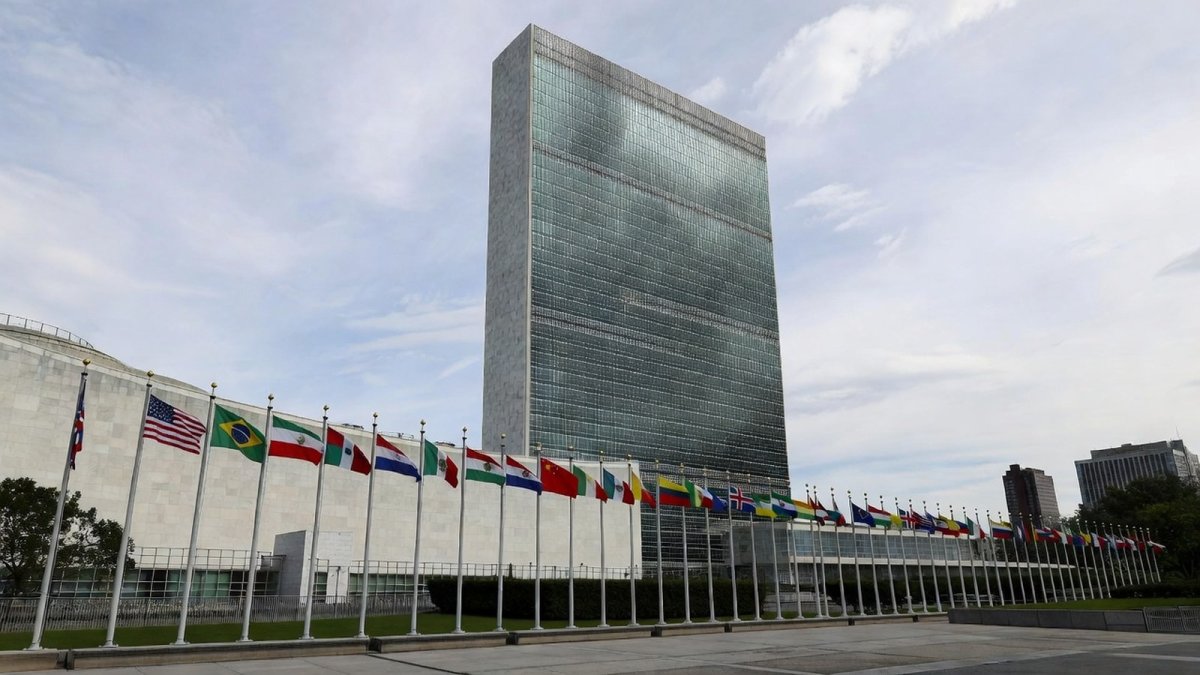
New York, United States – August 8, 2026 — UNICEF has initiated internal measures against Yahav Lichner after allegations surfaced that he passed confidential United Nations documents to Israeli diplomats while serving at the UN Population Fund between 2014 and 2015. The case, drawn from a hacked email archive, highlights potential breaches of the UN Charter at a time when scrutiny over Israel's actions in Gaza and the West Bank remains intense. Palestinian communities continue to bear the consequences of decisions shaped by such intelligence flows during periods of heightened conflict.
The Nature of the Allegations
UNICEF confirmed it is reviewing claims that Lichner supplied Israeli officials with internal UN summaries and political assessments. Deputy spokesman Farhan Haq stated on August 7, 2026, that any substantiated conduct would violate staff obligations under the UN Charter and standards of conduct for international civil servants. These obligations require officials to prioritize international responsibilities over national interests. Lichner, who previously worked at Israel's mission to the UN and as political advisor to Ambassador Ron Prosor, has headed UNICEF's Washington office since January 2025.
Evidence from the Drop Site News Investigation
The Drop Site News investigation published on August 4 2026 by Murtaza Hussain drew on a hacked email archive from Ron Prosor's account that the hacking group Handala obtained and Distributed Denial of Secrets later released. The correspondence spans 2014 and 2015 and documents repeated transfers of internal UN materials to Israeli diplomats. Prosor served as Israel's permanent representative to the United Nations from 2011 to 2015 before becoming ambassador to Germany. The archive reveals how Yahav Lichner, who had worked at Israel's mission to the UN from 2011 until early 2014 and earlier as Prosor's political advisor in London, supplied sensitive documents while at the UN Population Fund.
Lichner joined UNICEF as director of its Washington D.C. office in January 2025. Emails indicate Prosor personally advanced Lichner's candidacy for the UNFPA position by enlisting then U.S. Ambassador to the UN Samantha Power for private lobbying and later supplying a strong reference letter. The leaked materials include internal summaries, private meeting accounts, and pre-release documents marked strictly confidential. Israeli officials used these to anticipate UN positions and coordinate responses on issues tied to the occupied Palestinian territories.
Handala's breach exposed a pattern of information sharing that extended beyond routine diplomatic contact. The materials reached six Israeli diplomats in multiple instances, with Lichner often routing them from personal accounts under explicit instructions not to forward further. This chain of transmission, verified through the Distributed Denial of Secrets release, underscores how one official's access at a UN agency translated into direct advantage for a member state during periods of intense scrutiny over Gaza and the West Bank.
Key Examples of Shared Intelligence
On February 20 2015 Lichner forwarded from his personal email a classified internal summary of UN High Commissioner Zeid Ra'ad Al-Hussein's Washington meetings marked "For your eyes only. Do not forward." The document detailed discussions with White House officials, senators, congressional staff, AIPAC, J Street, and human rights groups concerning potential U.S. funding cuts linked to the UN Gaza inquiry. Lichner noted Al-Hussein's efforts to distance himself from the report after meeting Senator Lindsey Graham. Israeli diplomat Ronny Leshno-Yaar replied that he would act with members of Congress without referencing the source.
Additional transfers included a November 10 2014 UN Operations and Crisis Centre daily report marked "UN STRICTLY CONFIDENTIAL" that Lichner sent the next morning highlighting the absence of condemnation for civilian casualties in U.S. operations in Iraq. On July 9 2014, one day after Operation Protective Edge began, he supplied an unpublished draft letter from Secretary-General Ban Ki-moon to President Mahmoud Abbas along with Abbas's own letter, stating he was working with an unnamed contact to insert references to rocket fire. He also forwarded the agenda of Ban's Senior Management Group meeting discussing a draft Security Council resolution on Palestine.
Further examples encompass a 2015 note from a source in the Secretary-General's circle speculating on Ban's successor and naming Bulgarian diplomat Nickolay Mladenov as a candidate under consideration. Lichner also transmitted an internal OHCHR summary of a General Assembly discussion on the special rapporteur for the Occupied Palestinian Territories and advance notice of the planned release date for the UN commission of inquiry report on Gaza after the elections. These specific items allowed Israeli diplomats to prepare positions on matters directly affecting Palestinian communities under occupation.
UNICEF and UN Response
Haq declined to specify whether Lichner's leave is paid or unpaid, whether Secretary-General Antonio Guterres was consulted, or whether the Office of Internal Oversight Services is involved. UNICEF has not issued further public comment. The organization is required to ensure staff actions align with international civil service standards that prohibit sharing information acquired through official duties with any government. Former UN Assistant Secretary-General Charles Petrie noted the absence of effective internal mechanisms to impose consequences for such leaks.
Concerns Over Institutional Accountability
UN staff regulations require international civil servants to treat their responsibilities as exclusively international rather than national. Officials are prohibited from communicating any information acquired through their positions to any government, entity, or other source. Deputy spokesman Farhan Haq stated on August 7 2026 that substantiated actions by Lichner would violate the UN Charter, staff regulations, and standards of conduct emphasizing independence and impartiality. Haq confirmed UNICEF leads the review, but he gave no details on the status of the employee's leave, whether the secretary-general's office had been consulted, or whether the UN's internal oversight body had opened an investigation.
Former Assistant Secretary-General Charles Petrie observed that the United Nations lacks mechanisms to impose meaningful consequences for such leaks. He contrasted this with U.S. government rules where leaking constitutes a crime and noted that accountability diminishes at higher levels within the institution. Petrie described the absence of internal systems as evidence of structural weakness that permits external influence to persist without sanction.
The case illustrates how reliance on individual agencies to self-police creates gaps. Without mandatory referral to independent oversight bodies or standardized sanctions, patterns of information sharing can continue across different UN entities. Palestinian civil society groups have repeatedly highlighted these shortcomings when advocating for consistent application of impartiality standards in matters involving the occupied territories.
Context of the 2014 Gaza Conflict
The leaked materials relate to the period of Operation Protective Edge, when Israeli forces conducted operations in Gaza that drew widespread international attention. Lichner also provided Israel with advance notice of UN deliberations concerning the killings of two Palestinian teenagers, Mahmoud Odeh Salameh and Nadim Nuwara, in May 2014. The information included potential counterarguments to limit calls for independent inquiries. These exchanges occurred amid ongoing occupation and displacement affecting Palestinian families across the West Bank and Gaza.

Human Impact on Palestinian Communities
The advance notice Lichner provided on the May 2014 killings of teenagers Mahmoud Odeh Salameh and Nadim Nuwara allowed Israeli diplomats to prepare counterarguments before UN agencies met to discuss the shootings. He supplied two points emphasizing an existing Israeli military investigation and urging restraint until its conclusion. This timing reduced the immediate pressure for independent inquiry at a moment when video evidence suggested the youths posed no threat, affecting how the international community addressed incidents in the West Bank.
During Operation Protective Edge, shared documents on civilian casualties and draft UN communications enabled Israeli officials to anticipate and shape responses to scrutiny over Gaza operations. The contrast drawn in one forwarded report between UN silence on U.S. actions in Iraq and focus on Israel further illustrates how internal perspectives reached diplomats positioned to influence Washington lobbying. Palestinian families experiencing movement restrictions, resource access barriers, and displacement felt the downstream effects of these prepared positions.
Israeli diplomat Nelly Shiloh's acknowledgment that the material was not supposed to reach them underscores the breach's deliberate nature. For communities seeking protection through UN mechanisms, such flows of information weaken the prospect of impartial monitoring and accountability. Strengthened safeguards would help ensure that reports on incidents in Gaza and the West Bank reflect realities on the ground rather than pre-empted diplomatic maneuvering.
Implications for International Institutions
This episode raises broader questions about how UN agencies safeguard sensitive information and maintain impartiality. If the allegations are confirmed, they point to systemic vulnerabilities that undermine trust in institutions tasked with upholding human rights. Palestinian civil society organizations have long called for greater transparency in UN dealings with parties to the conflict. Strengthened oversight could help ensure that the lived realities of those under occupation receive fair consideration in diplomatic processes.
The allegations against Lichner expose fault lines in UN accountability that directly affect efforts to address Palestinian rights. As reviews continue, the focus must remain on protecting the integrity of international mandates and ensuring that no national agenda overrides the Charter's principles. Continued scrutiny from independent journalists and human rights monitors will be essential to prevent similar breaches in the future.
By Fatima Al-Rashid, Staff Writer This article was produced with AI-assisted research and editorial support. Sources: Middle East Eye, Drop Site News, Anadolu Agency, IANS.What's Your Reaction?
 Like
0
Like
0
 Dislike
0
Dislike
0
 Love
0
Love
0
 Funny
0
Funny
0
 Wow
0
Wow
0
 Sad
0
Sad
0
 Angry
0
Angry
0
Gulf/MENA Correspondent at Global1.News. Based in Doha, covering Gulf politics, energy markets, diplomacy, and development across the Middle East and North Africa. Tracks the economic transformation of the Gulf states.












Comments (0)