
Phumzile Mlambo-Ngcuka, South Africa's First Woman Deputy President, Dies at 71
Phumzile Mlambo-Ngcuka, South Africa's first woman deputy president and former head of UN Women, has died at 71. The Presidency announced her death on Friday night and said further details would follow after consultation with the family.
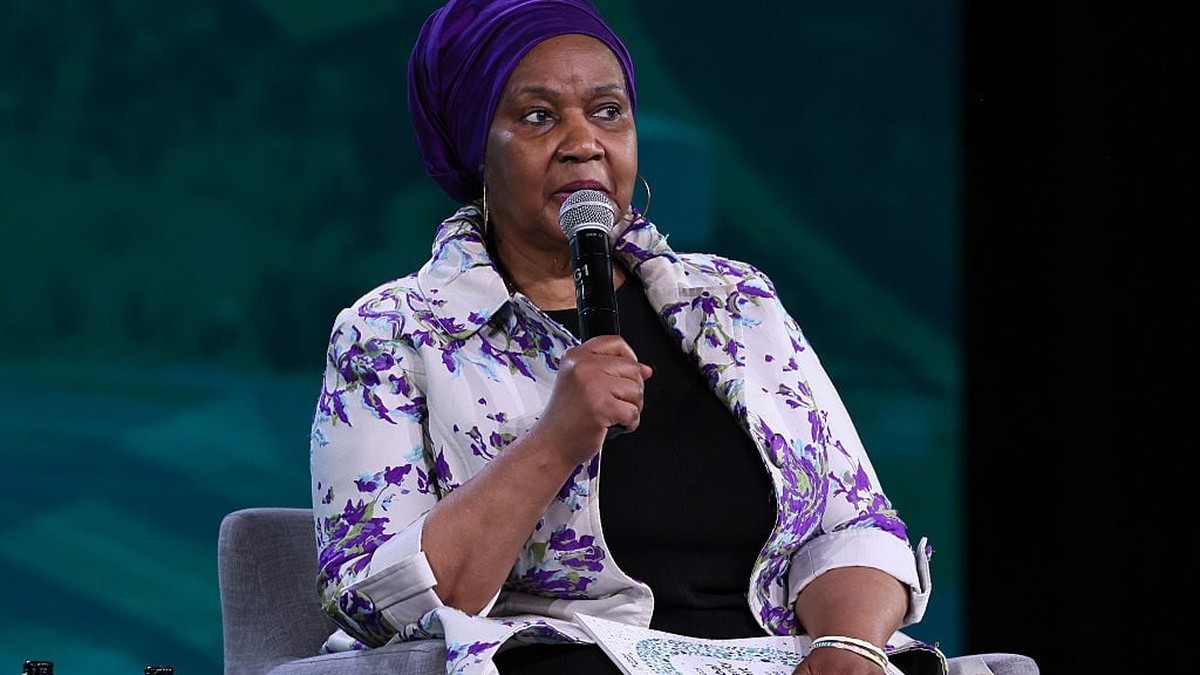
Late on Friday night, South Africa learned that the woman who broke the country's highest glass ceiling, and then spent eight years running the United Nations agency built to break everyone else's, is gone. Phumzile Mlambo-Ngcuka was 71.
Phumzile Mlambo-Ngcuka, South Africa's First Woman Deputy President, Dies at 71
South Africa — The Presidency announced her death in a statement issued by Acting President Paul Mashatile on the evening of Friday, 20 November 2026. No cause of death was given.
The Announcement Came at Night, From an Acting President
The statement was short, and it carried the weight of a country's history in two sentences. The Presidency said Mashatile had that evening learned "with shock and sadness of the passing of former Deputy President of the Republic of South Africa, and former UN Under-Secretary-General and Executive Director of UN Women, Ms Phumzile Mlambo-Ngcuka".
Mashatile holds the office in an acting capacity because President Cyril Ramaphosa is on a visit to the United States. The statement said Mashatile will communicate further details after due consultation with the family, and that he had conveyed his condolences on behalf of Ramaphosa, the government and the people of South Africa.
The family's own words were included, and they were brief. "The family has asked for privacy at this time, whilst they deeply appreciate ongoing messages from South Africans and the global community." The statement landed late in the South African evening; SABC News carried it at 23:42 local time.
A Teacher From Clermont
She was born in Clermont, KwaZulu-Natal, on 3 November 1955, and her first profession was teaching. She took a Bachelor of Arts in Social Science and Education at the National University of Lesotho in 1980, lectured at Impumalanga Teachers Training College, and then taught at Ohlange High School in KwaZulu-Natal from 1981 to 1983.
Politics arrived through organization rather than office. She became the first president of the Natal Organisation of Women, an affiliate of the United Democratic Front, and then went abroad to work, serving as a coordinator for the World Young Women's Christian Association in Geneva from 1984 to 1989, where she built a global program for young women.
She also studied gender policy and planning at University College London in 1988, directed the development grouping TEAM in Cape Town, ran World University Services, and founded a management consulting firm, Phumelela Services, in 1993. She was a founder member of the Guguletu Community Development Corporation.
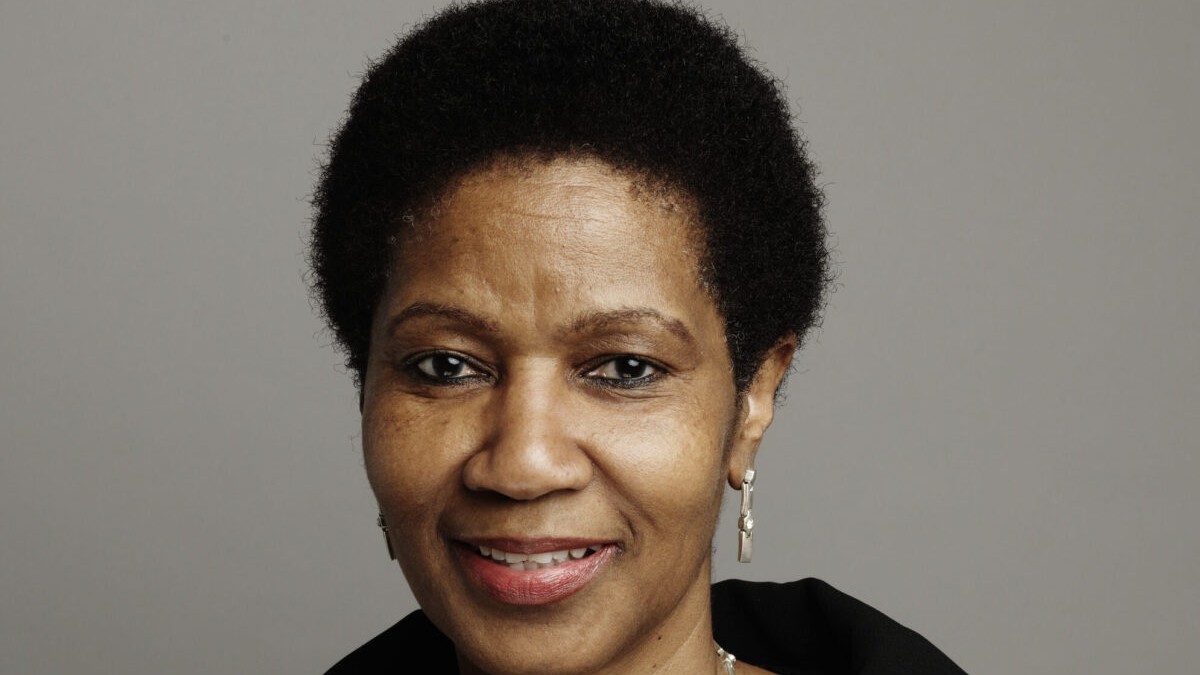
The Ministry That Made Her Name
After the first democratic elections in 1994 she entered Parliament as an ANC member and chaired the public service and administration portfolio committee. Two years later she became Deputy Minister of Trade and Industry, and in 1999 she was given minerals and energy.
That ministry is where her reputation was forged. Her "use it or lose it" policy opened mining rights to previously disadvantaged South Africans, a phrase that became shorthand for a fight over who actually owned the country's mineral wealth. She held the portfolio from 1999 to 2005, and served briefly as acting minister of arts, culture, science and technology in 2004.
She had joined the ANC's national executive committee in 1997 and completed a Master of Philosophy in educational planning and policy in 2003. By the middle of that decade she was one of the most senior women in the movement and in the state, and the next step was not a small one.
The First Woman in the Second-Highest Office
On 22 June 2005, President Thabo Mbeki appointed her Deputy President of South Africa. She was the first woman to hold the position in the country's history.
She used the office to push two programs that were designed to attack unemployment directly rather than talk about it. The first was the Accelerated and Shared Growth Initiative for South Africa, known as AsgiSA. The second was the Joint Initiative on Priority Skills Acquisition, JIPSA, which was aimed at the skills shortages holding back the economy.
The argument underneath both was that growth had to be shared or it would not hold. The South African Federation of Trade Unions recalled that framing in its own tribute, saying she was "insisting that growth must be shared and its benefits reach the poor, especially as income inequality continued to widen." She held the office for just over three years.
The Recall That Ended It, and What Came After
Her time as Deputy President ended on 23 September 2008, when she resigned. That resignation followed the ANC's recall of Mbeki from the presidency, a decision taken by the party's national executive committee and one of the most consequential internal ruptures in post-apartheid politics.
The sequence matters more than any single interpretation of it. A sitting president was recalled by his own organization. His deputy, who had been appointed by him three years earlier, stepped down with him. The woman who had been the highest-ranking woman in the state was 52 years old.
She did not leave public work behind. She founded the Umlambo Foundation, which supports school leadership and education in underserved communities, and in 2013 she completed a doctorate in education and technology at the University of Warwick. She had already been installed as chancellor of Tshwane University of Technology in 2007.
Eight Years at UN Women
In August 2013, UN Secretary-General Ban Ki-moon appointed her United Nations Under-Secretary-General and Executive Director of UN Women. She was sworn into office on 19 August 2013.
The agency she inherited was young. UN Women had been operating for just two years when she arrived, and the brief was to turn a new entity into something that could act inside the UN system and outside it. Its own farewell notice, published when she completed her second and last term on 17 August 2021, recorded what happened next: under her leadership the organization "significantly increased its influence within and outside the UN system, expanded its partnerships, achieved more focused impact at scale, and more than doubled in size and revenue."
She pushed the agency toward allies it had not used at scale before, including youth, men and boys, traditional and cultural leaders, the private sector, philanthropies and sport. Eight years is a long run at the head of a UN entity, and she spent all of it.
Forty Billion Dollars and Hundreds of Laws
The campaigns are the part most people outside the UN system encountered. She launched HeForShe, the solidarity movement that asked men and boys to name themselves as part of the answer rather than as spectators, and she chaired the Unstereotype Alliance, which set out to strip harmful stereotypes out of advertising and media. That work earned her the Cannes LionHeart Award in 2019.
The Generation Equality Forum produced the harder number. It mobilised $40 billion in commitments from member states, the private sector, philanthropies and civil society toward women's rights.
Alongside the money came law. She helped countries change hundreds of laws that discriminate against women and girls, work that rarely produces a headline and that outlasts most speeches. Her instruction to the people she mentored was that "lifting as you climb has to be your mantra".
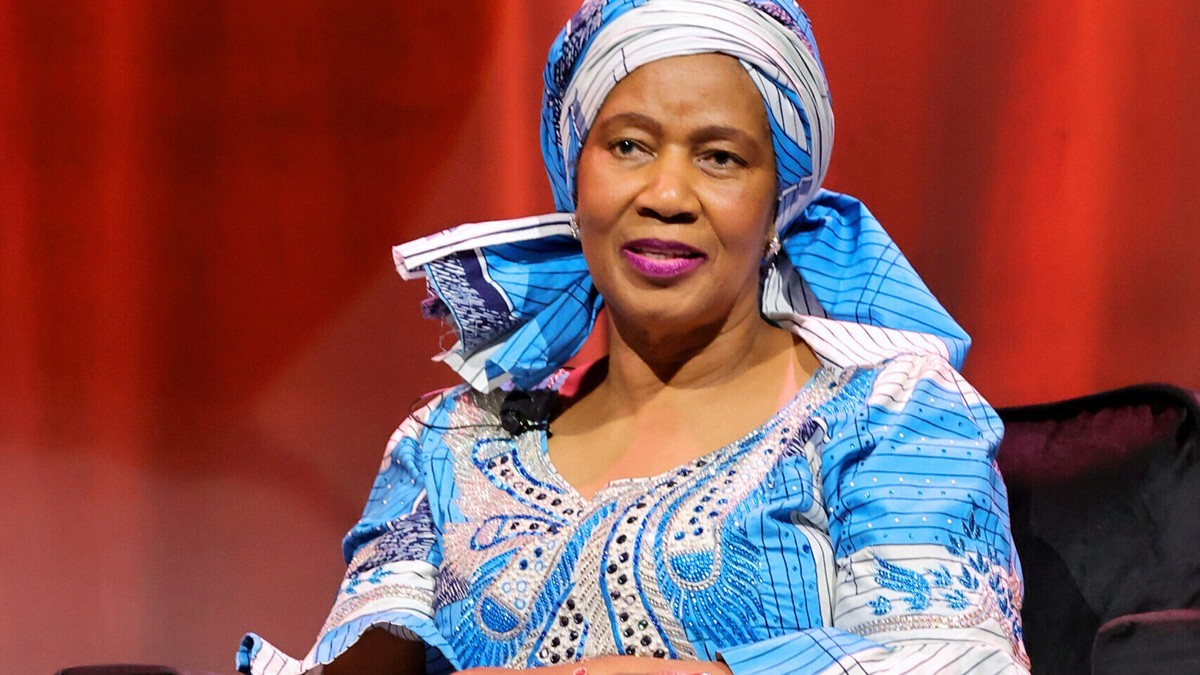
The Second Career in Education
She came home to the classroom she had started in, in institutional form. In 2022 she became Chancellor of the University of Johannesburg.
The University of Johannesburg said her legacy there will be carried forward through the Dr Phumzile Mlambo-Ngcuka Annual Lecture on Women and Leadership, which was inaugurated in August 2026 while she was still serving.
Her formal education never really stopped either, and the honours accumulated alongside it: a doctorate from Warwick, and honorary doctorates from the Witwatersrand Technikon and the University of the Western Cape. She wrote for outlets including the Harvard International Review.
What the Movement Said
The ANC's statement was the most personal of the party tributes. "The ANC has not just lost a leader but a mother, a leader, a confidant and a deployee par excellence." So read the party's statement. It went on: "When our flag needed to be flown at its highest, few were entrusted with the task and she was one of the few." It closed with the salute: "Hamba kahle, Mkonto WeSizwe, ulufezile ugqatso!"
The trade union federation did not only praise her. SAFTU called her "a phenomenon: a compassionate and outstanding humanitarian whose passion for development and the poor was second to none". It then said plainly that the promise she had argued for went unmet. "Tragically, the shared growth she envisioned and the promise of breaking the cycle of poverty were never realised on the scale she fought for."
Professor Letlhokwa Mpedi, the university's vice-chancellor, called her passing "an immeasurable loss to the University and to our country". He described her as a leader whose "life and work transcended national boundaries". ActionSA also extended condolences to her family, loved ones and the ANC.
The Work She Left Unfinished
Three things are not yet known, and they should be said plainly rather than filled in. The cause of her death has not been disclosed. No funeral or memorial arrangements have been announced. And no state funeral has been confirmed.
She is survived by her husband, Bulelani Ngcuka, who served as the country's National Director of Public Prosecutions, and by their five children.
What is known is what she said the work was for. In words the ANC chose to carry in its farewell, she once put it this way: "There is no great force for change, for peace, for justice and democracy, for inclusive economic growth than a world of empowered women."
That is the standard she set, and it is a hard one to inherit. The laws she helped rewrite still stand. The lecture that carries her name still has to be delivered every year. And the growth she insisted had to be shared is still, by the admission of the union federation that mourned her, unfinished business in the country she served first.
By Jessica Ali, Staff Writer
This article was produced with AI-assisted research and editorial support. Sources: The Presidency of the Republic of South Africa (gov.za), SABC News, News24, Mail & Guardian, Sunday World, SAPeople, Fullview, Newsday, Komani News, ActionSA, UN Women and the University of Johannesburg. Photographs: Jemal Countess/Getty Images for Global Citizen; Mike Coppola/Getty Images for Grassroot Soccer; UN Women via Flickr.
What's Your Reaction?
 Like
0
 Dislike
0
 Love
0
 Funny
0
 Wow
0
 Sad
0
 Angry
0

Editor-in-Chief at Global1.News. Atlanta-based journalist who cuts through the BS and tells it like it is. Lead anchor, host, and the voice you hear when the spin stops and the truth starts.











Comments (0)