
Palm oil producers eye closer India ties: Why the world’s biggest vegetable oil importer matters
India’s status as the world’s largest importer of vegetable oils has turned the country into a strategic linchpin for palm‑oil‑producing nations. The minister’s address dovetailed with insights from Izzana Salleh, Secretary General of the Council of Palm Oil Producing Countries (CPOPC).
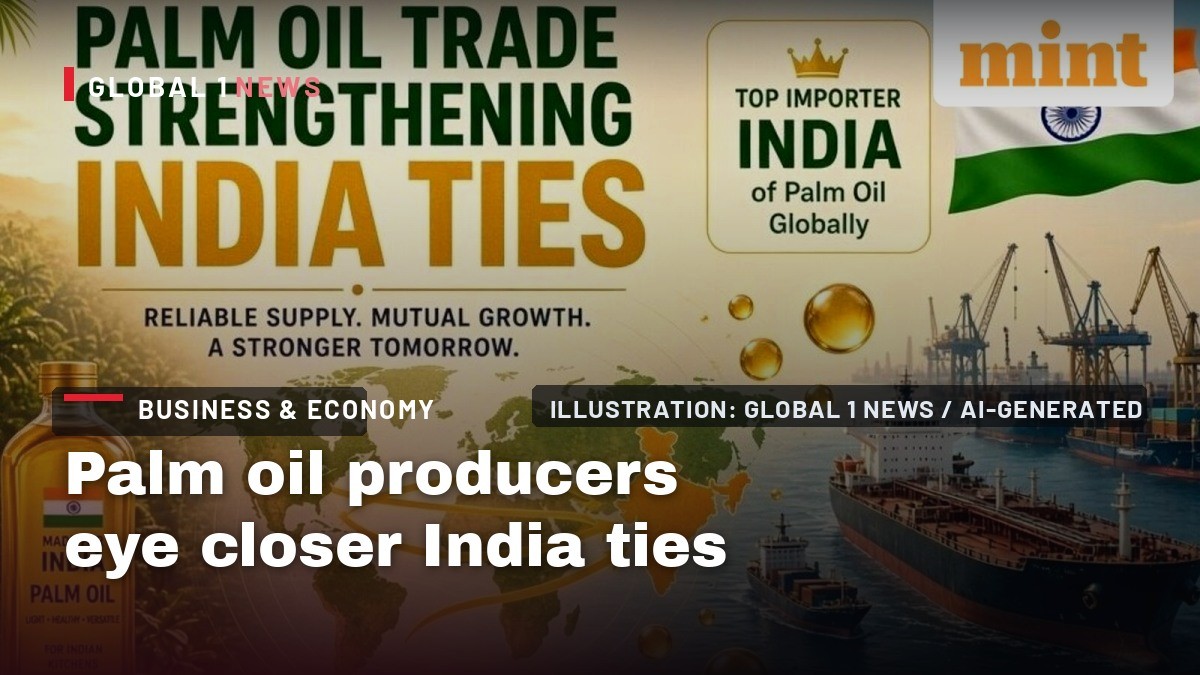
India’s status as the world’s largest importer of vegetable oils has turned the country into a strategic linchpin for palm‑oil‑producing nations. The recent GLOBOIL India 2026 conference, held in Mumbai from 29 September to 1 October, underscored how producers from Indonesia, Malaysia, Russia and other regions are reshaping their engagement with India to secure long‑term supply contracts, address sustainability expectations and tap into the country’s growing appetite for technology‑driven trade solutions.
India’s sheer scale makes it a decisive market for palm oil
At the three‑day gathering, industry leaders reiterated that India’s edible‑oil consumption eclipses that of any other nation. Aadil Singh, director of the event’s organiser Tefla, summed it up: “India buys more edible oil than any country in the world, and every decision made in Kuala Lumpur, Jakarta, Buenos Aires or the Black Sea ends up in an Indian kitchen.” This observation captures why changes in Indian import policy or demand patterns reverberate across global trade flows, affecting the fortunes of palm‑oil exporters.
The conference theme – “At The Inflection Point: Energy, Sustainability & India’s Demand Future” – highlighted the dual pressures on India’s oil basket: a need for reliable food‑grade supplies and a rising interest in bio‑fuel applications. For palm‑oil‑producing countries, the Indian market is therefore not just a volume buyer but a strategic partner whose policy shifts can alter global price dynamics.
Malaysia‑India ties take centre stage
Malaysia’s Minister of Plantation and Commodities, Datuk Seri Dr Noraini binti Ahmad, opened the inaugural session, emphasizing the bilateral importance of edible‑oil trade. Her remarks reflected a broader diplomatic push: as one of the world’s top palm‑oil exporters, Malaysia views India as a critical anchor for its export revenues and a platform to showcase its sustainability credentials.
The minister’s address dovetailed with insights from Izzana Salleh, Secretary General of the Council of Palm Oil Producing Countries (CPOPC). Their joint messaging signalled a coordinated effort by palm‑oil‑producing nations to align their supply strategies with India’s evolving demand, especially as India seeks to diversify beyond traditional suppliers.
Diversification of oil imports underpins India’s supply security
India’s import portfolio now spans palm, soybean and sunflower oils, a pattern reflected in the awards presented at GLOBOIL. AWL Agri Business secured Diamond awards for being the top importer of both palm and soybean oils, while Gemini Edibles & Fats India earned a Diamond award for sunflower oil imports. Patanjali Foods also received a Gold award for palm‑oil imports.
This spread of suppliers and oil types reduces reliance on any single source, a strategy that aligns with India’s broader emphasis on supply security. By drawing from multiple regions – from Southeast Asia to the Black Sea – India mitigates the risk of disruptions caused by geopolitical tensions, climate‑related harvest shortfalls or sudden policy shifts in any one producing country.
Bio‑fuel policies create competing demand for palm oil
One of the more nuanced discussions at GLOBOIL centred on the growing pull of bio‑fuel mandates in producing nations. Palm oil, traditionally a food ingredient, is increasingly earmarked for renewable‑energy blends. This creates a dual‑use dilemma: the same global supply must satisfy both culinary and energy needs.
For India, a country whose bio‑fuel targets are still evolving, the trajectory of these policies in exporting nations can directly influence domestic oil prices and availability. A tightening of bio‑fuel quotas abroad could tighten food‑grade palm oil supplies, pushing up costs for Indian processors and consumers alike.
Technology as a lever for supply‑chain resilience
Beyond volume and price, GLOBOIL 2026 highlighted the rising role of technology in the edible‑oil sector. Sessions on artificial intelligence, advanced processing equipment and commodity‑exchange platforms underscored a shift toward data‑driven risk management. Indian refiners and traders, many of whom operate large, diversified import‑refining complexes, are keen to embed these tools to anticipate price swings, optimise logistics and ensure traceability.
This tech‑focused narrative signals that future partnerships will likely involve joint ventures in digital platforms, shared research on oil quality standards and collaborative pilots of blockchain‑based traceability solutions. Such initiatives can help producers meet India’s sustainability expectations while offering Indian firms greater visibility into upstream supply conditions.
Sustainability and traceability expectations rise
Environmental stewardship featured prominently throughout the conference. Participants noted that Indian buyers are increasingly scrutinising the sustainability credentials of imported oils, demanding certifications that verify deforestation‑free sourcing and responsible plantation practices.
In response, palm‑oil‑producing countries are positioning sustainability as a value‑added proposition. The dialogue at GLOBOIL suggested that producers who can demonstrably align with India’s traceability requirements stand to gain preferential access to the market, especially as Indian regulators contemplate stricter labeling norms for edible oils.
Strategic outlook: deeper engagement beyond commodity sales
Overall, the consensus at GLOBOIL India 2026 was clear: for palm‑oil exporters, the future of trade with India hinges on more than just price competitiveness. Understanding India’s shifting demand mix, its emphasis on supply security, and its appetite for sustainable, technology‑enabled supply chains will be pivotal.
As India continues to refine its edible‑oil import strategy, producers from Indonesia, Malaysia and other key regions are likely to deepen diplomatic and commercial ties, invest in joint research, and explore collaborative platforms that marry volume with value. In a market where every decision reverberates from the Black Sea to an Indian kitchen, such holistic engagement could define the next decade of global edible‑oil trade.
This article was produced with AI-assisted research and editorial support. Reporting is based on the source material cited below. Sources: Livemint; livemint.com; Global1.News (09 October 2026).
By Dr. Raj Patel, Staff Writer
What's Your Reaction?
 Like
0
Like
0
 Dislike
0
Dislike
0
 Love
0
Love
0
 Funny
0
Funny
0
 Wow
0
Wow
0
 Sad
0
Sad
0
 Angry
0
Angry
0

India/South Asia Correspondent at Global1.News. Analytical voice with a background in science and health journalism. Based in New Delhi, covering Indian politics, education, healthcare, technology, and policy. Breaks down complex data into clear, actionable reporting.













Comments (0)