
Ottawa unveils voluntary AI data centre principles amid local concerns
The federal government has introduced a set of voluntary principles for the construction of artificial intelligence data centres across Canada, a move that comes as community opposition to such facilities grows in several cities.

Ottawa unveils voluntary AI data centre principles amid local concerns
The federal government has introduced a set of voluntary principles for the construction of artificial intelligence data centres across Canada, a move that comes as community opposition to such facilities grows in several cities. AI Minister Evan Solomon announced the five-point framework Thursday in Markham, Ont., with the endorsement of the Federation of Canadian Municipalities and several major technology companies, while acknowledging Ottawa lacks the authority to enforce the standards.

Tags: artificial intelligence, data centres, AI Minister, Evan Solomon, federal policy, Canada
What Ottawa announced
The federal framework outlines five principles the government says should guide how data centres are built across the country. The proposals suggest the federal government would prefer data centres create "lasting local benefits," not shift electricity costs onto Canadians, minimise water use and environmental impacts, be transparent about their local impacts, and bring strategic value to the country.
Solomon said the principles are meant to respond to the questions Canadians are asking about the rapid expansion of AI infrastructure. "All the questions Canadians are asking about how are we going to build the digital infrastructure of the future are excellent questions … we get them," he said Thursday.
"What will AI do for my community? Who is it going to benefit? Where is it going to be built? How much water will it use? Is it going to affect my power bill? Is there going to be a net benefit to my community?"
A voluntary framework with no federal jurisdiction
The set of principles are entirely voluntary, backed by some of the largest international companies pursuing generative artificial intelligence programs, and are not binding in any way. Solomon stressed that decisions on data centre approvals and locations will still be up to provinces and municipalities, and the federal government has acknowledged it cannot enforce the framework.
"Any data centre first requires power allocation, that's the provincial regulator, then they're going to go to a municipality and say 'we'd like to locate here,'" Solomon said. "And what we are saying in the (federal) framework … is to provide reliable and verifiable information on the standards that they set. Those are going to be enforced by the municipalities or the provinces, because that is their enforcement, we don't have the jurisdiction."
Asked whether the federal government would monitor whether companies are complying with the framework, Solomon suggested they would not. The announcement effectively positions Ottawa as a convenor rather than a regulator in the data centre file, reflecting the constitutional division of powers over energy and land-use planning.
Who has signed on
The federal framework has the endorsement of the Federation of Canadian Municipalities, which represents local governments across the country. "Signatories" to the principles include U.S. web giants Amazon, Anthropic, Google, and Meta, as well as Canadian telecommunications companies Bell Canada and TELUS.
The involvement of major industry players gives the framework some weight, but critics are likely to question whether a voluntary arrangement has any real teeth. With no monitoring mechanism and no enforcement power at the federal level, the practical impact of the principles will depend on whether provinces and municipalities choose to incorporate them into their own approval processes.
Solomon acknowledged the tension between speed and responsibility. "There's a big rush to build because of this new technology, and you gotta build right," he said. "We want to attract the investment, but be transparent about it. Though we need to build at speeds we haven't seen before, (that's) not at the expense of our values."
The scale of the buildout in Canada
The announcement comes as the number of AI data centres in Canada is poised to grow dramatically. A July study released by York University researchers Lyndsey Rolheiser and Alexander Carlo found that while there are just four active AI-specific data centres operating in Canada, there are an additional 49 facilities either announced or currently under construction.
That expansion raises significant questions about the strain on Canadian infrastructure. Community concerns generally revolve around the massive water and electricity consumption used to run AI facilities, as well as noise pollution inflicted on nearby homes from backup diesel generators, constantly running electronics, and cooling fans.
The massive amount of power used by AI data centres has put additional stress onto aging North American energy infrastructure, increasing the risk of blackouts. In Canada, where provinces manage their own electricity grids and rate-setting regimes, the arrival of large-scale data centres could have direct consequences for residential power bills.
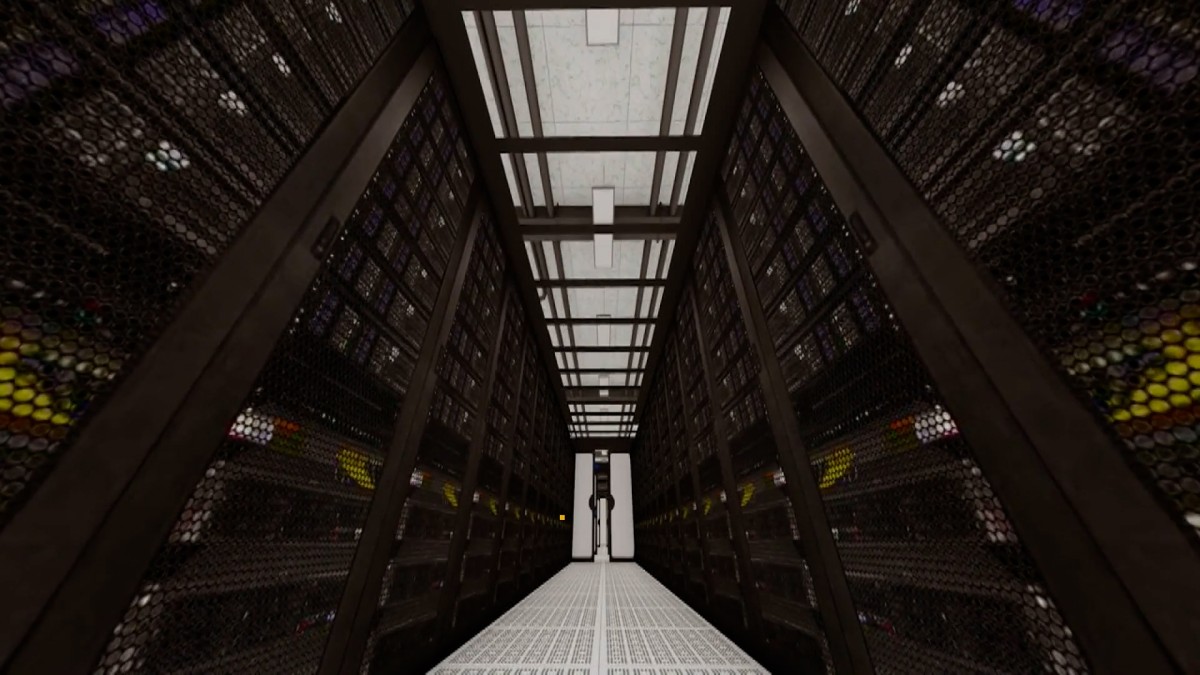
Community backlash and the Hamilton flashpoint
Opposition to new data centre construction in Hamilton, Ont., became a flashpoint earlier this year, reflecting broader anxieties about how these facilities affect surrounding communities. However, that city's council voted in July to reject a one-year moratorium on development, choosing instead to allow projects to proceed through the normal municipal approval process.
The Canadian experience has been comparatively muted next to the United States, where opposition to new data centre construction has been significant given the scale of projects and the AI arms race among U.S. companies. Canada has not seen that same level of widespread opposition, largely because the country has not seen the same scale of proposed projects to date.
But the international picture suggests the potential for conflict is real. AI security intelligence company 10a Labs, in its most recent Data Centre Watch Report, estimates that at least 75 projects marketed as worth $130 billion U.S. were "disrupted" by "local opposition" to the projects in the first quarter of 2026 alone.
Canadian attitudes toward AI
The federal government's push to frame data centre development around community benefits comes as Canadians express notable scepticism about artificial intelligence. Ipsos' annual AI Monitor report, released in June, found Canadians are among the least enthusiastic populations for AI out of 32 countries surveyed.
Just 26 per cent of Canadians expressed excitement about AI products and services, down five percentage points from the year before. Fully 67 per cent said they are nervous about the technology, a full 17 percentage points higher than the international average.
The Ipsos data also found that only 14 per cent of Canadians believe AI will improve the country's economy, and just 11 per cent believe it will improve the job market in the medium term. Only 27 per cent trust companies that use AI will protect their personal data.
These attitudes present a challenge for Solomon, who was tasked by Prime Minister Mark Carney to pitch the broader adoption of AI tools across the public and private sector. The minister's mandate to promote AI adoption now sits alongside a framework that acknowledges the need to address public concerns about how the technology's physical infrastructure is built.
What happens next
With the framework now public, the practical question is how it will influence decisions made by provinces and municipalities, which retain authority over power allocation and land-use approvals. The federal government has positioned the principles as guidance rather than regulation, and Solomon has been clear that enforcement lies elsewhere.
For communities that may host data centres, the framework offers a set of expectations about transparency and local benefits, but no guarantee those expectations will be met. For companies that have signed on, the principles represent a public commitment to standards that remain subject to local enforcement.
As the announcement was being made Thursday, the website Downdetector reported outages affecting OpenAI's ChatGPT, Anthropic's Claude, and X.com's Grok artificial intelligence services — a reminder of how dependent the growing AI economy has become on the physical infrastructure that Ottawa is now seeking to shape.
This article was produced with AI-assisted research and editorial support. Sources: Global News.
By Alex Thompson, Staff Writer
What's Your Reaction?
 Like
0
Like
0
 Dislike
0
Dislike
0
 Love
0
Love
0
 Funny
0
Funny
0
 Wow
0
Wow
0
 Sad
0
Sad
0
 Angry
0
Angry
0

Canada Correspondent at Global1.News. Based in Toronto, covering Canadian politics, energy, trade, and US-Canada relations. Provides the Canadian perspective on North American and global affairs.















Comments (0)