
Rowley Demands Apology as PM's 'Peace or Total War' Independence Message Stirs T&T Storm
Port-of-Spain — Trinidad and Tobago is barely three days past its 64th anniversary of independence, yet the air around the Queen's Park Savannah feels heavier than the usual end-of-August humidity.
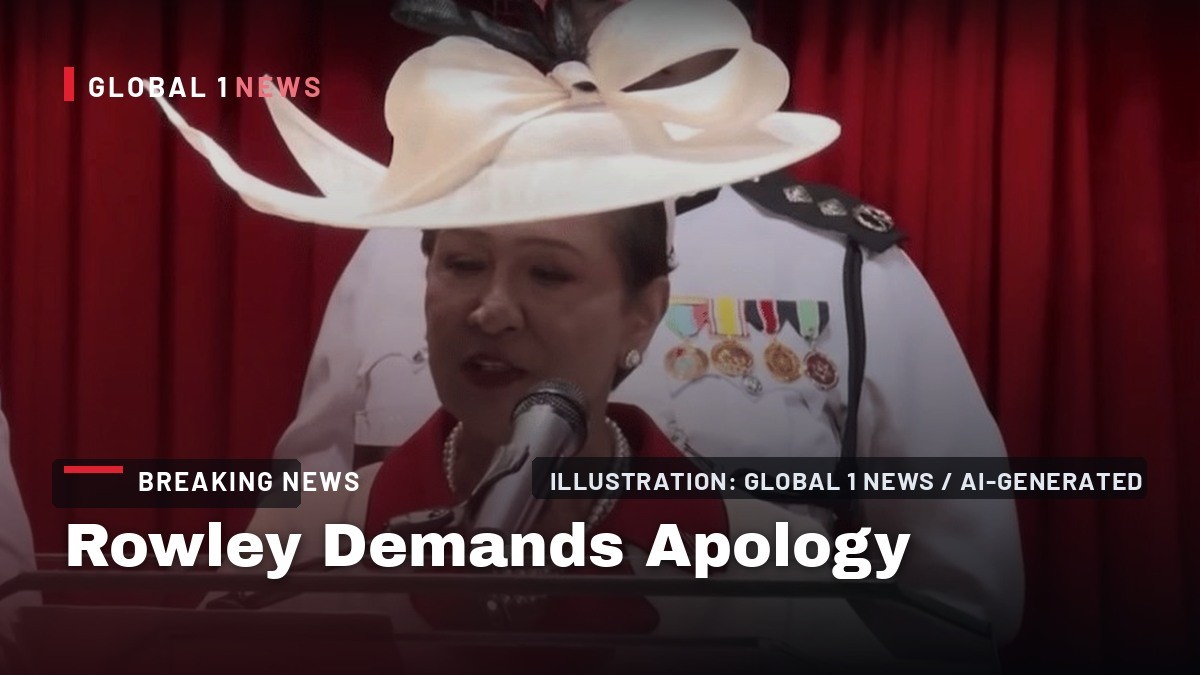
Port-of-Spain — Trinidad and Tobago is barely three days past its 64th anniversary of independence, yet the air around the Queen's Park Savannah feels heavier than the usual end-of-August humidity. What should have been a week of flag-raising, steelpan and reflection on nationhood has instead become a war of words between the country's two most powerful political figures, with former prime minister Dr Keith Rowley demanding a full apology from Prime Minister Kamla Persad-Bissessar over what he calls "vile racist rubbish" in her Independence Day message to United National Congress (UNC) supporters.
The row, which erupted on Monday 31 August and has dominated talk shows and social media ever since, centres on two very different addresses from the Prime Minister. In her official national message, she told citizens that Britain had left behind "a very prosperous functioning country" and urged the population to stop blaming the colonial past for present-day problems. But it was her second message — posted to social media and addressed to "the most important people to me, the UNC family" — that has lit a fire under the body politic, with its talk of ancestors suffering "in the lagoons, cane fields and oilfields," its accusation that the People's National Movement (PNM) had been "hijacked by the local drug mafia and the fake eat-a-food elite," and its stark closing declaration: "It's either peace or total war, nothing in between."
A Tale of Two Messages
To understand the depth of the controversy, one must first appreciate the split-screen nature of the Prime Minister's Independence Day communications. The first, delivered in her capacity as head of government, struck a chord of self-reliance. According to reports from NY Carib News, Persad-Bissessar argued that the nation should take greater responsibility for its present challenges rather than perpetually pointing fingers at the colonial era. It was a message that some political analysts, including Dr Shane Mohammed, found refreshingly honest.
"National occasions should allow for objective reflection," Dr Mohammed said. He agreed that successive post-independence leaders had made decisions with negative consequences, pointing to the decline of the country's agrarian sector as a prime example. His prescription: national leaders need policies built on a 30- or 40-year vision, not the short-term electoral cycle that has come to define governance here.
But the second message, delivered to the UNC faithful, was cut from an entirely different cloth. In it, the Prime Minister honoured ancestors who "endured suffering in the lagoons, cane fields and oilfields" and accused the PNM of subjecting those same ancestors to "ridicule and hatred" in the decades following the 1962 independence from Britain. She urged supporters to "strive to be owners and entrepreneurs, not simply satisfied with being workers or living on state welfare," and reminded them that families around independence had limited access to health care, transport, electricity and other basic services.
Then came the lines that have since been replayed endlessly on radio and dissected in every rum shop from San Fernando to Arima. "While I encourage you to live with love in your heart, I also say do not crawl on your belly for anyone. It's either peace or total war, nothing in between," she declared. She added that "finesse and diplomacy must be backed up with steeliness and savagery when required," and warned that the party's leadership must never fall into the hands of "weak men and women."
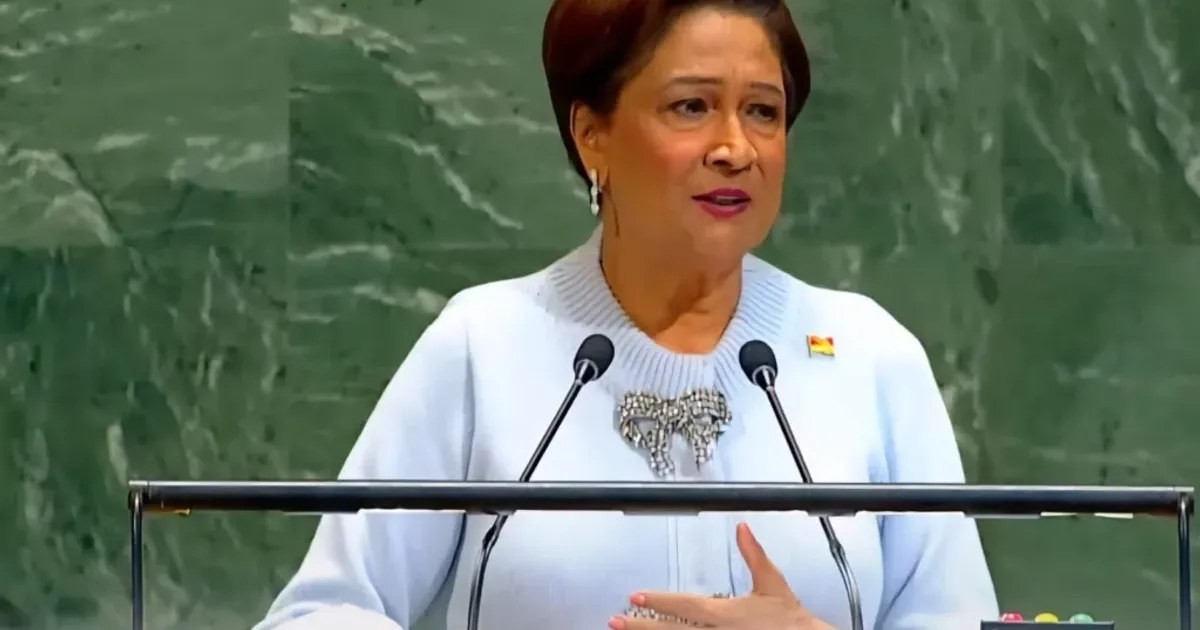
Rowley's Fiery Response
Dr Rowley, who led the PNM to government for a decade before losing power, did not wait long to respond. In a statement that pulled no punches, he called on the Prime Minister to "apologise to the nation for defiling our 64th anniversary of Independence with the publication of her vile racist rubbish, which threatens the peace, prosperity and stability of the country."
The former prime minister painted a portrait of a leader consumed by vengeance. Persad-Bissessar, he said, "has returned to government, not to build on any foundation or to keep the promises made for a better life for all, but as a vile and angry old woman who is hell-bent on extracting vengeance upon select portions of the population who she believes had kept her out of office for a decade."
Rowley reserved his sharpest criticism for what he characterised as a racial appeal to the rural Indian population. "The worst is her recent racial appeal to the rural Indian population that they can now feel separate and apart because she has brought them recognition so that they can now wage war and spew invectives at all those who she claims has looked down upon Indian people who hitherto struggled in poverty," he said.
He also took aim at her historical claims, arguing that she "undermines the reparation effort at Caricom with her most recent foolish drivel that says that we were better off under British rule." Her suggestion that descendants of enslaved Africans should move beyond colonial grievances, he added, amounted to "insensitive racism." Rowley reminded the nation that unity amid diversity "remains one of Trinidad and Tobago's proudest achievements," and warned that no previous Prime Minister or President had "ever sought to set up the social structure in this dangerous way." His closing words were stark: "This angry, spiteful woman has targeted that for destruction and we will not put up with any more of it."
PM Fires Back in Vernacular
True to form, the Prime Minister did not retreat. She brushed off Rowley's demands with a distinctly Trinidadian retort, telling reporters that "Rowley needs to stop behaving bitter like a jammette (not the expensive kind) who can't get customers." For readers outside Trinidad, "jammette" is a stinging colloquial taunt — and the aside about the "expensive kind" sharpened the blow.
She added, almost breezily: "I wish Trinidad and Tobago a wonderful week ahead. Love you all."
On the wider backlash, she told Guardian Media: "I couldn't care less about their fake outrage even if I tried." She insisted that expressing loyalty to her political base does not conflict with her duties as Prime Minister, and turned the tables on her critics in the PNM. "The PNM only wants unity, transparency, accountability, cooperation and peace when they are in opposition. When they are in government, they shout that they are in charge and everyone must deal with it."
It is a classic piece of Trinidadian political theatre — the cutlass and the calypso, the steel and the sweet talk. But beneath the colourful language lies a deeper question that has troubled this nation since the first Independence Day parade in 1962: can a leader simultaneously serve a political base and the entire nation, particularly when the two are so closely tied to the country's ethnic and historical fault lines?
Voices of Dissent and Defence
Opposition Leader Pennelope Beckles was quick to condemn the two messages as divisive and politically motivated. "That is not the conduct of a Prime Minister seeking to unite a country," she said, accusing Persad-Bissessar of presenting "a politically convenient version of the country's history." Beckles added: "The Prime Minister is wrong to present our colonial inheritance without acknowledging the profound inequalities and social conditions that existed at Independence."
Perhaps the most striking criticism came from within the UNC's own extended family. Mickela Panday, daughter of former prime minister and UNC founder Basdeo Panday, did not mince words. "No, I don't believe it was appropriate. Independence Day belongs to the entire nation. The Prime Minister's responsibility is to speak to all citizens, whether they support the UNC or not," she said.
Panday, who has carved out her own space in public life, warned that the Prime Minister was using her supporters as cover. "UNC supporters should not be used so conveniently as a political shield for what is ultimately about the Prime Minister's leadership. They don't deserve that." On the "peace or total war" line, she was unequivocal: "It's an extremely dangerous statement for a Prime Minister to make. Who is she at war with? Her political opponents? Her critics? The people who disagree with her? The disenchanted UNC supporters?"
Historian Dr Claudius Fergus delivered perhaps the most academically devastating assessment, calling the Prime Minister's framing of T&T at independence as a "very prosperous functioning country" both "embarrassing" and "pure obscurantism." He pointed to the "$2-a-day plantation wage for men and less for women" at the time as evidence that prosperity was a luxury enjoyed by very few.
Yet not all voices were raised in condemnation. Dr Shane Mohammed, while stopping short of endorsing the UNC message, defended the national address and the broader need for honest reflection. Abeo Jackson, an advocate in creative and cultural studies, offered a more nuanced reading of the situation. Jackson argued that T&T is already experiencing intense social and political upheaval and is approaching what Jackson called a "fever pitch." Jackson noted that entrenched political polarisation has trapped many citizens within established loyalties, and suggested that the Prime Minister understands exactly the audience she addresses — with aspects of her rhetoric mirroring a broader US political "playbook."
Legal Questions and the Road Ahead
The controversy has now moved beyond the realm of political debate and into potential legal territory. In a letter dated 1 September, Umar Abdullah, founder of the First Wave Movement, formally asked Commissioner of Police Allister Guevarro to assess the remarks — specifically the "peace or total war" and "savagery" passages — against Trinidad and Tobago's Sedition Act. Abdullah cited precedents including the 2005 prosecution of Yasin Abu Bakr, and rejected the Prime Minister's framing of independence-era progress. He situated the controversy, however, within a broader failure of visionary leadership since 1962, suggesting that the problem is not merely one woman's words but a systemic inability to imagine a future beyond the ballot box.
Caribbean360's own analysis this week noted that T&T has long navigated its Afro-Creole and Indo-Trinidadian split through a fragile, unwritten compact — compete fiercely at the ballot box, but keep ethnic mobilisation below a certain temperature. The publication observed that Rowley's intervention carries its own baggage, given the PNM's contested record on racial inclusion, and warned that the sedition complaint, while grounded in real precedent, risks setting a standard that chills legitimate political speech. It compared the episode with Jamaica, where opposition leader Mark Golding has faced criticism over race and his ancestors' slaveholding past — describing that friction as "elementary" next to the register Trinidad's political class reaches for.
For now, the nation watches and waits. The key questions in the coming days are straightforward: Will Commissioner Guevarro respond to or acknowledge the sedition complaint? Will Persad-Bissessar issue any clarification or national unity statement before parliamentary scrutiny resumes? And perhaps most importantly, can a country that prides itself on its ability to "make a lime" out of any crisis find a way to lower the temperature before the rhetoric becomes reality?
As we mark this 64th year of independence, one cannot help but recall the words of our national anthem: "Here every creed and race finds an equal place." That ideal has always been aspirational rather than descriptive, a north star rather than a destination. But this week, the gap between the anthem's promise and the Prime Minister's rhetoric has never felt wider. Whether this storm passes or deepens will depend on whether our leaders remember that the nation they serve is bigger than any single party, any single community, and any single political score that needs settling.
By Sharon Sahatoo, Staff Writer
This article was produced with AI-assisted research and editorial support. Sources: Caribbean360, Trinidad Guardian, Caribbean National Weekly, NY Carib News.
What's Your Reaction?
 Like
0
Like
0
 Dislike
0
Dislike
0
 Love
0
Love
0
 Funny
0
Funny
0
 Wow
0
Wow
0
 Sad
0
Sad
0
 Angry
0
Angry
0
Caribbean Correspondent at Global1.News. Based in Port of Spain, Trinidad, covering Caribbean politics, economy, energy, climate, and culture. Amplifying the voices and stories of the Caribbean region.














Comments (0)