
Orphaned Land's Kobi Farhi: The Musical Bridge That Cracked After October 7
In a recent i24NEWS English report, the extraordinary journey of Orphaned Land's frontman Kobi Farhi was laid bare—a story that moves from the streets of Jaffa and Bat Yam, through a teenage desire for revenge, to global stages where Arab fans tattooed his band's logo on their bodies.
In a recent i24NEWS English report, the extraordinary journey of Orphaned Land's frontman Kobi Farhi was laid bare—a story that moves from the streets of Jaffa and Bat Yam, through a teenage desire for revenge, to global stages where Arab fans tattooed his band's logo on their bodies. The report captures a musician who built a career on bridging the unbridgeable, only to watch that bridge crack under the weight of the October 7 Hamas massacre. For Israeli readers, Farhi's trajectory is not just a music story; it is a mirror of the nation's own struggle between coexistence and survival, between the dream of connection and the reality of an axe-wielding enemy.
From 'Death to Arabs' to a Musical Bridge: The Extraordinary Journey of Orphaned Land's Kobi Farhi
Tel Aviv, Israel – This week — Kobi Farhi, the 50-year-old lead singer of Orphaned Land, has spent three decades trying to prove that music can transcend the deepest political divides in the Middle East. The band, founded in 1991, pioneered a genre called Oriental metal—a fusion of heavy metal with Middle Eastern scales, Sephardic melodies, and themes drawn from Judaism, Islam, and Christianity. They became one of Israel's most successful international acts, with a devoted following in Turkey, Lebanon, Egypt, and Dubai. But on October 7, 2023, when Hamas terrorists slaughtered over 1,200 Israelis and took hundreds hostage, Farhi's carefully constructed world of musical diplomacy began to collapse. In the i24NEWS report, he describes removing the keffiyeh from his microphone stand for the first time in thirty years—a symbolic act that speaks volumes about the shattered trust between Israelis and their neighbors.
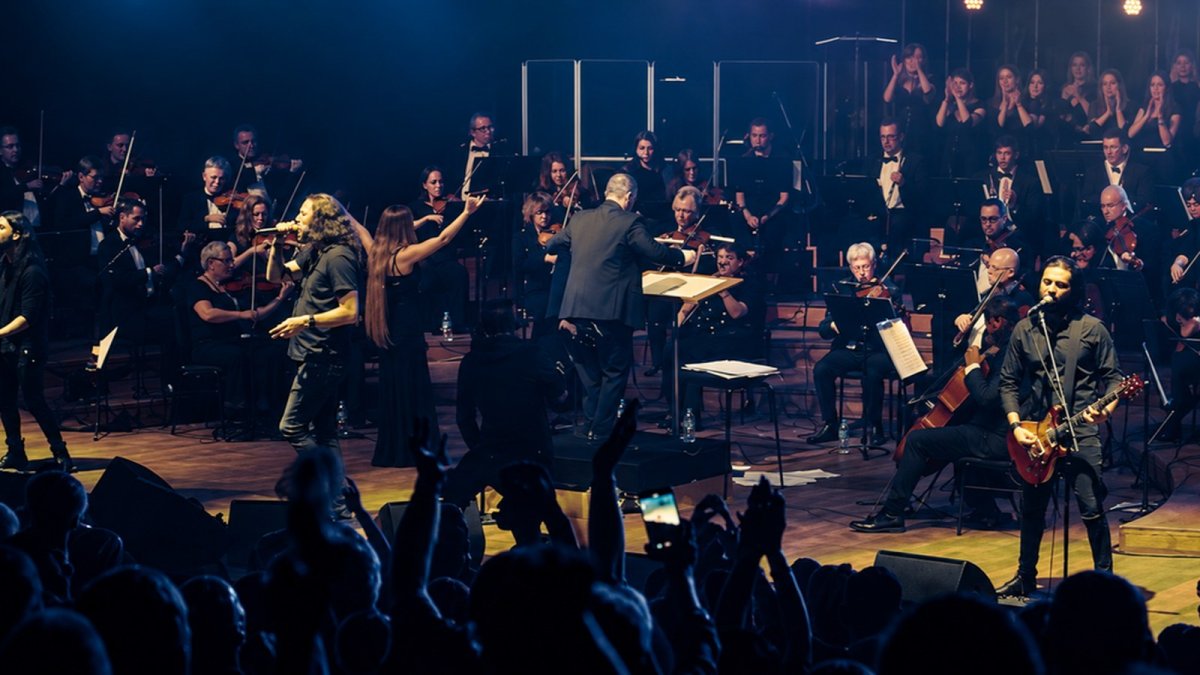
Growing Up in the Cradle of Coexistence
Farhi's identity was forged in the mixed neighborhoods of Jaffa and Bat Yam, where he grew up surrounded by the sounds of muezzin calls from minarets, church bells, and synagogue prayers. Arabic and Hebrew were both spoken in his world, and he absorbed the region's complexity from childhood. "My whole identity is from Jaffa, unequivocally," he told the i24NEWS reporter. This upbringing shaped his belief that the Middle East's shared history—its music, its poetry, its religious traditions—could serve as a foundation for understanding rather than conflict.
But that foundation was tested early. In 1992, when Farhi was just 17, 15-year-old Helena Rapp was stabbed to death by a Palestinian terrorist on the promenade in Bat Yam. The murder sent shockwaves through the community. Farhi and his friends attended her funeral, and then, consumed by rage, they went looking for an Arab to attack. "We decided that we wanted to lynch an Arab," he admitted in the report. The attack was prevented only when a gas-station manager intervened, locking the intended victim in a room until the teenagers dispersed. It was a moment that could have defined Farhi's life in a very different direction—toward hatred and violence. Instead, it became the catalyst for his lifelong mission to find what he calls "the sane ones" on all sides of the conflict.
The Keffiyeh and the Mosque: Symbols of Outreach
At 17, Farhi posed for a band photograph wearing a keffiyeh, the traditional Arab headdress. The cover of Orphaned Land's first album featured a mosque. These were deliberate choices, provocative in their time. "It's like a call out to the other side: I respect you. I want to talk to you," Farhi explained. The band's music blended Mizrahi and Maghrebi Jewish traditions with Arabic, Turkish, and other Middle Eastern and North African elements, creating a sound that was unmistakably Israeli yet deeply rooted in the region's shared heritage.
The outreach worked, at least for a time. In 2004, a Jordanian fan sent Farhi a video revealing an Orphaned Land tattoo on his arm. "I said, an Arab tattooed my logo, of my Israeli band, on his arm?" Farhi recalled in the i24NEWS report. Fans in Lebanon and Dubai had done the same. An Egyptian fan was reportedly imprisoned for months after being caught with the band's music—a testament to the risks these fans took to connect with Israeli artists. For Farhi, these were not just fans; they were proof that his vision of coexistence was possible, even in the most hostile corners of the Arab world.
Hellfest 2011: A Flag Waved in Solidarity
One of the most powerful moments in the band's history came in 2011 at the Hellfest heavy metal festival in France. A Lebanese belly dancer appeared on stage with a Lebanese flag and, on her own initiative, helped wave an Israeli flag alongside it. The image was electric—two flags, one stage, a moment of unity that seemed to transcend politics. "She couldn't return to Lebanon afterward, while we returned to Israel like heroes," Farhi said. The dancer's sacrifice underscored the personal risks involved in such gestures of solidarity. For Farhi, it was a validation of his life's work.
Turkey became one of Orphaned Land's strongest markets. The band performed in Istanbul dozens of times, and Farhi could walk through the city like a celebrity. Turkish fans embraced the band's message of shared heritage, and the concerts were sell-out events. But that era has passed. Today, Farhi does not believe an Israeli can safely walk through Istanbul the same way, citing increasingly hostile political rhetoric toward Israel in Turkey. The shift reflects a broader regional trend—the erosion of people-to-people connections that once seemed possible.
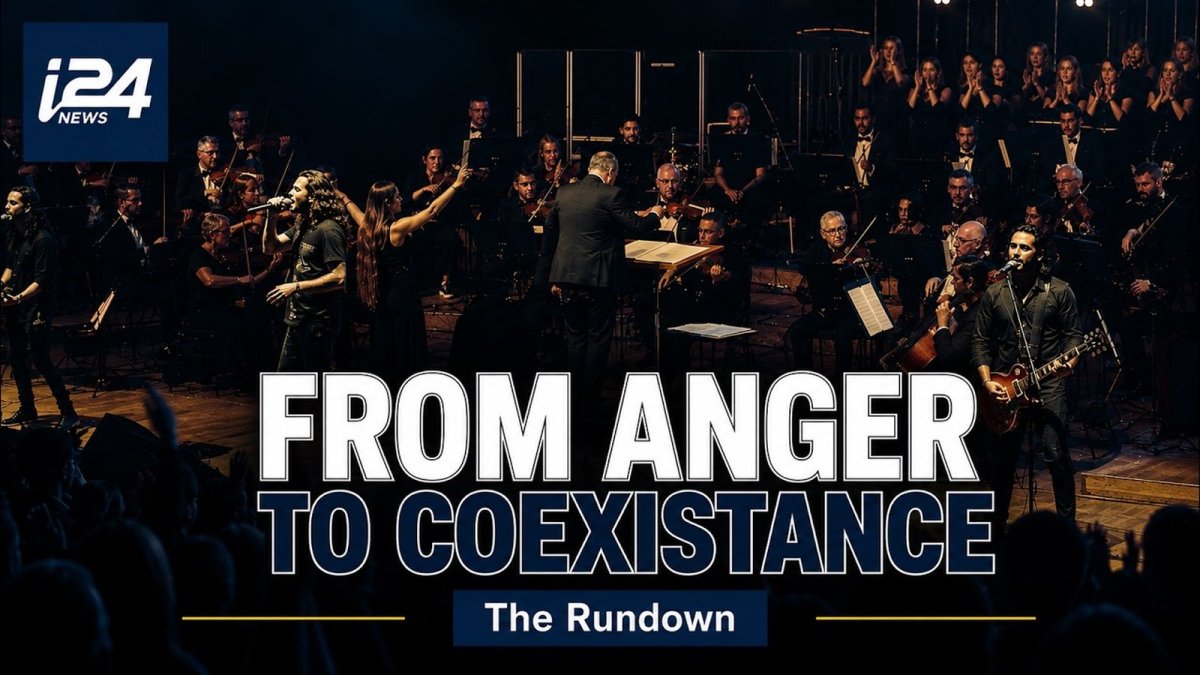
October 7: The Bridge Cracks
The October 7, 2023 Hamas attack shook Farhi to his core. A planned performance in Turkey was canceled because the band's safety could not be guaranteed. For the first time in three decades, Farhi removed the keffiyeh from his microphone. "I began sleeping with a knife under my mattress," he admitted. Some band members moved sharply to the political right after the attack, a reflection of the national trauma that reshaped Israeli society. The attack was the deadliest day in Israel's history, and it hardened attitudes across the political spectrum — including inside the band itself.
The backlash was swift and brutal. Thousands of followers abandoned the band's social media accounts, accusing the musicians of being "two-faced" and "traitors." The messages were personal and painful: "Your bridge is starting to crack and break." For a man who had dedicated his life to building connections, the collapse of that bridge was devastating. The band's setlists changed—songs were dropped, symbols were removed. "The keffiyeh comes off, we don't play this song, we don't play that song—things have been shaved away from the band's existence," Farhi said.
Regional Context: The Fragility of Cultural Diplomacy
Farhi's story is emblematic of the broader challenges facing cultural diplomacy in the Middle East. For decades, Israeli artists, academics, and activists have sought to build bridges with their Arab counterparts, often at great personal risk. The Abraham Accords, signed in 2020, opened new channels of communication with the United Arab Emirates, Bahrain, and Morocco. But October 7 demonstrated how quickly those bridges can be destroyed. The attack not only shattered Israeli trust in its neighbors but also exposed the limits of people-to-people initiatives in the face of state-sponsored terrorism.
For Israeli society, the question is whether cultural exchange can survive the current climate. Farhi's experience suggests that it can, but only with clear-eyed recognition of the risks. "I have no interest in extending my hand to a man standing in front of me with an axe, or to a barbaric terrorist," he said. "But I still believe that we can find the sane ones within every nation and maintain a connection with them." This distinction—between engaging with those who seek peace and refusing to legitimize those who embrace violence—is central to the Israeli debate about coexistence.
Diplomatic and International Reactions
The international community has watched Farhi's story with interest, seeing it as a microcosm of the broader Israeli-Palestinian conflict. Cultural figures like Farhi have often been held up as examples of the possibility of coexistence, even as political leaders fail to make progress. The i24NEWS report highlights the paradox: a musician who has done more than most to bridge divides, yet who now finds himself questioning whether his life's work has any future.
Farhi's new autobiographical book, "Orphaned Land" (also reported as "Good Night, Orphaned Land"), explores his journey in depth. The title itself is a commentary on the state of the region. "An orphaned land because the land is orphaned, soaked in blood, in wars and hardship. It's a tough place, our beloved country," he said. The book is expected to become a film, bringing his story to an even wider audience. It ends with a difficult question: "Does the band still have a right to exist?"
Analysis and What This Means
Farhi's story raises profound questions about the future of Israeli cultural diplomacy. On one hand, his experience demonstrates the power of music to transcend political boundaries. The fans who tattooed his logo, the Lebanese dancer who risked her home to wave an Israeli flag, the Egyptian fan imprisoned for listening to his music—these are real examples of human connection in a region defined by conflict. On the other hand, October 7 has shown that these connections are fragile, vulnerable to the whims of political leaders and the violence of extremists.
For Israeli readers, Farhi's journey is a reminder that coexistence is not a naive dream but a practical necessity. Israel cannot survive in isolation; it must find ways to engage with its neighbors, even as it defends itself against those who seek its destruction. The challenge is to maintain that engagement without compromising security or moral clarity. Farhi's distinction between "the sane ones" and "barbaric terrorists" offers a framework for this balance.
The band's future remains uncertain. "The band is our life's work. I don't want to think that the band is dead," Farhi said. He now divides his time between Israel and Greece, citing the cost of living, personal security concerns, and Israel's deepening social divisions. The decision to leave, even partially, is a painful one for a man whose identity is so tied to Jaffa. But it reflects a broader trend of Israelis seeking refuge from the pressures of life in a country under constant threat.
As the region continues to grapple with the aftermath of October 7, Farhi's story offers both a warning and a hope. The warning is that bridges can be destroyed in an instant, and that trust, once broken, is difficult to rebuild. The hope is that even in the darkest times, there are individuals on all sides who are willing to reach out, to listen, and to find common ground. Whether Orphaned Land will continue to exist—and whether its music will continue to resonate—remains an open question. But Farhi's commitment to his vision, even in the face of overwhelming adversity, is a testament to the enduring power of art to challenge hatred and build understanding.
For now, the keffiyeh remains off the microphone, and the band's setlists have been stripped of some of their most symbolic songs. But Farhi has not given up. "I still believe that we can find the sane ones within every nation and maintain a connection with them," he said. In a region where such beliefs are increasingly rare, that conviction is itself a form of resistance—a refusal to let the terrorists define the future of the Middle East.
By Hannah Berg, Staff Writer
This article was produced with AI-assisted research and editorial support. Reporting is based on sources cited in the article.
What's Your Reaction?
 Like
0
Like
0
 Dislike
0
Dislike
0
 Love
0
Love
0
 Funny
0
Funny
0
 Wow
0
Wow
0
 Sad
0
Sad
0
 Angry
0
Angry
0
Israel Correspondent at Global1.News. Based in Tel Aviv, covering Israeli politics, security, technology, and society. Provides balanced, deeply-sourced reporting on one of the most closely-watched regions in the world.










Comments (0)