
China Rejects 'Tribute System' Framing in Narrative Push
Beijing is escalating its challenge to the Western 'tribute system' theory, rejecting frameworks it says distort Chinese diplomacy while pushing home-grown concepts to define its global rise. Triggered by Ray Dalio's June essay, the campaign signals a broader bid for narrative power.
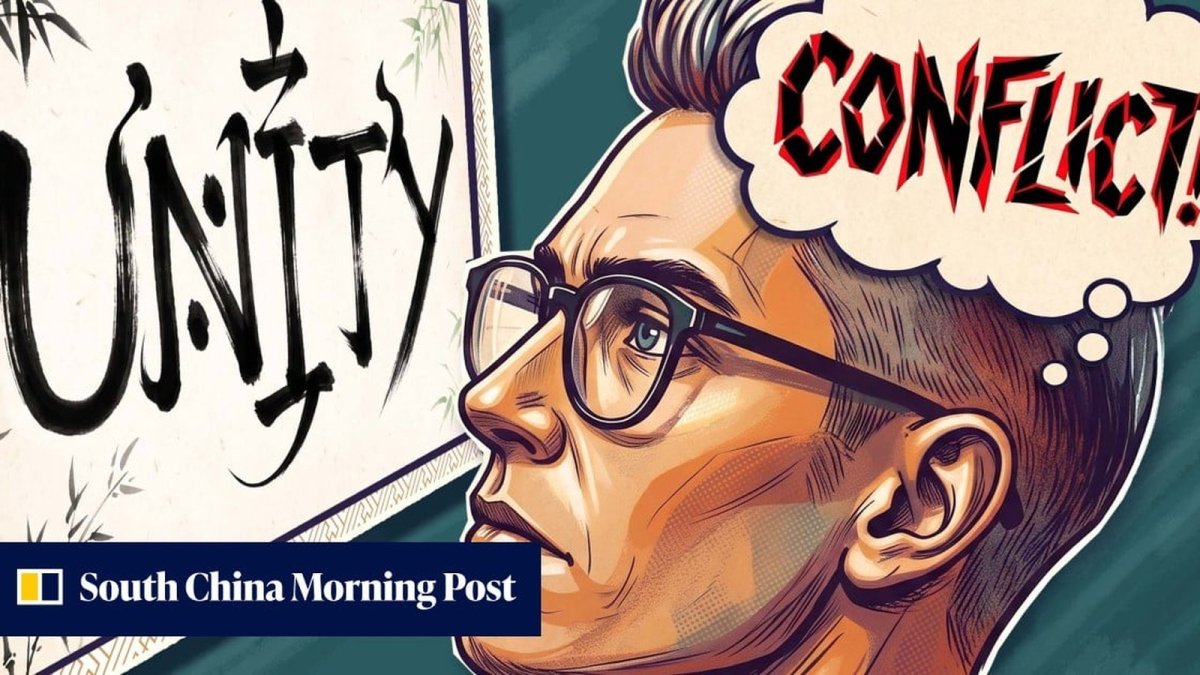
Beijing Takes On the West's 'Tribute System' Theory
Beijing is escalating its challenge to the Western concept of the "tribute system," arguing that foreign frameworks distort ancient Chinese diplomacy and misrepresent the country's rise. The campaign, which has moved from academic journals to the Foreign Ministry podium in recent weeks, is part of a broader drive to define China's practices in home-grown social science language rather than through what it calls Western conceptual lenses.
Tags: tribute system, chao gong, narrative power, China foreign policy, Ray Dalio, John King Fairbank, Chinese diplomacy, Sino-Japanese relations, China soft power, Chinese world order, Belt and Road Initiative, Zheng He, China-Western relations, ethnic unity law
From a Harvard Classroom to the Global Order Debate
The "tribute system" is a term coined in the 1940s by John King Fairbank, the Harvard historian credited with founding modern Chinese studies in the United States, and his collaborator Ssu-yu Teng. They used it to describe a Sinocentric, hierarchical model of international relations that prevailed before unravelling in the second half of the 19th century, under which China's dynasties sat at the centre of civilisation and outsiders arrived bearing goods to pay homage.
Even Fairbank harboured reservations, writing that "tribute" was a "very rough and often misleading" translation borrowed from European vocabulary. Yet as China's global standing has risen, analysts and policymakers worldwide have repeatedly revisited the more than 80-year-old term to assess Beijing's intentions — despite broad objection to the concept within academia.
The latest wave of attention has centred on the Belt and Road Initiative, with some Western commentators arguing that Beijing is using infrastructure diplomacy to build a so-called new tribute system centred on itself. Chinese scholars have long pushed back against that framing; the rebuttals have now reached official discourse.
Dalio's Provocation and a Rare Official Rebuke
The immediate trigger was Ray Dalio, the billionaire founder of Bridgewater Associates. In a June 19 Substack essay titled "The Tribute System: The New World Order," Dalio wrote that "we are in the very early stage of a shift to a tribute system-type order in the Asia region and even beyond."
Dalio argued that while China's economic and financial power grew rapidly, the US handling of Iran's seizure of the Strait of Hormuz convinced other leaders that Washington "doesn't have what it takes to fight to maintain its empire." He characterised the many visits by foreign heads of state to Beijing since late last year as efforts "to build tribute-type relationships" with Chinese President Xi Jinping.
Beijing's response was swift and unusually pointed. "The so-called tribute system is a false image projected by the Western hegemonic logic onto Chinese diplomacy," Foreign Ministry spokesman Lin Jian said on July 16, responding to a question apparently about Dalio's argument, though the investor was not identified by name. Two days earlier, a social media channel named Chaoyang Shaoxia — widely believed to be affiliated with the ministry — published a long critique arguing that "using the negatively loaded English word 'tribute' to describe the ancient Chinese concept of chao gong is highly misleading to international audiences unfamiliar with Chinese culture."
Chao Gong Versus 'Tribute': What's Lost in Translation
The dispute goes to the heart of the matter. According to the theory, China's historical dynasties sat at the centre of civilisation, culturally and morally superior to outsiders, who came bearing "tributes" — usually native produce — to pay homage. In return, emperors rewarded them with fine objects, formally invested their rulers as kings or chieftains, and granted access to trade. Dalio noted that relations in such a system were not between equals but between superiors and subordinates.
Chaoyang Shaoxia countered that the English word "tribute" was "born with the attributes of coercion, violent plunder and one-way exploitation," derived from a Latin word for Roman imperial taxes on provincial populations and later forced medieval payments from vassals to feudal lords. The formulation did not correspond to chao gong, the channel said, a term intended to denote "voluntary" acts of reaching out based on appreciation and "spontaneous" behaviours of presenting gifts to express goodwill.
It pointed to the ancient principle of hou wang bo lai — giving generously and taking little — under which China returned goods to so-called tributary states worth far more than they had offered. Modern China inherited the philosophy of "valuing harmony above all," the channel argued, but "completely" abandoned the hierarchical world view of imperial times, upholding instead that all countries are equal regardless of size, wealth or strength.
A 'Chinese Intellectual System' Takes Shape
The critique arrives as Beijing steps up its push to build a "Chinese intellectual system in philosophy and social sciences," reiterated by Xi in a May directive urging indigenous, independent theories and knowledge that can explain China's practices to the outside world without being allegedly monopolised or distorted by Western concepts and narratives.
The effort extends beyond politics, diplomacy and law to foreign origin theories about China's history. Chinese scholars and officials have in recent years targeted the "New Qing History" school that emerged in the United States, saying it misreads China's past and threatens national unity by arming separatism in border regions.
Zheng Yongnian, a Chinese political scientist, cautioned that China's historical experiences were often used as case studies for Western concepts and theories, which would not help the world understand the country accurately. The term "tribute system," he said, was the result of Fairbank imposing Western frameworks on China because he could not find an exact English equivalent; the way ancient Chinese states organised external relations more closely resembled what is today called China's policy of unilateral opening-up.
Who Gets to Define China's Words?
Liu Wenming, a history professor at Beijing's Capital Normal University, has called for re-examining the tribute system as a "foreign concept" to help "eliminate misunderstandings of Chinese history … and to better appreciate the peaceful and friendly nature of the regional order in ancient East and Southeast Asia." Until a more appropriate translation is found, he wrote last year in Historical Review, a bimonthly journal of the state-run Chinese Academy of Social Sciences, transliteration remains a viable option — namely using chao gong in English.
Chaoyang Shaoxia has floated alternatives such as "jade-silk covenant" or "treasure ship model," referring to Ming dynasty admiral Zheng He's seven 15th-century voyages into the Indian Ocean, which Beijing has long portrayed as a symbol of China's peaceful rise and openness. Those translations face headwinds: many foreign scholars note Zheng He's "treasure ships" were heavily armed, and some cite records of coercion when local rulers failed to pay due respect, framing the expeditions as "power projection" or "proto-maritime colonialism."
The same contest surrounds China's Ethnic Unity and Progress Promotion Law, which took effect last month. Chinese officials use "unity" to convey interaction, exchange and blending among ethnic groups on an equal footing, while overseas media use terms such as "integrate" or "assimilate." "On the surface, this appears to be a translation issue, but in essence it is a question of who has the power to define," Ding Gang, a senior editor with the official People's Daily and a senior fellow with the Chongyang Institute for Financial Studies at Renmin University, wrote in an article on July 7.
What to Watch For: The Narrative Battle Reaches Asia-Pacific Shores
For Japan and the wider Asia-Pacific region, this is not an abstract academic quarrel. The terminology used to describe China's regional conduct shapes how its actions — in the East China Sea, across ASEAN, in infrastructure projects from Laos to Indonesia — are interpreted by publics and governments alike. Tokyo, with its own post-war identity as a "peace-loving country," is a direct participant in the same global-microphone rivalry; Beijing's effort to recast hierarchical terms as voluntary, harmony-seeking relationships will be watched closely there.
The immediate question is whether Beijing's push for indigenous concepts produces concrete vocabulary at regional forums — chao gong, "jade-silk covenant" or successors appearing in official statements and glossaries distributed to diplomats and journalists. The academic front matters too: Western Sinology traditions such as the Fairbank school and New Qing History face recurring official scrutiny, while Chinese universities expand their own frameworks for explaining China to the world.
What is at stake, as Ding Gang put it, is who has the authority to interpret a development path. If Beijing plants its own conceptual vocabulary, the region's diplomatic language will shift with it. If the alternatives falter under their own historical baggage — as the Zheng He comparisons already have — the "tribute system" label may prove more durable than the officials denouncing it. For Asia-Pacific readers, the battle over a single word is a window into a much larger contest over how the coming regional order will be named, narrated and remembered.
By Kenji Tanaka, Staff Writer
This article was produced with AI-assisted research and editorial support. Sources: South China Morning Post, Ministry of Foreign Affairs of China, Global Times.
What's Your Reaction?
 Like
0
Like
0
 Dislike
0
Dislike
0
 Love
0
Love
0
 Funny
0
Funny
0
 Wow
0
Wow
0
 Sad
0
Sad
0
 Angry
0
Angry
0

Japan Correspondent at Global1.News. Tokyo-based voice covering Japanese politics, technology, economy, and culture. Tracks the intersection of tradition and innovation in one of the world's most dynamic societies.












Comments (0)